

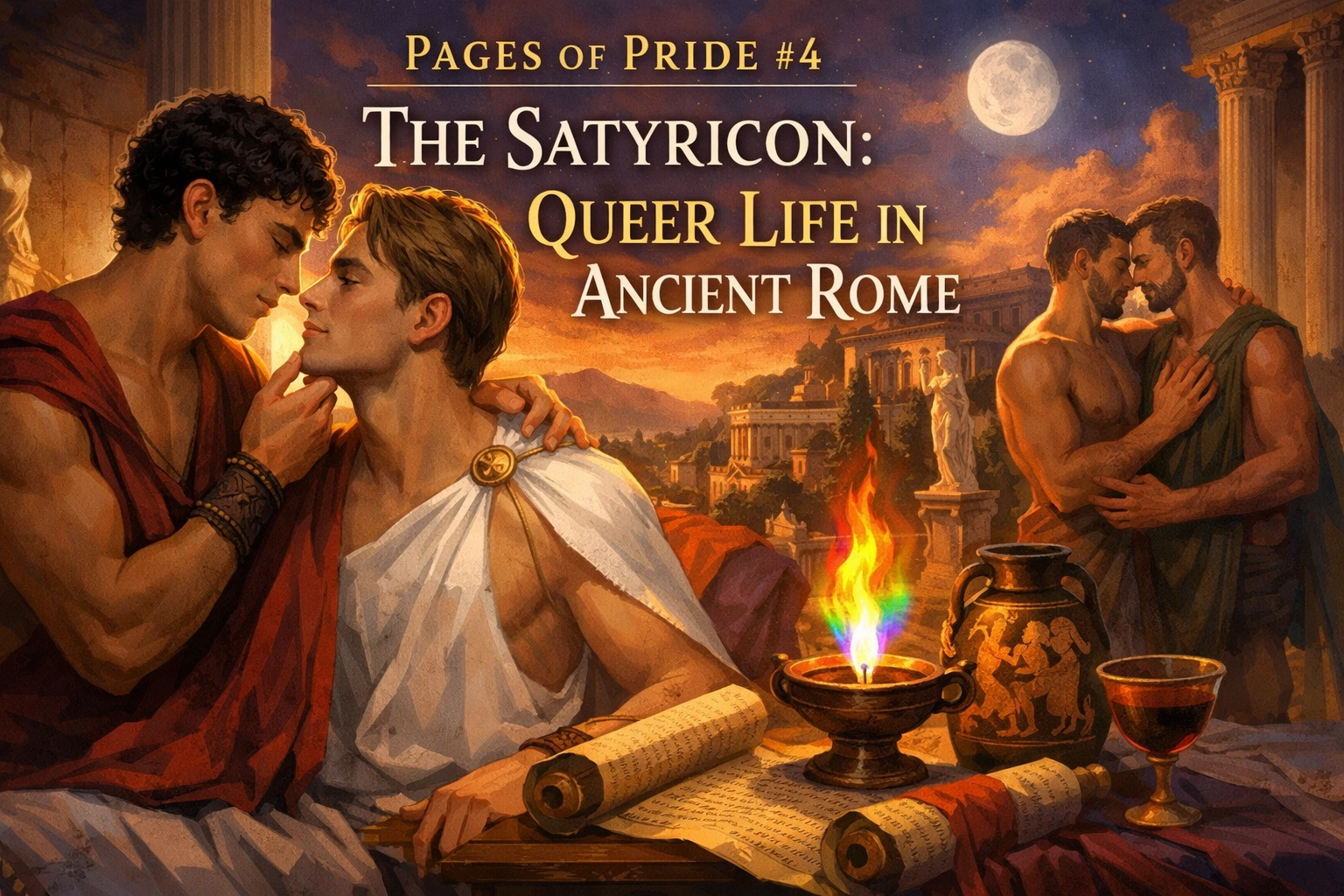
Long before we had tags like "enemies to lovers" or "forced proximity," ancient Rome was serving up some seriously queer content. And nowhere is that more apparent than in The Satyricon, a sprawling, bawdy, and unapologetically homoerotic novel from the first century AD that makes modern MM romance look downright tame.
Written during the reign of Emperor Nero (yes, that Nero), The Satyricon is traditionally attributed to Petronius Arbiter, a courtier known for his refined taste and eventual dramatic exit from Nero's court. What survives today is only fragments of a much larger work, but what we have is enough to paint a vivid picture of queer life in ancient Rome, complete with jealous lovers, sexual misadventures, and enough drama to fill a season of your favorite streaming series.

Raw, Unfiltered, and Unapologetically Queer
If you're used to the polished prose of contemporary gay romance novels, The Satyricon might come as a shock. This isn't your sweet, slow-burn love story with carefully crafted emotional beats. This is raw, satirical, and often hilariously crude, a comic-picaresque novel that follows the misadventures of Encolpius, a runaway slave, as he navigates the underbelly of Roman society.
Encolpius isn't your typical hero. He's flawed, selfish, and constantly getting into trouble, usually of the romantic or sexual variety. His primary love interest? A beautiful young man named Giton, who becomes the source of endless jealousy and competition. The novel explores their turbulent relationship alongside Encolpius's rivalry with Ascyltus, another man vying for Giton's affections. Think of it as an ancient Roman love triangle that would fit right in with modern MM fiction tropes.
What makes The Satyricon so fascinating for readers of LGBTQ+ literature is its matter-of-fact treatment of male-male desire. There's no moralizing, no hand-wringing about the "sinfulness" of same-sex relationships. In the world of the Satyricon, men desiring men is simply part of the social fabric, celebrated in some contexts, mocked in others, but never presented as unnatural or shocking.
A Celebration of Priapus (Yes, Really)
One of the more entertaining aspects of The Satyricon is its ongoing homage to Priapus, the god of fertility and male virility. Throughout the fragments, Encolpius finds himself cursed by Priapus with erectile dysfunction: a running gag that adds both humor and pathos to his romantic misadventures.
This isn't just ancient Roman comedy; it's a reminder that discussions of masculinity, sexuality, and performance anxiety are nothing new. The struggles Encolpius faces: insecurity, jealousy, the fear of not measuring up (literally and figuratively): are themes that resonate with modern MM romance readers. The difference? The Satyricon presents these issues with a satirical edge that's both darkly funny and surprisingly human.
The Dinner Party That Broke the Internet (Circa 60 AD)
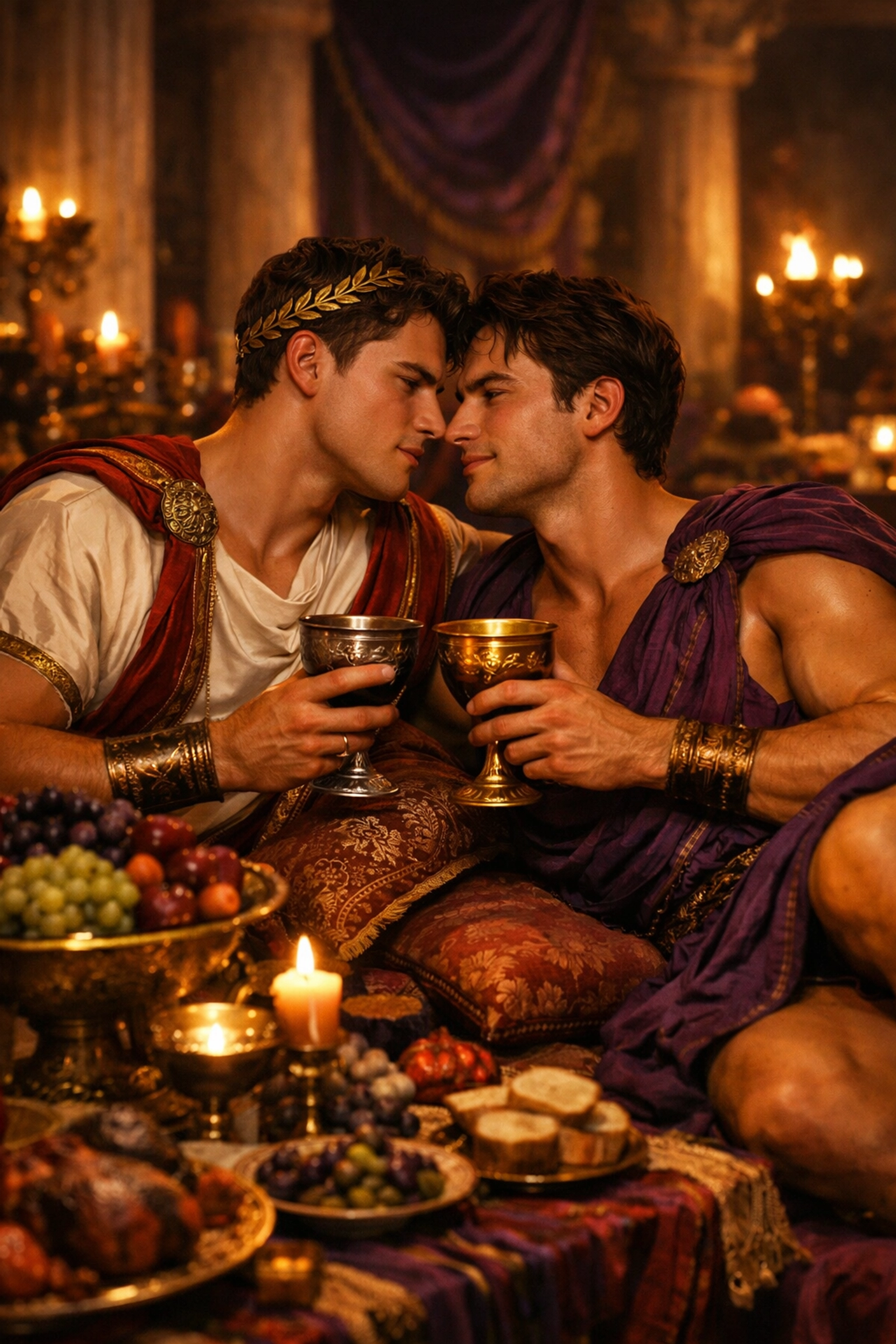
If you've ever read The Satyricon, you know about the "Cena Trimalchionis" or "Trimalchio's Dinner Party." This extended sequence, which takes up a significant portion of the surviving text, is a masterclass in satirical social commentary. Trimalchio, a wealthy freedman (former slave), throws an extravagant feast that showcases both the opulence and vulgarity of nouveau-riche Roman society.
While not explicitly focused on queer themes, the dinner party sequence offers fascinating insights into Roman attitudes toward gender, sexuality, and social performance. Trimalchio himself is married to a woman, but the atmosphere is one of fluid sexuality and performative masculinity. The evening features dancers, singers, and entertainers of various genders, all presented in a way that suggests Roman sexuality was far more flexible than many historical narratives acknowledge.
For readers interested in historical MM romance and ancient Roman queer fiction, this sequence is gold. It shows how sexuality intersected with class, power, and social status in ways that feel both alien and strangely familiar.
Why The Satyricon Matters for Modern LGBTQ+ Literature
Here's the thing: The Satyricon matters not because it's a perfect representation of queer love (it's not), but because it's evidence. Evidence that queer desire, queer stories, and queer people have always existed. When modern anti-LGBTQ+ voices claim that queer visibility is a "modern invention," we can point to texts like The Satyricon and say, "Actually, we've been here all along."
The novel also challenges our assumptions about what "gay literature" should look like. It's not earnest or noble. It doesn't present its queer characters as perfect victims or heroes. Instead, it shows us messy, complicated people navigating desire, jealousy, and social expectation: much like the best MM romance books do today.

The Fragments That Survived (And What We Lost)
One of the tragedies of The Satyricon is that we only have fragments: perhaps 10% of the original text. What survives comes primarily from three manuscripts, and scholars have spent centuries trying to piece together the full narrative. What we have suggests a sprawling epic that moved through various episodes, each showcasing different aspects of Roman life.
The fragmentary nature of the text adds an interesting layer of meaning. Just as queer history has been erased, censored, and lost over the centuries, so too has much of The Satyricon disappeared. What remains are tantalizing glimpses of a fully realized queer world: one that modern readers of gay romance novels and queer fiction can only imagine.
Satire, Sex, and Social Commentary
What sets The Satyricon apart from other ancient literature is its satirical edge. Petronius wasn't writing propaganda or moral instruction; he was poking fun at Roman society from top to bottom. The wealthy are pompous and vulgar. The poor are scheming and desperate. Everyone is obsessed with sex, status, and survival.
This satirical approach means that while the text depicts male-male desire openly, it's not always flattering. Characters are mocked for their sexual obsessions, their jealousies, and their failures. But crucially, their queerness isn't the punchline: their humanity is. In this way, The Satyricon treats its queer characters with a rough equality that's almost refreshing compared to later eras when queer existence was criminalized and pathologized.
Reading The Satyricon Today
So should you read The Satyricon? If you're a fan of MM fiction and LGBTQ+ literature with an interest in where it all began, absolutely. Just be prepared: this isn't a romance in the modern sense. There's no HEA (happily ever after), no redemption arc, and definitely no fade-to-black bedroom scenes.
What you will find is a window into how one culture: flawed, complex, and long vanished: understood desire between men. You'll find humor, humanity, and the recognition that queer people have always told our stories, even when those stories are crude, complicated, or uncomfortable.
Several modern translations exist, each with their own flavor. Some play up the comedy, others the eroticism, and still others the social commentary. Pick one that appeals to your interests, and dive in knowing you're reading one of the oldest surviving gay books in Western literature.
The Legacy Lives On
The influence of The Satyricon extends far beyond ancient literature. It inspired everything from Fellini's surreal 1969 film Fellini Satyricon to F. Scott Fitzgerald's use of "Trimalchio" as an early title for The Great Gatsby. The novel's picaresque structure and satirical tone influenced countless works of fiction across centuries.
For the LGBTQ+ community, The Satyricon serves as both history and heritage. It's proof that queer love, queer desire, and queer stories aren't modern inventions or "phases": they're fundamental parts of human experience that have always existed, even when they've been hidden, censored, or destroyed.
At Read with Pride, we celebrate the full spectrum of LGBTQ+ fiction: from ancient texts like The Satyricon to the hottest new releases in MM romance. Because understanding where we've been helps us appreciate where we're going.
Final Thoughts
The Satyricon isn't an easy read, and it's definitely not for everyone. But for readers hungry for the roots of queer literature, for those interested in gay historical romance (even if it's more history than romance), and for anyone who wants to understand how male-male relationships were depicted before Christianity reshaped Western attitudes toward sexuality, it's essential reading.
Nearly two thousand years later, Encolpius and Giton's tumultuous relationship still resonates. The jealousy, the passion, the drama: it's all there, preserved in fragmented Latin prose that somehow feels more honest than many modern novels.
So pour yourself a glass of wine (the Romans certainly would have), settle in with a good translation, and prepare to travel back to an ancient world where queer life was complicated, messy, and undeniably present.
Ready to explore more LGBTQ+ literary history and discover amazing MM romance books? Visit us at Readwithpride.com for your next great read, and follow us on Facebook, Instagram, and X for daily recommendations, book news, and queer literary history.
#ReadWithPride #MMRomance #GayRomanceBooks #LGBTQFiction #QueeFiction #HistoricalMMRomance #GayBooks #GayLiterature #AncientRome #TheSatyricon #MMBooks #GayHistoricalRomance #QueerHistory #LGBTQBooks #GayNovels #MMFiction #GayRomanceNovels #LGBTQLiterature #QueerReads #PagesOfPride

Leave a Reply
You must be logged in to post a comment.