

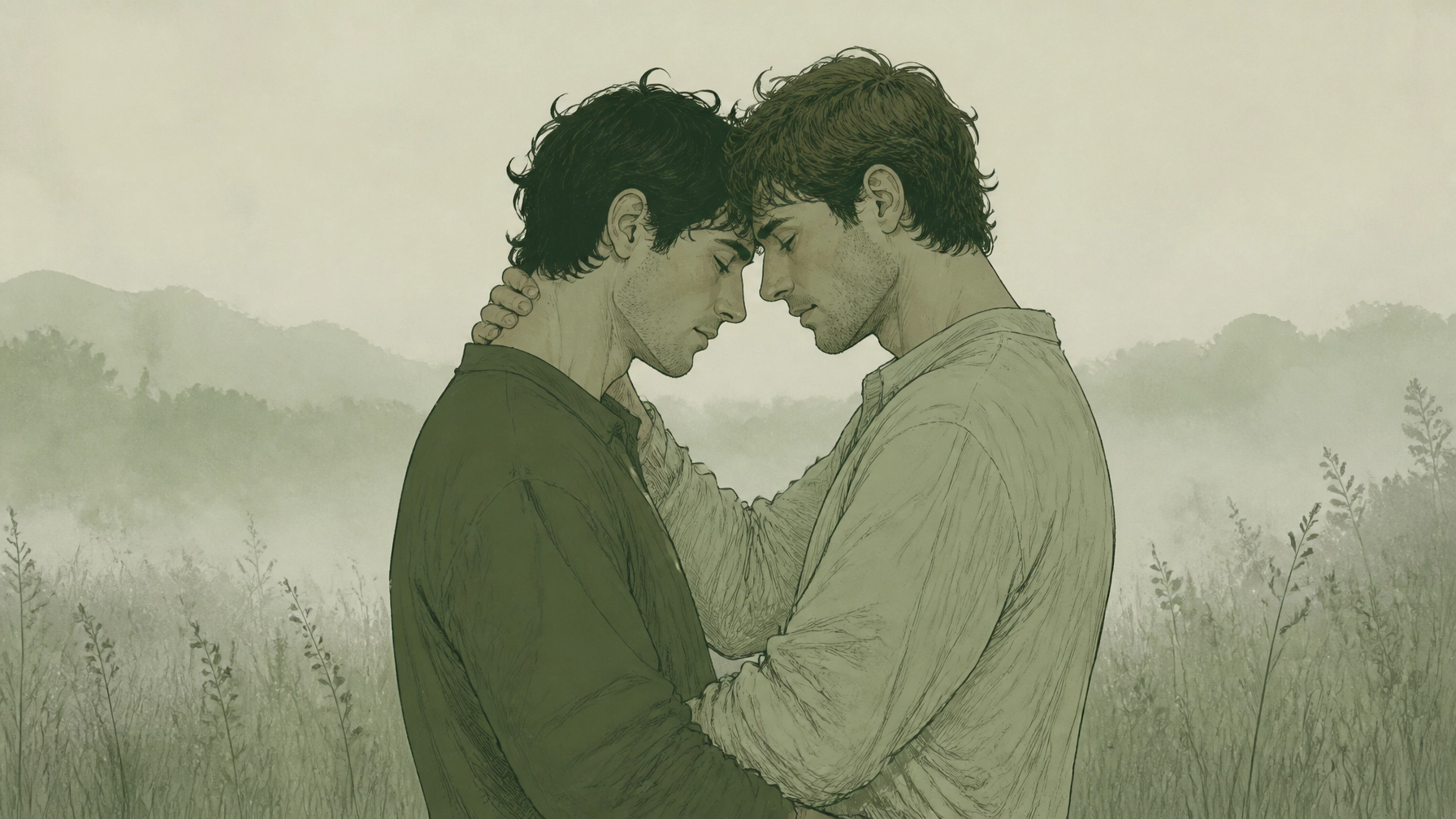
There is a specific kind of silence that follows a storm: a heavy, damp stillness where the air tastes of ozone and the earth feels raw, exposed. In the world of literature, that storm is what we call "high angst." For many, the word "angst" suggests a fleeting discomfort, a temporary cloud over a summer day. But for the emotionally invested reader, angst is the very soil from which the most profound truths grow.
As a writer, I have always been drawn to the fractures in the human spirit. I find myself wandering into the dark corners of the heart, not to dwell in the shadow, but to understand the light that eventually breaks through. My stories often explore the lives of men who are navigating the jagged edges of their own identities: men who are coming out later in life, men grappling with the fluid tides of bisexuality, or men who find themselves in the "rare experience" of a nudist community, where the lack of clothing becomes a searing metaphor for the lack of emotional armor.
If you find yourself reaching for stories that make your heart ache before they make it soar, you aren’t just looking for drama. You are looking for a visceral connection. Here are ten things you should know about the world of high-angst fiction and why it resonates so deeply with those of us who read: and write: with pride.
1. Angst is the Shadow that Defines the Light
In MM romance, angst is never just about suffering for suffering’s sake. It is the necessary contrast. Without the biting cold of isolation, the warmth of a lover’s hand against your cheek wouldn’t feel quite so miraculous. High-angst fiction understands that love is often a hard-won sanctuary. When we read about characters who are pushed to their breaking points, we are really reading about the resilience of the human heart. It is the shadow that makes the eventual dawn feel earned, brilliant, and permanent.
2. The Internalized Struggle is the Real Monster
While external plot points: betrayals, accidents, secrets: drive a story, the most potent angst in gay fiction is internal. It is the silent war a man wages against himself. Whether it’s the fear of losing a life built on a lie or the terrifying vulnerability of admitting a desire that has been buried for decades, these internal struggles provide the psychological depth that defines character-driven novels. We don't just want to see men fall in love; we want to see them learn to love themselves enough to allow someone else in.
3. Vulnerability is a High-Stakes Gamble
In high-angst stories, vulnerability isn't a soft, gentle thing. It is a gamble. It is the moment a character stands emotionally "naked" before another, waiting for the blow that may or may not come. I often use the setting of a naturist beach or a nudist retreat to heighten this sensation. When the physical layers are gone, the emotional ones become impossible to hide. For the bisexual reader or the man still finding his place in the LGBTQ+ community, that feeling of exposure is a daily reality. High-angst fiction captures that "searing" honesty and turns it into art.
4. Jealousy and Possession as Mirrors
We are often told that jealousy is a "negative" emotion, but in the realm of intense M/M books, it is a powerful mirror. It reflects a character’s deepest insecurities and their most desperate needs. When I write about possessive jealousy, I’m not writing about toxicity; I’m writing about the terror of losing the one thing that makes the world make sense. It is a visceral, pulsing emotion that reveals the stakes of the relationship. It shows us just how much a character has to lose.
5. The "Rare Experience" of Emotional Exile
One of the most profound categories of angst involves "rare experiences": situations where characters are isolated by circumstance or choice. Imagine two men forced together in a remote cabin, or perhaps meeting in a community where they are "outcasts" even among outcasts. This isolation strips away the noise of the world, leaving only the raw, lyrical tension of their connection. It is in these "unexpected places" that we find the most authentic versions of ourselves.
6. Bisexuality and the Angst of the "In-Between"
There is a specific, often overlooked angst in the bisexual experience: the feeling of belonging everywhere and nowhere at once. In my writing, I strive to portray this with remarkable sensitivity. The struggle to be seen and understood by both the straight and queer worlds is a fertile ground for high-angst storytelling. It isn't just about who you love; it’s about the internal tug-of-war that comes with a fluid identity in a world that demands categories.
7. The Landscape as an Emotional Character
In literary gay fiction, the setting should breathe alongside the characters. Whether it’s a gritty urban landscape or the intimate, sun-drenched silence of a private garden, the world around the characters should reflect their internal turmoil. If a character is feeling the "searing hate" of a past betrayal, the sun should feel too bright, the air too dry. If they are falling in love, the world should feel vivid and brimming with possibility. This imagery pulls the reader into the story, making the angst a sensory experience.
8. The Catharsis of the Unflinching Moment
We read high-angst fiction for the "unflinching" moments: the scenes where everything is laid bare and the characters finally speak their truth, no matter how much it hurts. There is a profound empathy in witnessing these moments. As readers, we see our own "authentic internal struggles" mirrored on the page. This connection is what makes MM contemporary stories so powerful; they remind us that we are not alone in our messiness or our pain.
9. The Slow Burn of Emotional Survival
High-angst fiction is rarely a fast-paced thriller. It is a slow burn, a steady accumulation of emotional weight. It’s the lingering look, the words left unsaid, the "lyrical, evocative prose" that describes the space between two people. This slow build-up is what allows the reader to become fully invested. You don't just see the characters connect; you feel the gravity of their attraction pulling them together against all odds.
10. The Sacredness of the Earned Happy Ever After (HEA)
Finally, the most important thing to know about high-angst fiction is that the ending matters. In the LGBTQ+ fiction world, we have had enough tragedies. We have seen enough stories where the "queer struggle" ends in heartbreak. High-angst romance reverses this. It acknowledges the darkness, the jealousy, the shame, and the isolation, but it insists on a happy ending. That HEA is sacred because it has been earned through fire. It is a celebration of resilience and connection.
For those who seek these deep, emotionally charged journeys, my work is a tribute to your own strength. I invite you to explore these themes further in my latest novels, where the men are complex, the emotions are raw, and the love is always worth the struggle.
You can find my full collection of immersive MM novels here: Dick Ferguson’s E-Book Store.
If you are looking for popular gay books that don't shy away from the "darker aspects of the human experience" while still celebrating the beauty of queer love, you have come to the right place. Let us read with pride, together, and find the connection we all deserve.
Follow us on social media for more updates, character spotlights, and literary discussions:
- Instagram: Follow Dick Ferguson
- X (Twitter): Join the Conversation
- Facebook: Connect with Readers
- Website: Read With Pride
#HighAngst #MMRomance #GayFiction #ReadWithPride #BisexualRep #QueerLiterature #LiteraryMMRomance #CharacterDriven #DickFerguson #GayBooks2026 #EmotionalRead


{“@type”:”BlogPosting”,”image”:[“https://cdn.marblism.com/c5E3n2DLv8Q.webp”,”https://cdn.marblism.com/Pqe25o86ygI.webp”,”https://cdn.marblism.com/EJyY5SLvmgc.webp”,”https://cdn.marblism.com/2-_pKAzebPu.webp”,”https://cdn.marblism.com/_zOqNM4AxYA.webp”],”author”:{“url”:”https://readwithpride.com/e-book-store/dickfergusonwriter/”,”name”:”Dick Ferguson”,”@type”:”Person”},”@context”:”https://schema.org”,”headline”:”Looking For Intense Emotional Connection? Here Are 10 Things You Should Know About High-Angst Fiction”,”keywords”:”MM romance, gay books, high-angst fiction, LGBTQ+ ebooks, bisexual romance, character-driven novels, Read with Pride”,”publisher”:{“logo”:{“url”:”https://readwithpride.com/wp-content/uploads/2024/logo.png”,”@type”:”ImageObject”},”name”:”Read with Pride”,”@type”:”Organization”},”description”:”Explore the profound emotional depth of high-angst MM fiction with author Dick Ferguson. Discover why the emotionally invested reader craves stories of vulnerability, bisexuality, and resilience.”,”datePublished”:”2026-06-11″,”mainEntityOfPage”:{“@id”:”https://readwithpride.com/blog/high-angst-fiction-emotional-connection”,”@type”:”WebPage”}}

Leave a Reply
You must be logged in to post a comment.