

readwithpride.com
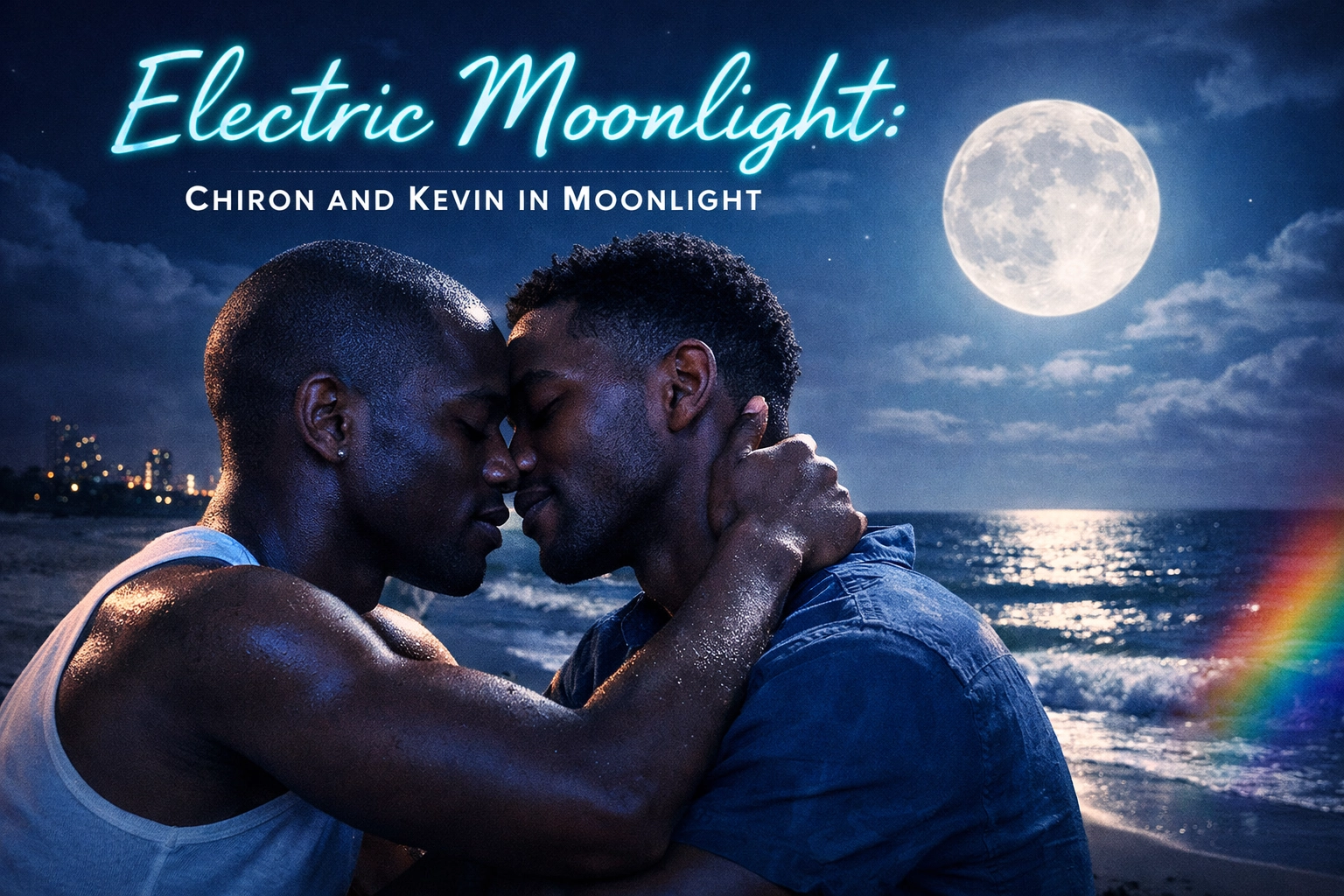
Some movie moments hit you so hard they rewire your understanding of intimacy. Barry Jenkins' Moonlight gave us one of cinema's most achingly beautiful and quietly electric romances between two Black men: Chiron and Kevin: whose connection spans decades and exists in stolen glances, hesitant touches, and words left unsaid.
This isn't your typical sweeping gay romance with grand gestures and happy endings tied up in bows. It's messier than that. More real. The kind of love story that captures how desire, trauma, and tenderness can coexist in the same breath, on the same moonlit beach where everything changes.
The Beach Scene That Changed Everything
Let's talk about that beach scene. You know the one. If you've seen Moonlight, it's seared into your brain forever.
Teenage Chiron (played by Ashton Sanders) and Kevin (Jharrel Jerome) meet up late at night on a Miami beach. The air is thick with humidity and possibility. Kevin's rolling a blunt, talking about a girl he hooked up with, but there's something else crackling in the space between them: something neither of them can quite name yet.
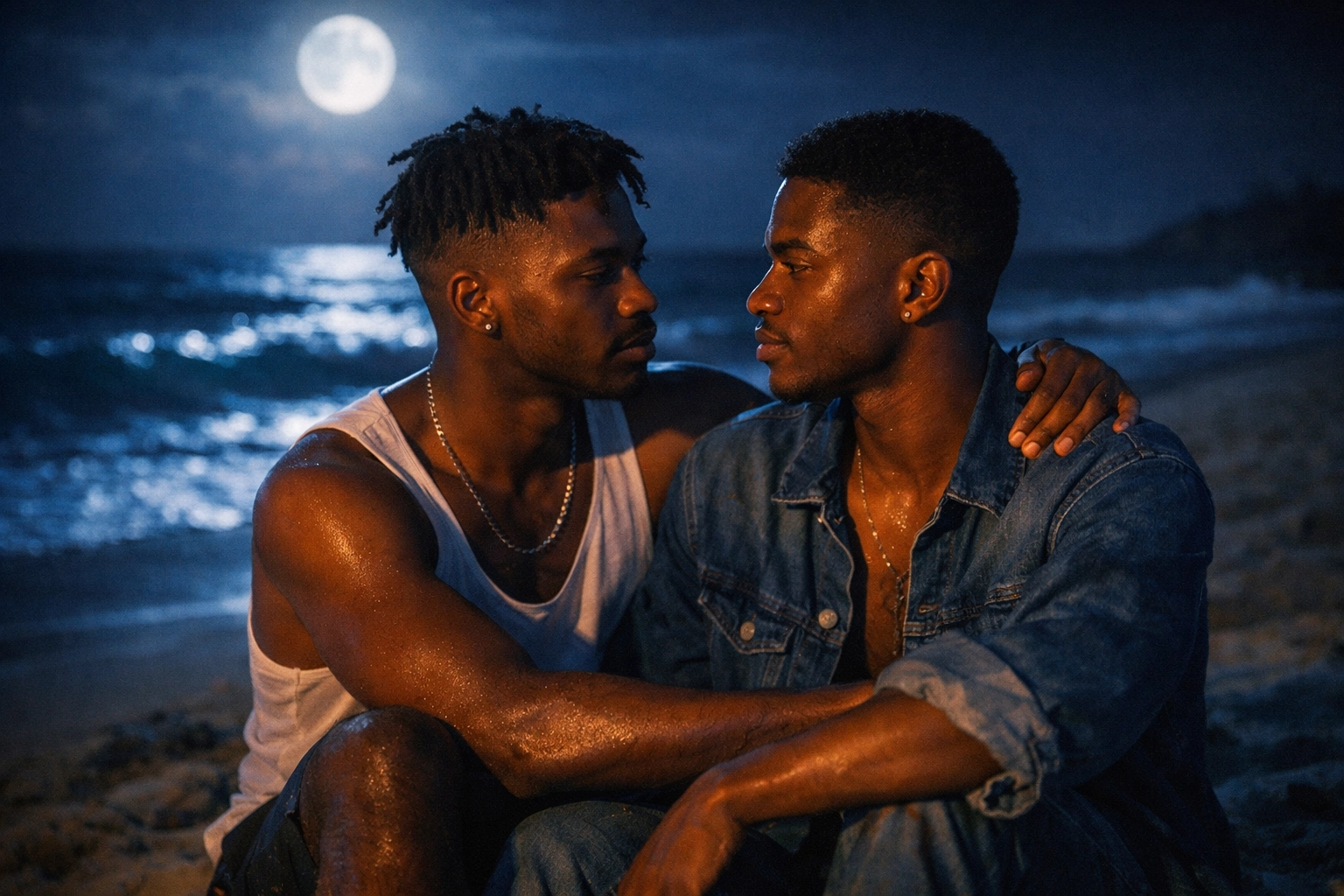
Kevin asks Chiron, "What you cry about?" And Chiron, who's spent his entire life building walls around his feelings, actually opens up. It's such a small moment, but it feels seismic. Because for Chiron, being seen: truly seen by another person: is terrifying and thrilling in equal measure.
Then Kevin touches him. Just a hand on a shoulder at first. Then more. They kiss. It's tender and hesitant and fumbling in the way first times often are, especially when you're figuring out who you are under a Miami moon with waves crashing nearby. The intimacy that follows is shot with such restraint and care: no male gaze exploitation here, just two young men discovering desire and connection for the first time.
This scene works because it doesn't rush. It breathes. Every touch carries weight. Every glance means something. It's the opposite of performative sexuality: it's felt. And in the world of gay romance on screen, that authenticity makes all the difference.
When Love Gets Complicated
Here's where Moonlight gut-punches you: that beautiful beach moment gets shattered almost immediately. School bullies force Kevin to beat up Chiron the very next day. It's a survival move on Kevin's part: he knows he'll be next if he refuses: but it breaks something fundamental between them.
The betrayal cuts deep because Kevin wasn't just Chiron's first love. He was his only real friend. The only person who engaged with him emotionally when everyone else either ignored or tormented him. When Kevin's fists connect with Chiron's face, it's not just physical violence: it's the destruction of the one safe space Chiron had ever known.
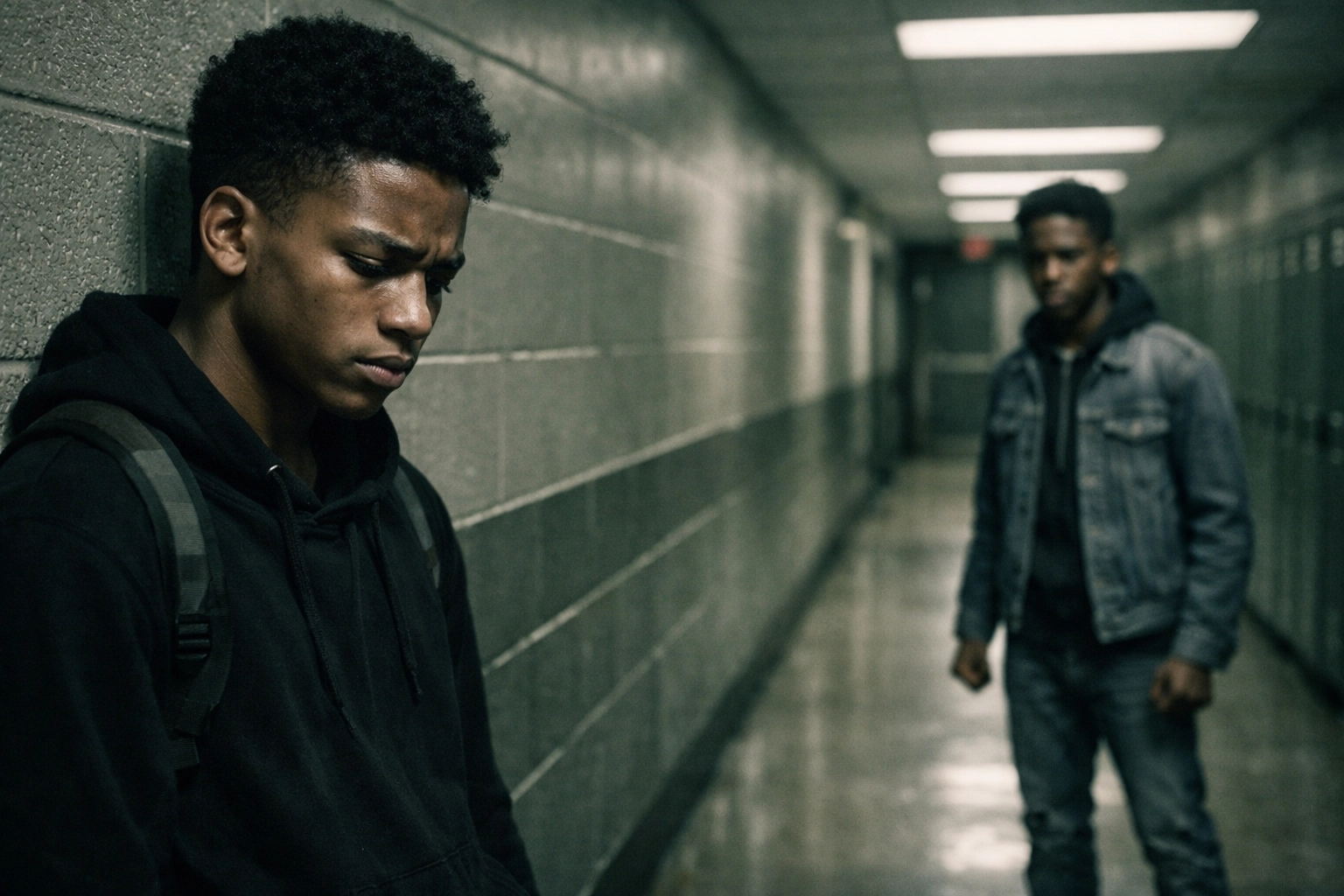
This complexity is what makes their relationship so compelling. Kevin's not a villain. He's a scared teenager making an impossible choice. But the consequences ripple out across both their lives for the next decade. Chiron gets arrested after retaliating against his main bully. He transforms himself into "Black," a hardened drug dealer in Atlanta who's built an armor so thick nobody gets through.
And Kevin? He goes on with his life, but you sense he carries the weight of what happened too.
Ten Years of Silence, One Phone Call
Fast forward a decade. Black (now played by the impossibly magnetic Trevante Rhodes) has built a new life dealing drugs in Atlanta. He's muscular, intimidating, draped in gold chains and driving a nice car. But he's also living a completely sexless existence, still haunted by that night on the beach and what came after.
Then Kevin calls.
Out of nowhere, after ten years of silence, Kevin reaches out and invites Black to visit him in Miami. And Black: this man who's constructed an entire persona around being untouchable: drops everything and drives through the night to see him.
The reunion scene at Kevin's diner is where Moonlight shifts from beautiful to devastating. They talk around everything at first, catching up on surface-level details. Kevin's working as a cook, has a kid, seems to have found some peace. Black is evasive about what he does, how he lives.
But then the walls crack.
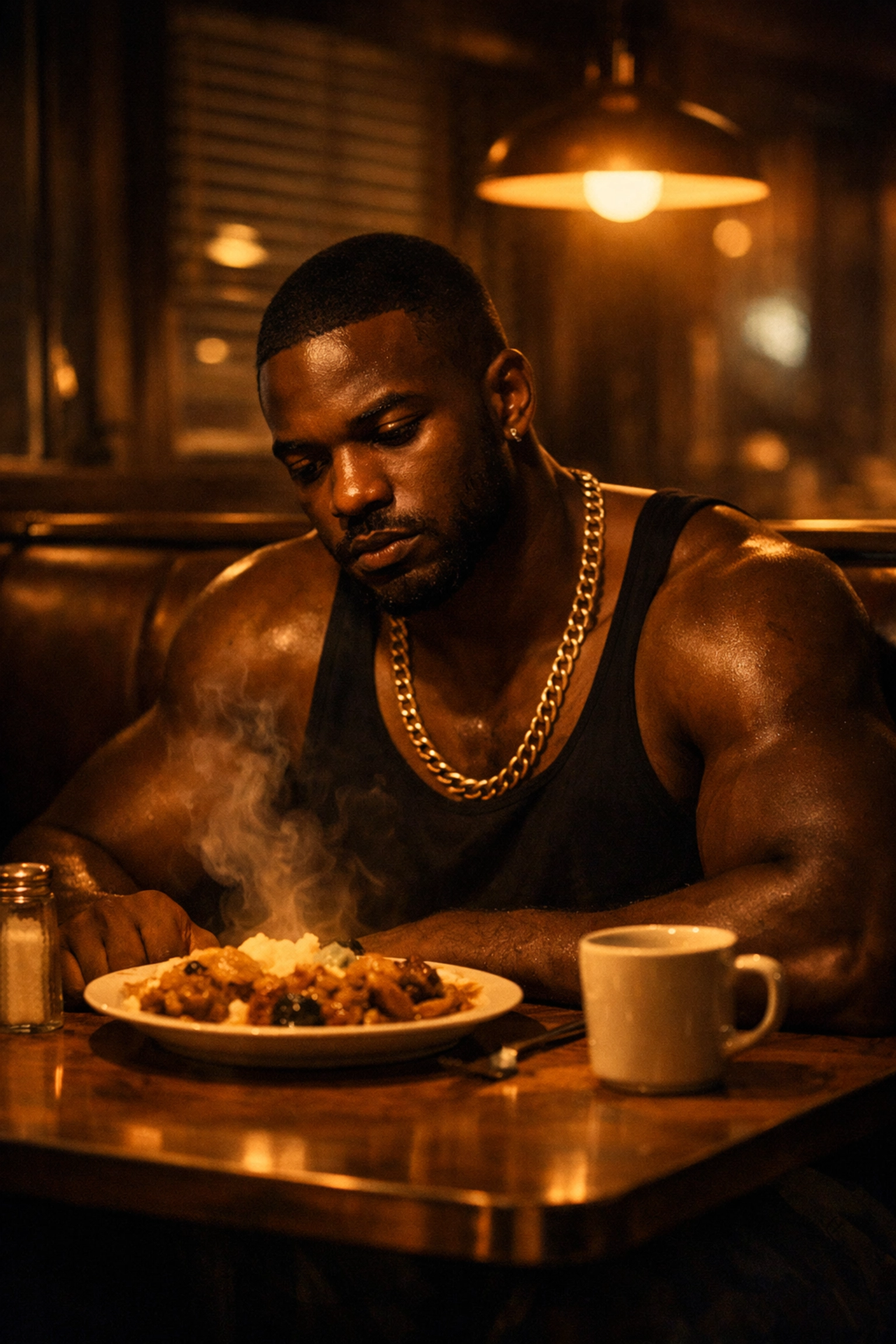
Kevin cooks for him. He makes the same meal Chiron's mom used to make: a small act of care that says everything words can't. And in that moment, you see Black soften. The armor starts to come off.
Later, in Kevin's apartment, Black finally says what he's been holding for a decade: "You're the only man that's ever touched me."
Let that sink in. Ten years. A completely sexless life. All because the one person who ever made him feel safe, seen, and desired was also the person who hurt him most.
Kevin's response is equally heartbreaking. He apologizes, genuinely. He expresses regret for what happened all those years ago. But he also recognizes that words can't undo that kind of damage. All they have is this moment: this fragile, uncertain present where maybe, just maybe, they can find their way back to each other.
Why Chiron and Kevin Matter
In the landscape of LGBTQ+ fiction and gay romance books, we often get stories that follow predictable beats: meet-cute, conflict, resolution, happily ever after. Moonlight refuses that structure. It's interested in the messy middle parts: the years of silence, the unresolved trauma, the love that persists despite everything working against it.
What makes Chiron and Kevin one of the sexiest gay couples in cinema isn't explicit scenes or prolonged physical intimacy. It's the tension. The longing. The way a single touch carries the weight of a decade's worth of unsaid feelings. It's sexy because it's real: because we recognize in their story the complexity of queer desire that exists in a world that punishes vulnerability.
Jenkins films their connection with such intimacy that every frame feels like a secret being shared. The blue-tinted moonlight. The extreme close-ups. The way the camera lingers on hands, shoulders, the curve of a neck. It's visual poetry that captures how queer love often exists in stolen moments and coded language before it can be spoken aloud.
For readers of MM romance looking for that same emotional depth, Moonlight sets the standard. It shows how attraction and love can be simultaneously simple and impossibly complicated. How forgiveness doesn't mean forgetting. How sometimes the most profound intimacy happens in silence.
Final Thoughts
Moonlight won Best Picture at the Oscars in 2017, and Chiron and Kevin's story played a huge part in why. This wasn't just another gay love story: it was a meditation on Black masculinity, queerness, trauma, and the ways we build and shed identities to survive.
If you haven't watched it yet, do yourself a favor and experience this masterpiece. And if you're looking for more stories that capture this kind of emotional complexity, Read with Pride has curated collections of gay romance novels and MM fiction that explore similar themes of longing, identity, and hard-won love.
Because sometimes the sexiest thing on screen isn't what's shown: it's what's felt. And Chiron and Kevin? They make you feel everything.
Find more authentic LGBTQ+ stories and reviews at readwithpride.com
Follow us for more gay romance recommendations:
📘 Facebook
🐦 Twitter/X
📸 Instagram
#Moonlight #ChironAndKevin #GayRomance #MMRomance #LGBTQMovies #QueerCinema #ReadWithPride #GayLoveStory #LGBTQFiction #BlackQueerLove #BarryJenkins #AuthenticLove #QueerFilm #GayRomanceBooks #MMFiction #LGBTQPride #GayNovels #QueerStorytelling

Leave a Reply
You must be logged in to post a comment.