

readwithpride.com
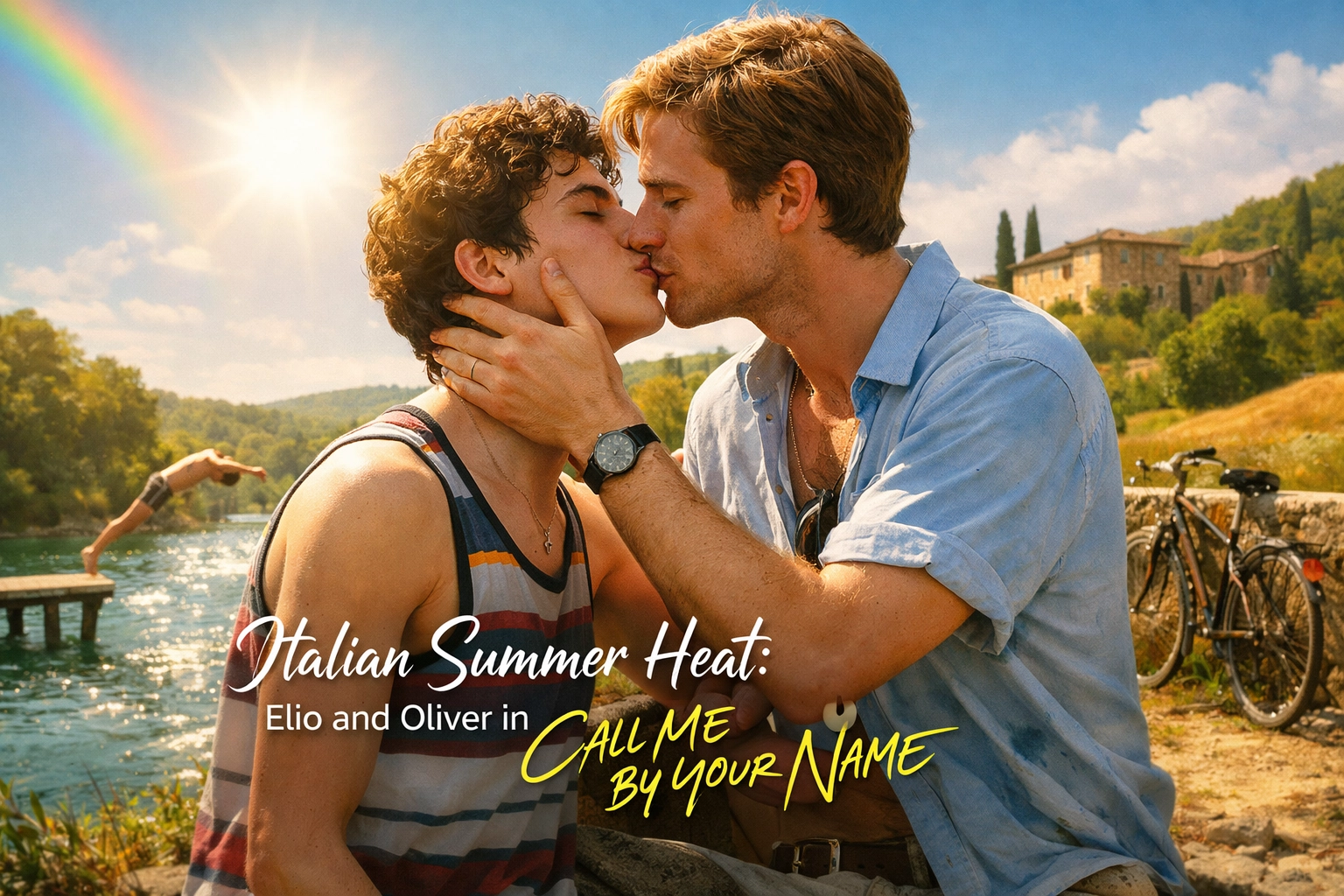
If you've ever wanted to bottle up the essence of summer longing, desire that tastes like apricots, and chemistry so thick you could cut it with a knife, well, Call Me by Your Name basically did that for us. Luca Guadagnino's 2017 adaptation of André Aciman's novel gave us one of the most achingly beautiful gay love stories ever put to film, and at its sun-drenched heart are Elio and Oliver: two people who prove that six weeks can change everything.
Let's talk about why this MM romance continues to wreck us in the best possible way. 🍑✨
The Setup: Summer in Northern Italy
Picture this: it's 1983, somewhere in the lush countryside of Northern Italy. Seventeen-year-old Elio Perlman is spending another lazy summer at his family's 17th-century villa, transcribing music, reading philosophy, and generally being the kind of polyglot intellectual teen that makes the rest of us feel like we wasted our youth. (We did.)
Enter Oliver, a 24-year-old American doctoral student who's come to assist Elio's father: a professor: with his academic work. Oliver is everything Elio isn't: confident, physically imposing, casually American in a way that feels almost exotic in this Italian paradise. He says "later" instead of goodbye. He wears his Star of David necklace openly. He radiates a kind of ease that Elio can only dream of possessing.
And from the moment Oliver arrives, Elio is gone.
The Dance Begins
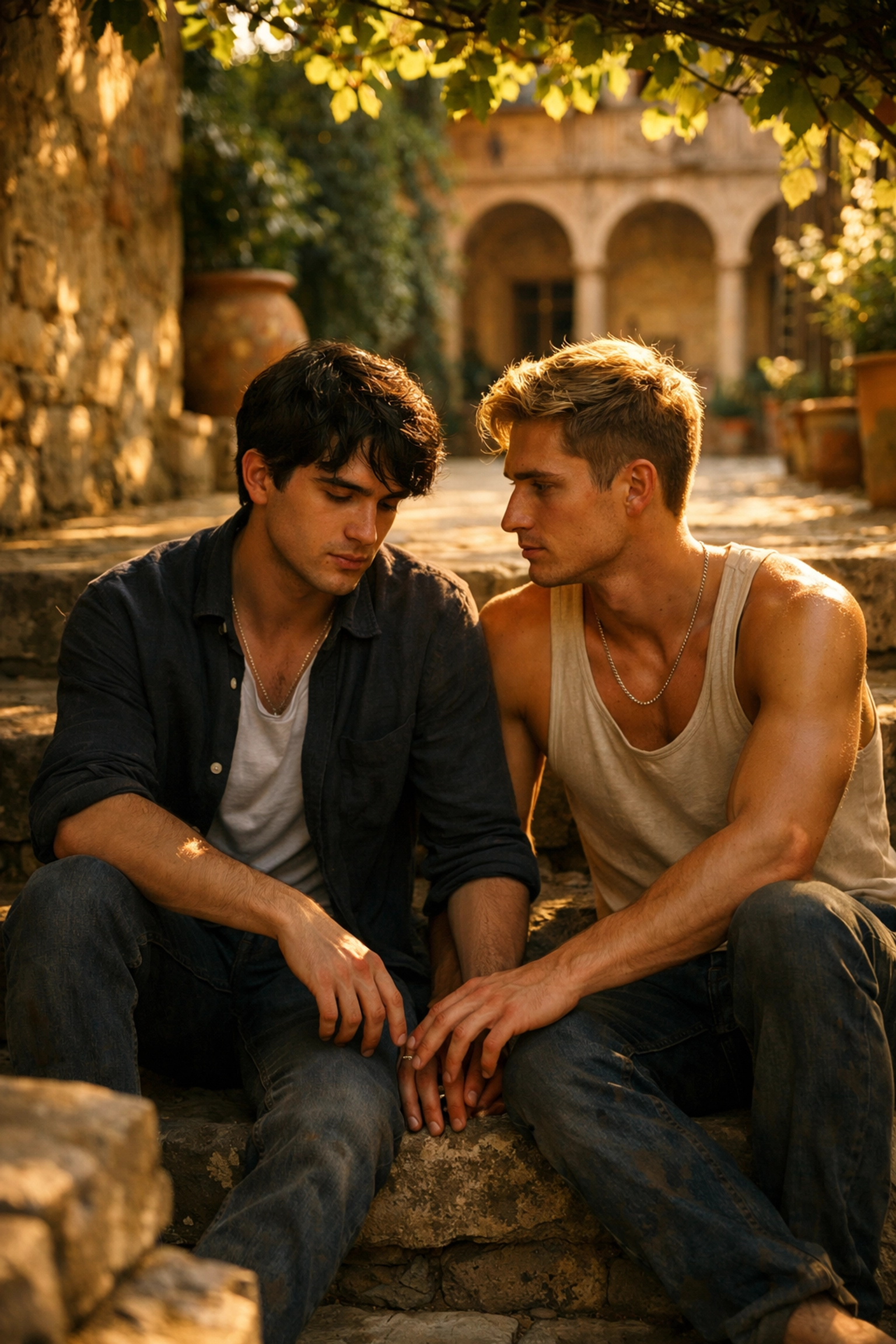
What makes Elio and Oliver so compelling as a couple isn't just the attraction: it's the slow burn of their connection. This isn't a love-at-first-sight situation. It's messier, more uncertain, more real.
Elio spends the early weeks analyzing every interaction with Oliver like it's a text that needs decoding. Why does he say "later"? What does it mean? Is that choice of swim trunks a signal? The kid is simultaneously brilliant and utterly clueless about his own feelings, caught between intellectual confidence and emotional inexperience.
For readers who love enemies to lovers or forced proximity tropes in their gay romance books, this dynamic hits differently. They're not enemies, exactly: but there's tension, avoidance, a push-pull that comes from Elio's confusion about his sexuality and Oliver's awareness that acting on his attraction could be disastrous.
Because here's the thing: Oliver knows. He sees Elio's interest, feels the magnetic pull between them, but he also understands the risks. He's older, he's a guest in this home, and this is 1983: not exactly a time when coming out was easy or safe.
The Moment Everything Changes
The film and novel both capture those watershed moments when everything shifts. There's the midnight conversation where Elio, emboldened by jealousy and frustration, finally makes his move. There's Oliver's response: a kiss, then withdrawal, the classic "we can't" that only makes the wanting worse.
And then there's the surrender. "Call me by your name, and I'll call you by mine." It's intimate in a way that goes beyond physical connection: it's about identity, about seeing and being seen completely.

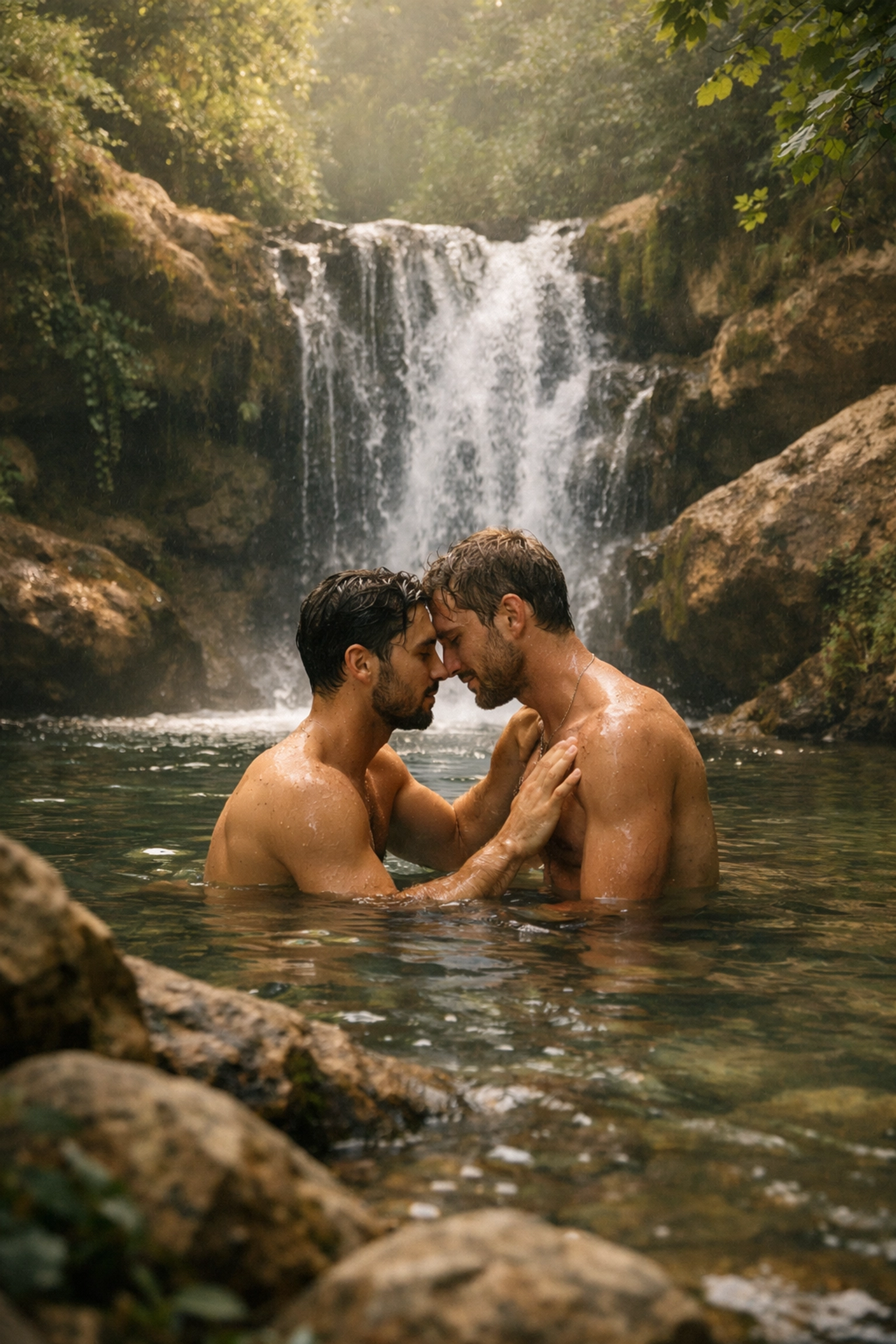
What follows is some of the most beautifully filmed gay fiction ever committed to screen. The Italian countryside becomes a character itself: sun-dappled bicycle rides through ancient streets, stolen moments by Roman ruins, that unforgettable waterfall scene where the world narrows to just the two of them.
This is queer fiction at its most sensory. You can practically feel the heat, taste the fruit, hear the cicadas. Guadagnino doesn't just show us their romance: he immerses us in it.
The Complexity of Oliver
Let's give Oliver his due, because he's more than just the object of Elio's obsession. Beneath that "movie star" exterior (as Elio's mother calls him) is someone wrestling with his own identity.
Oliver is attracted to both men and women: his sexuality isn't neatly defined, and the film doesn't force a label on him. In 1983, coming out wasn't the option it might be today, especially for an academic hoping to build a career. His time with Elio represents both the most authentic version of himself and something he believes he can't keep.
That tension: between who Oliver is with Elio and who he'll become after leaving Italy: adds layers to their romance. This isn't just a summer fling; it's Oliver grabbing onto something real before returning to a life of compromise.
Elio's Awakening
For Elio, this summer crystallizes everything. His bisexuality, his capacity for deep feeling, his transition from boy to young man: it all happens in these six weeks. The relationship with Oliver isn't just his first serious romance; it's the experience that shapes how he'll understand love and desire for the rest of his life.
The film gives us one of cinema's most powerful coming-out moments, not through dramatic confrontation but through Elio's father's gentle, devastating speech about not killing off what makes us feel alive. Michael Stuhlbarg's monologue has become iconic in LGBTQ+ fiction for a reason: it's the acceptance every queer person deserves.
Why We Keep Coming Back
Years later, Call Me by Your Name remains essential viewing for anyone who loves MM romance books and gay romantic fiction. Here's why it endures:
The authenticity. Nothing feels exploitative or male-gaze-y. The intimacy is earned, the emotions raw and real. This is queer fiction made with respect and understanding.
The performances. Timothée Chalamet and Armie Hammer created characters we believe in completely. Elio's nervous energy, Oliver's careful distance: every gesture matters.
The refusal to sanitize. The film doesn't shy away from the complications: the age gap, the eventual heartbreak, the reality that not all love stories have fairy-tale endings. It's honest about what it means to love when the world makes that love complicated.
The celebration of desire. In a culture that often desexualizes gay love stories or makes them palatable for straight audiences, Call Me by Your Name lets its characters want each other fully and unapologetically.
The Legacy
The relationship between Elio and Oliver has become a touchstone in gay literature and film. It's influenced countless MM novels, inspired readers to seek out similar emotional MM books, and proven that audiences hunger for complex, beautifully told LGBTQ+ romance.
For those discovering this story in 2026, it holds up remarkably well. The themes: first love, sexual awakening, the bittersweet nature of timing: remain universal. And the Italian setting? Still devastatingly gorgeous.
If you're building your gay romance reading list or looking for best MM romance recommendations that capture similar vibes, Call Me by Your Name set the standard for sun-soaked, emotionally devastating contemporary gay romance.
Ready to explore more unforgettable love stories? Check out our curated collection of LGBTQ+ ebooks at Read with Pride, where every romance celebrates authentic queer love. 🌈
Connect with us and join the conversation:
- Facebook: Read with Pride
- Instagram: @read.withpride
- X/Twitter: @Read_With_Pride
#CallMeByYourName #MMRomance #GayRomance #LGBTQBooks #QueerFiction #ReadWithPride #GayLoveStories #MMRomanceBooks #GayFiction #LGBTQRomance #GayRomanceBooks #ItalianSummer #ElioAndOliver #QueerCinema #GayLiterature #MMNovels #GayContemporaryRomance #2026Reading #BestMMRomance #LGBTQReading

Leave a Reply
You must be logged in to post a comment.