


readwithpride.com
The morning Thabo decided to tell his family, Table Mountain was wrapped in its famous tablecloth of clouds. He took it as a sign: the mountain was hiding too, just like he'd been doing for the past three years. At seventeen, he'd practiced this moment a hundred times in the mirror, but none of those rehearsals prepared him for the weight in his chest as he sat across from his mother and father at the breakfast table in their Khayelitsha home.
Cape Town might be known as Africa's gay capital, but that reputation doesn't always reach every neighborhood, every family, or every heart that needs it most.
The City of Contradictions
Cape Town exists in this fascinating contradiction. Walk through Green Point or De Waterkant, and you'll find rainbow flags, vibrant LGBTQ+ spaces, and a community that's carved out visibility in a country still grappling with colonial legacies and deeply ingrained homophobia. The city hosts pride celebrations, has gay-friendly beaches, and boasts a nightlife scene that welcomes queer folks from across the continent.
But scratch beneath that glossy surface, and the reality is more complicated. South Africa might have one of the most progressive constitutions in the world when it comes to LGBTQ+ rights, but legal protection doesn't always translate to social acceptance. Anti-LGBTQ+ hate crimes still happen. Discrimination is real. And for many young people like Thabo, coming out isn't just about personal identity: it's about navigating cultural expectations, family dynamics, and the persistent myth that being gay is somehow "un-African."
When Family Becomes Your Foundation
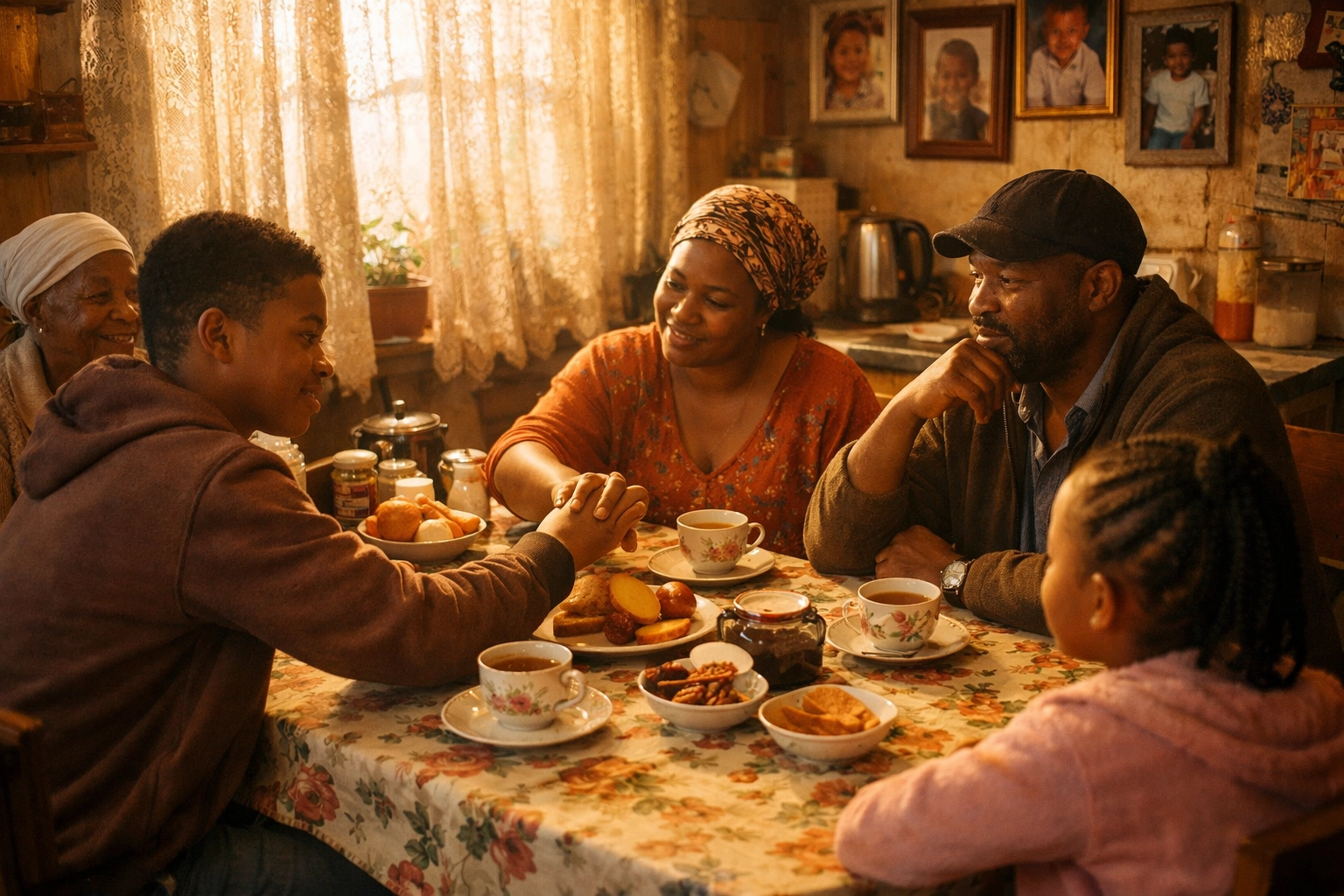
Thabo's story didn't follow the script he'd feared. His mother, Nomsa, put down her tea and reached across the table. His father, Sipho, was quiet: longer than Thabo would have liked: but when he finally spoke, he asked just one question: "Are you safe?"
That question changed everything. It wasn't about judgment or disappointment. It was about protection, about understanding that coming out in South Africa comes with risks that go beyond awkward family dinners.
Over the weeks that followed, Thabo's parents did something remarkable. They learned. Nomsa joined a support group for parents of LGBTQ+ children. Sipho had long conversations with his son about what support looked like. They asked questions: some clumsy, some beautiful: but they showed up. When Thabo's extended family had opinions, his parents stood firm. When neighbors whispered, they held their heads high.
This is the power of family support that often gets overlooked in coming out stories. We talk about the rejections, the heartbreak, the kids who lose their homes. Those stories matter desperately. But so do the stories of resilience, of families who choose love over fear, who expand their understanding of what family means.
The Stages of Coming Home to Yourself
Coming out isn't a single moment: it's a process. Psychologists talk about stages: confusion, comparison, tolerance, acceptance, pride, and synthesis. For Thabo, confusion hit at fourteen when he realized his feelings for his best friend weren't exactly platonic. Comparison came next, measuring himself against straight friends and feeling othered. Tolerance was the longest stage: years of telling himself it was okay to be gay but not quite believing it.

What shifted things was finding community. A school counselor connected him with Triangle Project, a Cape Town-based LGBTQ+ organization. Suddenly, he wasn't alone. He met other young people navigating the same questions, the same fears, the same hope for something better.
This sense of belonging is critical, especially in a context where isolation can be suffocating. Even in Cape Town's LGBTQ+ spaces, not everyone finds automatic acceptance. The Alternative Inclusive Pride Network formed specifically because black lesbians and queer people felt marginalized by mainstream pride events. Inclusivity within the community itself is an ongoing conversation.
Building Your Support Network
For any young person considering coming out in Cape Town: or anywhere in South Africa: strategic support is everything. Here's what Thabo learned:
Choose your first confidant wisely. Thabo told his best friend first, someone he trusted completely. That positive response gave him courage for harder conversations.
Access LGBTQ+-specific resources. Organizations like Triangle Project, GALA (Gay and Lesbian Memory in Action), and Gender DynamiX offer counseling, community spaces, and crisis support. You don't have to navigate this alone.
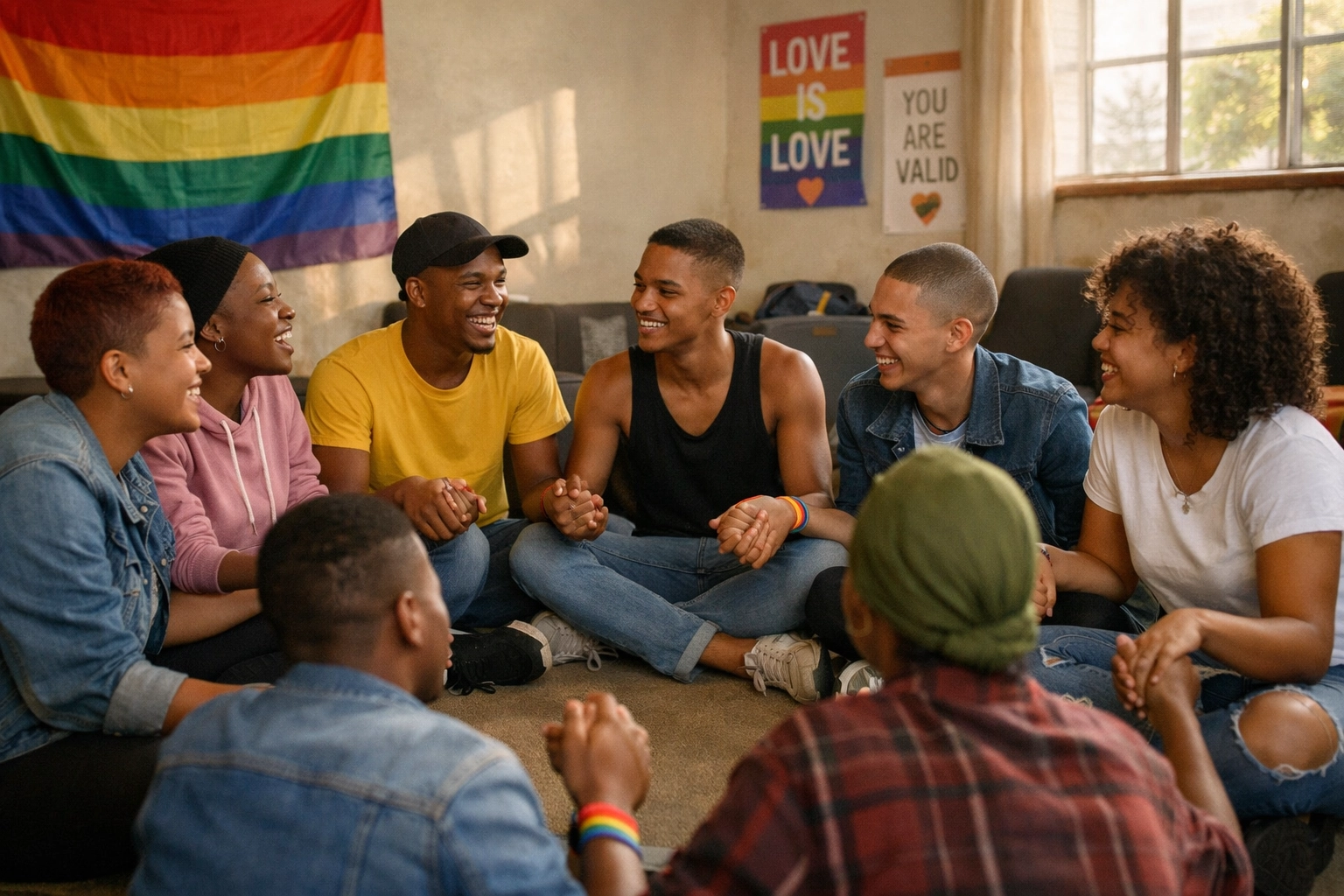
Find your people. Whether it's online communities, school GSAs, or local meetup groups, connecting with other LGBTQ+ people normalizes your experience and reminds you that you belong.
Take your time. There's no deadline for coming out. Some people tell everyone at once; others come out in stages. Both approaches are valid. Safety: emotional and physical: comes first.
The Ripple Effect of Acceptance
Six months after coming out, Thabo's younger cousin, Lebo, asked to talk to him privately. At thirteen, she was questioning her own identity and didn't know where to turn. Because Thabo's parents had created a safe space in their home, Lebo knew she had somewhere to go.
This is how change happens: not through grand gestures, but through individual families deciding that love is bigger than fear. Nomsa started talking to other mothers at church about her son. Some were receptive; others weren't ready. But seeds were planted. Conversations started happening in spaces where they hadn't before.
Sipho challenged his friends when they made homophobic jokes. It was uncomfortable. Some friendships shifted. But he realized his discomfort was temporary; his son's need for acceptance was permanent.
Reading Our Way to Understanding
One thing that helped Thabo's family was books. Nomsa stumbled upon LGBTQ+ fiction that helped her understand her son's experience through stories. Gay romance novels and queer fiction gave her windows into lives she hadn't considered before. Sipho, surprisingly, started reading MM romance books, drawn in by well-told stories that happened to feature gay men falling in love.
At Readwithpride.com, we believe stories have power: they build empathy, challenge assumptions, and remind us of our shared humanity. Gay love stories aren't just entertainment; they're mirrors for LGBTQ+ people to see themselves and windows for others to understand experiences different from their own.
Moving Forward
Thabo is now nineteen, studying at the University of Cape Town, and volunteering with youth programs that support LGBTQ+ teens. His journey didn't end with coming out: it began there. He still faces challenges. South Africa's progressive laws haven't eliminated discrimination or hate crimes. Cape Town's reputation as a gay-friendly city doesn't extend equally to all neighborhoods or all people.
But he has something that makes all the difference: a family that loves him without conditions, a community that accepts him fully, and a sense of self that no longer requires hiding.
His story is one of resilience: not just his own, but his family's willingness to grow, to learn, to choose love over prejudice. In a country still working through colonial legacies that painted homosexuality as foreign, families like Thabo's are doing the quiet, revolutionary work of redefining what it means to be African, to be family, to be free.
Coming out in Cape Town, or anywhere, isn't easy. But with support, community, and families willing to show up, it becomes possible. And possibility is where change begins.
Find more stories about LGBTQ+ families, coming out journeys, and queer resilience at Readwithpride.com. Explore our collection of gay fiction, MM romance, and LGBTQ+ ebooks that celebrate love in all its forms.
Follow us:
- Facebook: Read With Pride
- Instagram: @read.withpride
- X (Twitter): @Read_With_Pride
#ComingOut #LGBTQYouth #CapeTown #GayFiction #ReadWithPride #QueerResilience #LGBTQFamily #MMRomance #QueerFiction #GayBooks #LGBTQSupport #SouthAfrica #FamilyAcceptance #LGBTQStories #GayRomanceBooks #2026 #PrideMonth #QueerAfrica #LGBTQCommunity #GayLoveStories

Leave a Reply
You must be logged in to post a comment.