

readwithpride.com
When we talk about excellence in the LGBTQ+ community, we need to spotlight the voices, stories, and lived experiences that exist at the intersection of multiple identities. Black queer excellence isn't just about representation: it's about recognizing the unique brilliance that emerges when people navigate the complex realities of being both Black and queer in a world that often marginalizes both identities.
This is intersectionality in action, and it's absolutely transformative.
What Intersectionality Really Means
Let's get real for a second. Intersectionality isn't just a buzzword thrown around in academic circles. Coined by scholar Kimberlé Crenshaw, intersectionality recognizes that the experience of being Black and queer isn't simply racism plus homophobia. It's a qualitatively different experience: one where these identities intertwine to create both unique challenges and extraordinary forms of resilience, creativity, and community.
Black queer individuals face discrimination that can't be neatly separated into "racial" or "LGBTQ+" boxes. They experience homophobia within Black communities, racism within LGBTQ+ spaces, and the compounded weight of both in broader society. But here's the thing: out of these challenges has emerged some of the most innovative cultural movements, powerful activism, and beautiful storytelling our community has ever seen.
Cultural Innovation That Changed Everything
Think about the ballroom scene. Created by and for Black queer people, ballroom culture gave birth to voguing, houses (chosen families), and a space where Black trans women, gay men, and queer folks could express themselves authentically when the rest of the world shut them out. This wasn't just about dancing: it was about survival, community, and creating art that said "we exist, we're fabulous, and we're not going anywhere."
The influence of ballroom culture has rippled through mainstream media, fashion, and music, yet its roots remain firmly planted in Black queer resistance and joy. That's excellence. That's innovation born from necessity and nurtured by community.
Black queer people have also reimagined what family can look like. When traditional family structures fail them, they've created chosen families: networks of love, support, and mutual care that challenge heteronormative expectations. These aren't just "alternatives" to traditional families; they're beautiful, intentional structures that often provide more authentic belonging than biological families ever could.
Activist Leaders Who Paved the Way
Let's talk about the legends. Audre Lorde: Black, lesbian, mother, warrior, poet: used her words to dismantle racism, classism, homophobia, and sexism simultaneously. She centered women of color and gay women in feminist movements when they were being pushed to the margins. Her work on "hierarchies of oppression" taught us that liberation isn't a competition: it's collective or it's nothing.
Essex Hemphill brought visibility to the Black gay male experience at a time when both the Black community and the broader LGBTQ+ community wanted to ignore it. His poetry confronted the racism within gay spaces and the homophobia within Black spaces head-on, refusing to be silent about either.
Then there's Marsha P. Johnson and Sylvia Rivera, trans women of color who were at the forefront of the Stonedale riots and spent their lives fighting for the most marginalized members of our community. Rivera literally opened her home to provide housing for gender non-conforming and gay youth who had nowhere else to go. That's what Black Queer Feminism calls "trans brilliance": radical solidarity in action.
These activists didn't just fight for gay rights or Black rights: they fought for liberation at the intersections, understanding that freedom isn't real until it includes everyone.
Stories That Reflect Our Truth
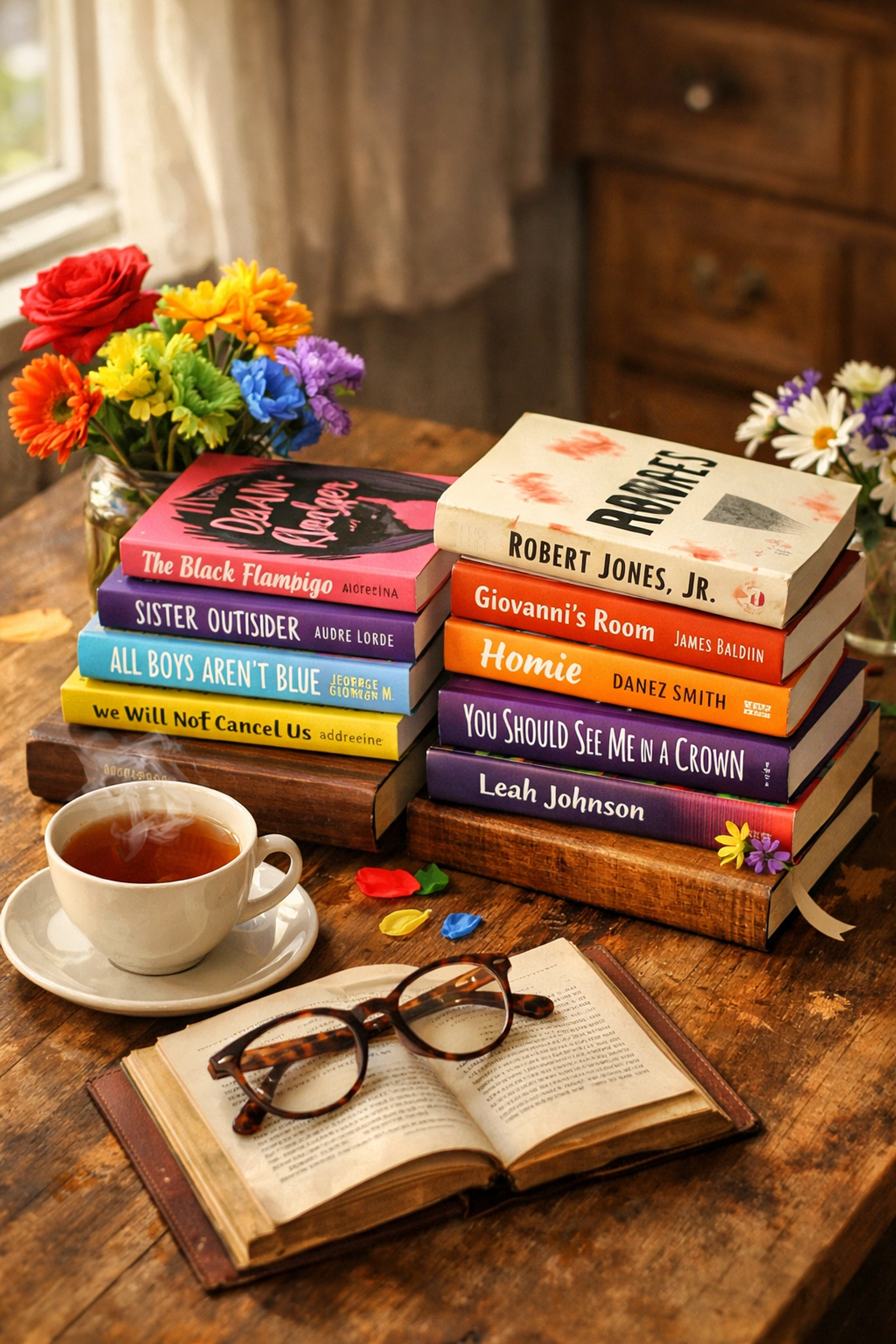
At Read with Pride, we believe in the power of storytelling to create visibility, foster understanding, and celebrate the diversity within our community. Black queer excellence deserves to be centered in LGBTQ+ fiction and gay romance books: not as a niche category, but as an essential part of the broader narrative.
MM romance and queer fiction have come a long way, but we still need more stories that authentically represent Black queer experiences. We're talking about gay novels where the protagonists navigate their Blackness and queerness simultaneously, where their cultural background informs their love stories, and where their excellence isn't an exception: it's the norm.
The beauty of MM romance books and gay fiction is that they allow us to imagine worlds where Black queer people get their happily ever afters, where they're heroes of their own stories, and where their intersectional identities are celebrated rather than erased.
Community Building and Trans Brilliance
One of the most powerful aspects of Black queer excellence is the emphasis on transformative relationships and community accountability. This isn't about performative allyship or surface-level solidarity: it's about doing the work to build genuine connections across difference.
Black Queer Feminism operates through what activists call "trans brilliance": practices of radical care, mutual accountability, and direct, loving communication. It's about creating spaces where people can reimagine their identities, challenge oppressive systems, and contribute to collective liberation movements.
This framework recognizes that liberation isn't individual: it's interconnected. When one of us wins, we all win. When one of us is left behind, none of us are truly free.
Why This Matters Right Now
In 2026, we're seeing increased visibility for LGBTQ+ stories, but that visibility isn't always inclusive. Black queer voices are still fighting to be heard in spaces that claim to be progressive. That's why celebrating Black queer excellence isn't optional: it's essential.
Whether you're looking for gay romance novels, LGBTQ+ ebooks, or MM contemporary fiction, seek out stories by and about Black queer people. Support Black queer authors. Amplify Black queer voices. Read books that challenge you to think about intersectionality in new ways.
The best MM romance books of 2026 should include diverse protagonists whose experiences reflect the beautiful complexity of our community. Gay love stories should feature Black queer couples navigating their relationships with authenticity and joy. LGBTQ+ fiction should center marginalized voices, not treat them as afterthoughts.
Join the Movement
At Readwithpride.com, we're committed to publishing and promoting LGBTQ+ fiction that celebrates all of us: including and especially those at the intersections. We want to see more gay books that feature Black queer protagonists, more MM novels that explore cultural identity alongside romance, and more queer fiction that recognizes the unique excellence of Black queer people.
Follow us on Facebook, Instagram, and X to stay updated on new releases, author spotlights, and conversations about intersectionality in LGBTQ+ literature.
Black queer excellence isn't a trend: it's a legacy. It's ballroom culture and chosen families. It's Audre Lorde's poetry and Marsha P. Johnson's activism. It's the everyday resistance of Black queer people who refuse to be erased, silenced, or forced to choose between parts of their identity.
Let's celebrate that excellence. Let's read about it, talk about it, and make space for it in every corner of our community.
#BlackQueerExcellence #IntersectionalityMatters #ReadWithPride #LGBTQFiction #MMRomance #QueerBooks #GayRomanceBooks #BlackLGBTQ #QueerLit #DiverseReads #MMRomanceBooks #LGBTQReads2026 #GayBooks #PrideReading #BlackQueerStories #RepresentationMatters

Leave a Reply
You must be logged in to post a comment.