

readwithpride.com
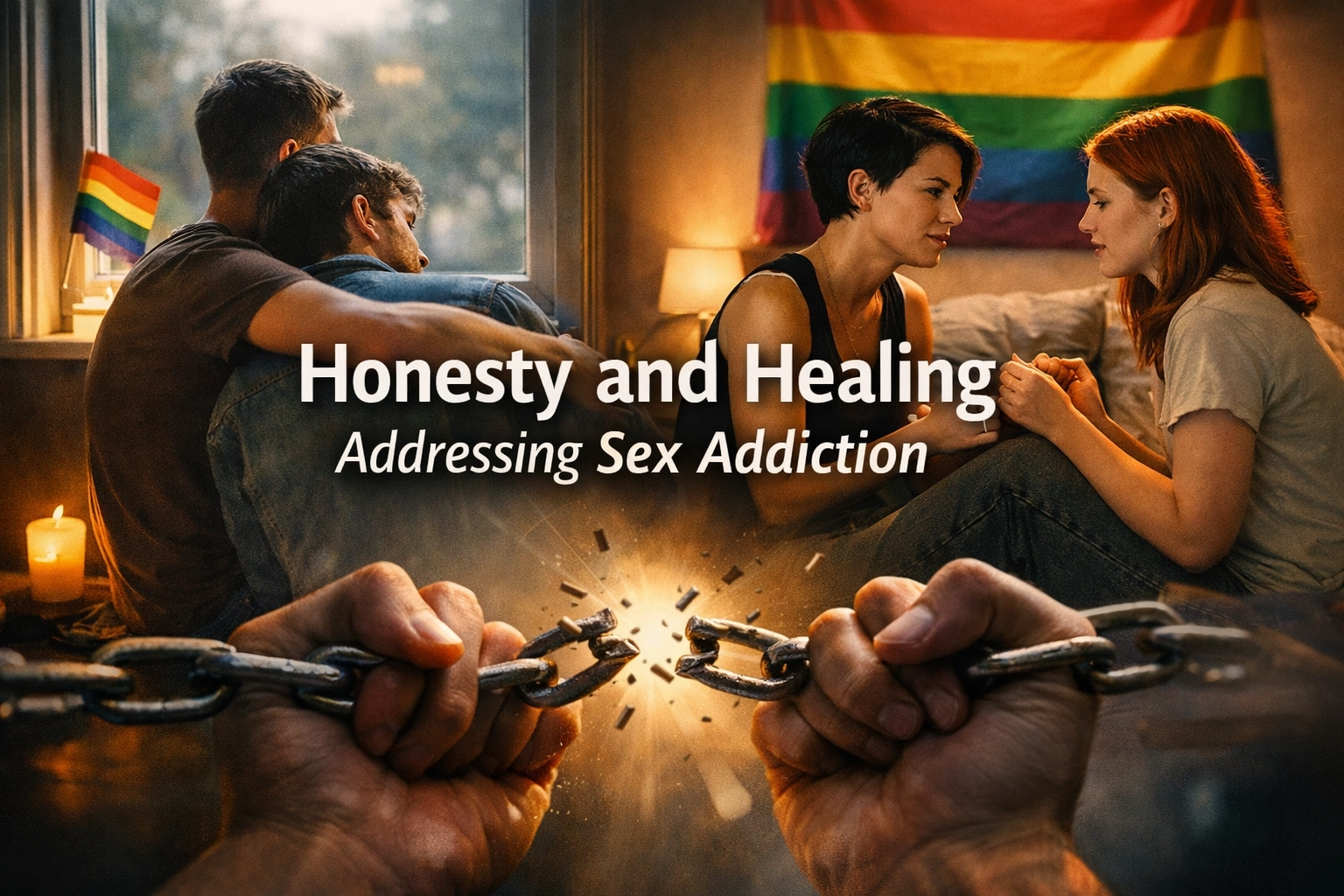
Let's talk about something that doesn't get enough airtime in LGBTQ+ spaces: sex addiction, porn addiction, and compulsive sexual behaviors. It's a topic wrapped in shame, silence, and a whole lot of confusion, especially when you're navigating it as part of the queer community. The truth is, addiction doesn't discriminate, and neither should our conversations about healing.
If you're reading this because you're struggling, or because someone you love is struggling, take a breath. You're not broken. You're not too far gone. And you're definitely not alone.
Why Honesty Matters More Than You Think
Here's the uncomfortable truth: healing cannot happen in the dark. Secrets don't just keep us isolated, they actively prevent recovery. The foundation of addressing any addiction, especially sex addiction, is honesty. Not just honesty with therapists or support groups, but honesty with yourself.
For many of us in the LGBTQ+ community, honesty has been complicated from the start. We've spent years, sometimes decades, hiding parts of ourselves, managing perceptions, navigating shame about who we are. That survival mechanism? It doesn't turn off easily. And when it comes to sex addiction, those same patterns of hiding and managing can make the addiction worse.
Admitting that compulsive sexual behaviors are controlling your life means stepping out of denial. It means acknowledging that the person you've presented to the world, and maybe even to yourself, has been built on some level of dishonesty. That's a hard pill to swallow, but it's also the doorway to freedom.

What Sex Addiction Actually Looks Like
Let's clear something up: sex addiction isn't about having a healthy sex life or enjoying porn occasionally. It's about compulsivity, loss of control, and continuing behaviors despite negative consequences. For LGBTQ+ folks, this might look like:
- Spending hours on hookup apps even when you don't really want to
- Using porn to escape difficult emotions, to the point where it interferes with relationships or work
- Engaging in risky sexual behaviors that put your health or safety at risk
- Feeling intense shame after sexual encounters, yet repeating the pattern
- Using sex or masturbation as the primary way to cope with stress, loneliness, or trauma
The queer experience adds layers of complexity here. Many of us discovered our sexuality through porn or hookup apps because those were the only safe spaces available. The same tools that helped us explore our identities can become mechanisms of addiction. That's not irony: it's just reality.
The Five Components of Recovery
Recovery from sex addiction isn't a simple "just stop" situation. According to experts in the field, genuine healing involves five interconnected components:
Stopping the sexual behaviors that have become compulsive. This includes the obvious ones, but also the subtle ones: the flirtatious texts that go nowhere, the "just browsing" that turns into hours lost.
Stopping the rituals that lead to acting out. These are the thoughts, situations, or behaviors that precede the compulsive behavior. Maybe it's driving past certain places, opening certain apps, or even just certain thought patterns that you've learned lead to the same outcome.
Stopping the fantasy that fuels the cycle. This is often the hardest part because it happens entirely in your head. But fantasy is where the addiction gets its power, and addressing it is crucial.
Healing despair. Most people struggling with sex addiction carry a deep belief that they're beyond help, beyond love, beyond redemption. This despair keeps people trapped in cycles of shame and acting out.
Healing shame. Shame is the rocket fuel of addiction. It makes us hide, isolate, and seek comfort in the very behaviors that make us feel ashamed in the first place. Breaking this cycle requires community, vulnerability, and a whole lot of compassion.
The LGBTQ+ Angle Nobody Talks About
Here's what makes addressing sex addiction in LGBTQ+ communities particularly tricky: our relationship with sex is already complicated by a society that has shamed, criminalized, and pathologized queer sexuality for centuries.
We've been told our desires are wrong, sinful, or sick. We've been denied relationship recognition, representation, and sometimes basic safety. Many of us came of age during the AIDS crisis or in its long shadow, where gay sex became synonymous with death. Others of us grew up with purity culture that made any sexuality outside heterosexual marriage seem deviant.
So when a queer person develops an unhealthy relationship with sex or porn, it's happening in a context of existing trauma, shame, and marginalization. Recovery can't just be about stopping behaviors: it has to be about untangling what's actually addiction from what's internalized homophobia or transphobia.
This is why finding LGBTQ+-affirming treatment and support is essential. You need spaces where your identity isn't treated as part of the problem, where therapists understand that your sexuality isn't the issue: the compulsivity is.
Building Your Recovery Toolkit
Effective recovery isn't one-size-fits-all, but it typically includes several evidence-based approaches working together:
Therapy is non-negotiable. Cognitive-behavioral therapy (CBT) helps you identify triggers, challenge self-defeating thoughts, and develop healthier coping strategies. Look for therapists who specialize in sex addiction AND are affirming of LGBTQ+ identities. Both matter.
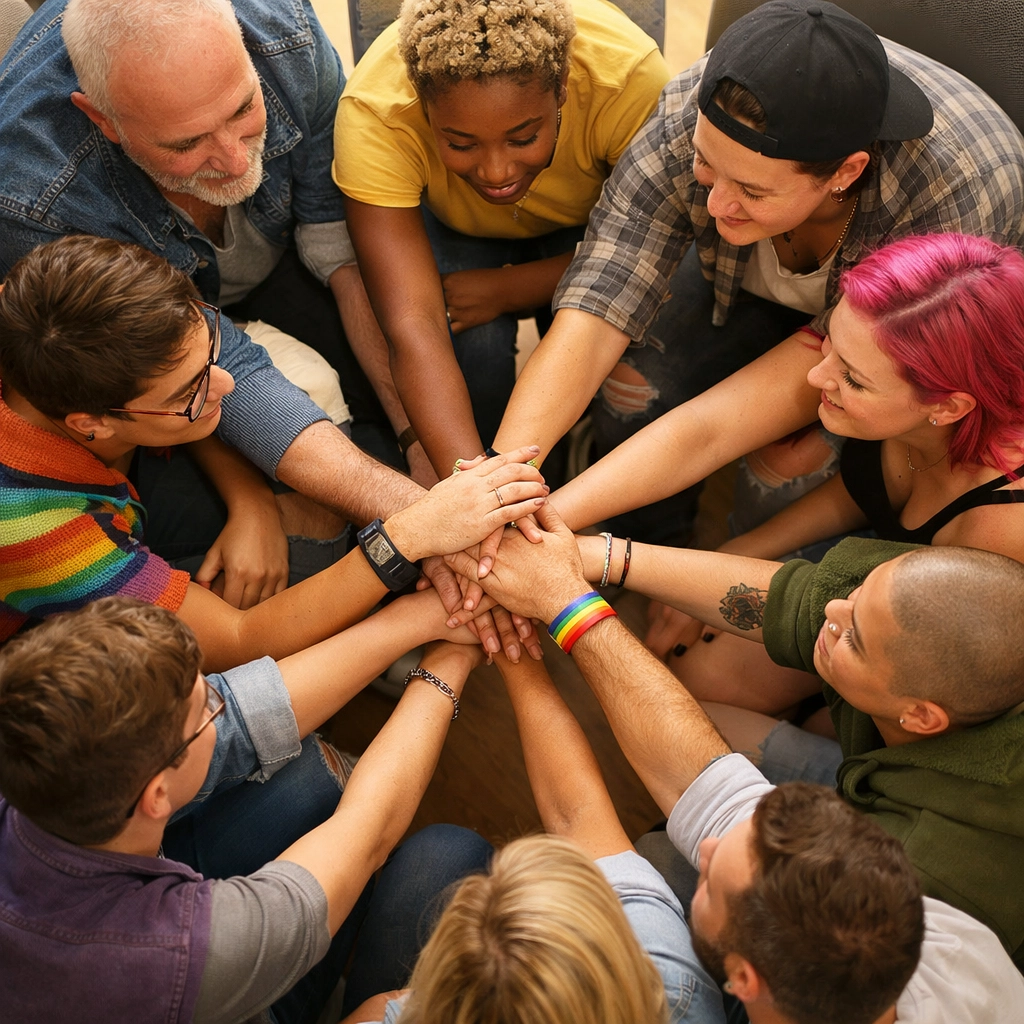
Support groups provide community. Whether it's 12-step programs like Sex Addicts Anonymous, SMART Recovery, or LGBTQ+-specific support groups, connecting with others who understand the struggle helps break through shame and isolation. You discover you're not uniquely broken: you're human, and humans sometimes develop unhealthy coping mechanisms.
Address the trauma underneath. Sex addiction is often a symptom of deeper wounds: childhood trauma, sexual abuse, rejection, abandonment, or the cumulative trauma of living as LGBTQ+ in an often-hostile world. You can't just treat the surface behaviors; you have to heal what's underneath.
Consider medication when appropriate. For some people, medications like SSRIs can help manage urges and address co-occurring conditions like depression, anxiety, or OCD that fuel addictive behaviors.
What Recovery Actually Gives You
Here's the hopeful part: recovery from sex addiction isn't just about what you give up. It's about what you gain. People in recovery report developing greater self-awareness, deeper empathy for themselves and others, genuine integrity, and a sense of accountability that actually feels empowering rather than restrictive.
You get to discover what authentic intimacy feels like when it's not driven by compulsion or shame. You get to experience sexuality as a choice rather than a need. You get to show up in relationships: with yourself, with partners, with friends: as your actual self rather than a carefully managed version.
For LGBTQ+ folks, this can mean finally experiencing your sexuality as something joyful rather than fraught, something that connects rather than isolates. That's worth the hard work.
Moving Forward
If you're struggling with sex addiction, porn addiction, or compulsive sexual behaviors, start with honesty. Tell one person. Find one therapist. Join one support group. Take one step toward emerging from isolation into community.
Recovery is possible. It's not easy, and it's not quick, but it's absolutely possible. You deserve a life where sex is a source of joy and connection rather than shame and compulsion. You deserve relationships built on authenticity. You deserve to be free.
At Read with Pride, we believe in telling all the LGBTQ+ stories: including the messy, complicated, difficult ones. Because representation matters, and so does your healing journey.
Connect with us:
- Website: readwithpride.com
- Facebook: facebook.com/Read With Pride
- Instagram: @read.withpride
- X/Twitter: @Read_With_Pride
#ReadWithPride #LGBTQHealth #AddictionRecovery #SexAddiction #QueerHealing #LGBTQSupport #MentalHealthMatters #QueerWellness #HealingJourney #AuthenticLiving #LGBTQStories #QueerCommunity #RecoveryIsPossible #LGBTQFiction #MMRomance #GayBooks #QueerFiction #2026 #SelfCare

Leave a Reply
You must be logged in to post a comment.