

readwithpride.com
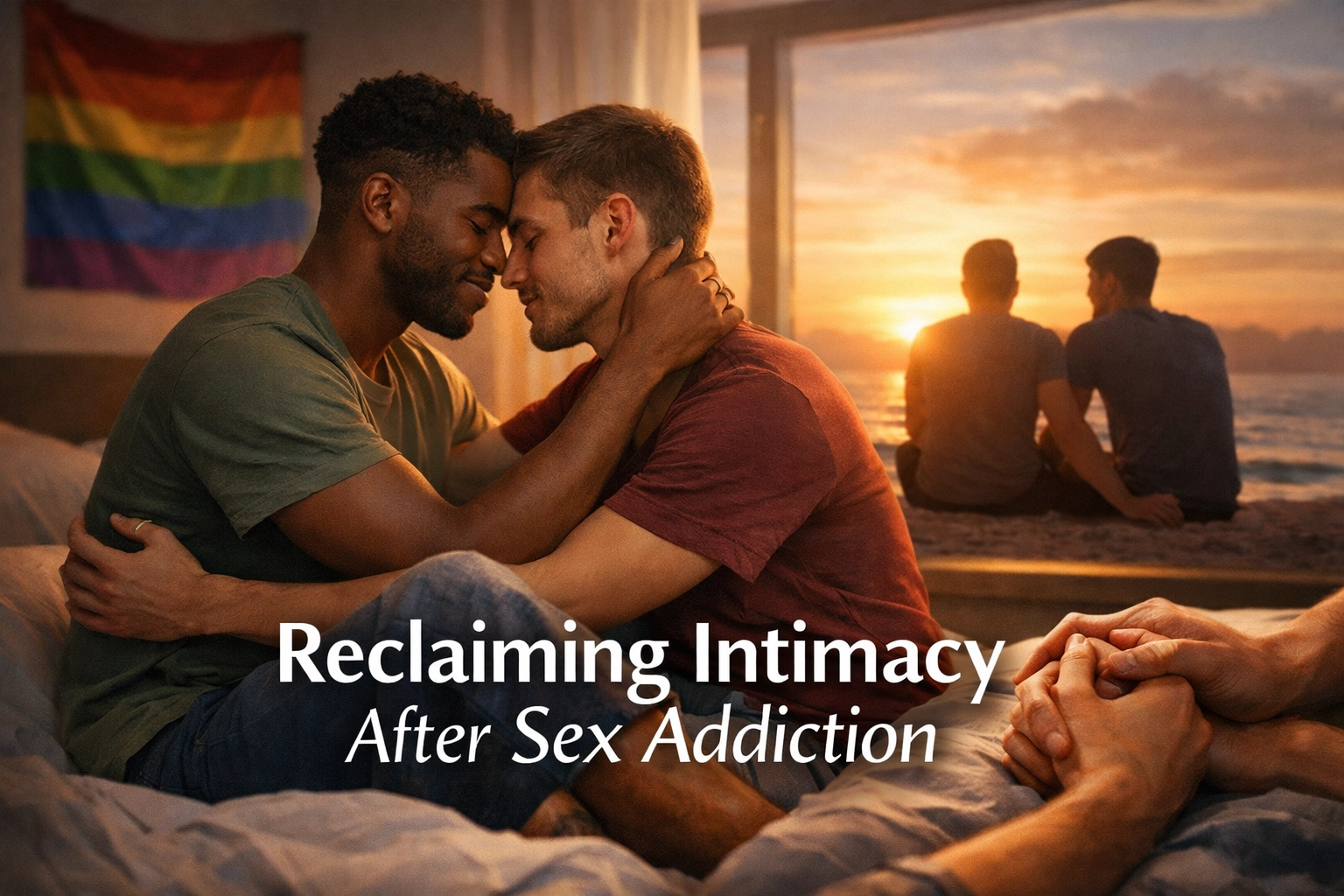
When Marcus finally told his boyfriend Jake about his sex addiction, he thought it would be the end of everything. Instead, it became the beginning of something neither of them expected: a journey toward genuine intimacy they'd never actually experienced before. Their story isn't unique. For many couples in the LGBTQ+ community, particularly in MM relationships, sex addiction can feel like an invisible wall between two people who desperately want to connect.
But here's the thing: reclaiming intimacy after addiction isn't just possible: it can lead to deeper, more authentic connection than ever before.
Understanding What We're Really Talking About
Sex addiction isn't about being particularly sexual or having a high libido. It's about using sex as a coping mechanism, an escape from difficult feelings, or a way to avoid genuine vulnerability. In gay relationships, this can be particularly complex given the unique pressures of navigating sexuality in a world that hasn't always welcomed us with open arms.
The addiction often masks deeper issues: trauma, shame, internalized homophobia, or simply never learning healthy ways to process stress and emotions. Recovery requires more than stopping problematic behaviors. It demands developing self-awareness, empathy, honesty, and a genuine sense of self-worth.

The Foundation of Recovery
Recovery begins with understanding your own worthiness. This isn't therapy-speak fluff: it's the actual work. When Jake started attending support groups and working with a therapist specializing in sex addiction, he learned something crucial: he'd been using sex to feel valuable, desired, and momentarily free from the anxiety that plagued him.
For many in recovery, the path involves:
Developing self-awareness: Understanding triggers, patterns, and the emotional landscape that drives addictive behavior. This means getting comfortable with discomfort: feeling your feelings instead of escaping into sexual release.
Building a support system: Recovery doesn't happen in isolation. Whether it's Sex Addicts Anonymous, a therapist who understands LGBTQ+ experiences, or trusted friends who can hold space for your truth, you need people in your corner.
Learning vulnerability: The ability to share difficult truths: pain, shame, fear, sadness: with another person is the gateway to genuine intimacy. For Marcus, watching Jake learn to express his fears instead of acting out sexually was terrifying and beautiful in equal measure.
When Are You Ready to Rebuild Intimacy?
Here's a question Marcus asked himself constantly in those early months: "How do I know if we're ready to try again?"
You're likely ready when:
- You're actively engaged in recovery work with consistent support
- You can identify and discuss your feelings, even the uncomfortable ones
- You've developed the habit of reaching out to others when cravings or difficult emotions arise
- You understand that sex is one form of intimacy, not a replacement for it
Many recovery programs recommend at least six months of sexual abstinence. This gives your brain time to rewire, helps you develop other coping mechanisms, and creates space to discover what intimacy actually means beyond physical release. For couples like Marcus and Jake, this period felt impossibly long: until it didn't. They discovered they could be close without being sexual, vulnerable without needing to immediately discharge that vulnerability through sex.

Reclaiming Healthy Sexuality Together
When Marcus and Jake finally decided to reintroduce sexual intimacy, they approached it completely differently. Gone were the spontaneous hookups driven by stress or boredom. Instead, they built something intentional.
Sex as connection, not release: They learned to check in before initiating: asking themselves whether they wanted sex as an expression of connection or as an escape from something uncomfortable. This simple practice transformed everything.
Both partners fully present: Sex addiction often involves objectification, even within loving relationships. One partner becomes a means to an end rather than a full human being. Recovery means returning to sex as something that happens between two people, not something one person does to another.
Clear, ongoing communication: Working with a therapist who specialized in sexual health within LGBTQ+ relationships, they identified which activities felt cooperative and which didn't. They learned to express gratitude, check in during intimacy, and talk about what worked and what didn't without judgment.
This kind of communication isn't exactly sexy in the rom-com sense: but it creates a foundation for sexuality that's actually sustainable and deeply satisfying.
The Power of Professional Support
Let's be real: you can't DIY your way out of sex addiction any more than you can perform surgery on yourself. Professional support isn't optional: it's essential.
Individual therapy: Understanding how trauma, stress, and mental health affect your relationship patterns. For Jake, this meant excavating childhood experiences and addressing shame that had nothing to do with Marcus but affected everything between them.
Couples therapy: Particularly approaches like Emotionally Focused Therapy can help couples move beyond grief and negative patterns into "tender, loving, responsive, and emotionally connected ways" of relating.
Group support: Whether it's Sex Addicts Anonymous or LGBTQ+-specific recovery groups, connecting with others walking the same path reduces isolation and provides practical strategies.

What Makes LGBTQ+ Recovery Unique
Here's something that doesn't get talked about enough: recovery for LGBTQ+ folks carries additional layers. We've often internalized shame about our sexuality from a young age. We've navigated spaces that told us our desires were inherently wrong. We've sometimes used sex as rebellion, validation, or proof of our right to exist.
Recovery means untangling healthy sexuality from these complex histories. It means finding therapists and support groups who understand that your queerness isn't the problem: it's actually part of your strength. Resources like those found through Read with Pride can provide stories and representation that remind you that you're not alone in this journey.
The Other Side of the Storm
A year into their recovery journey, Marcus and Jake barely recognize their relationship: in the best way. They've discovered that genuine intimacy is both simpler and more complex than they imagined. Simpler because it's rooted in honesty and presence rather than performance. More complex because it requires continuous attention, vulnerability, and choice.
They still have difficult days. Recovery isn't linear. But they've built something resilient: a relationship where both people can be fully human, fully flawed, and fully loved.
Moving Forward
If you're navigating sex addiction in your relationship, know this: you're not broken, and your relationship isn't doomed. Recovery is possible. Intimacy: real, sustainable, authentic intimacy: is waiting on the other side of this work.
It requires courage to face your patterns, vulnerability to share your truth, and commitment to showing up even when it's uncomfortable. But the alternative: continuing to use sex as an escape while the distance between you and your partner grows: that's far more painful.
The MM romance books and gay fiction available through Read with Pride often explore the complexities of intimacy, connection, and overcoming obstacles together. While your story is uniquely yours, you're part of a larger community navigating love, sexuality, and authentic connection.
Your journey toward reclaiming intimacy starts with a single step: telling the truth. Everything else builds from there.
Connect with Read with Pride:
- Website: readwithpride.com
- Facebook: facebook.com/readwithpride
- Instagram: @read.withpride
- Twitter/X: @Read_With_Pride
#MMRomance #GayRomance #LGBTQFiction #ReadWithPride #QueerFiction #GayLoveStories #MMBooks #RecoveryJourney #LGBTQRelationships #AuthenticLove #GayBooks #QueerLiterature #MMRomanceBooks #LGBTQCommunity #GayFiction #IntimacyMatters #HealthyRelationships #LGBTQSupport #GayRomanceNovels #2026LGBTQBooks

Leave a Reply
You must be logged in to post a comment.