


readwithpride.com
There's something magical about watching a drag queen own the stage, the sequins catching the light, the lip sync so perfect it could fool the gods, the energy that makes an entire room come alive. But here's what most people don't see: that same queen, four hours later, sitting in sweatpants eating leftover takeout while scrolling through grocery delivery apps because they're too exhausted to go to the store.
The transformation isn't just about glitter and gowns. It's about code-switching between two very different realities, and finding balance between them is one of the most challenging, and beautiful, journeys any performer undertakes.
The Morning After the Night Before
Let's get real. While the audience only sees the three-hour show, they don't see the two hours of makeup application beforehand, or the hour-long takedown at 2 AM. They don't see the load of laundry that needs doing because everything smells like smoke and sweat. They don't see you standing in the shower at 3 AM, scrubbing adhesive off your skin while mentally calculating how many hours of sleep you'll get before your day job starts.
Because yes, most drag queens have day jobs. The fantasy of making rent solely through tips and booking fees? That's reserved for the top tier. The rest are balancing spreadsheets by day and death drops by night. They're teachers, nurses, retail workers, customer service reps, people living dual lives that would exhaust anyone.
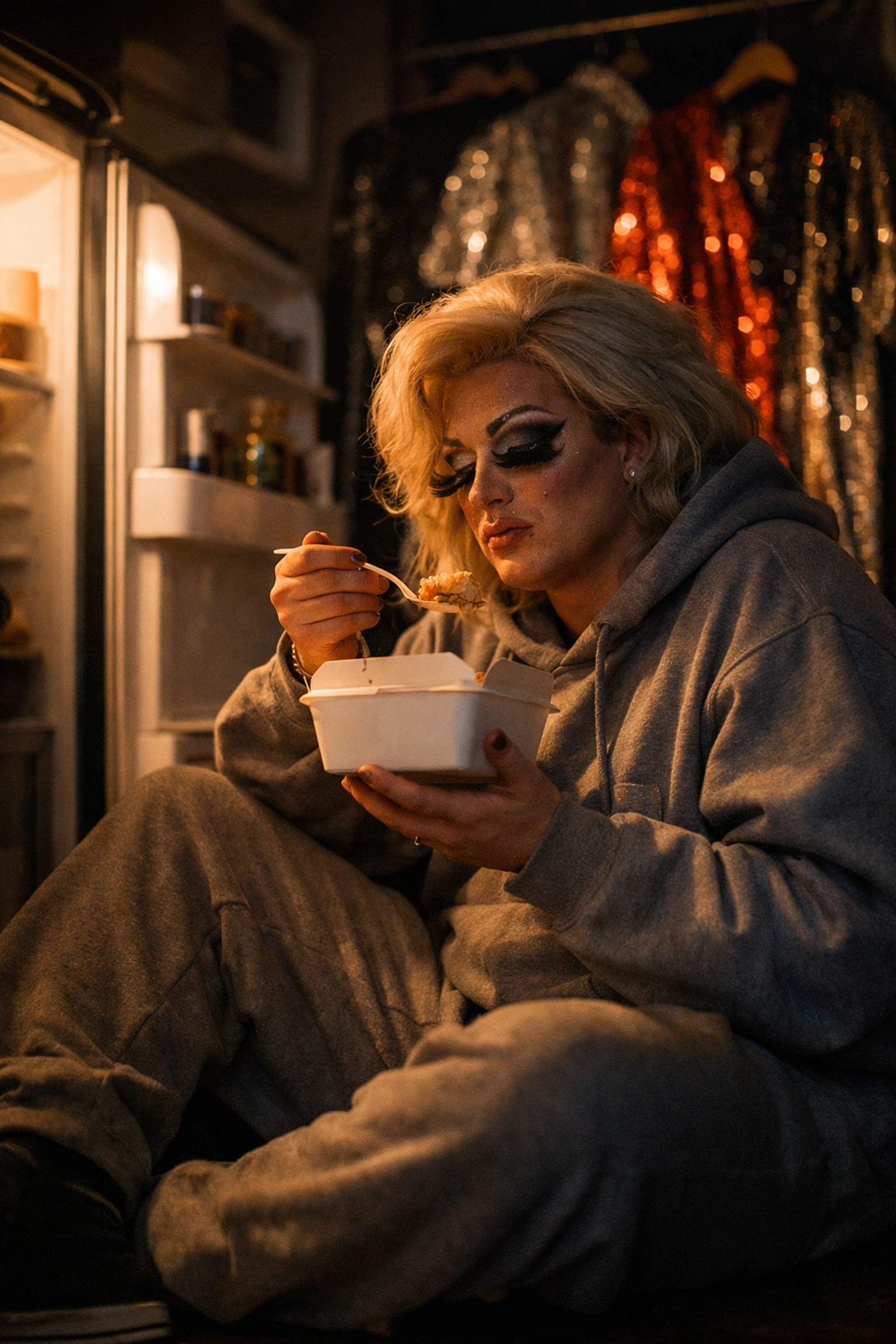
The exhaustion is real. Your body becomes a battleground between the adrenaline rush of performance and the bone-deep fatigue that follows. You learn to function on less sleep than you thought humanly possible. You perfect the art of the strategic nap. You memorize which coffee shop makes the strongest espresso and which energy drink actually delivers on its promises.
The Person Behind the Persona
One of the most beautiful and complicated aspects of drag is the relationship between the performer and their persona. Your drag character isn't just a costume you wear, it's an extension of yourself, often representing qualities you wish you could embody all the time. Confidence. Fearlessness. Pure, unapologetic glamour.
But you can't live in that headspace 24/7. Nobody can maintain that level of intensity, and trying to do so is a fast track to burnout. The challenge becomes knowing when to let your persona rest and when to just be… you.
This means navigating questions from people who can't separate the two. They expect you to be "on" all the time, delivering one-liners and serving looks at the grocery store. They're disappointed when you're just wearing jeans and a hoodie, looking like any other person buying toilet paper on a Tuesday afternoon. Learning to set those boundaries, to say "I'm off duty right now", becomes essential for mental health.
Self-Care Isn't Just Face Masks and Bath Bombs
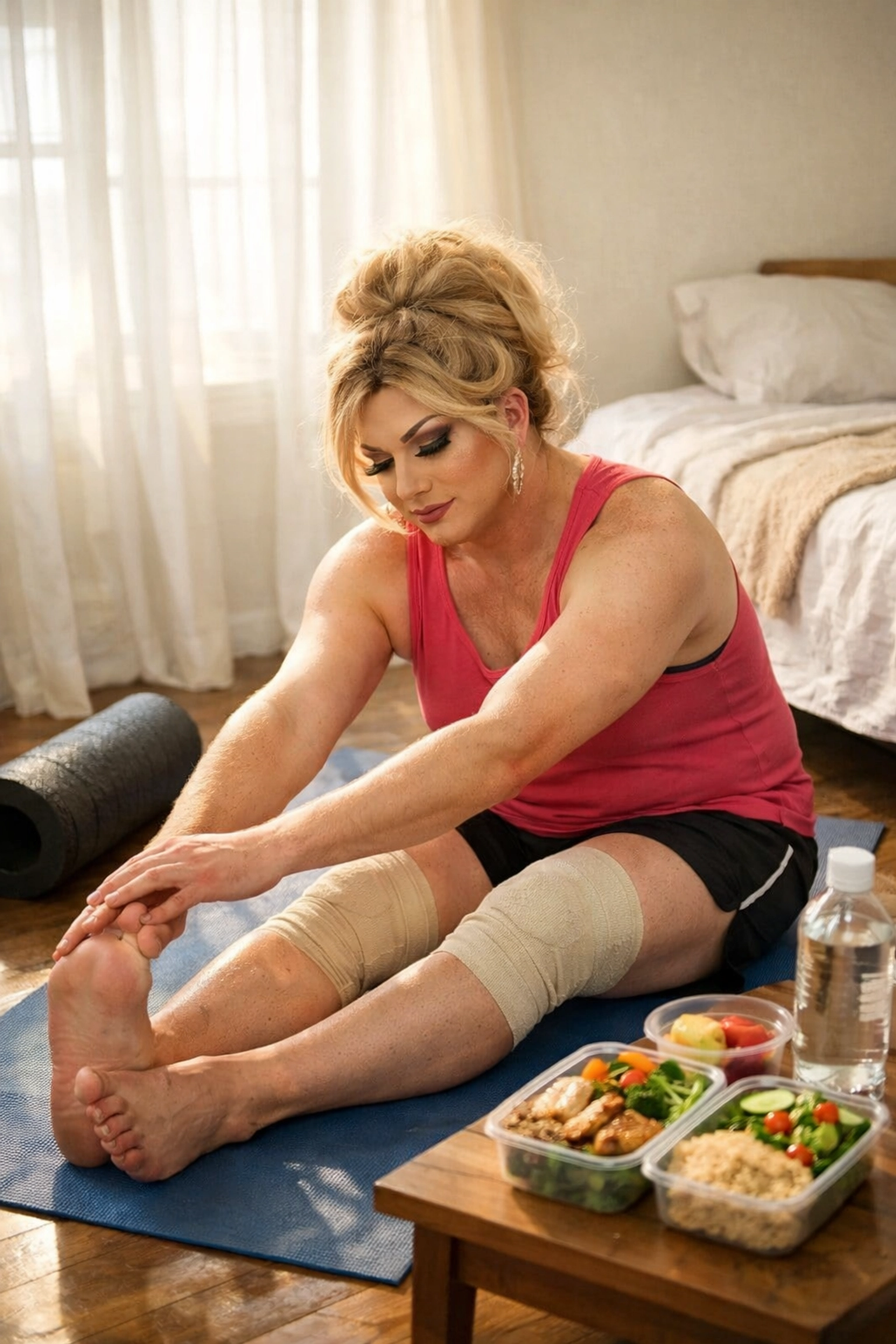
When your body is your instrument, maintenance becomes a full-time job. We're not just talking about skincare routines (though yes, those are crucial when you're caking on makeup several times a week). We're talking about physical therapy for those knees that take a beating. Vocal rest days so you don't blow out your voice. Proper nutrition because you can't death drop on an empty stomach.

The irony is thick: you spend hours creating an illusion of perfection, but maintaining your actual body requires accepting its limitations and treating it with genuine care. That means:
- Actually going to the doctor when something hurts, not just taping it up and pushing through
- Setting boundaries around bookings so you're not performing seven nights a week
- Building in recovery time between major shows
- Saying no to gigs that don't pay enough to justify the physical toll
It also means tending to your mental health with the same dedication you give to perfecting that contour. Therapy isn't a luxury: it's necessary maintenance for anyone navigating the psychological weight of performance, public scrutiny, and living authentically in a world that isn't always kind to people who color outside the lines.
Relationships When You're Always Running
Try explaining to a date that you need to leave dinner early because you have to pad, tape, paint, and transform for a midnight show. Try maintaining friendships when your free time exists in scattered hours between rehearsals, performances, and recovery. Try being present for family events when you're mentally running through choreography and calculating whether you'll make it to Aunt Linda's birthday before the cake is cut.
The struggle is real, and it requires intentional effort. Quality time becomes more important than quantity. You learn to be present in the moments you do have, putting down your phone and actually engaging instead of mentally cataloging what needs to be done next. You surround yourself with people who understand your world: other performers who get it, supportive partners who know that "I'll be home late" is basically your catchphrase, friends who love you in sweatpants as much as in full drag.
Building that support system matters more than most people realize. These are the people who'll help you pack wigs at 1 AM, drive you to the emergency room when you twist your ankle mid-performance, and remind you that you're more than your booking calendar.
The Admin Work Nobody Talks About
Here's what drag really is: running a small business while also being the product. Every successful queen is also a manager, accountant, social media strategist, costume designer, and promoter. Between shows, you're:
- Managing bookings and contracts (and chasing down payment from venues that "forgot")
- Creating content for multiple social media platforms
- Maintaining and repairing costumes because sequins don't sew themselves back on
- Shopping for new looks while staying within a budget that would make most people weep
- Networking and maintaining relationships with venues, other performers, and potential collaborators
This administrative reality means your downtime isn't always downtime. You're answering DMs while eating breakfast, editing performance videos during lunch breaks, and confirming next month's bookings while waiting for laundry to finish. Learning to set actual boundaries: times when you're completely offline and unavailable: becomes crucial for preventing burnout.
Finding Your Rhythm
Balance doesn't mean perfect equilibrium. It's not about splitting your time 50/50 between drag and "real life" (spoiler: it's all real life). It's about finding a rhythm that works for you, and accepting that this rhythm will change.
Some queens thrive on chaos, booking themselves solid and running on pure adrenaline. Others need more structured schedules with clear boundaries between performance and personal time. Neither approach is wrong: it's about knowing yourself well enough to create a sustainable pattern.
This might mean:
- Blocking out full days off where you don't even think about drag
- Creating morning routines that ground you before the chaos starts
- Practicing mindfulness to stay present instead of always planning three steps ahead
- Journaling to process the emotional weight of public performance and personal life
- Building in flexibility so when life happens (and it will), your whole system doesn't collapse
The goal isn't to achieve some mythical state of perfect balance. It's to create a life where you can pursue your passion without completely sacrificing your wellbeing. It's recognizing that taking care of yourself isn't selfish: it's what allows you to keep doing this thing you love.
The Beauty in the Struggle
Here's the thing nobody tells you: the struggle itself can be beautiful. Not in a romanticized "suffering for art" way, but in the way it forces you to become more intentional, more present, more honest about what you need and want.
Living this dual existence: the glamorous performer and the regular human: teaches you things that most people never learn. You develop resilience that goes beyond physical endurance. You learn to advocate for yourself, to set boundaries, to ask for help when you need it. You figure out who really shows up for you and who only loves the fantasy.
You also learn to find joy in small moments: the perfect wing on the first try, a genuine laugh with friends between sets, finally mastering that trick you've been practicing for weeks, or just sitting in comfortable silence with someone who accepts all your versions.
Keep Reading, Keep Living
At Read with Pride, we celebrate all aspects of LGBTQ+ life: the glamorous, the mundane, and everything in between. Whether you're searching for MM romance books that capture authentic queer experiences or gay romance novels that explore the complexity of living authentically, our collection reflects real lives, real struggles, and real triumphs.
Finding balance is an ongoing journey, not a destination. Some days you'll nail it. Other days you'll eat cereal for dinner while sitting on the floor in yesterday's clothes, and that's okay too. The beauty is in showing up for yourself, in whatever way you can, and knowing that you're more than enough: with or without the glitter.
Connect with us:
- Website: readwithpride.com
- Facebook: Read With Pride
- Instagram: @read.withpride
- X: @Read_With_Pride
#DragLife #LGBTQCommunity #ReadWithPride #QueerStories #AuthenticLiving #DragQueens #FindingBalance #LGBTQFiction #QueerReads #MMRomance #GayRomanceBooks #LGBTQBooks #QueerCommunity #LiveAuthentically #SelfCare #PerformanceArt #DragCulture #LGBTQContent #ReadwithPride #GayBooks

Leave a Reply
You must be logged in to post a comment.