

readwithpride.com
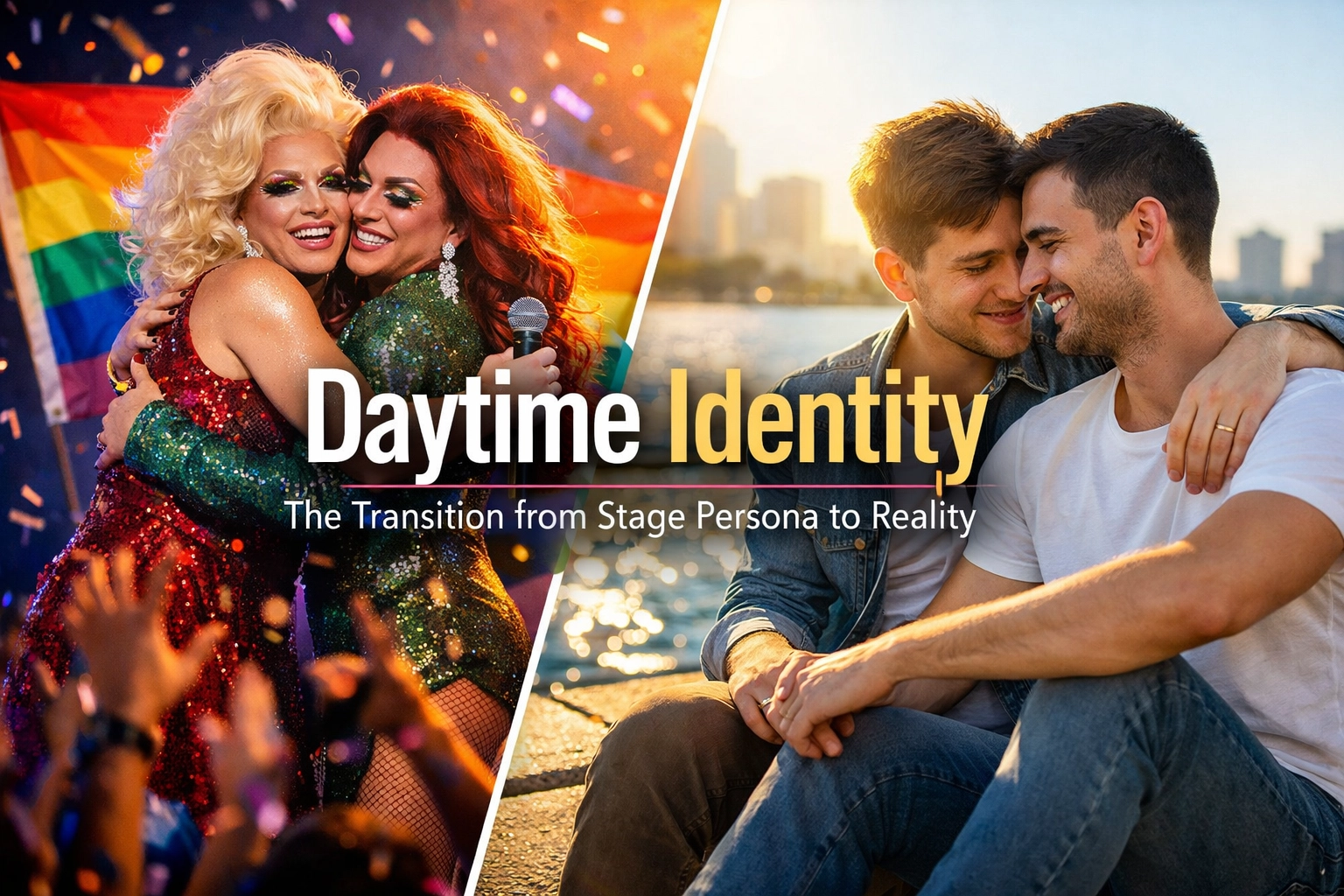
The spotlight dims. The last beat of music fades. The applause becomes a distant echo as you walk backstage, still wearing six-inch heels and enough glitter to blind a small army. This is where the real transformation begins, not the one the audience sees, but the one that happens in reverse. The journey from fierce queen to everyday person is something most people never witness, and honestly? It's just as complex as putting on the persona in the first place.
The Physical Unraveling
Let's start with what most people think they understand: the makeup removal. But calling it "makeup removal" is like calling a symphony "some noise." We're talking about layers upon layers of foundation, contour that could cut glass, lashes that weigh more than your dignity at 3 AM, and rhinestones strategically placed in locations that would make a dermatologist weep.
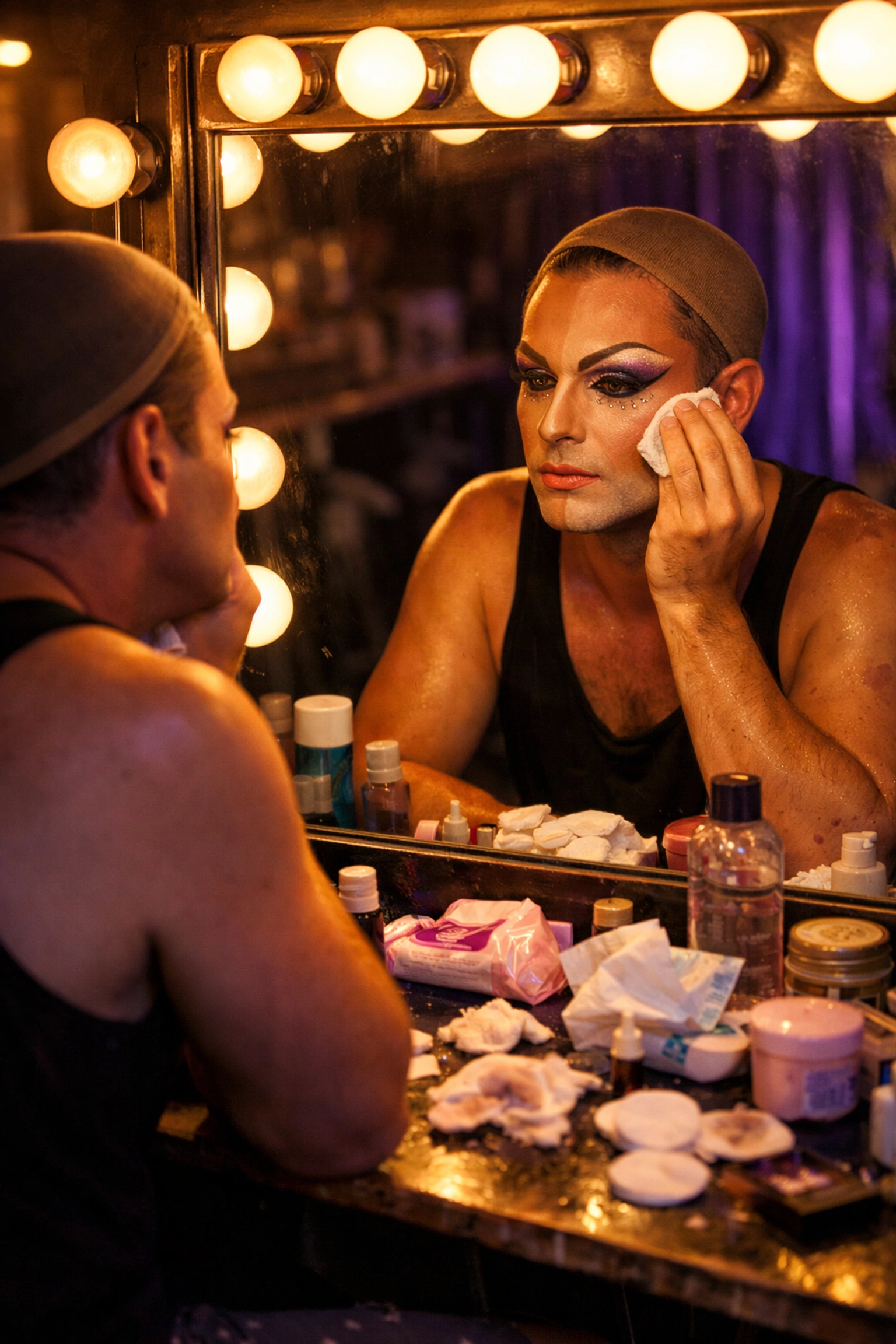
The process can take anywhere from thirty minutes to two hours, depending on how elaborate the look was and how tired you are. Some performers have it down to a science, makeup wipes, micellar water, oil cleansers, more wipes, then the regular skincare routine. Others just stare at themselves in the mirror for ten minutes first, processing the transition that's about to happen.
And the wig? Oh honey, that's a whole ceremony. Carefully removing pins, protecting the hairline you've painstakingly concealed, trying not to look like a disheveled mess when that wig cap comes off. There's something vulnerable about that moment: like watching a superhero remove their cape.
The costume comes off piece by piece. The corset that's been compressing your organs for four hours gets unlaced. The hip padding that gave you curves for days gets tossed in a bag. The tucking underwear that performed actual miracles finally releases you from its grip. And suddenly, you're standing there in your actual body, which feels weirdly foreign after hours of being reshaped and restructured.
The Mental Shift That Nobody Talks About
Here's where it gets interesting: and real. The physical transformation is the easy part. The mental and emotional transition? That's where the psychology gets complicated.

When you're in drag, you're not just wearing a costume. You're inhabiting a character you've created, nurtured, and developed over time. That character has her own personality, her own confidence levels, her own way of moving through the world. She says things you might not say. She takes up space in ways you might not normally take up space. She's fearless, or vulnerable, or bitchy, or sweet: whatever you've crafted her to be.
And then you take her off.
Some performers describe it as a deflation. Like all that energy and presence that filled you up on stage slowly seeps out as you remove each element of the persona. Others talk about it as a relief: finally being able to breathe, to be quiet, to not perform. Many experience both feelings simultaneously, which makes the whole thing even more confusing.
There's also the issue of confidence redistribution. Your drag persona might be the most confident person in the room, but the person underneath might struggle with anxiety, self-doubt, or imposter syndrome. Learning to carry some of that stage confidence into your everyday life: without completely depending on the persona: is a balancing act that takes years to master.
The In-Between Moments
The weirdest part? The in-between moments when you're partially transformed. Half the makeup off, wig gone but face still beat, costume off but still in drag tights. You're neither your stage persona nor your daytime self. You're in this liminal space that feels oddly vulnerable and strangely powerful at the same time.
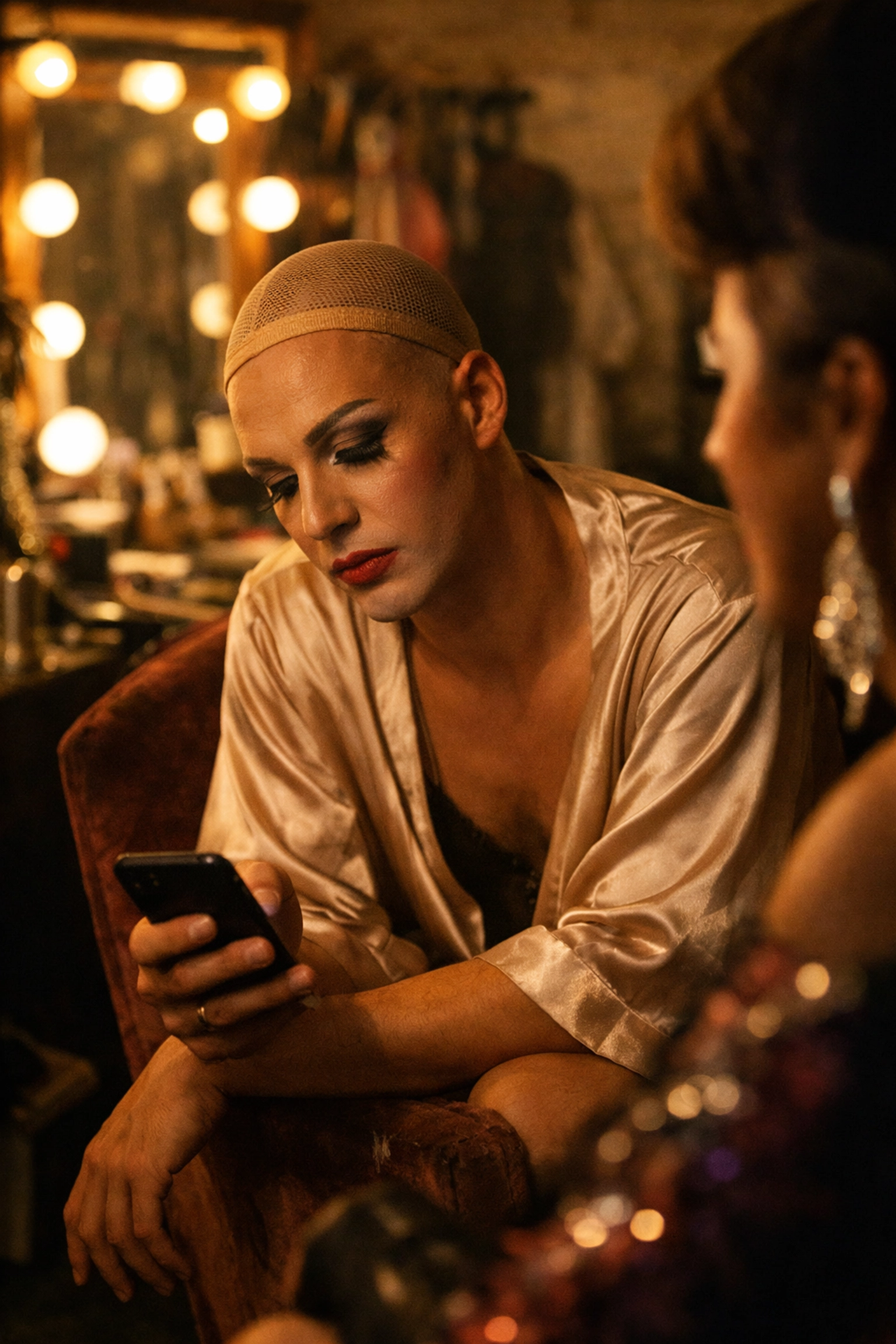
This is often when the real conversations happen backstage. When queens talk about their actual lives, their struggles, their hopes. When the performance mask is literally sliding off but hasn't completely disappeared yet. There's something about this transitional state that makes people more honest, more raw.
Many performers say this is when they feel most themselves: not fully in character, not fully out of it, but somewhere in the middle where both identities coexist. It's a state that's hard to maintain for long, but it offers a glimpse into the complexity of living with multiple facets of identity.
Navigating Different Worlds
The transition from stage to street isn't just about changing clothes. It's about switching social contexts entirely. On stage or at the club, being big, bold, and unapologetically queer is celebrated. Walking to your car at 2 AM in a still-partially-glittered state? That's a different story.
Many performers talk about the code-switching that happens: not just between drag and not-drag, but between different levels of queerness that feel safe to express depending on where you are. The grocery store the next morning requires a different presentation than the gay bar. The family dinner requires something else entirely. And if you're not out in certain areas of your life, there's another layer of complexity to navigate.
This constant shifting between identities and presentations can be exhausting. Some performers describe feeling like they're never fully themselves anywhere: always adjusting, always performing to some degree, even when the drag is off.
The Relationship Between the Two Selves
Over time, most drag performers develop a complex relationship with their persona. For some, the stage character becomes a way to express parts of themselves that feel too big or too much for everyday life. For others, it's a shield: a way to protect their more vulnerable self by putting up a fabulous, untouchable front.
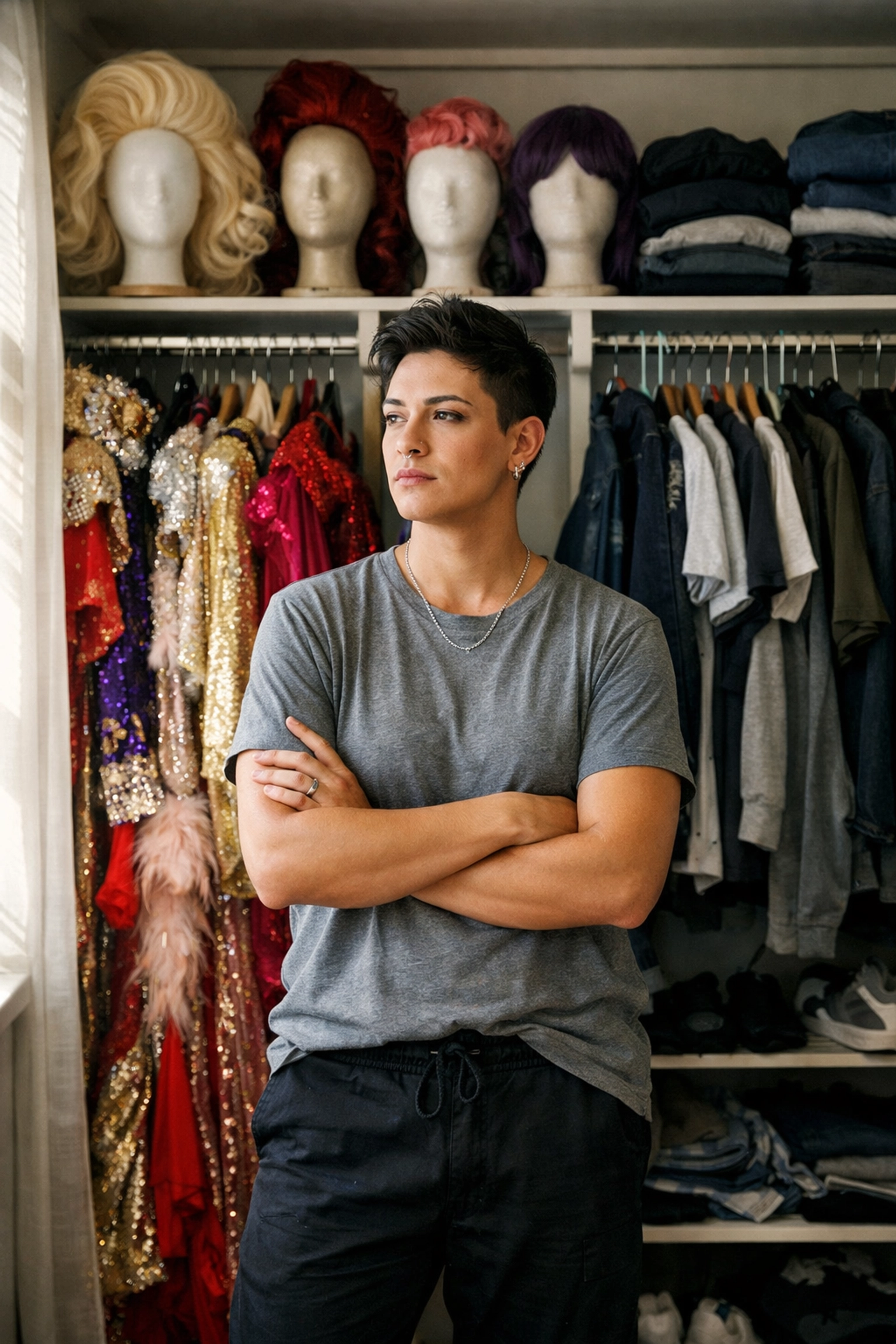
The healthiest relationships between performer and persona involve integration rather than complete separation. Taking the confidence you feel on stage and letting it inform how you move through the world. Allowing your everyday self to be a little more playful, a little more bold. Recognizing that both the glamorous queen and the person in sweatpants are valid, valuable versions of you.
But achieving that integration isn't easy. It requires sitting with the discomfort of feeling like different people in different contexts. It means acknowledging that identity is fluid, contextual, and constantly evolving: something our culture doesn't always prepare us for.
The Morning After
There's something both mundane and profound about waking up the day after a performance. Your face still has traces of glitter no amount of washing could remove. Your body aches in places you forgot existed. Your phone has photos from the night before that look like they're from a different life.
And you have to get up, make coffee, maybe go to your day job, and exist as the non-performing version of yourself. For some, this feels like a relief: a return to normalcy. For others, it feels like a letdown: like the real world is too gray, too small, too quiet after the technicolor intensity of being on stage.
The key is finding ways to honor both versions of yourself. Your stage persona deserves respect and space. Your everyday self deserves the same. Neither one is more "real" than the other: they're both authentic expressions of who you are, just adapted for different contexts and purposes.
Finding Balance in the Duality
At Readwithpride.com, we celebrate all the facets of queer identity, including the complex relationship between performance and authenticity. Whether you're into MM romance books that explore characters with dual identities, or gay fiction that delves into the psychology of self-expression, we've got stories that reflect these experiences.
The transition from stage persona to daytime reality isn't just about drag queens: it's about all of us navigating different versions of ourselves in different contexts. It's about the masks we wear and the faces we show. It's about finding authenticity in a world that constantly asks us to perform.
And maybe that's the real lesson: authenticity isn't about being the same person in every context. It's about being intentional about who you are in each moment, and honoring all the different versions of yourself that make you whole.
Ready to explore more stories about identity, authenticity, and queer life? Check out our collection of LGBTQ+ ebooks and gay romance novels at Readwithpride.com, and follow us for more authentic queer content.
Follow us on social media:
- Facebook: Read With Pride
- Instagram: @read.withpride
- Twitter/X: @Read_With_Pride
#DragCulture #LGBTQIdentity #QueerStories #DragQueens #ReadWithPride #AuthenticQueerVoices #LGBTQCommunity #QueerIdentity #MMRomance #GayFiction #LGBTQBooks #QueerLiterature #2026Pride #DragLife #PerformanceArt #QueerExpression

Leave a Reply
You must be logged in to post a comment.