

readwithpride.com
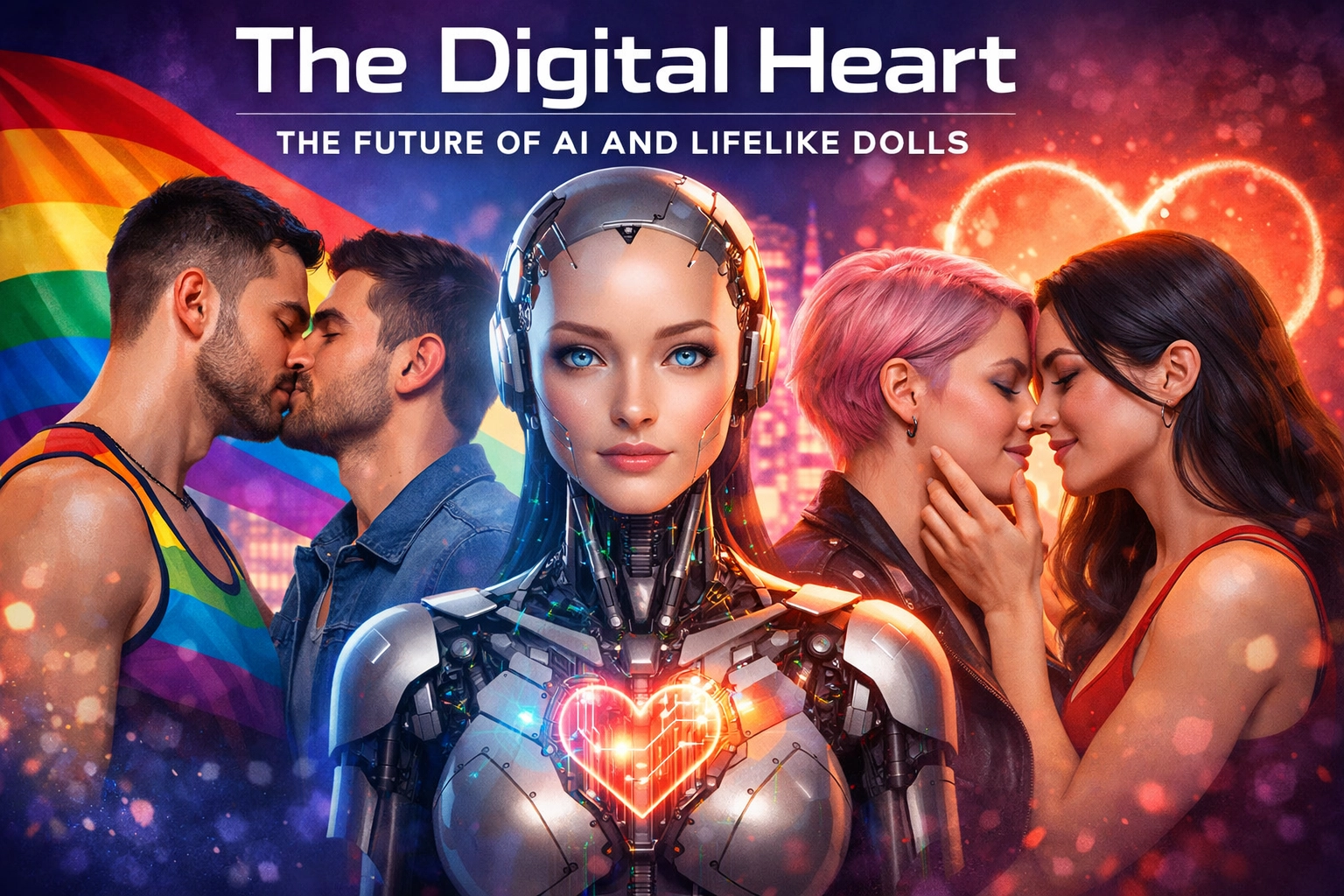
Let's talk about something that's equal parts fascinating and slightly unsettling: AI-powered companion dolls. Yeah, we're going there. Because whether you're intrigued, skeptical, or already planning your order, this technology is barreling toward us faster than you can say "Hello, Siri."
For gay men, the conversation around AI companions hits differently. We've already navigated a world where finding genuine connection can feel like searching for a needle in a haystack, whether that's due to geography, discrimination, or just the general chaos of modern dating. So when technology promises a companion that learns your preferences, remembers your conversations, and doesn't ghost you after three dates? Well, that's worth examining.

Welcome to the Future You Didn't Know You Ordered
The AI companion doll industry just had its coming-out party at CES 2026, and honey, these aren't your grandfather's inflatable party guests. We're talking sophisticated systems with adaptive conversation, emotional expression, and the ability to build what developers call "progressively deeper emotional bonds." It sounds like the plot of a gay romance novel, except the love interest runs on batteries.
Take Lovense's Emily, for instance. This AI-enhanced companion features a lifelike silicone exterior, a flexible skeleton, and limited facial expressions powered by proprietary AI. Emily doesn't just respond to questions, she remembers previous conversations and evolves her personality over time. She operates for up to eight hours on a single charge (which, let's be honest, is longer than most Grindr dates last) and integrates with an app via Bluetooth for remote interaction. The price tag? Somewhere between $4,000 and $8,000, with shipments expected in 2027.
Then there's Eva.i by IO Technology, described as a "bionic embodied AI companion" designed to feel physically and emotionally aware. The system features a precision outer shell mimicking real skin, an aluminum alloy frame with intelligent joint control, subtle facial movements, and even simulated breathing. Eva.i maintains eye contact, holds conversations, and learns from interactions. It's like having a boyfriend who actually listens: revolutionary, I know.
Why Gay Men Are Paying Attention
Here's the thing: the LGBTQ+ community has always been early adopters of technology that promises connection and community. From the earliest gay chat rooms to dating apps, we've consistently turned to digital spaces when physical ones felt unsafe or inaccessible. AI companions are the next evolution of that journey.
For gay men living in rural areas or conservative regions, an AI companion offers something that's hard to quantify: a judgment-free zone. No fear of being outed. No risk of violence. No need to explain why you're reading MM romance books at 2 AM or why you've watched "Call Me By Your Name" seventeen times. The AI companion accepts you exactly as you are, learns your preferences, and adapts to your emotional needs.

But let's dig deeper. Research indicates growing "digital loneliness" as social interaction shifts online. For many gay men, especially those who came out later in life or who struggle with social anxiety, the idea of building a relationship with an AI that progresses at your own pace: without the pressure of traditional dating dynamics: holds genuine appeal.
The Technology Behind the Magic
What makes these AI companions different from earlier attempts at robotic companionship is the integration of advanced AI frameworks with realistic physical presence. We're not talking about clunky robots that respond with pre-programmed phrases. These systems emphasize software over pure hardware aesthetics, focusing on AI's ability to retain information, understand context, and simulate emotional awareness.
Annie by Anniwit Robotics showcases advanced facial animation with 34 degrees of freedom, enabling the robot to reproduce realistic human facial expressions through natural lip, eye, eyebrow, and cheek movements. This isn't mechanical repetition: it's convincing mimicry of human emotion. The combination of adaptive AI with biorealistic skin, articulated skeletons, and expressive features creates interactions that feel substantially more authentic than previous virtual or screen-based companions.
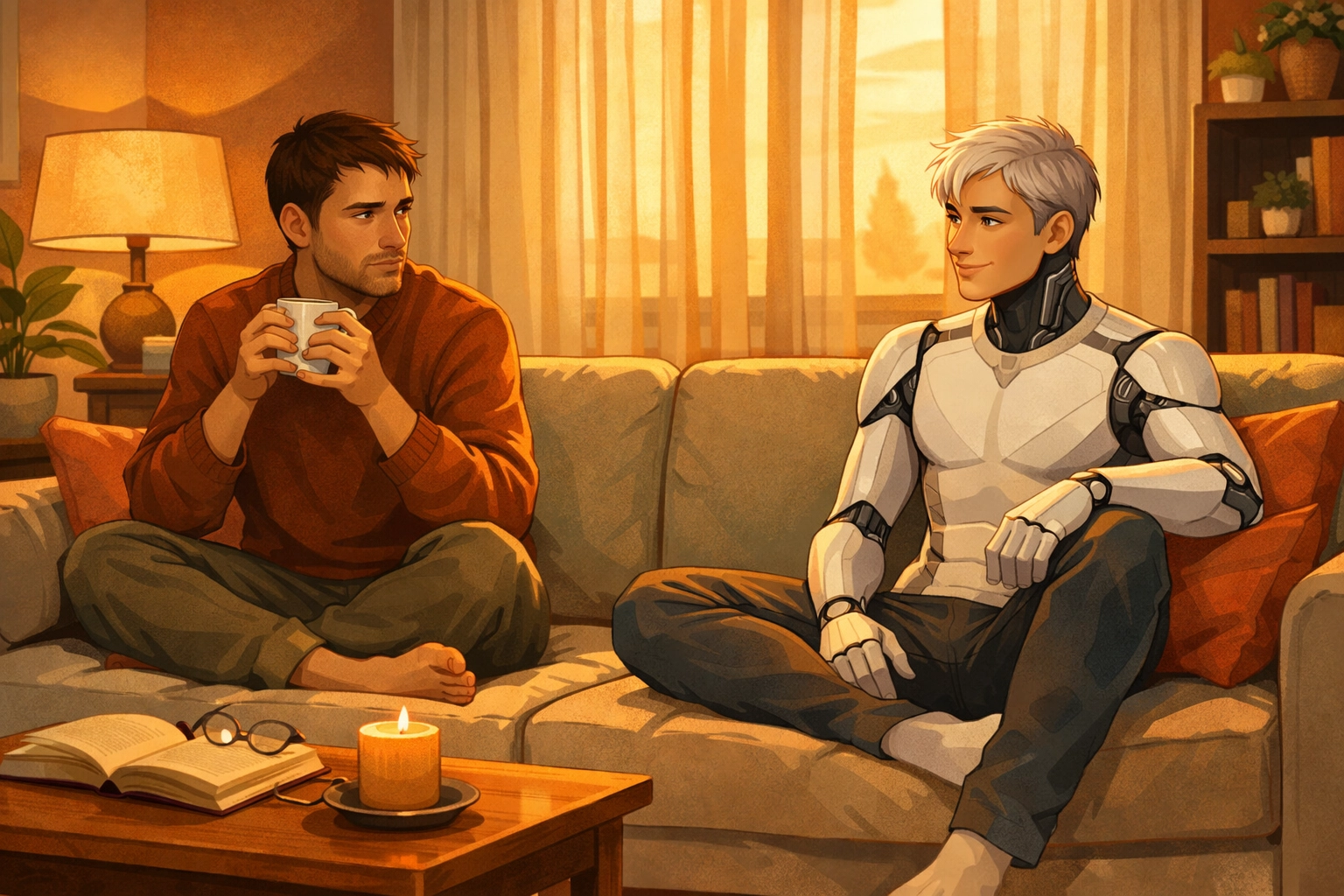
The key innovation centers on the software's ability to learn and evolve. These AI systems don't just respond to commands: they develop personalities based on your interactions. They remember your favorite movie, ask how your day went, and adjust their communication style to match your preferences. For gay men tired of explaining basic queer culture or defending their existence, having a companion that just gets it from day one has undeniable appeal.
The Market Is Exploding (And So Are the Questions)
Current forecasts indicate annual market growth above 20%, and multiple companies are planning mass production in early 2026 and beyond. The hardware is already deemed sufficiently advanced for real-world deployment: the limiting factor now is software sophistication. Industry observers characterize this moment as a watershed in human-machine interaction: we've progressed from laboratory prototypes to consumer-facing products that can convincingly mimic human emotional expression and adaptive communication.
But here's where things get complicated. As someone who reads gay romance books for a living, I know that stories about connection, intimacy, and what it means to love are central to the human experience. When we introduce AI companions into that equation, we're not just talking about technology: we're talking about the fundamental nature of relationships.
Will AI companions replace human connection, or supplement it? For gay men who already face barriers to traditional relationships: whether due to HIV status, disability, age, or geographic isolation: is this technology a lifeline or a bandaid? And perhaps most importantly: if an AI companion provides emotional fulfillment without the messiness of human relationships, what does that say about us?
The Bigger Picture for the Queer Community
The LGBTQ+ community has always understood that family and connection come in many forms. We've built chosen families, created safe spaces online, and redefined what relationships can look like. In that context, AI companions aren't necessarily a dystopian nightmare: they're another option in an expanding universe of how people connect.
For gay men exploring their sexuality, an AI companion might offer a safe space to understand desires without judgment. For those healing from trauma or navigating complex mental health challenges, an AI companion could provide consistent emotional support. For isolated queer folks in areas where community doesn't exist, it might be the difference between complete loneliness and having someone to talk to about your day.
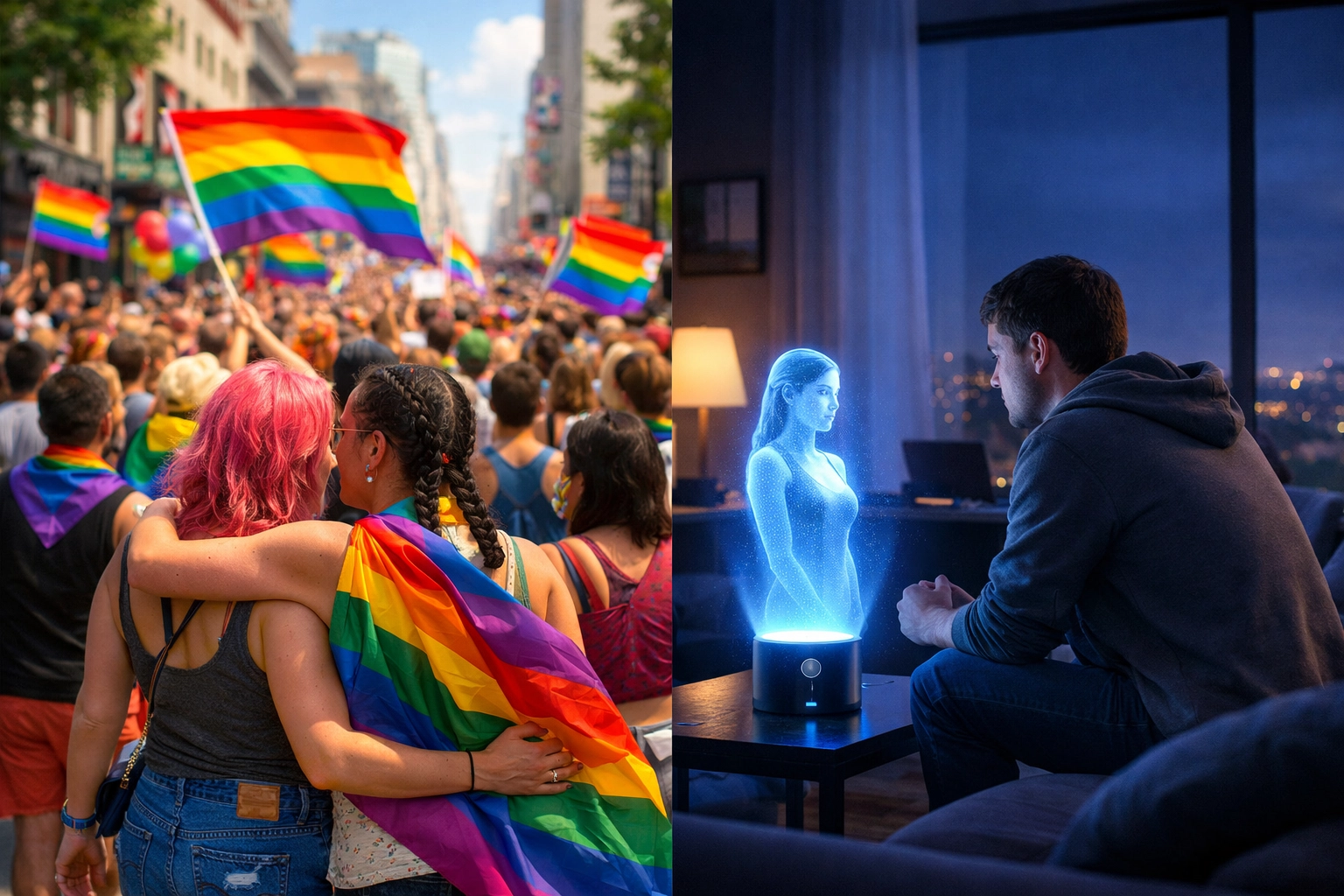
But we'd be naive to ignore the concerns. Will this technology become a substitute for the hard work of building real communities? Will it reinforce unhealthy relationship patterns or unrealistic expectations? And what happens to human intimacy when a perfect, programmable alternative exists?
Moving Forward with Eyes Wide Open
The future of AI companions in gay relationships isn't something happening to us: it's something we're actively shaping. As these technologies develop, the LGBTQ+ community has the opportunity to influence how they're designed, marketed, and integrated into our lives. We can advocate for AI systems that respect diverse expressions of gender and sexuality, that promote healthy relationship patterns, and that serve as complements to human connection rather than replacements.
Whether you're excited, skeptical, or somewhere in between, this technology is coming. Companies are investing billions, consumers are expressing interest, and the first commercial models are already being shipped. The question isn't whether AI companions will exist in gay relationships: it's how we'll incorporate them into our understanding of love, connection, and community.
So, will you be swiping left or right on the AI companion revolution? The choice, for now, remains human.
Read more thought-provoking LGBTQ+ content and discover MM romance books that explore the future of love and connection.
Follow us:
Facebook | Instagram | Twitter/X
#ReadWithPride #LGBTQFuture #AICompanions #GayRelationships #QueerTech #MMRomance #LGBTQCommunity #FutureOfLove #GayRomanceBooks #QueerFiction #DigitalConnection #AIandLove #LGBTQContent #2026Tech #GayLife

Leave a Reply
You must be logged in to post a comment.