

readwithpride.com
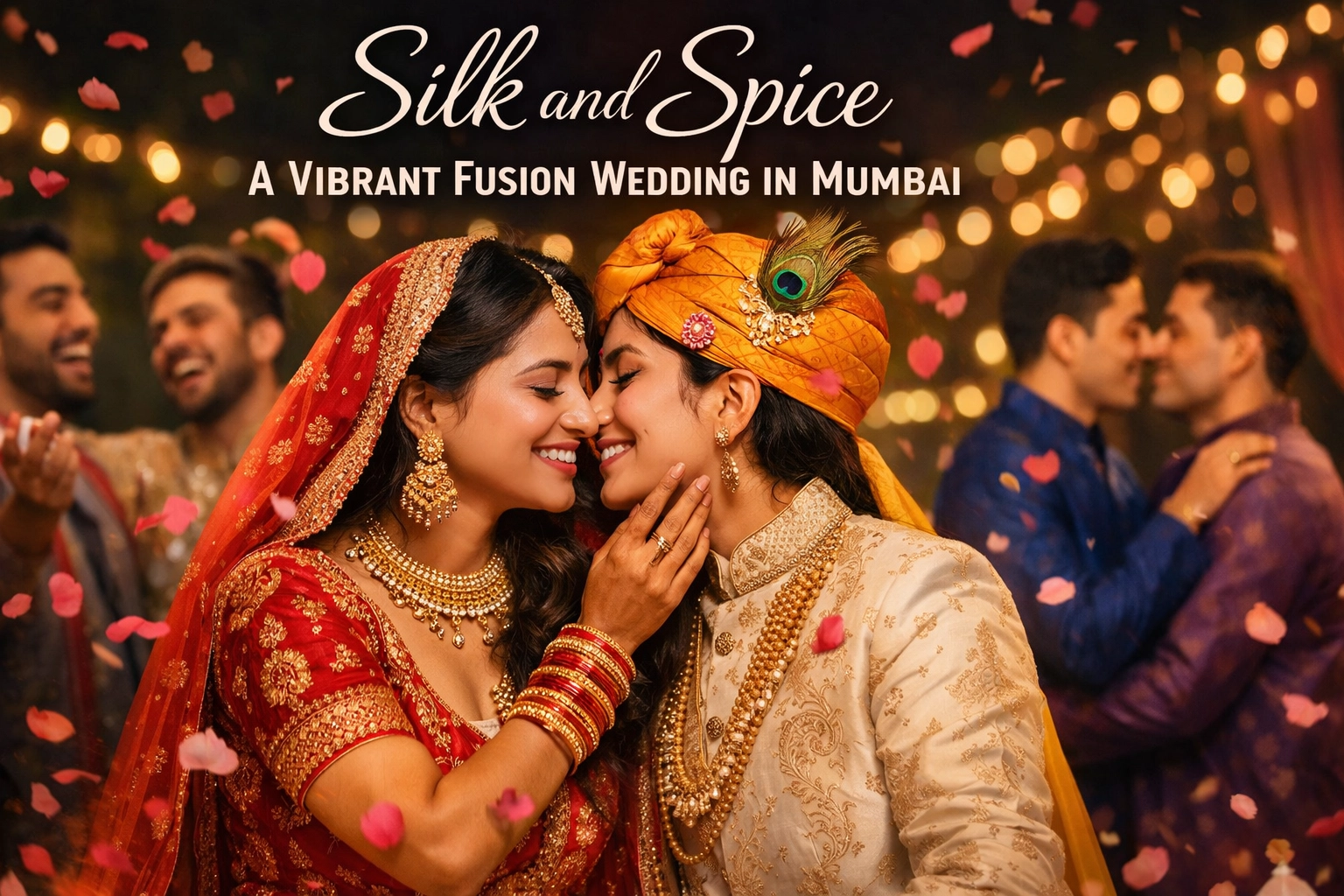
When Arjun and Vikram said "I do" under a canopy of marigolds and rainbow flags in Mumbai, they didn't just celebrate their love, they rewrote the rulebook on what an Indian wedding could be. Their fusion ceremony became a masterclass in honoring tradition while fearlessly embracing queer identity, proving that you can have your kulfi and eat it too.
Two Hearts, One Vision
Arjun, a textile designer from Pune, met Vikram, a tech entrepreneur from Delhi, at a Pride parade in Mumbai three years ago. Their connection was instantaneous, a collision of creative chaos and methodical brilliance. When they decided to marry, both families had initial reservations. Not about them being gay (surprisingly, that bridge had been crossed years earlier), but about whether they could pull off a wedding that satisfied both traditional expectations and their desire for authentic queer celebration.
Spoiler alert: They absolutely nailed it.
"We didn't want to choose between being Indian and being gay," Vikram explained. "We wanted silk and spice, tradition and revolution. Why should we have to pick?"
The Mehendi That Broke the Internet
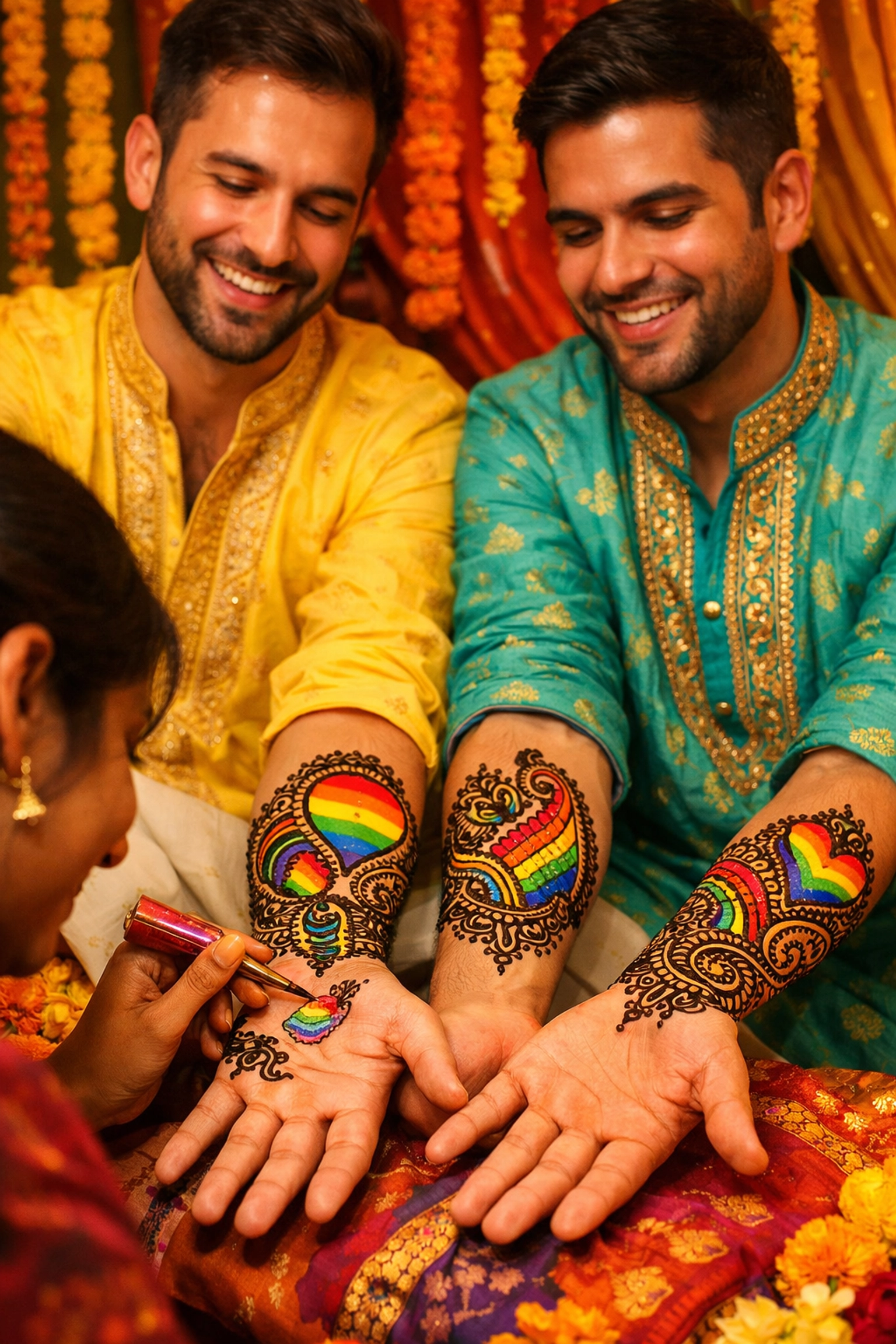
The celebration kicked off with a mehendi ceremony that flipped gender norms on their heads. Both grooms sat side-by-side, getting intricate henna designs applied to their hands and feet, a ritual typically reserved for brides. The henna artist incorporated rainbow patterns into the traditional paisley designs, with tiny pride flags hidden among the peacocks and flowers.
But here's where things got deliciously subversive: Their mothers joined them, also getting mehendi applied. "If the boys are doing it, we're doing it," Arjun's mother declared, and suddenly half the family was queuing up for henna, regardless of gender.
The playlist was a chaotic mix of Bollywood classics and Lady Gaga. Watching aunties dance to "Born This Way" while uncles attempted TikTok moves remains one of the most joyfully absurd cultural mashups imaginable.
Sangeet Spectacular
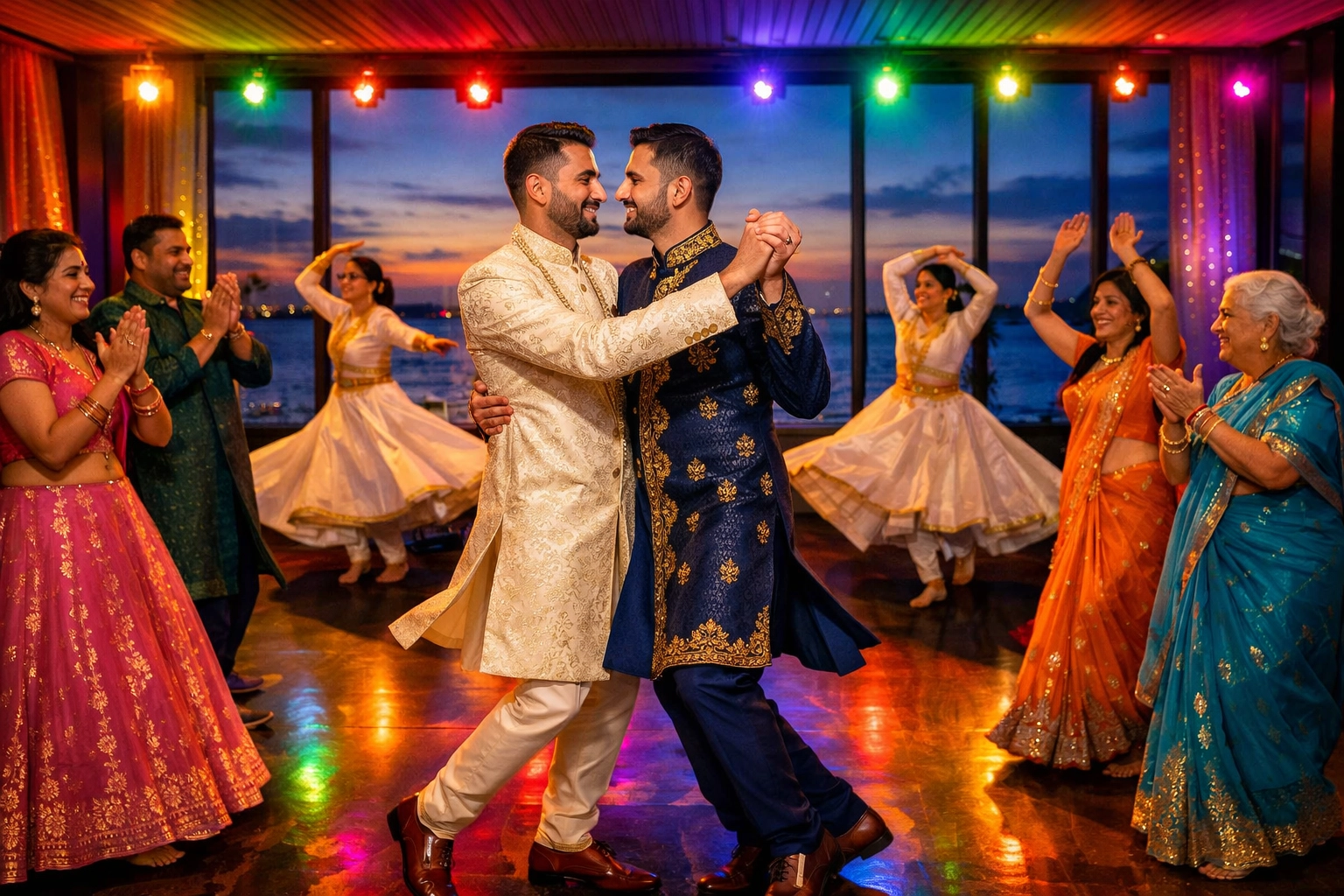
The sangeet ceremony transformed a historic Mumbai venue into something between a Bollywood film set and a pride parade. Professional dancers performed a choreographed piece that told Arjun and Vikram's love story through kathak dance, complete with rainbow-colored ghungroos (ankle bells).
Family members from both sides performed, including Vikram's conservative grandfather, who surprised everyone with a speech about how love had taught him to unlearn prejudice. "I grew up in a different India," he said, voice trembling. "But these boys are building a better one."
The dress code? "Festive fusion", which resulted in guests wearing everything from traditional sherwanis in lavender and pink to custom kurtas embroidered with equality symbols. The fashion alone could fill an entire Read with Pride catalogue.
The Ceremony Where Tradition Met Tomorrow
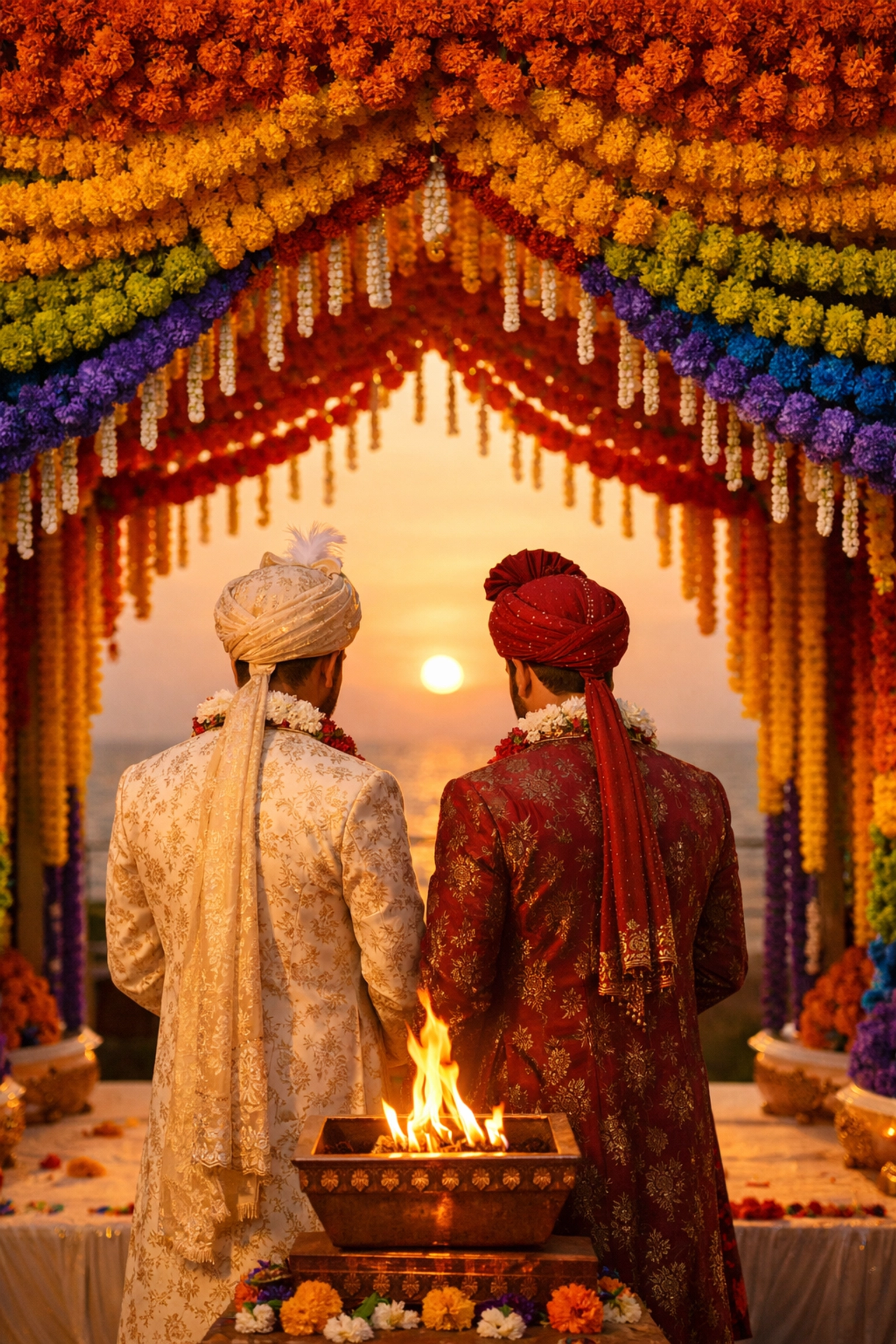
The main wedding ceremony was held at a luxury venue overlooking the Arabian Sea at sunset. The mandap, the sacred canopy under which Hindu marriages are performed, was decorated with thousands of marigolds arranged in gradient rainbow colors, shifting from deep orange to purple.
Instead of one pandit (priest), they had two: one traditional and one specifically trained in LGBTQ+ ceremonies who could navigate Hindu scriptures while acknowledging their reality as a same-sex couple. The result was a ceremony that felt both ancient and revolutionary.
The seven pheras (circles around the sacred fire) were modified to reflect their equal partnership. Traditional Hindu wedding vows often assign specific roles to bride and groom, but theirs were rewritten together:
"I promise to be your partner in both success and struggle."
"I promise to honor your dreams as sacred as my own."
"I promise to face our families together, with courage and compassion."
When they exchanged garlands, a jaimala ceremony usually fraught with competitive energy, they did it simultaneously, neither trying to "win" by garlanding first. It was a small detail that spoke volumes about their relationship.
Fashion Forward, Tradition First
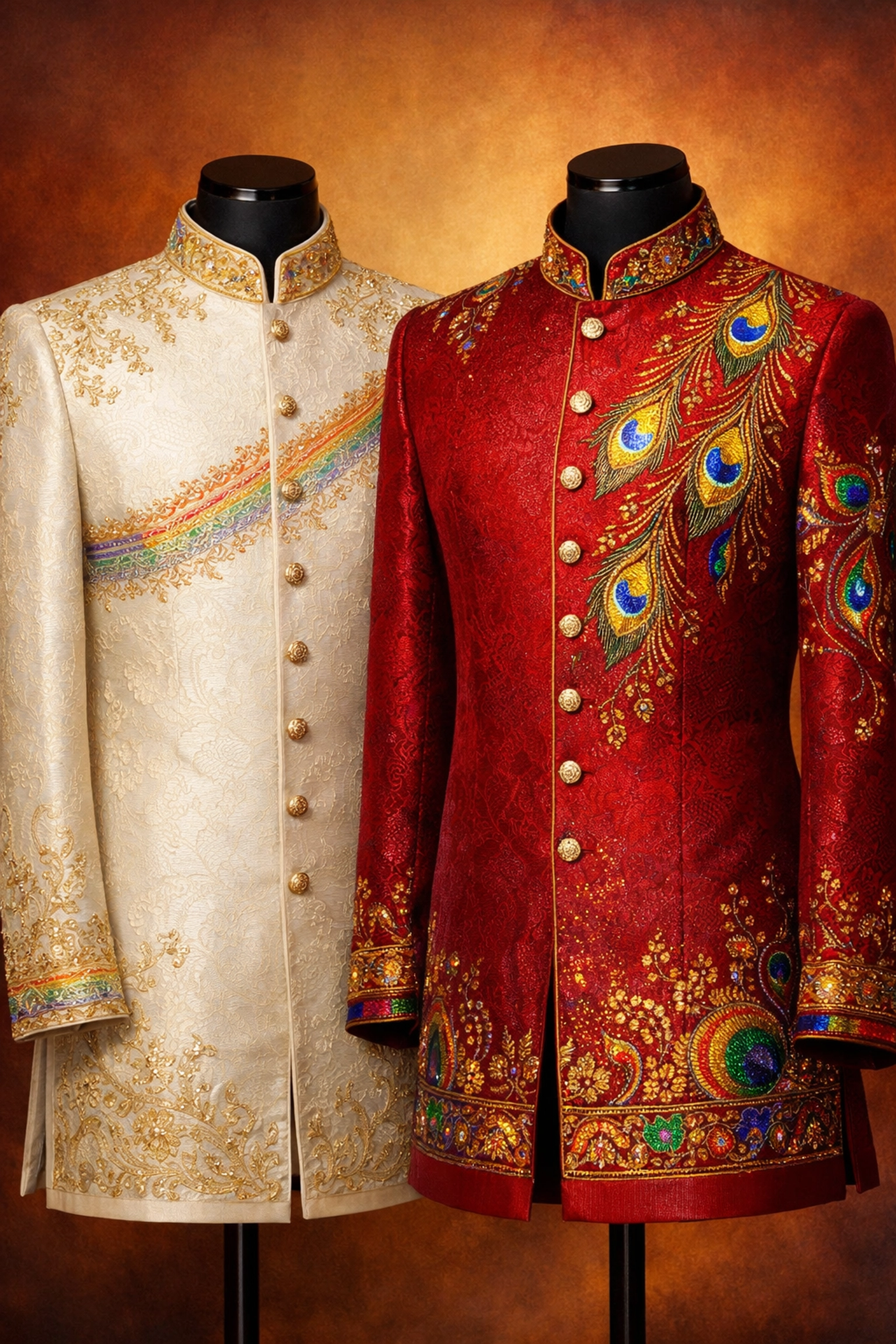
Let's talk about what they wore, because wow. Arjun, true to his textile designer roots, created custom sherwanis for both of them. His was ivory silk with subtle gold embroidery forming the chemical structure of dopamine (the "love hormone") across the chest. Vikram's was deep crimson with peacock feather motifs that, upon closer inspection, incorporated tiny rainbow elements.
Their turbans: traditional pagris: were wrapped in complementary colors: one in rose gold, one in champagne. Both included small pins: one featuring the equality symbol, the other saying "Love is Love" in Hindi.
The guests didn't hold back either. It was a riot of color that would make any MM romance book cover look understated. Silk saris in jewel tones, embroidered kurtas, bespoke sherwanis, and more jewelry than a small country's treasury. Several guests wore custom-made outfits featuring subtle pride elements: a pocket square here, an embroidered border there.
Reception: Where Tradition Threw a Pride Party
The reception dinner featured a menu that was peak fusion: traditional Maharashtrian delicacies alongside international cuisine, with creative cocktails named after famous queer icons. The "Harvey Milk Lassi" was particularly popular.
The couple's first dance was to a mashup of a classic Hindi love song and Sam Smith's "Stay With Me," arranged by a Mumbai-based DJ. Watching two grooms in full traditional wedding attire slow dance while their families cheered was the kind of moment that makes you believe in progress.
Speeches ranged from tearful to hilarious. Arjun's sister joked about finally being able to steal his clothes without judgment. Vikram's best friend shared stories about their early dating days, navigating Mumbai's queer scene together. The common thread? Unshakeable support and infectious joy.
Beyond the Wedding: Honeymoon Dreams
For their honeymoon, Arjun and Vikram chose Kerala: God's Own Country: specifically selecting LGBTQ+-friendly resorts and homestays. "We wanted to support businesses that support us," Arjun explained. "And we wanted to explore our own incredible country as openly married men."
Their honeymoon story could fill its own article (and maybe it should), but suffice to say they spent two weeks cruising the backwaters, eating phenomenal food, and occasionally dealing with confused but generally accepting strangers trying to figure out which one of them was the "bride."
What It All Means
Arjun and Vikram's wedding wasn't just a celebration: it was a statement. In a country where Section 377 was only repealed in 2018, where same-sex marriage still isn't legally recognized nationwide, their lavish, unapologetic celebration of queer love felt both brave and necessary.
"We're not the first gay couple to get married in India," Vikram said. "And we definitely won't be the last. But every wedding like ours makes space for the next one. Every family that celebrates makes it easier for another family to say yes."
Their wedding photos went viral on Indian social media, sparking both praise and predictable criticism. But mostly praise. Mostly messages from young queer Indians saying, "I didn't know this was possible" or "Thank you for showing us what our future could look like."
That's the power of visibility. That's the magic of refusing to choose between identities, of insisting that tradition can evolve without losing its soul.
Looking for more stories that celebrate LGBTQ+ love in all its forms? Head over to readwithpride.com for gay romance books, MM romance novels, and queer fiction that'll make your heart sing louder than a Bollywood musical.
#ReadWithPride #MMRomance #GayWedding #QueerIndia #LGBTQWedding #FusionWedding #GayRomance #MumbaiPride #IndianWedding #QueerLove #GayLoveStories #LGBTQFiction #PrideAndTradition #MarriageEquality #QueerCelebration #LoveIsLove #GayBooks #MMBooks #QueerFiction
Follow us on Facebook, Instagram, and Twitter for more inspiring LGBTQ+ content and the best gay romance recommendations!

Leave a Reply
You must be logged in to post a comment.