

readwithpride.com
Prison isn't a place anyone dreams about. It's concrete walls, steel bars, and the constant hum of tension that never quite fades. For gay men doing time, it's even more complicated: navigating an environment where vulnerability can be dangerous, where showing affection might paint a target on your back, and where the simple act of being yourself requires careful calculation.
But here's something most people don't talk about: even in the most unlikely places, humans find ways to create connection. Sometimes, a shared cell: that tiny, confined space that could feel like a tomb: becomes something else entirely. It becomes a sanctuary.
The Reality of Being Gay Behind Bars
Let's not sugarcoat it. Prison culture can be brutally homophobic. There's a hierarchy, unwritten rules, and a constant pressure to perform a certain kind of masculinity. For openly gay men, or those who get clocked, the threats are real. Harassment, violence, and isolation are all part of the landscape.
But there's another reality that exists alongside the hardship: queer people have always found each other, even in the most hostile environments. We've built communities in the shadows, created safe spaces where none existed, and found ways to survive: and sometimes thrive: against the odds.
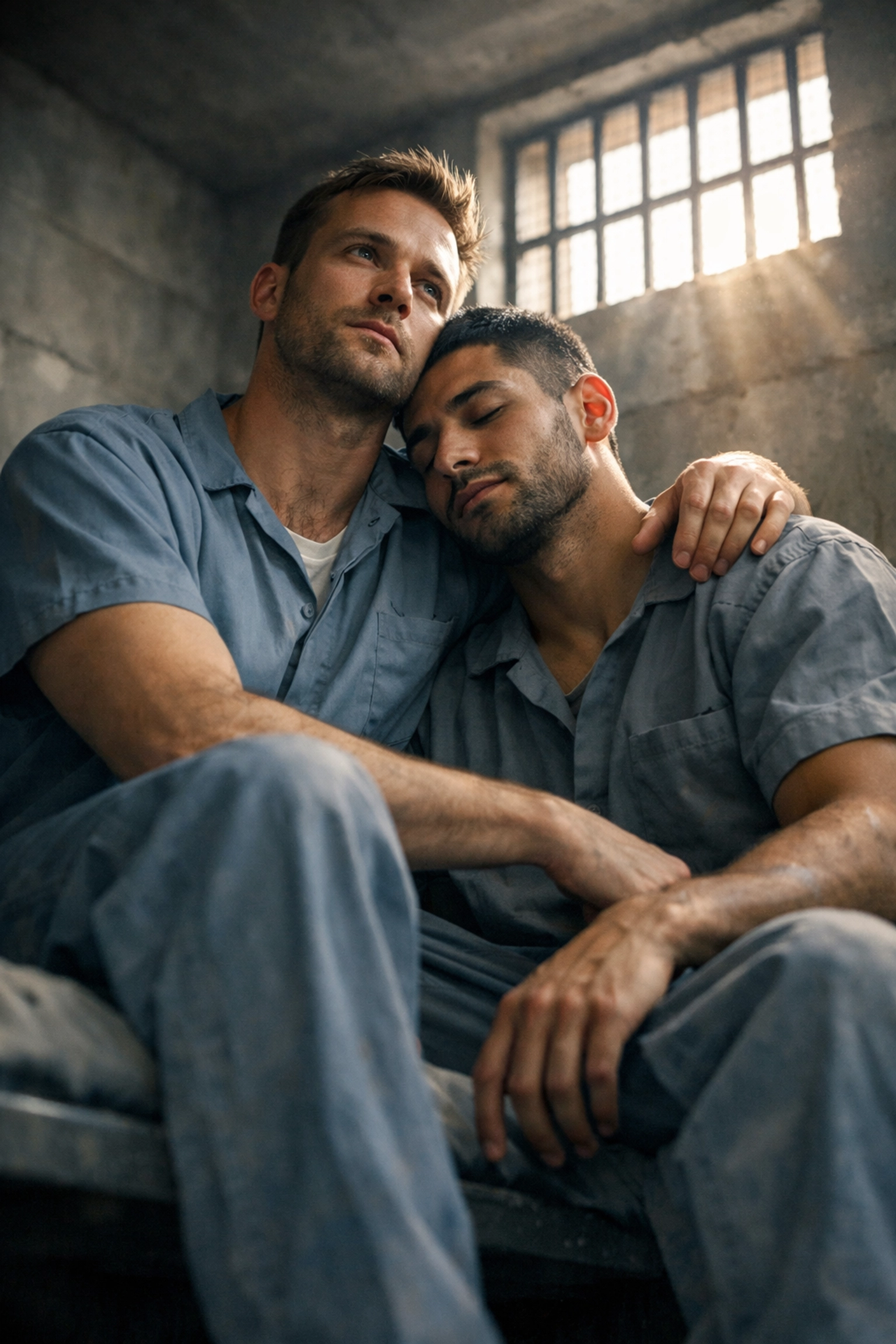
In prison, that might mean recognizing a kindred spirit across the yard. A certain look, a shared understanding. It might mean being assigned a cellmate who gets it, who sees you. And in those eight-by-ten feet of space, something unexpected can happen.
When Your Cell Becomes Your World
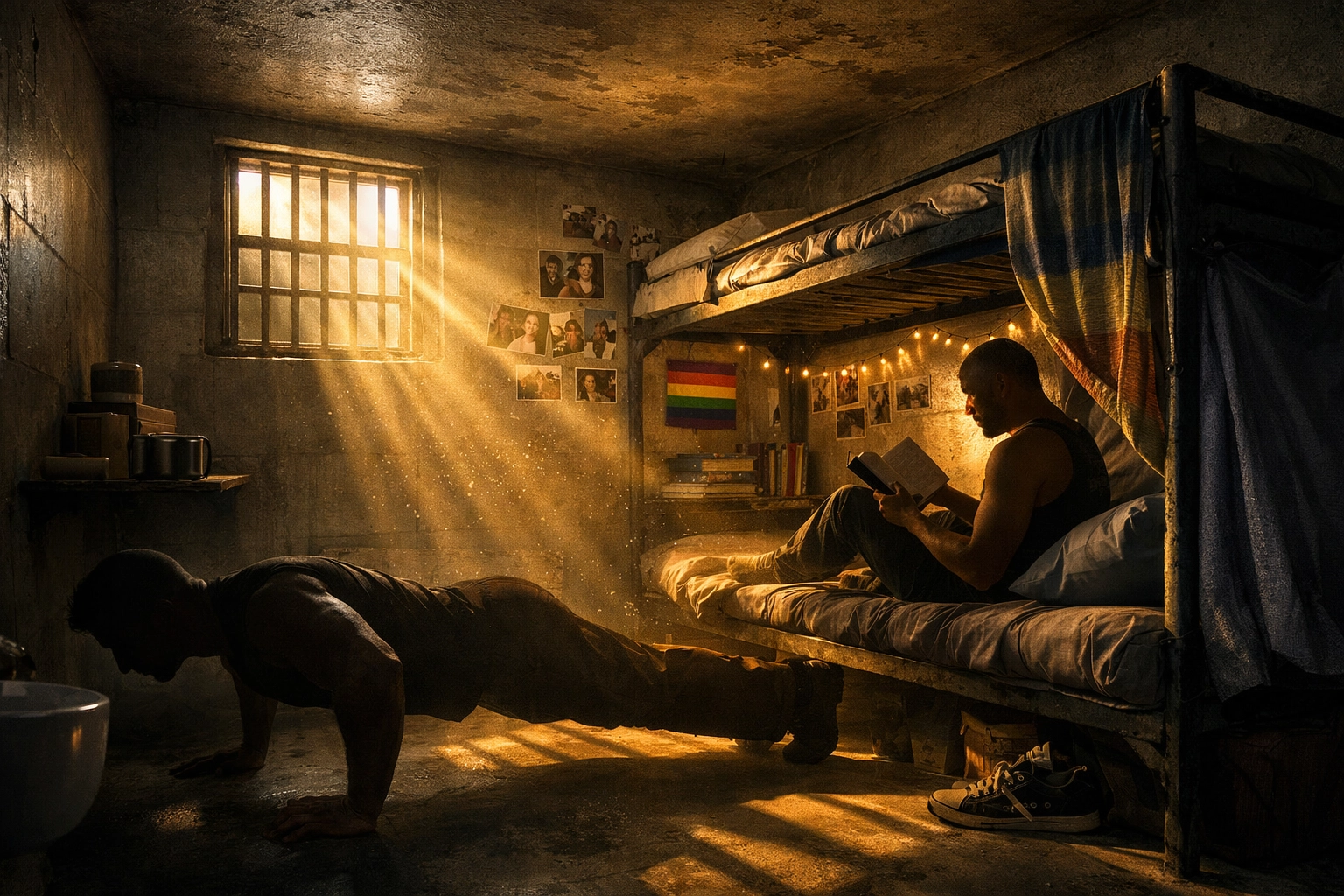
When you're locked down for most of the day, your cell isn't just where you sleep. It's your living room, bedroom, dining room, and private space all rolled into one. You eat there, work out there, think there, dream there. And if you're sharing that space with someone, you get to know them in a way that's almost unavoidable.
The intimacy isn't always romantic or sexual: though it can be. Sometimes it's just the intimacy of being truly seen. Of having someone who knows your morning routine, who notices when you're having a bad day, who shares the silence with you when words aren't enough.
For gay men who've spent their lives hiding parts of themselves, having a cellmate who accepts you: or better yet, shares your experience: can be profoundly healing. You're not performing anymore. You're just existing, in all your complexity, with someone who gets it.
Building Trust in Confined Spaces
Trust doesn't come easy in prison. Everyone's on guard, protecting themselves, watching their backs. But when you're sharing a cell, you don't have much choice but to eventually let some walls down.
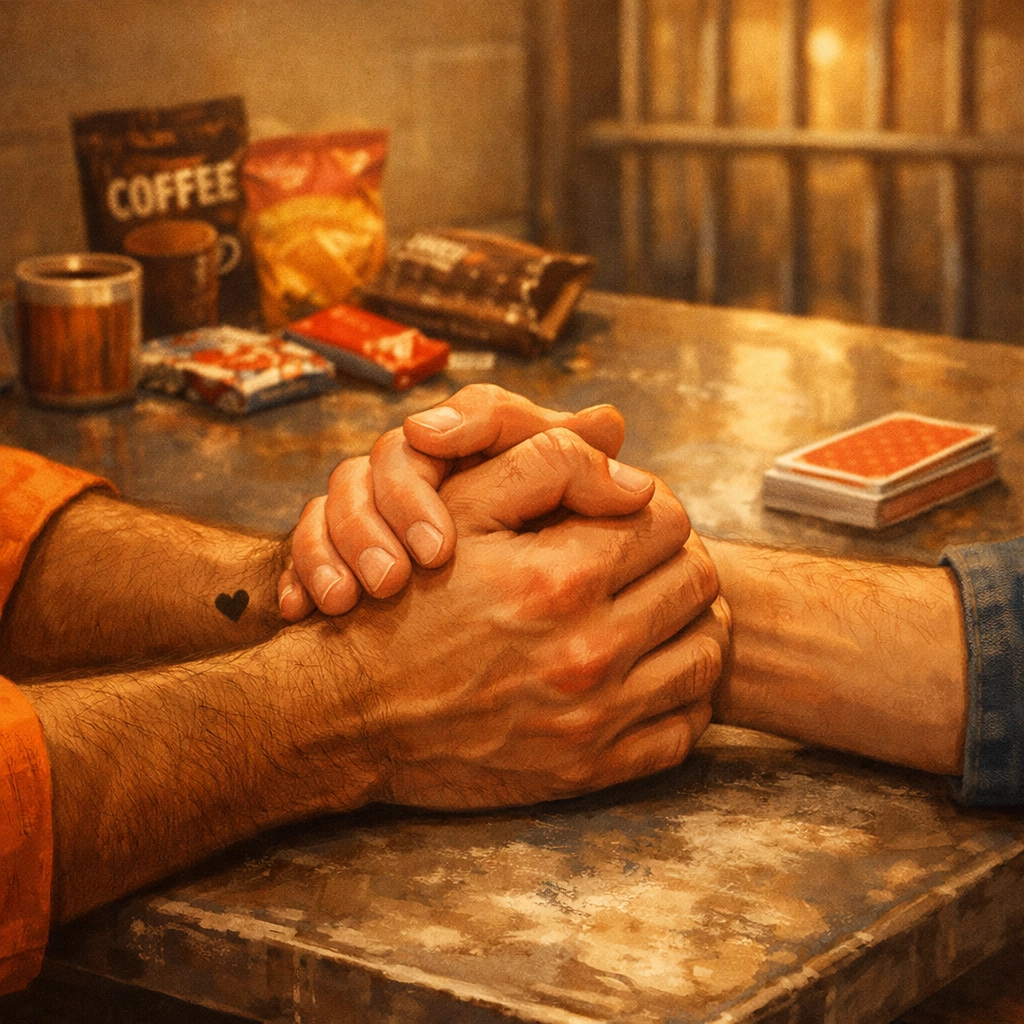
It starts small. Sharing commissary snacks. Taking turns at the sink. Respecting each other's space and routines. Then it deepens. Late-night conversations when the block finally quiets down. Stories about life before, about families, about the people you used to be. Confessions you'd never make in the daylight.
For some, this becomes the foundation of something deeper: a friendship that sustains you through the hardest days. For others, it evolves into romance, a connection that defies the circumstances trying to break you down.
These relationships aren't simple. They're complicated by power dynamics, by the psychological stress of incarceration, by the knowledge that nothing in this environment is truly private or safe. But they're also incredibly human. Two people finding comfort in each other when the world outside the cell feels hostile and uncertain.
The Complexity of Prison Romance
Let's talk about what MM romance books often explore but real life makes infinitely more complex: falling for your cellmate. It happens. Two people thrown together, sharing space, finding unexpected connection. In the free world, you'd call it forced proximity: a classic gay romance trope. In prison, it's just Tuesday.
But prison relationships carry weight that's hard to explain to someone who hasn't been there. There's the question of consent in an environment where free choice is already limited. There's the risk: getting caught can mean solitary confinement, loss of privileges, or worse. There's the judgement from both guards and other inmates.
And yet, love and desire don't stop existing just because you're behind bars. The heart wants what it wants, even when the timing is terrible and the circumstances are impossible. Some of the most profound connections happen in the least likely places.
What makes these relationships work: when they do work: is mutual respect. It's about creating a space where both people feel safe, where boundaries are honored, where the power dynamic is as balanced as it can be given the circumstances. It's about choosing each other, as much as anyone can choose anything in prison.
Survival Strategies and Mutual Support
Beyond romance, there's the practical reality of surviving prison as a gay man. Having a cellmate who has your back can literally be the difference between making it through and breaking down.
You learn each other's tells. When one person needs space, the other knows to give it. When someone's struggling, the other offers what support they can: even if it's just sitting in companionable silence. You become each other's early warning system, watching for threats, navigating the social landscape together.
There's also the mental health aspect. Prison is designed to break you down psychologically. The isolation, the lack of autonomy, the constant surveillance: it takes a toll. Having someone to talk to, to laugh with, to maintain your humanity with, that's not a small thing. That's survival.
Some cellmates become workout partners, helping each other stay physically strong. Others become study partners, working toward GEDs or college degrees together. Some become family: the chosen kind that sees you through the worst moments and celebrates the small victories.
Creating Beauty in Harsh Places
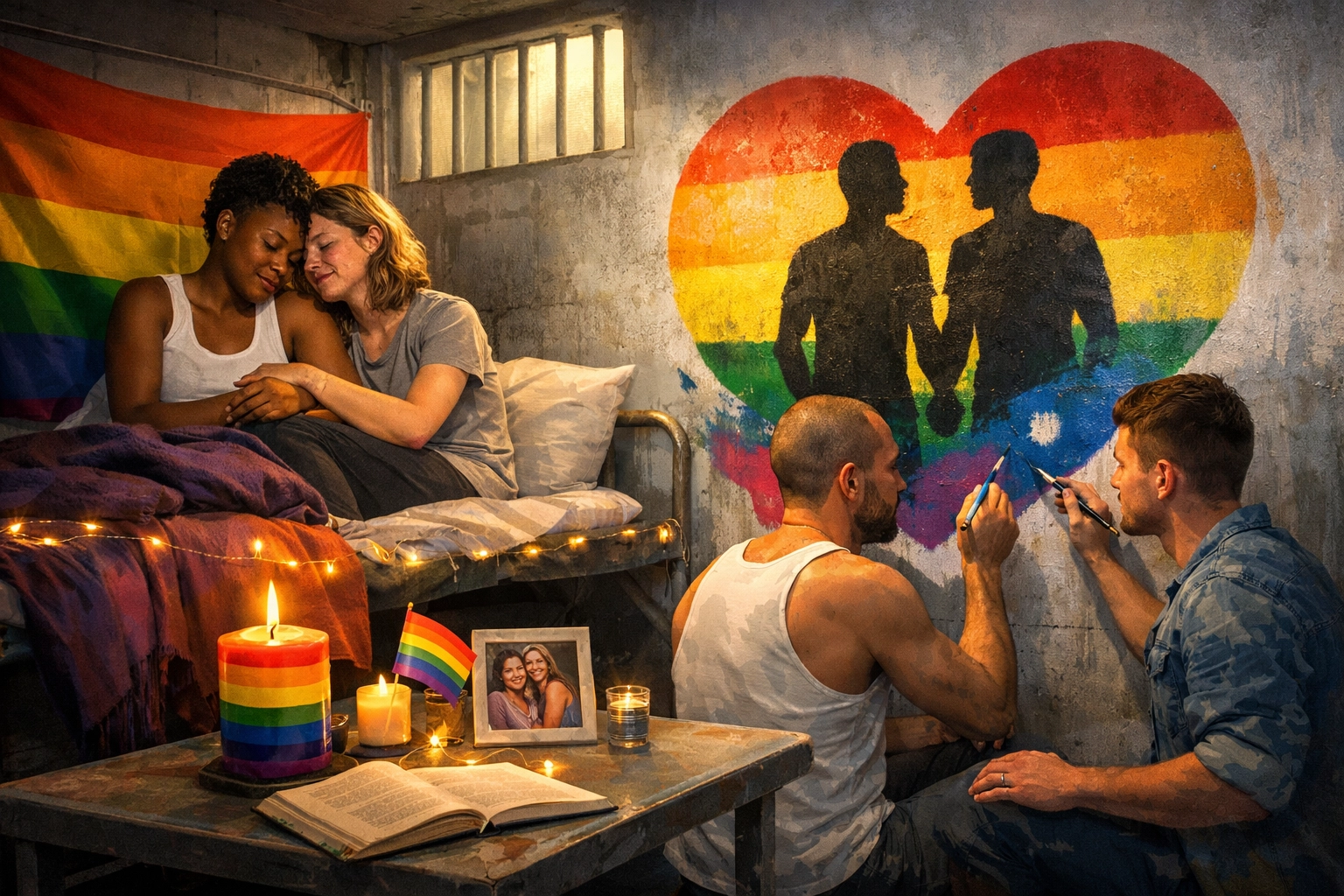
Here's what's remarkable about humans: we find ways to create beauty even in the ugliest circumstances. In a prison cell, that might mean hanging photos or artwork on the walls. Creating a space that feels just slightly less institutional, slightly more like a home.
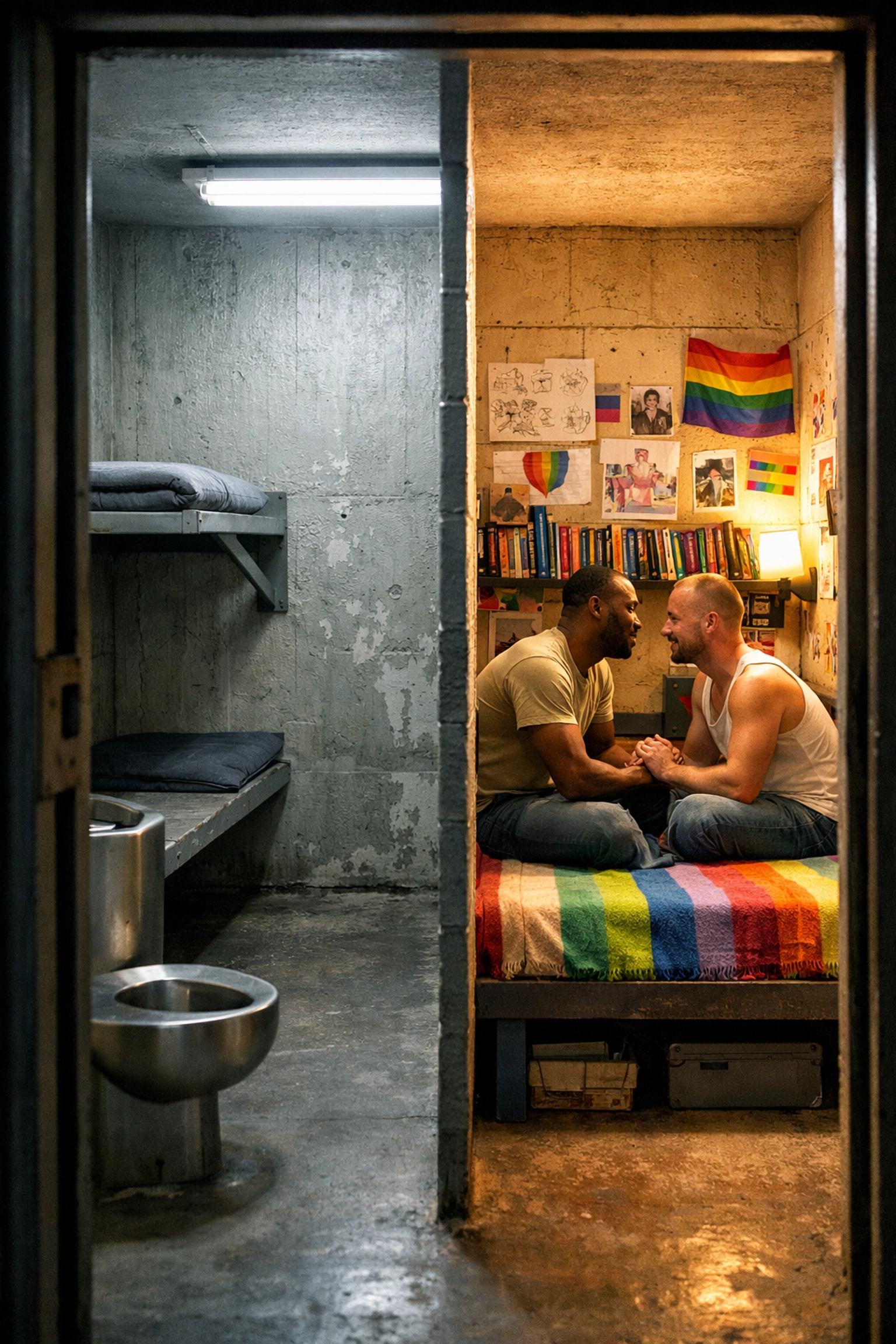
For gay couples sharing a cell, it might mean small rituals. Making each other coffee a certain way. Saving the good snack from commissary to share. Creating privacy with a hung sheet when the situation allows. Finding moments of tenderness in an environment designed to strip away softness.
These acts of care: they're revolutionary in their own way. They're assertions of humanity in a system that tries to reduce people to numbers and categories. They're proof that connection survives even when everything else is taken away.
The Question of What Happens Next
Prison relationships exist in a strange temporal space. There's the immediate present: the day-to-day reality of sharing a cell. And there's the uncertain future. Will you both get out around the same time? Will you stay together on the outside? Can a relationship built in confinement survive in the free world?
These questions don't always have easy answers. Some prison relationships are exactly what both people needed for that moment in time, and they end naturally when circumstances change. Others transform into lifelong partnerships, couples who weather the storm together and come out the other side still holding on.
What matters most isn't the outcome: it's the meaning that relationship held in the moment. The sanctuary you built together in an eight-by-ten cell. The way you kept each other human when everything around you was designed to do the opposite.
Finding Hope in Unexpected Places
At Read with Pride, we believe that queer love stories deserve to be told in all their complexity. That includes the stories that make people uncomfortable, the relationships that don't fit neat categories, the connections that happen in places society would rather forget about.
Gay men in prison are still gay men. Still human. Still deserving of connection, intimacy, and love. Their stories matter. Their experiences: difficult and complicated as they are: are part of our community's broader narrative.
If you're interested in exploring more MM romance books that tackle complex themes with authenticity and heart, check out our collection at Read with Pride. We're committed to publishing LGBTQ+ fiction that doesn't shy away from the hard stuff, that shows our community in all its diversity and resilience.
Because here's the truth: love finds a way. Even in a prison cell. Even when the odds are stacked against you. Two people can create something that sustains them, that reminds them of their humanity, that becomes a sanctuary when sanctuary seems impossible.
That's not romanticizing incarceration. That's acknowledging the incredible strength and creativity of queer people who refuse to let their circumstances define them. Who build connection in the cracks of a broken system. Who find each other and hold on.
Connect with us:
#ReadWithPride #MMRomance #GayRomanceBooks #LGBTQFiction #QueerStories #GayLoveStories #MMBooks #PrisonRomance #AuthenticLGBTQ #GayFiction #LGBTQReading #QueerLiterature #GayNovels #MMRomanceBooks #LoveIsLove #QueerCommunity #GayBooks2026 #LGBTQEbooks

Leave a Reply
You must be logged in to post a comment.