

readwithpride.com
Let's talk about something that doesn't get much airtime in mainstream LGBTQ+ conversations: what happens when gay men fall in love: or something like it: behind bars. It's complicated, it's raw, and it's deeply human. Because even in the most oppressive environments imaginable, the need for connection doesn't just disappear.
Prison isn't designed for tenderness. It's built on concrete, steel, and control. But people? We're wired for connection. And when you strip away everything else: your freedom, your privacy, your identity: sometimes all you have left is the person in the cell next to yours who understands what it means to be different in a place that demands conformity.
The Reality Check
First things first: being openly gay in prison is dangerous. Let's not romanticize this. Many LGBTQ+ people in the prison system face harassment, violence, and isolation. The threat is real, constant, and exhausting. Some men hide who they are for survival. Others can't or won't hide, and they pay a price for that authenticity.
But within that harsh reality, something else happens too. Relationships form. Not always the kind of love stories you'd find in MM romance books, but connections nonetheless. Sometimes it's about survival: finding protection, companionship, or just someone who makes the days slightly less unbearable. Sometimes it becomes something more.
The prison environment creates its own social dynamics. There are men who identify as gay on the outside and inside. There are men who engage in same-sex relationships behind bars but wouldn't consider themselves gay. And there are those who discover or acknowledge their sexuality in ways they never could in their previous lives. It's a spectrum, just like everywhere else, but with infinitely higher stakes.
The Different Faces of Connection
Survival Relationships are transactional at their core. Protection in exchange for companionship. Commissary items for intimacy. These aren't love stories: they're survival mechanisms. But even within these arrangements, genuine feelings can develop. Humans are complicated like that.
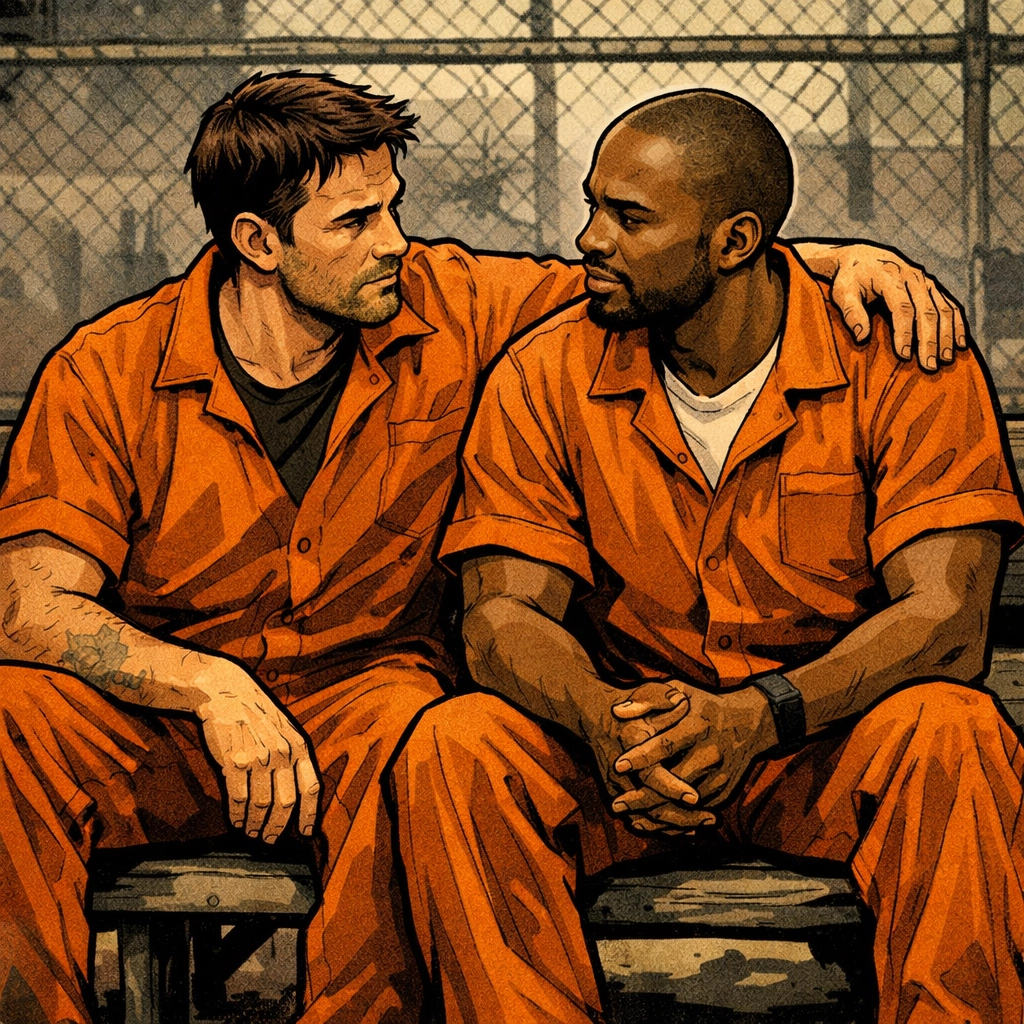
Companionship is different. It's about finding someone who gets it. Someone you can talk to when the walls feel like they're closing in. Someone who knows your real name, not just your prison number. These relationships might include physical intimacy, but they're built on something deeper: the desperate need to be seen as human when the system treats you as less than that.
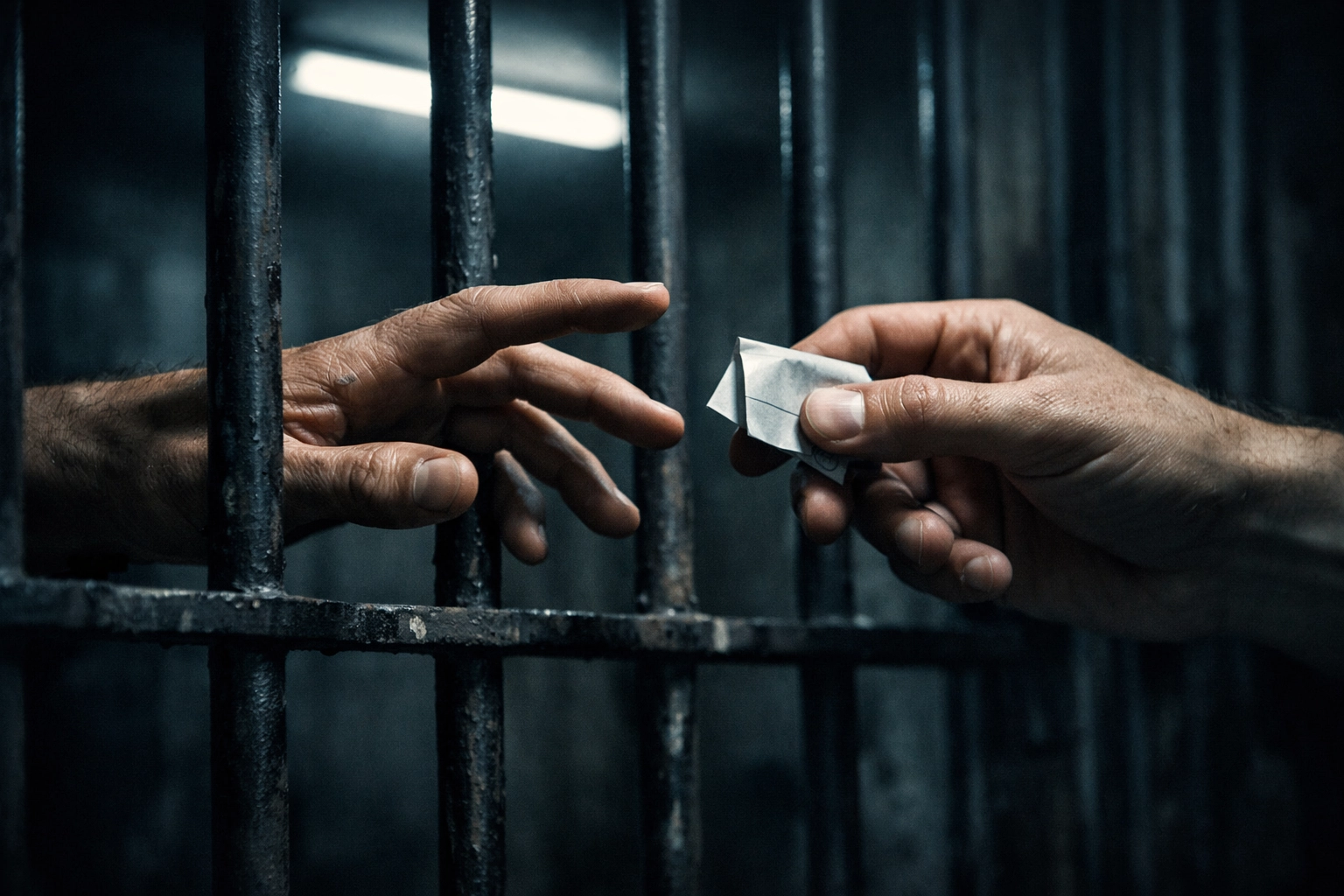
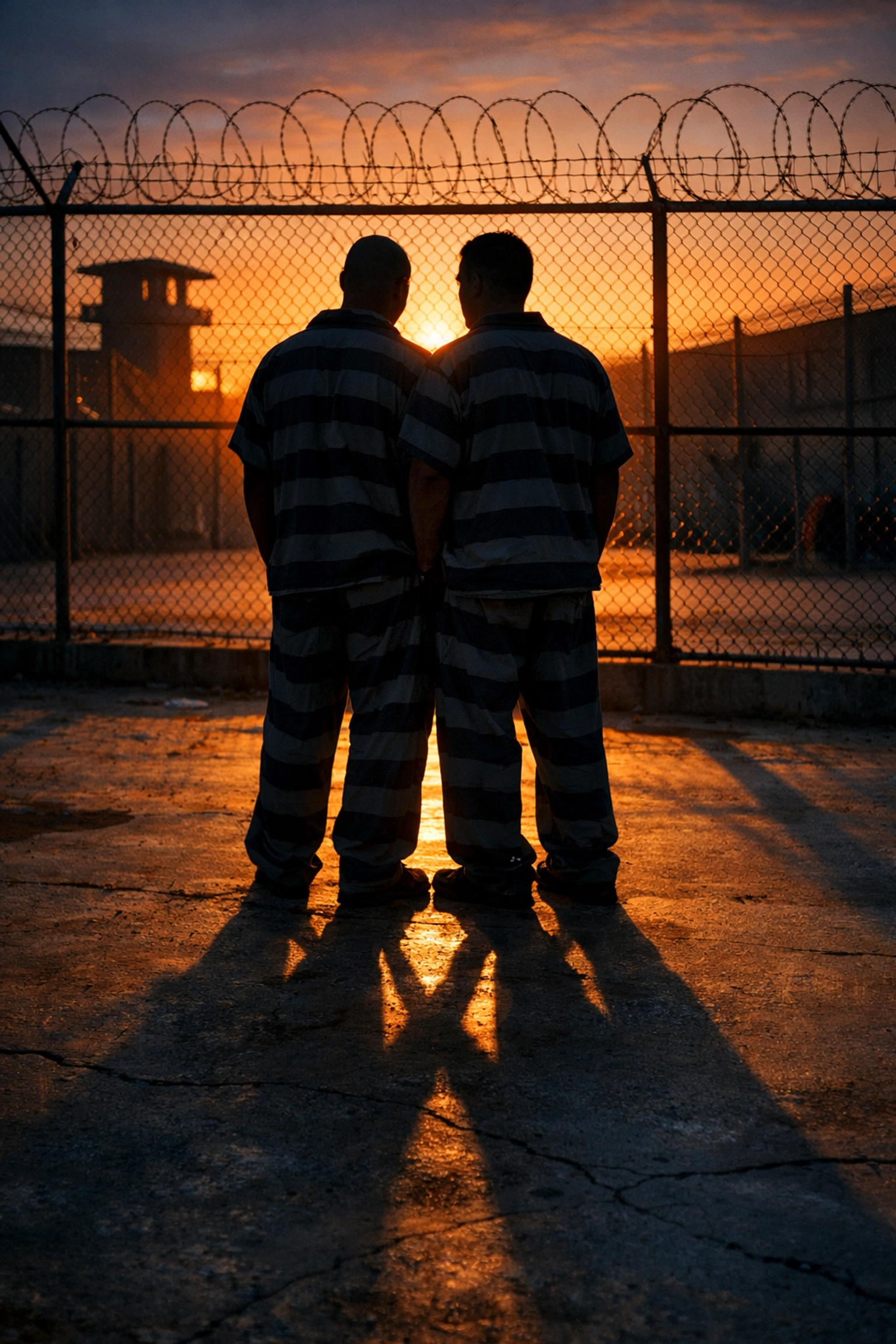
Real Romance does happen. Against all odds, in the worst possible circumstances, two people find each other. They share stolen moments in the yard. They pass notes through trusted connections. They create a private world in a place designed to eliminate privacy. These are the stories that sound like fiction but happen more often than you'd think.
The Secret Language of Prison Romance
Communication becomes an art form. A look across the cafeteria. A particular way of standing during yard time. Messages encoded in seemingly innocent conversations. Everything has to be subtle because visibility equals vulnerability.
Physical intimacy requires even more creativity and risk. Empty storage rooms. Brief moments in the shower area. The constant fear of being caught: not just by guards, but by other inmates who might see vulnerability as opportunity. Every touch is stolen. Every kiss could cost you.
Some facilities have more tolerance than others. In some places, as long as you're discreet, people look the other way. In others, any hint of same-sex attraction brings immediate consequences. Learning the unwritten rules of your particular environment isn't optional: it's survival.
The Emotional Reality
Here's what the movies don't show you: the loneliness is crushing. Even when you find someone, you can't hold hands in public. You can't be yourself openly. You're constantly performing masculinity, constantly on guard, constantly aware that the person who makes your life bearable could be transferred tomorrow, and you might never see them again.
The emotional toll is enormous. You're dealing with the trauma that likely contributed to your incarceration, the trauma of the system itself, and now the complexity of maintaining a relationship in impossible circumstances. Mental health resources in prisons are minimal at best, non-existent at worst. You deal with it alone or with your person if you're lucky enough to have one.
But: and this is important: those relationships can also be healing. Having someone who accepts you, who sees you as more than your conviction, who reminds you that you're capable of love and connection? That can be the difference between surviving your sentence and thriving despite it.
Life After Release
What happens when one of you gets out? Sometimes the relationship ends at the prison gates. The outside world is different, and what worked inside doesn't translate. Sometimes people stay connected, visiting, writing, counting down the days until both are free.
And sometimes: sometimes: couples make it. They build lives together on the outside. They deal with parole restrictions and the stigma of being formerly incarcerated and LGBTQ+. They create a future from what began in the darkest place imaginable.
These are the love stories that don't get published as gay romance novels. They're too messy, too complicated, too real. But they matter. They're part of our community's story.
The Bigger Picture
We need to talk about prison reform and how it affects LGBTQ+ people. We need to advocate for:
- Better protections for queer inmates
- Appropriate housing that balances safety with dignity
- Access to mental health resources
- Training for prison staff on LGBTQ+ issues
- Policies that don't punish consensual relationships
Because here's the truth: people are going to form connections whether the system wants them to or not. Making those connections dangerous doesn't stop them: it just adds trauma on top of trauma.
Finding Yourself in Impossible Places
Some men discover or fully accept their sexuality in prison. Away from family expectations, societal pressure, and the life they built around denial, they finally have space: however confined: to be honest with themselves. It's ironic and sad and profound all at once.
Others go in knowing exactly who they are and spend their entire sentence fighting to maintain that identity in a system designed to break them down. That takes a different kind of courage: the everyday courage of refusing to be erased.
The Stories We Need
At Read with Pride, we believe in telling all kinds of LGBTQ+ stories, including the uncomfortable ones. Not every love story happens in perfect circumstances. Not every romance leads to a happily ever after. But they're all valid. They all matter. They all deserve to be told.
The men finding tenderness in the shadows of concrete aren't characters in a book: they're real people navigating impossible situations. Some of them will come out the other side with stories of love that survived the worst. Others will carry the scars of what they endured. All of them deserve our respect, our advocacy, and our recognition that their experiences are part of our broader community.
Love doesn't stop existing just because we're in places designed to eliminate it. Connection finds a way, even through concrete walls. And that, ultimately, is both heartbreaking and hopeful in equal measure.
Exploring diverse LGBTQ+ narratives and experiences. Follow us on Facebook, Instagram, and Twitter for more authentic queer storytelling.
#ReadWithPride #LGBTQStories #GayRomance #QueerNarratives #MMRomance #PrisonReform #LGBTQRights #QueerLove #AuthenticStories #GayLoveStories #LGBTQCommunity #QueerFiction #RealStories #LGBTQAdvocacy #MMRomanceBooks #GayBooks #LGBTQEbooks #2026 #QueerRepresentation

Leave a Reply
You must be logged in to post a comment.