


readwithpride.com
There's something about Chicago that demands a soundtrack. Maybe it's the way Lake Michigan crashes against the shore like percussion, or how the El train rattles overhead like a bass line that never quite resolves. For Marcus Chen, the city's rhythm was something he analyzed in spreadsheets and user engagement metrics. For Terrell Washington, it was something he felt in his bones every time his fingers touched a keyboard: the musical kind, not the one Marcus stared at for twelve hours a day.
They met on a Tuesday, which felt appropriately unromantic for two people who would later swear they didn't believe in fate.
Marcus had wandered into Buddy's Blues Lounge on a whim, dragged there by a co-worker who insisted he needed to "see some real Chicago" instead of just the view from his Michigan Avenue high-rise. Terrell was three songs into his set, playing an original piece that made the small crowd lean in closer, drinks forgotten. The tech worker in Marcus wanted to map the chord progression, to understand the algorithm of why his chest felt tight. The human in Marcus just wanted to keep listening.
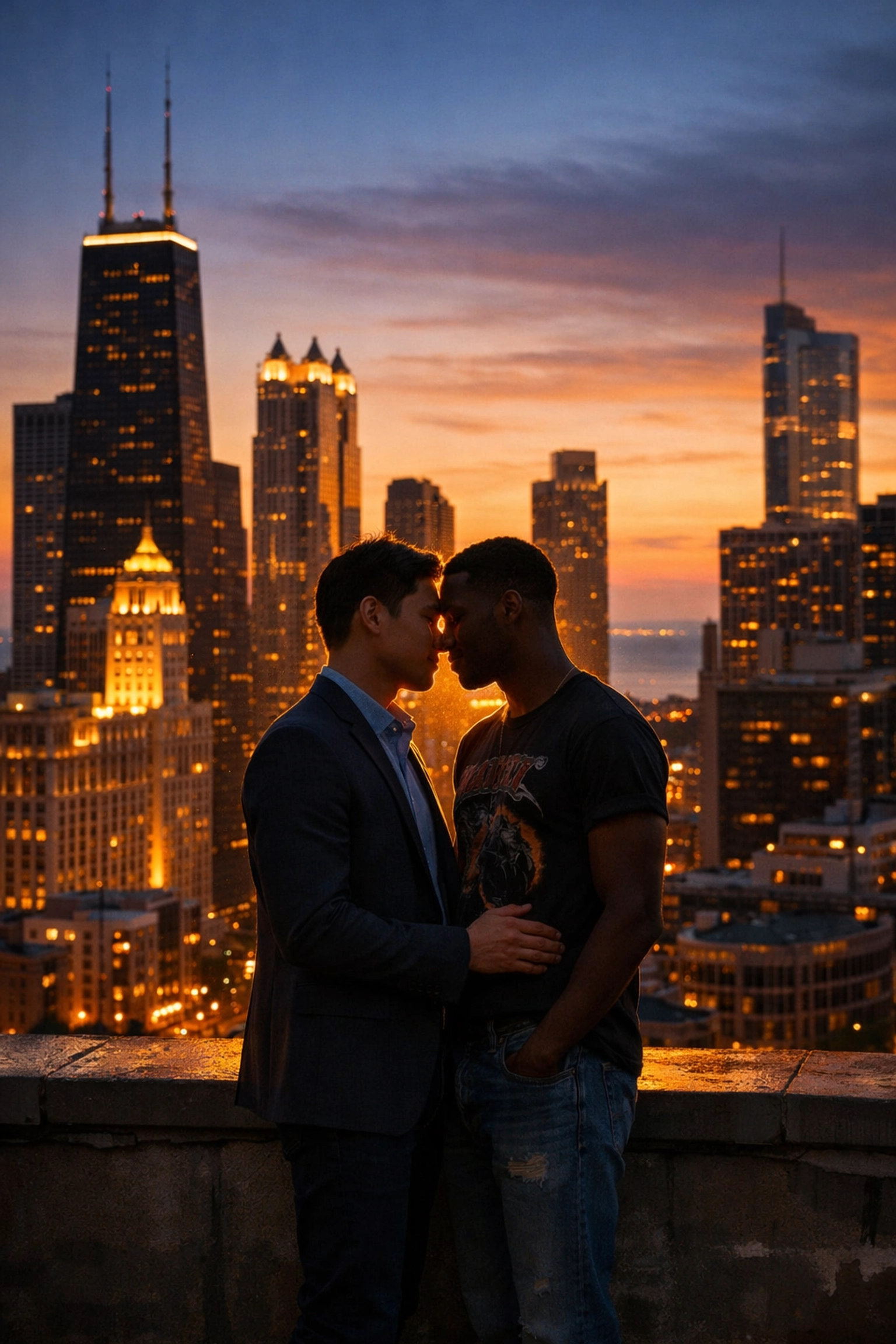
When Worlds Collide on the Magnificent Mile
The Magnificent Mile might be known for shopping and skyscrapers, but it's also where countless love stories unfold in the shadows of corporate America. Marcus lived in one of those glass towers, the kind where your living room has a better view than most people's vacation photos. His life was startups and venture capital meetings, Patagonia vests and artisanal coffee that cost more than Terrell's weekly grocery budget.
Terrell, on the other hand, lived in Bronzeville, in a two-bedroom apartment he shared with his grandmother and about forty years of accumulated family history. He taught music at a community center three days a week and played blues clubs the other four, channeling a tradition that ran from Muddy Waters through his grandfather's record collection straight into his own compositions.
On paper, they made no sense. Marcus's world was all clean lines and disruption culture. Terrell's was analog warmth and tradition. But Chicago has always been a city of contradictions: polish and grit, lake breezes and industrial smoke, deep-dish pizza and Michelin stars. It's a place where a blues musician and a tech worker can find themselves sharing late-night tacos at a Maxwell Street stand, arguing about whether Spotify is killing music or democratizing it.
"You're overthinking it," Terrell said, gesturing with a pastor taco that threatened to spill. "Music isn't data."
"Everything is data," Marcus countered, but he was smiling. "Even this. The fact that we're here, that I came back to your show three times this week: that's a pattern."
"Baby, if you need an algorithm to tell you you're into me, we got bigger problems."
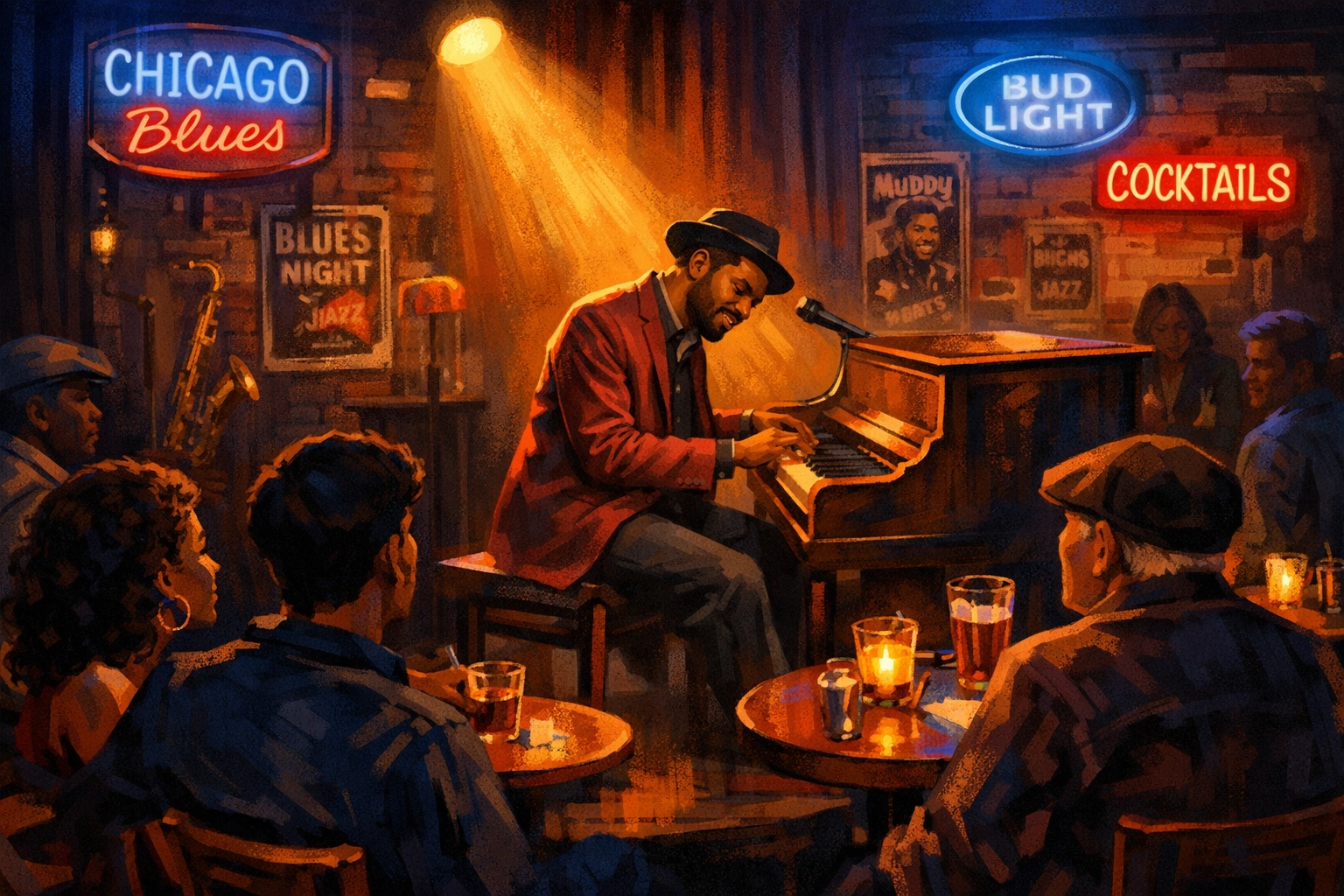
The Soundtrack of Falling
Their relationship developed like a good jazz standard: familiar structure, but full of improvisation. Marcus started showing up at Terrell's gigs with increasing regularity, learning to read the set list in the way Terrell's shoulders moved before launching into a new song. Terrell started understanding Marcus's world too, the pressure of investor meetings, the constant hustle of startup culture, the weight of being one of the few Asian gay men in a predominantly white tech scene.
Chicago's LGBTQ+ scene gave them spaces to exist together. They danced at Berlin until 4 AM, caught drag brunch at Sidetrack, walked hand-in-hand down Halsted Street past rainbow flags that promised visibility and community. The city has always been more than its postcards and tourist traps: it's the neighborhoods, the local spots, the communities that carved out space for themselves when no one else would.
Boystown became their middle ground, somewhere between Marcus's Michigan Avenue and Terrell's Bronzeville. They'd meet at indie bookstores, at Read with Pride's favorite local queer-owned shop, browsing MM romance books and gay fiction that reflected parts of their story back at them. Marcus discovered he loved contemporary MM romance: those stories of mismatched couples finding common ground. Terrell preferred historical fiction, tales of queer resilience that echoed the blues tradition of turning pain into art.
The Blues Ain't About Being Sad
"People think the blues is about being miserable," Terrell explained one night, his fingers absently working through a melody on Marcus's expensive electric keyboard: a gift that Terrell had initially refused before Marcus wore him down. "But it's really about transformation. Taking something heavy and making it beautiful."
They were in Marcus's apartment, the Magnificent Mile spread out below them like a circuit board of lights. It was Marcus's birthday, and instead of the rooftop party his friends had planned, he'd canceled everything to spend it here, with Terrell, learning to hear music the way Terrell did.
"Play it again," Marcus said. "The thing you were working on."
Terrell obliged, and this time Marcus closed his eyes, letting go of the need to analyze, to understand, to optimize. He just listened. And somewhere in that listening, he understood what Terrell had been trying to tell him: that some things weren't meant to be decoded, just felt.
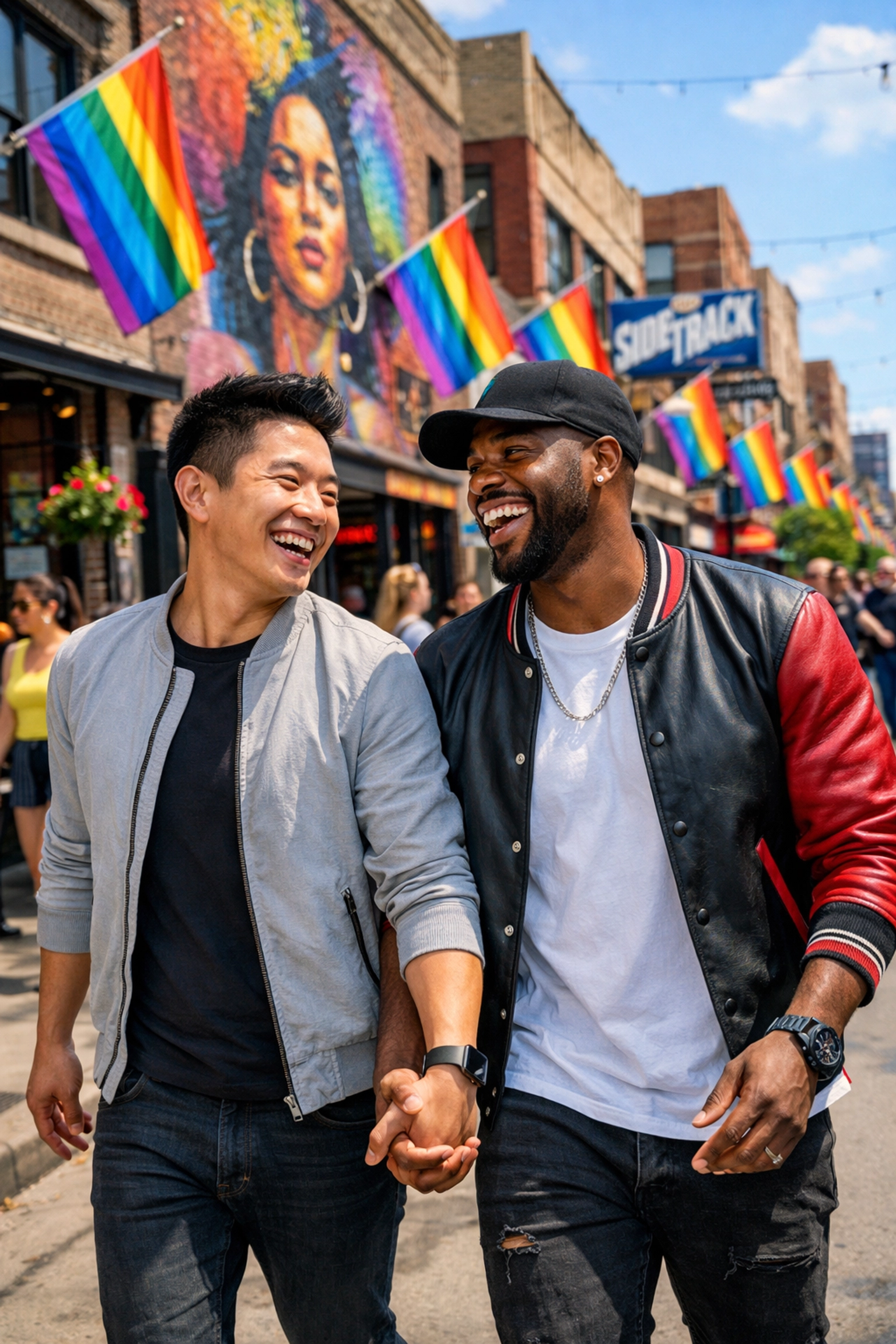
Different Worlds, Same City
Their differences never disappeared, but they learned to navigate them. Marcus started taking Fridays off to catch Terrell's afternoon session at the community center, watching him teach teenagers who looked like him how to translate their stories into chord progressions. Terrell learned to exist in Marcus's corporate world without losing himself, wearing the blazer Marcus bought him to investor dinners and charming venture capitalists with the same authenticity that packed blues clubs.
Chicago taught them both something about resilience. This city has always been about working people, about communities that survive winters that would break lesser spirits. The LGBTQ+ community here built spaces from scratch: bars and bookstores and support networks: long before corporate pride became a thing. There's a grit to queer Chicago that both men recognized, even if they expressed it differently.
Marcus's systematic approach to problems complemented Terrell's intuitive creativity. When Terrell's grandmother got sick, Marcus was the one who researched doctors, made spreadsheets of insurance options, organized a crowdfunding campaign. When Marcus's startup imploded after a failed funding round, Terrell was the one who reminded him that failure wasn't the end of the story: just a bridge to somewhere else.
Writing Their Own Song
A year after that first Tuesday night at Buddy's Blues Lounge, Terrell premiered a new composition. He called it "Magnificent Mile Blues," and if you listened carefully: really carefully: you could hear the influence of Marcus in it. The structure was tighter than his usual work, more deliberate. But the soul was pure Terrell, all warmth and depth and hard-earned wisdom.
Marcus sat in the front row, and for once, his phone stayed in his pocket. No metrics, no analytics, no trying to quantify the unquantifiable. Just him and the music and the man who'd taught him that some of the best things in life resist optimization.
Their story isn't unique to Chicago, but it's uniquely of Chicago: a city that's always been about the collision of different worlds, different people, different dreams finding harmony in unexpected places. From the Magnificent Mile to Maxwell Street, from Boystown to Bronzeville, the city holds space for all of its contradictions to coexist.
And if you walk down Michigan Avenue on the right night, if you listen past the traffic and the tourists and the corporate hustle, you might just hear it: the whispers of the Windy City, telling stories of connection found in the most unlikely places.
Discover more LGBTQ+ stories and gay romance books at readwithpride.com
Follow us on Facebook, Instagram, and Twitter for daily queer fiction recommendations and community celebrations.
#MMRomance #GayRomance #ReadWithPride #LGBTQBooks #ChicagoLove #QueerFiction #GayLoveStories #ContemporaryRomance #MMRomanceBooks #GayFiction #QueerLit #LGBTQReads #PrideReading #GayBooks #DiverseRomance

Leave a Reply
You must be logged in to post a comment.