

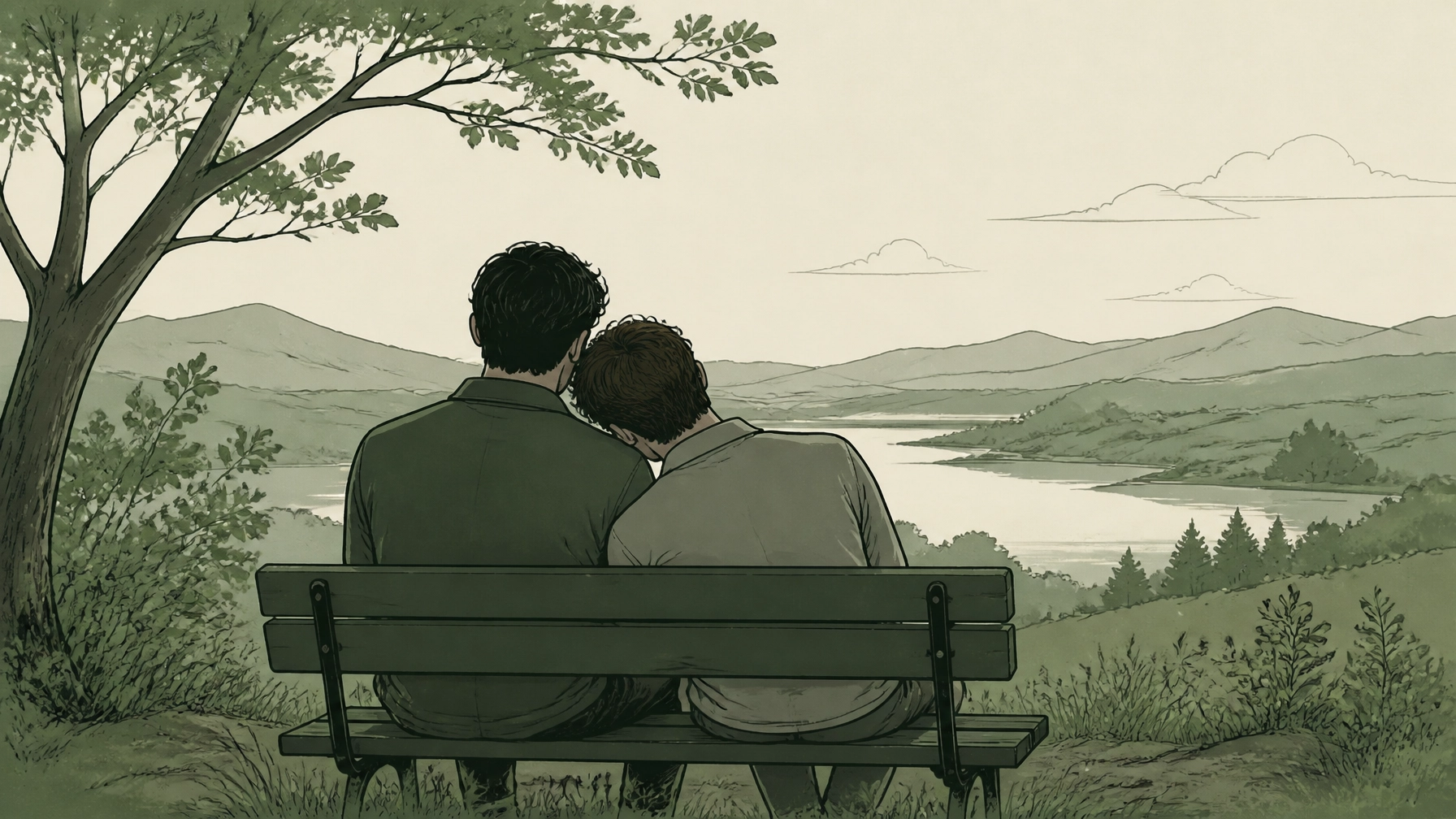
It’s 2026, and the world looks a little different than it did even five years ago. If you walk into any bookstore: physical or digital: you’ll see it immediately. The rigid lines we used to draw around "men" and "women," "masculine" and "feminine," are blurring. Some might even say traditional gender is on its deathbed. But here at Read with Pride, we don’t see it as an ending. We see it as a beautiful, messy, and long-overdue evolution.
The stories we read reflect the lives we lead. As an author, Dick Ferguson has always been obsessed with the internal lives of men who don’t quite fit the mold. Whether it's exploring the vulnerability of a coming-out journey or the intense emotional stakes of an MM romance, his work has always pointed toward a more fluid future.
So, is traditional gender dead? Let’s look at 10 things you need to know about queer identity and gay fiction in 2026.
1. The Beauty of Being Non-Binary: Living Beyond the Binary Gaze
In 2026, being non-binary isn't just a label; it’s a way of moving through the world that refuses to be categorized by the "binary gaze." For a long time, society expected everyone to perform for a specific audience: to be "man enough" or "woman enough."
Living beyond the binary gaze means reclaiming your body and your presentation for yourself. In our stories, we’re seeing characters who exist in that middle space not as a "plot point," but as a lived reality. They are men who embrace softness, individuals who reject the "he/him" or "she/her" dichotomy, and lovers who find beauty in the in-between. This shift has allowed MM romance books to explore even deeper levels of intimacy, where connection is based on soul rather than social expectation.
2. Redefining the "Alpha": The New Masculinity in MM Fiction
Remember the old "Alpha" trope? The stoic, unmovable man who never cried? In 2026, that version of masculinity is mostly a relic. Today’s gay romance readers are looking for the "New Alpha": a man who is strong enough to be vulnerable.
Authentic masculinity now includes the ability to say, "I’m scared," or "I need you." In Dick Ferguson's novels, masculinity is portrayed with remarkable sensitivity and nuance. It’s not about how much you can lift; it’s about how much you can feel. This evolution has made MM contemporary stories far more relatable and emotionally resonant.
3. Fluidity as a Foundation: Why Bisexual Narratives are Leading the Way
Bisexuality used to be treated as a "phase" or a pit stop on the way to coming out as gay. In 2026, we’ve finally moved past that. Fluidity is now recognized as a stable, beautiful identity in its own right.
Bisexual romance is currently one of the fastest-growing sub-genres. Why? Because it challenges the idea that love has to be one-dimensional. Readers are gravitating toward characters who navigate the complexities of their desires with honesty. It’s about the person, not the "type," and that’s a message that resonates with everyone in the LGBTQ+ community.
4. The Power of "OwnVoices": Authenticity as the New Standard
In 2026, the demand for OwnVoices stories: books written by authors who share the identity of their characters: is higher than ever. Readers are discerning; they can tell when a story is "performed" versus when it is "felt."
Authentic representation means portraying the "darker aspects of the human experience" alongside the joy. It means writing about the gritty urban landscapes and the intimate personal journeys of queer men with profound empathy. When you read with pride, you’re often looking for that spark of recognition: the feeling that the author truly gets you.
5. Beyond the Screen: How Digital Queer Safe Havens Have Evolved
The internet has always been a lifeline for the queer community, but in 2026, our digital spaces have become even more sophisticated. From dedicated gay book clubs on decentralized social apps to immersive VR reading lounges, the way we connect over queer fiction has changed.
These spaces aren't just for chatting; they are safe havens where people can explore their identities before they’re ready to do so in the physical world. They are the birthplaces of new sub-genres and the support systems for debut MM authors.
6. Emotional Realism Over Tropes: What Readers Actually Want in 2026
While we still love a good "grumpy-sunshine" or "enemies-to-lovers" setup, readers in 2026 are increasingly demanding emotional realism. A trope is just a skeleton; it needs the meat of authentic internal struggles to come alive.
People are looking for literary MM romance that doesn't shy away from possessive jealousy, searing hate, or the terrifying vulnerability of choosing love. We want to feel the characters' struggles as if they were our own. This trend toward high-angst, emotionally charged stories is a testament to the sophistication of today's readership.
7. The Nudist Narrative: Vulnerability and Radical Body Acceptance
One of the more unique themes we explore at eBooks by Dick Ferguson is the intersection of nudism and queer identity. In 2026, social nudism (or naturism) has become a powerful symbol for radical body acceptance.
Stripping away the clothes is a metaphor for stripping away the social constructs of gender and status. It’s about being seen exactly as you are. In gay novels that incorporate these themes, we see characters finding a sense of peace and connection that is rarely found in the "clothed" world. It’s a niche, but it speaks to a universal desire: to be accepted without judgment.
8. Literary Prose in Genre Fiction: Why the Way We Tell Stories Matters
For a long time, "romance" and "literary fiction" were kept in separate boxes. By 2026, those boxes have been smashed. Authors like Dick Ferguson are proving that you can have a gripping gay love story written with lyrical, evocative prose.
The "vivid imagery" and "profound empathy" found in high-end queer literature are no longer reserved for tragic endings. We believe that queer joy deserves beautiful sentences. The way a story is told is just as important as the story itself.
9. Queer Ancestry: Bringing LGBTQ+ History into Modern Romance
There is a massive trend in 2026 toward "reclaiming" our history. Gay historical romance and MM historical novels are no longer just about the Victorian era. We’re looking at the queer 1920s, the hidden lives of soldiers in WWII, and the activists of the 80s.
Understanding where we came from helps us understand who we are now. By weaving historical threads into modern narratives, authors are giving the community a sense of permanence and legacy. It’s a reminder that we have always been here, and we have always been loving each other.
10. Resilience and Connection: The Future of Gay Love Stories
Finally, the most important thing to know about queer identity in 2026 is that it is rooted in resilience. Despite the challenges and the backlashes, the "powerful bond" of connection remains.
The future of MM romance books isn't just about "happily ever after"; it's about "happy and resilient ever after." It’s about characters who grapple with their insecurities and come out stronger on the other side. This celebration of resilience is what keeps readers coming back to our e-book store.
Conclusion: A World of Stories
Is traditional gender dead? Perhaps not entirely, but it certainly isn't the boss of us anymore. In 2026, we are freer to explore the full spectrum of human emotion, identity, and desire than ever before.
Whether you are a long-time fan of MM novels or someone just beginning to explore LGBTQ+ ebooks, there is a story waiting for you that feels true. We invite you to dive into the richly detailed worlds of Dick Ferguson and discover the power of authentic, emotionally immersive storytelling.
Explore our latest releases and find your next favorite read at our store: https://readwithpride.com/e-book-store/dickfergusonwriter/
Follow us on social media:
- Instagram: https://www.instagram.com/dickfergusonwriter
- X (Twitter): https://www.x.com/DickFergus94902
- Facebook: https://www.facebook.com/profile.php?id=61572869844598
- Website: www.readwithpride.com
Three new blog post options for tomorrow:
- The Psychology of Jealousy: Why We Love High-Angst MM Romance
- From Urban Grit to Personal Growth: Mapping the Landscapes of Dick Ferguson’s Novels
- More Than a Trope: How to Write Truly Multi-Dimensional Queer Characters
#readwithpride #LGBTQebooks #gaybooks #MMromance #gayromance #queerfiction #DickFerguson #MMfiction #gayliterature #bisexualrep #nonbinaryidentity


{“@type”:”BlogPosting”,”image”:[“https://cdn.marblism.com/R4DuVyYo_fo.webp”,”https://cdn.marblism.com/ydNYi44umRC.webp”,”https://cdn.marblism.com/L1YkMxpsEHe.webp”,”https://cdn.marblism.com/7hJGZhk436H.webp”,”https://cdn.marblism.com/Taw9n4N4YWV.webp”],”author”:{“url”:”https://readwithpride.com/e-book-store/dickfergusonwriter/”,”name”:”Dick Ferguson”,”@type”:”Person”},”@context”:”https://schema.org”,”headline”:”Is Traditional Gender Dead? 10 Things You Should Know About Queer Identity in 2026″,”keywords”:”MM romance, gay books, LGBTQ+ ebooks, Read with Pride, gay fiction, non-binary, bisexuality, emotional depth, literary MM romance”,”publisher”:{“logo”:{“url”:”https://readwithpride.com/wp-content/uploads/2024/01/logo.png”,”@type”:”ImageObject”},”name”:”Read with Pride”,”@type”:”Organization”},”description”:”Explore the evolution of queer identity, non-binary representation, and MM romance in 2026. Discover how traditional gender norms are shifting in literature and life.”,”datePublished”:”2026-07-08″}

Leave a Reply
You must be logged in to post a comment.