

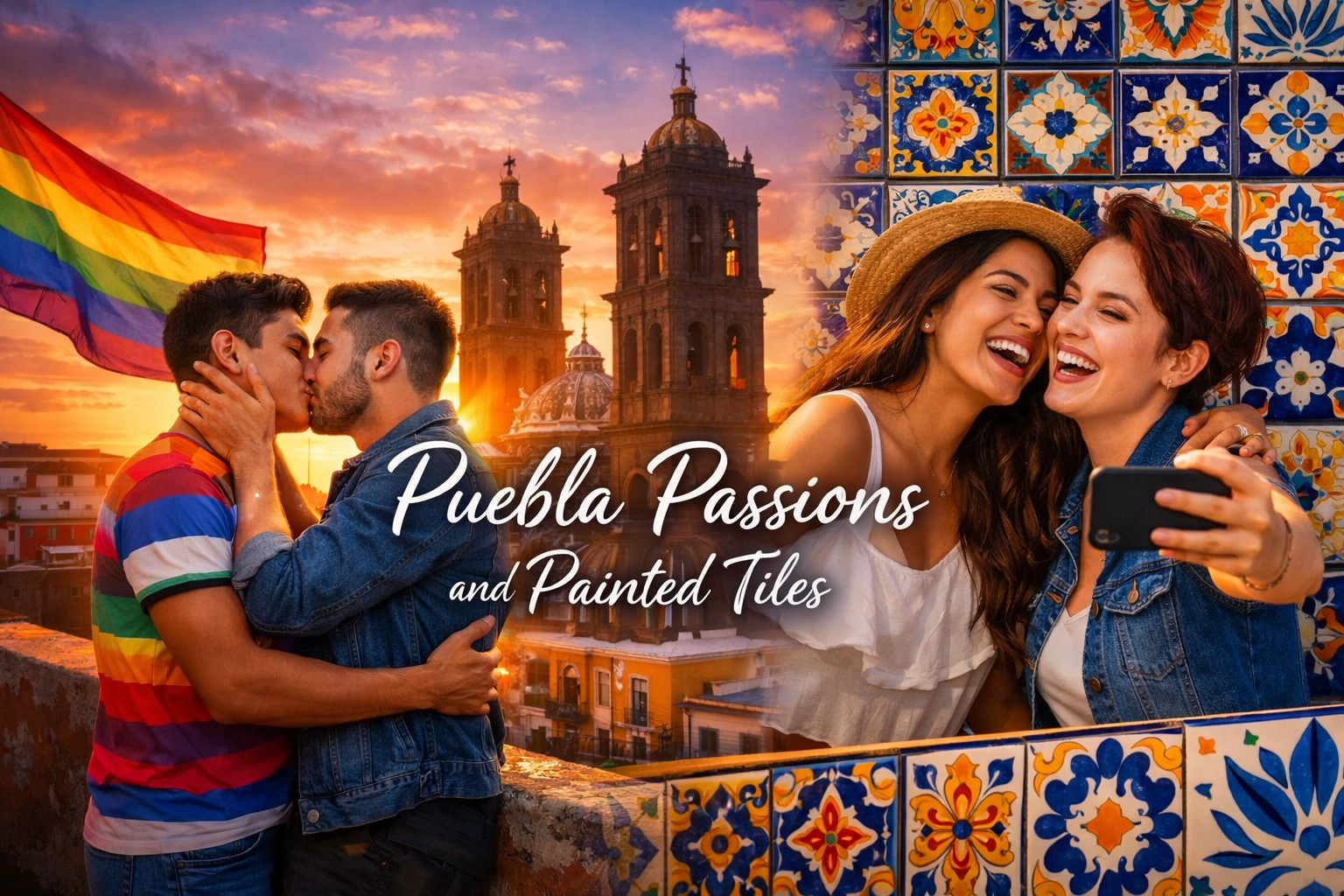
readwithpride.com
The first time I brought Diego home to meet my family in Puebla, my abuela touched the Talavera tiles on her kitchen wall and told us a story. Each blue-and-white square, she said, represented a marriage between two worlds: Spanish technique and Mexican soul, European precision and indigenous passion. She smiled at us knowingly, her fingers tracing the painted flowers. "Sometimes the most beautiful things," she whispered, "come from unexpected combinations."
I'm pretty sure she wasn't just talking about ceramics.
Living Between Two Worlds
Puebla isn't Mexico City. It doesn't have the anonymous sprawl where you can disappear into the crowd, and it's not Guadalajara with its established gay districts and rainbow crosswalks. Puebla is something else entirely: a colonial jewel where baroque churches cast shadows on streets that have witnessed four centuries of Mexican life, where tradition isn't just respected, it's woven into the city's DNA like the intricate patterns on those famous tiles.
Growing up here meant learning to navigate spaces where history pressed against the present. My family owned a small Talavera workshop in the artisan quarter, one of the few still using the original 16th-century techniques. From childhood, I watched my father and uncles mixing the white and black volcanic clays, applying the milky tin glaze, hand-painting each piece with brushes made from donkey hair. The craft demands patience, precision, and respect for what came before.
Coming out demanded something similar.
The Weight of Painted Expectations
In Puebla's traditional families, expectations arrive gift-wrapped in religious devotion and cultural pride. You're not just disappointing your parents when you deviate from the script: you're somehow betraying centuries of ancestors, the Virgin of Guadalupe, and possibly every artisan who ever shaped clay with their bare hands.
When I told my parents I was gay at twenty-two, my father didn't speak to me for three months. He'd come to the workshop before dawn and leave after dark, avoiding our house entirely. My mother cried in the kitchen, rosary beads clicking through her fingers like a ceramic glaze cracking under heat.
But here's the thing about Puebla: and maybe about Mexico in general: nothing is ever as simple as rejection or acceptance. It's more complicated, more layered, like those tiles with their multiple glazes and firing processes. My father wouldn't speak to me, but he also wouldn't let anyone else in the family criticize me. My mother cried, but she also set an extra place at Sunday dinner, week after week, in case I decided to come.
Finding Color in a Blue-and-White World
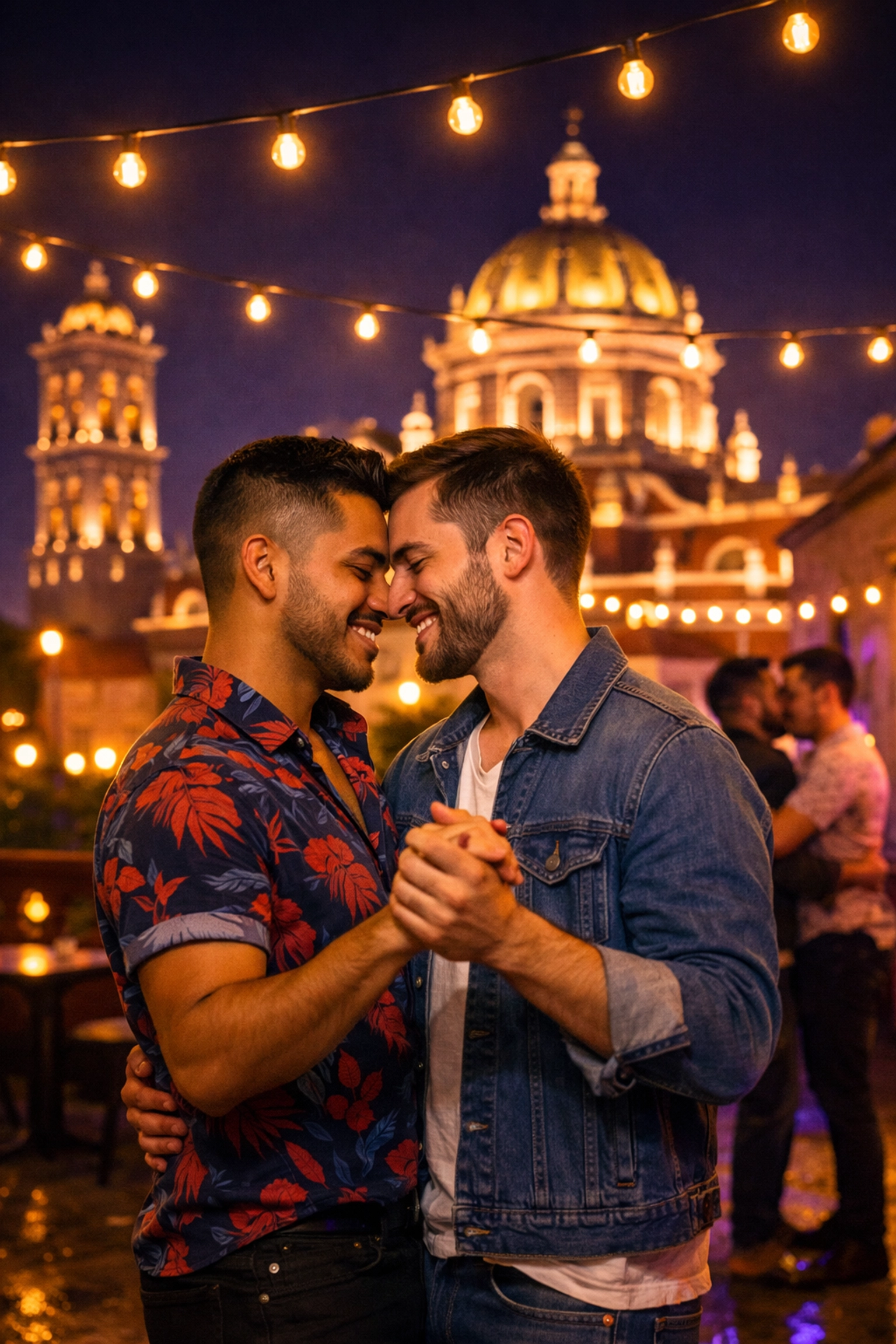
The Puebla gay scene exists in pockets and shadows, in coded conversations and knowing glances. There's Bar La Pasión on Cinco de Mayo street, where the rainbow flag hangs discreetly by the back entrance. There's the Saturday market in Analco where queer artists sell their work alongside traditional craftspeople. There are rooftop gatherings in the centro histórico where we dance to Selena and Bad Bunny while the illuminated cathedral watches from across the zócalo.
I met Diego at one of those rooftop parties. He was from Mexico City, working in Puebla for six months as an architect specializing in colonial restoration. He understood the paradox of loving something traditional while also needing it to evolve. "These buildings," he told me on our second date, walking past the tile-covered Casa de los Muñecos, "they only survived because each generation added something new while respecting what came before."
We fell in love between those contradictions: the gay man from a traditional Talavera family and the chilango architect who saw beauty in synthesis rather than purity.
When Tradition Meets Pride
The turning point came during Puebla's anniversary celebrations. My father's workshop had been commissioned to create a series of commemorative tiles for the municipal palace. It was a huge honor, the kind of recognition that could sustain a family business for years. But my father's hands had developed arthritis, making the detailed brushwork nearly impossible.
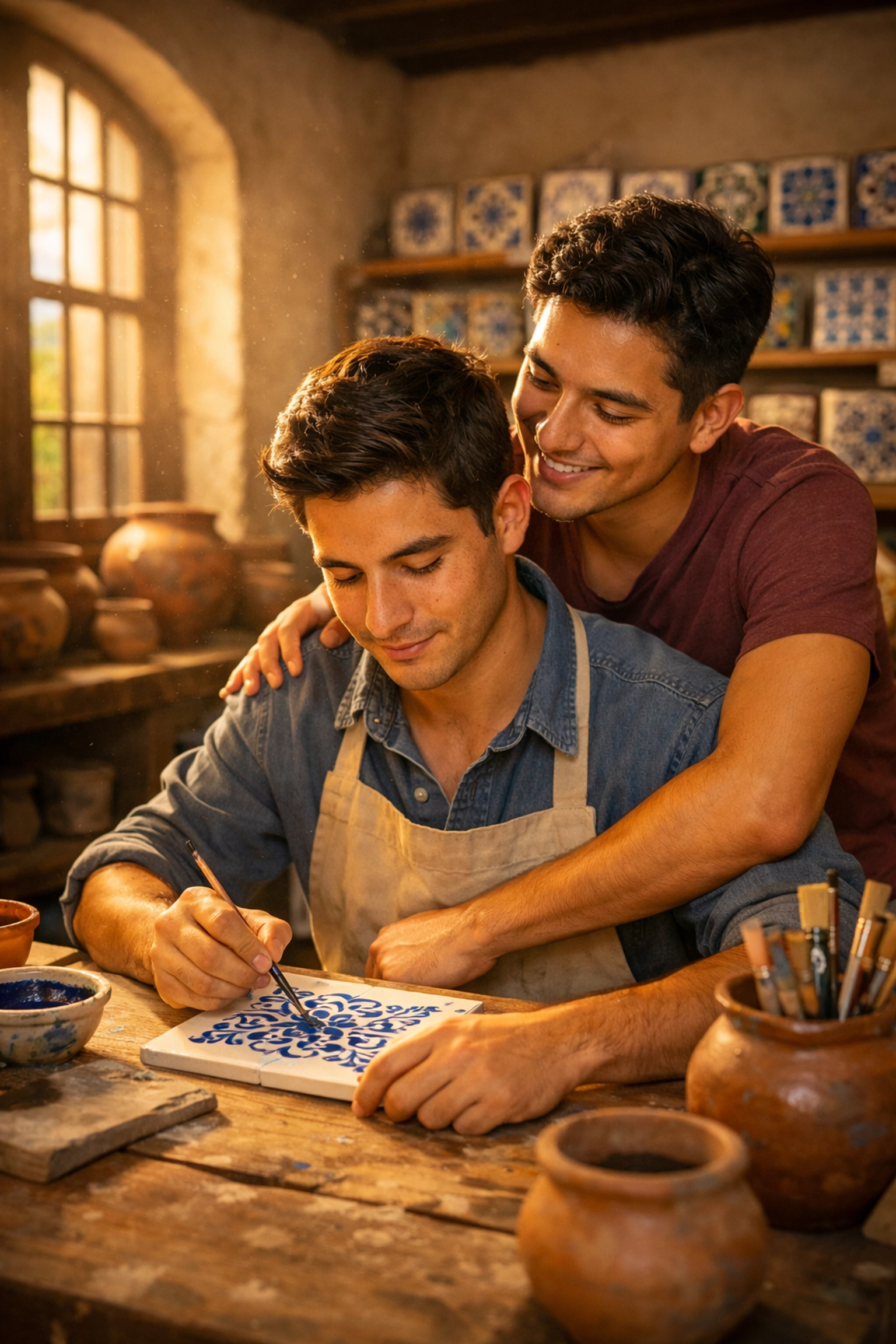
Diego suggested I help with the design work: I'd always had an eye for patterns, even if I'd chosen literature over ceramics for my career. We spent evenings in the workshop, Diego sketching architectural elements while I painted sample tiles, trying to capture Puebla's essence in blue and white glaze.
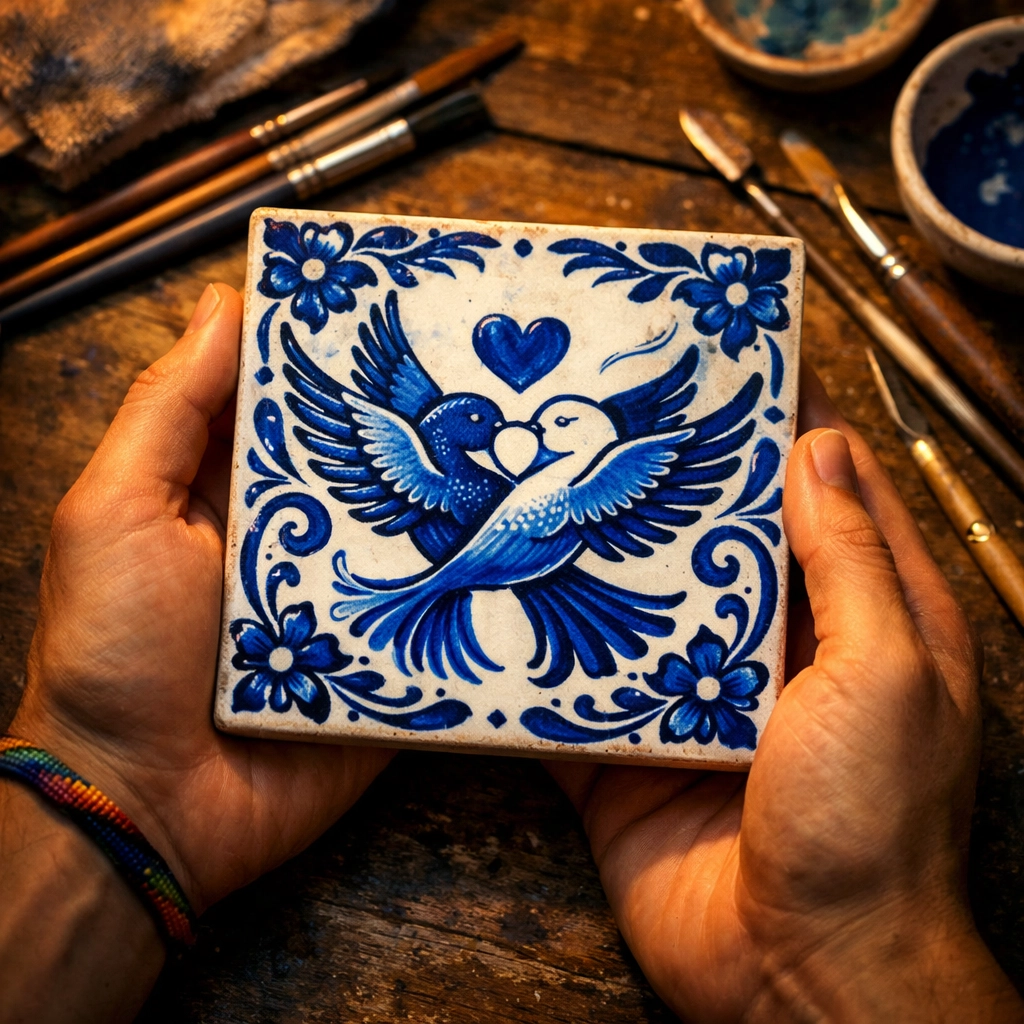
One night, working late, I painted a tile that deviated from the traditional motifs. Instead of the usual flowers and geometric patterns, I incorporated two birds in flight, their wings overlapping, their paths intertwining. Diego saw it and went quiet.
"That's us," he said simply.
My father found that tile the next morning. I expected anger, a lecture about respecting tradition, about not making the family business political. Instead, he studied it for a long time, turning it in his weathered hands.
"The old masters," he finally said, "they didn't just copy what came before. They mixed Spanish and Mexican, Chinese and Italian. Every generation added something." He looked at me. "Maybe it's time for something new."
That tile became part of the municipal commission. Not prominently: Puebla isn't ready for rainbow flags on government buildings: but there, incorporated into a larger pattern, visible to those who know how to look.
The New Puebla Underground
There's a growing community here, quieter than Mexico City's but no less real. Young queer artists are opening galleries in the historic district. Gay-owned cafés are appearing in the neighborhoods around UDLAP and BUAP universities. The annual diversity march grows larger each year, winding through streets where conquistadors once rode.
We're not changing Puebla's tradition: we're adding to it, layering our colors onto the existing pattern. The city's conservatives still protest Pride events. Families still struggle with acceptance. Church bells still ring across a city where Catholic identity runs deep. But something is shifting, like tectonic plates moving beneath volcanic clay.
Diego extended his six-month contract indefinitely. We found an apartment near the Zócalo with original Talavera tiles in the bathroom: the good kind, not tourist reproductions. On weekends, we explore the city together: the Biblioteca Palafoxiana with its ancient books, the markets in Cholula, the cantinas where mariachi bands play until dawn.
Glazed in Authenticity
My abuela was right about those tiles. The most beautiful things come from unexpected combinations: not just Spanish and Mexican, not just old and new, but also tradition and change, family and chosen family, the person you were raised to be and the person you actually are.
Puebla taught me that you don't have to reject your roots to grow in a new direction. You can honor where you came from while insisting on the right to become something your ancestors never imagined. Like those artisans who first mixed European tin-glazing with indigenous Mexican clay, sometimes the most authentic thing you can do is create something that's never existed before.
The city is changing, slowly, one conversation at a time, one family learning acceptance, one tile added to an ancient pattern. It's not perfect. It's not easy. But it's real, and it's ours.
And some nights, when Diego and I walk home through the illuminated centro, past churches covered in Talavera tiles that have witnessed centuries of Mexican life, I think about all the love stories those painted surfaces have reflected. How many secrets have those tiles kept? How many impossible combinations have they witnessed?
Maybe ours isn't so impossible after all.
Looking for more LGBTQ+ stories that celebrate authentic experiences? Explore Read with Pride for MM romance books, gay fiction, and queer love stories that honor tradition while embracing change.
Connect with us:
- Facebook: Read With Pride
- Instagram: @read.withpride
- Twitter/X: @Read_With_Pride
- Website: readwithpride.com
#ReadWithPride #GayPuebla #LGBTQMexico #MexicanPride #MMRomance #QueerLatinx #GayRomanceBooks #LGBTQFiction #QueerStories #AuthenticVoices #Talavera #ColonialMexico #GayMexico #LGBTQCommunity #QueerLove #GayLife #PrideInTradition #MMContemporary #GayLiterature #QueerNarratives

Leave a Reply
You must be logged in to post a comment.