


readwithpride.com
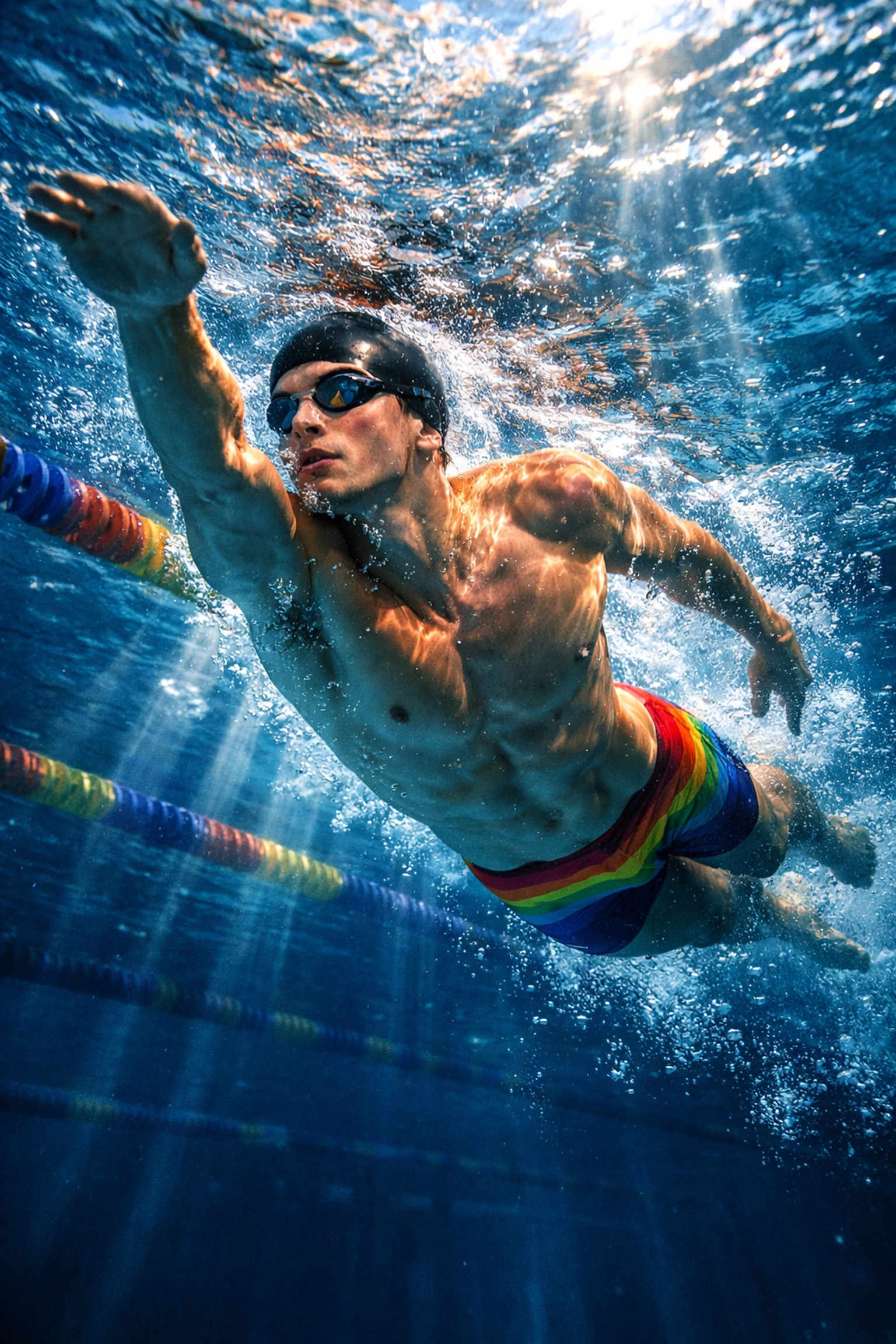
The water doesn't lie. That's what Kenji Watanabe's coach always told him. In the pool, you're stripped down to nothing but effort, technique, and heart. There's nowhere to hide.
But outside the pool? That was a different story entirely.
The Weight of Gold
At twenty-four, Kenji had become one of Japan's most promising swimmers. His freestyle was poetry in motion, powerful, precise, devastating. He'd medaled at the World Championships, broken national records, and was now training for the upcoming Olympics in his home city of Tokyo. The pressure was immense. Not just to win, but to win for Japan. To make his family proud. To honor his country.
Every morning at 4:30 AM, he'd dive into the Tokyo Metropolitan Gym pool, the chlorine burning his nostrils, the cold water shocking his system awake. Eight hours of training a day. Strict diet. Physio sessions. Media obligations. Sponsor appearances. His life was regimented down to the minute, controlled, perfect.
And completely, suffocatingly fake.
Because while Kenji was busy being Japan's golden boy, he was also hiding the most fundamental truth about himself: he was gay. And in the high-stakes, hyper-masculine world of elite athletics, especially in Japan, where tradition and conformity still held incredible sway, that felt like an impossible secret to carry.
The Double Life
The locker room was its own kind of torture. Surrounded by half-naked teammates, trying desperately not to look, not to feel, not to want. Kenji had perfected the art of the thousand-yard stare, focusing on his locker, his phone, anything but the bodies around him.
When teammates talked about girlfriends or which celebrities they found attractive, Kenji would nod along, occasionally throwing in a non-committal "yeah" or "she's pretty." He'd learned to be a chameleon, to blend in seamlessly with heteronormative expectations.

His parents had already started introducing him to "suitable young women", daughters of family friends, colleagues' relatives. His mother would send him photos with increasingly desperate subtexts: She's very accomplished. She speaks three languages. Her family owns a respected business. The unspoken pressure was clear: win gold, get married, have children, carry on the family name.
But late at night, alone in his apartment, Kenji would scroll through LGBTQ+ forums on his phone, reading gay romance books and MM fiction that showed him worlds where men loved men openly, without shame. He discovered authors who wrote gay love stories that made his chest ache with longing. These stories, these queer fiction narratives, were his lifeline, proof that there was another way to live.
The Breaking Point
It came during a routine interview. A sports journalist, trying to dig deeper than the usual platitudes, asked about Kenji's motivation. "What drives you? What do you think about during those final fifty meters when your lungs are burning and your muscles are screaming?"
Without thinking, Kenji answered honestly: "I think about freedom. About what it would feel like to just… be myself without apology."
The journalist blinked, sensing something deeper but not quite grasping it. The interview moved on. But for Kenji, something had shifted. He'd spoken a truth, even a veiled one, and the world hadn't ended.
That night, he called his best friend from university, Yuki, the only person who knew. "I can't do this anymore," he said quietly. "I'm drowning on dry land."

Yuki, who had come out years earlier and now lived openly with his partner, was gentle but firm. "Then stop drowning. You're the strongest person I know, Kenji. You push your body to its absolute limits every single day. Why can't you give yourself the same courage?"
The Leap
Coming out wasn't one moment, it was a series of small, terrifying jumps.
First, he told his coach. They were alone after practice, the pool still and silent. "I need to tell you something," Kenji began, his heart hammering harder than it ever did during competition. "I'm gay."
His coach, a gruff man in his sixties who'd trained Olympians for decades, was quiet for a long moment. Then he said, "Does this affect your swimming?"
"No."
"Then I don't care. Keep training hard. That's what matters."
It wasn't acceptance exactly, but it wasn't rejection either. It was… permission to exist.
Next came his teammates. Kenji waited until after a particularly brutal training session, when everyone was too exhausted to have much energy for drama. In the locker room, he simply said it: "I'm gay. I've been hiding it, and I'm tired of hiding. I just wanted you all to know."
The silence lasted maybe ten seconds, an eternity. Then one of his teammates, Ryo, shrugged and said, "Okay. Can you still help me with my butterfly technique?"
And just like that, the world kept turning.
The Ripples
Kenji's coming out didn't stay within his team for long. In the age of social media, news travels fast. Someone posted about it online. A small LGBTQ+ sports blog picked it up. Then a major newspaper. Within weeks, Kenji Watanabe became Japan's first openly gay elite swimmer.
The response was… mixed. Supportive messages flooded in from LGBTQ+ people across Japan and around the world, thanking him for his visibility. Parents of queer kids wrote to him, saying he'd given their children hope. He received messages from other athletes, some closeted, some recently out, telling him he'd inspired them.
But there was backlash too. Conservative commentators questioned whether he could represent Japan's "values." Some sponsors got nervous. His parents didn't speak to him for three weeks.
The hardest part was the waiting, wondering if he'd destroyed everything he'd worked for, if coming out had cost him his Olympic dreams.
Then his coach called him into his office. Kenji braced himself for the worst.
"Your times have improved," his coach said, showing him the data. "Since you came out. You're swimming faster, stronger. You know why?"
Kenji shook his head.
"Because you're not carrying all that weight anymore. The water doesn't lie, remember? And now, neither do you."
True Colors
At his next major competition, Kenji dove into the pool with a new kind of fire. For the first time in his life, he was swimming as his complete, authentic self. No compartments, no secrets, no shame.
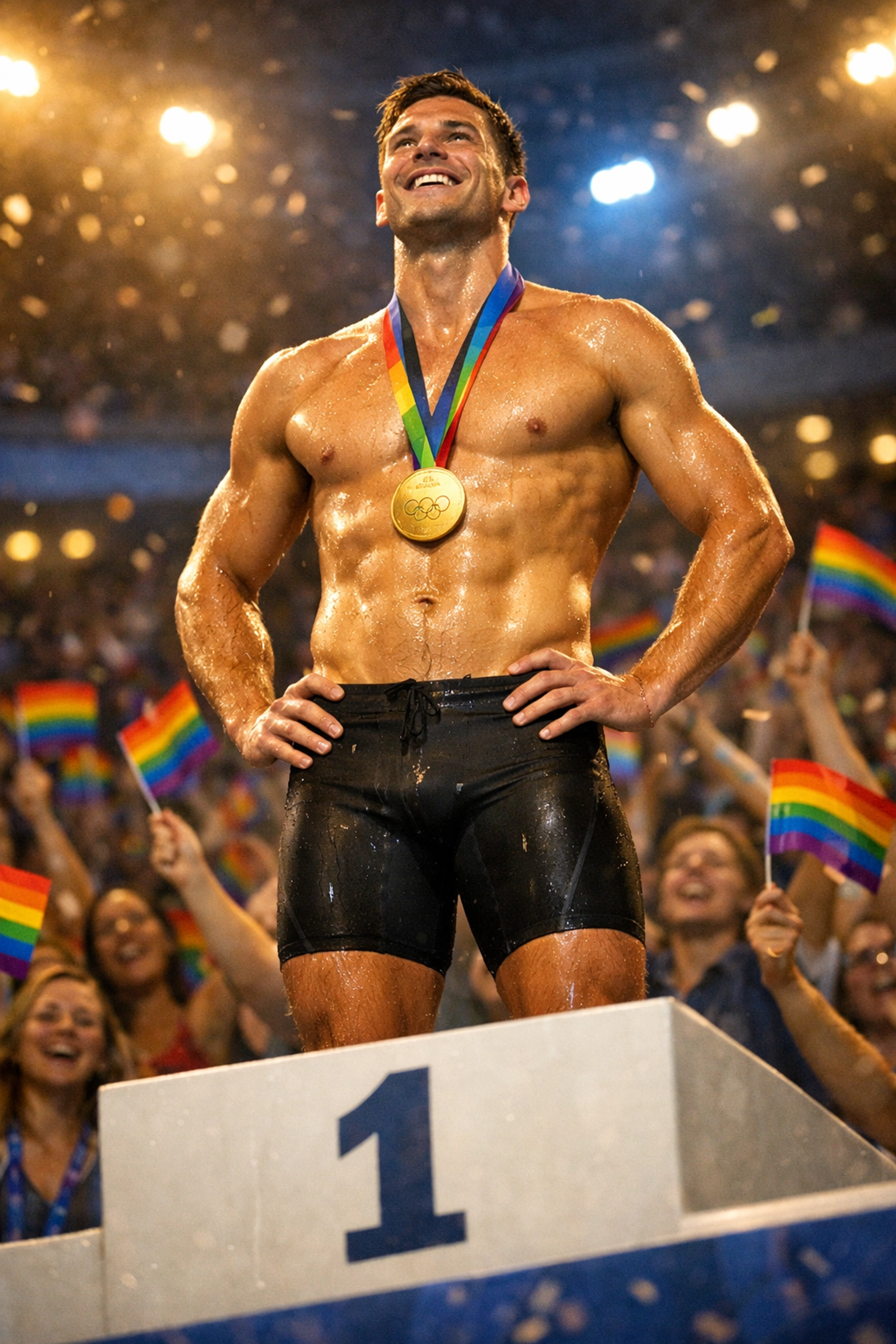
He touched the wall first. New personal best.
Standing on the podium, gold medal around his neck, Kenji looked up at the crowd. He spotted a young man in the stands holding a small rainbow flag, tears streaming down his face. Their eyes met, and Kenji nodded.
I see you. You're not alone.
After the race, a young journalist asked him how he felt. Kenji smiled, a real, unguarded smile. "Like I finally earned the right to celebrate my own victories."
His story resonated far beyond the pool. He became a voice for LGBTQ+ visibility in sports, partnering with organizations that supported queer athletes. He started speaking at schools, telling young people that authenticity wasn't weakness, it was the ultimate strength.
And yes, his parents eventually came around. It took time, difficult conversations, and a lot of patience. But the day his mother told him she was proud: not just of his medals, but of his courage: Kenji cried harder than he ever had.
The Legacy
Kenji's journey reminds us that coming out isn't about one dramatic moment: it's about the daily choice to live authentically, even when it's terrifying. It's about understanding that the people who matter will love you for your truth, not your performance of someone else's expectations.
In the world of MM romance books and gay fiction, we celebrate these stories constantly: tales of brave men who choose love and authenticity over conformity. But these aren't just fictional narratives. They're happening in real life, in locker rooms and boardrooms and family dinners across the world.
Whether you're an Olympic hopeful or someone just trying to navigate Monday morning at work, your story matters. Your truth matters. And every time someone like Kenji chooses authenticity over fear, it makes the path a little easier for the next person.
The water doesn't lie. And increasingly, neither do we.
Looking for more inspiring LGBTQ+ stories and the best gay romance novels of 2026? Explore our collection of MM romance, queer fiction, and gay love stories that celebrate authentic representation at readwithpride.com.
Follow us for daily LGBTQ+ content and book recommendations:
- Instagram: @read.withpride
- Facebook: Read With Pride
- X/Twitter: @Read_With_Pride
#ReadWithPride #MMRomance #GayRomance #LGBTQFiction #ComingOutStories #QueerAthletes #GayBooks #MMBooks #QueerFiction #GayLoveStories #AuthenticLiving #LGBTQRepresentation #GayRomanceBooks #PrideInSports #LGBTQAthletes #QueerVisibility #MMRomanceBooks #GayContemporaryRomance #2026LGBTQ #ReadWithPrideCommunity

Leave a Reply
You must be logged in to post a comment.