

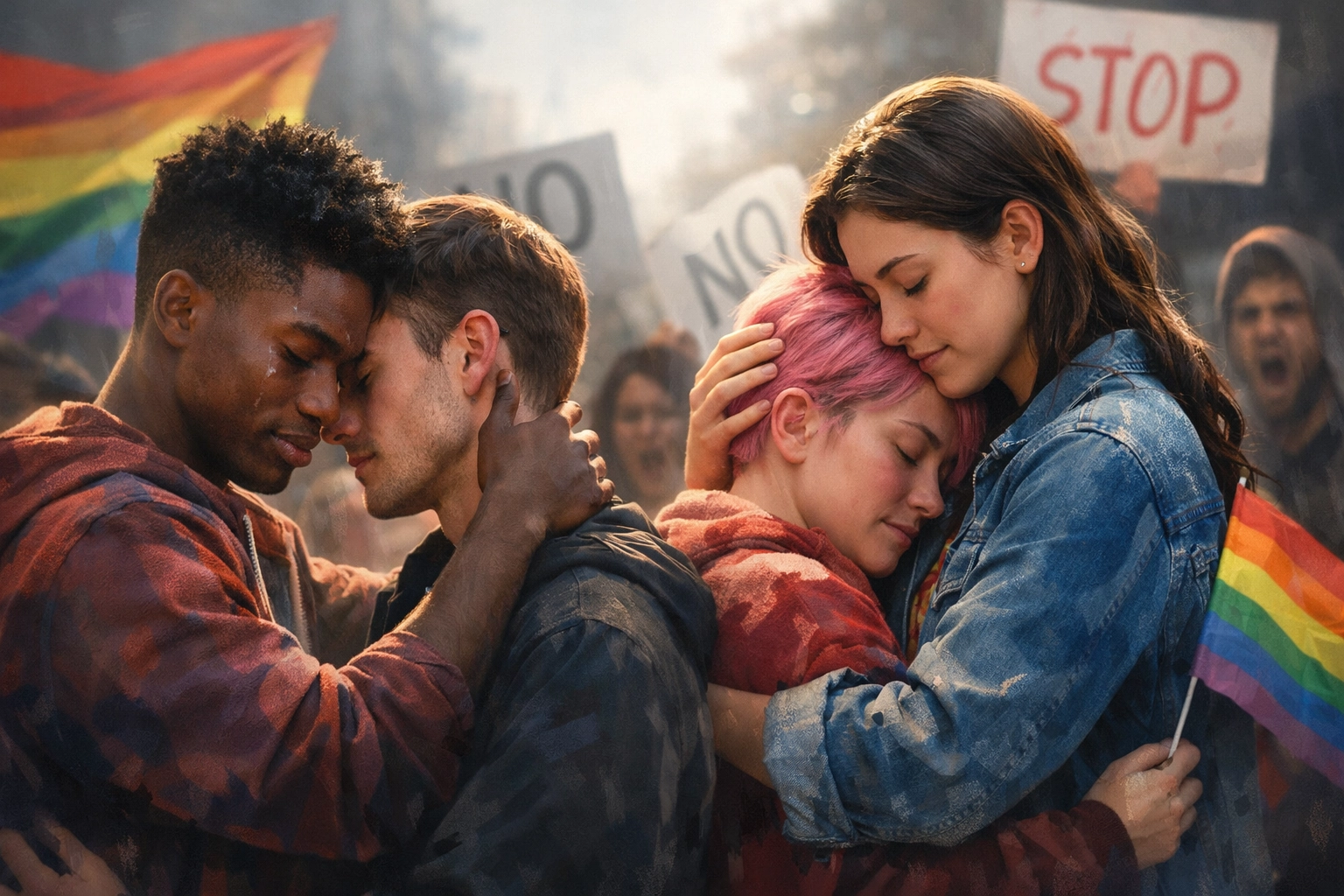
readwithpride.com
Marcus had always been good at compartmentalizing. At work, he was the polished corporate attorney who never let his guard down. At family gatherings, he was the dutiful son who deflected questions about settling down with vague promises of "when the time is right." At the gym, he was just another guy getting his reps in, invisible in plain sight.
But when he met Jamal at a mutual friend's birthday party, all those carefully constructed walls started to crack.
The Weight of Double Expectations
Being a Black gay man means navigating two worlds that don't always welcome you with open arms. Marcus knew this intimately. His family's church had made their stance on homosexuality clear from the pulpit, while the predominantly white gay spaces downtown often felt more like performative diversity than genuine inclusion.
"You ever feel like you're too Black for the gay community and too gay for the Black community?" Jamal asked on their third date, his fingers tracing patterns on Marcus's palm as they sat in Jamal's living room, the only place where they both felt they could truly breathe.
Marcus laughed, but it was the kind of laugh that held years of exhaustion. "Every single day."
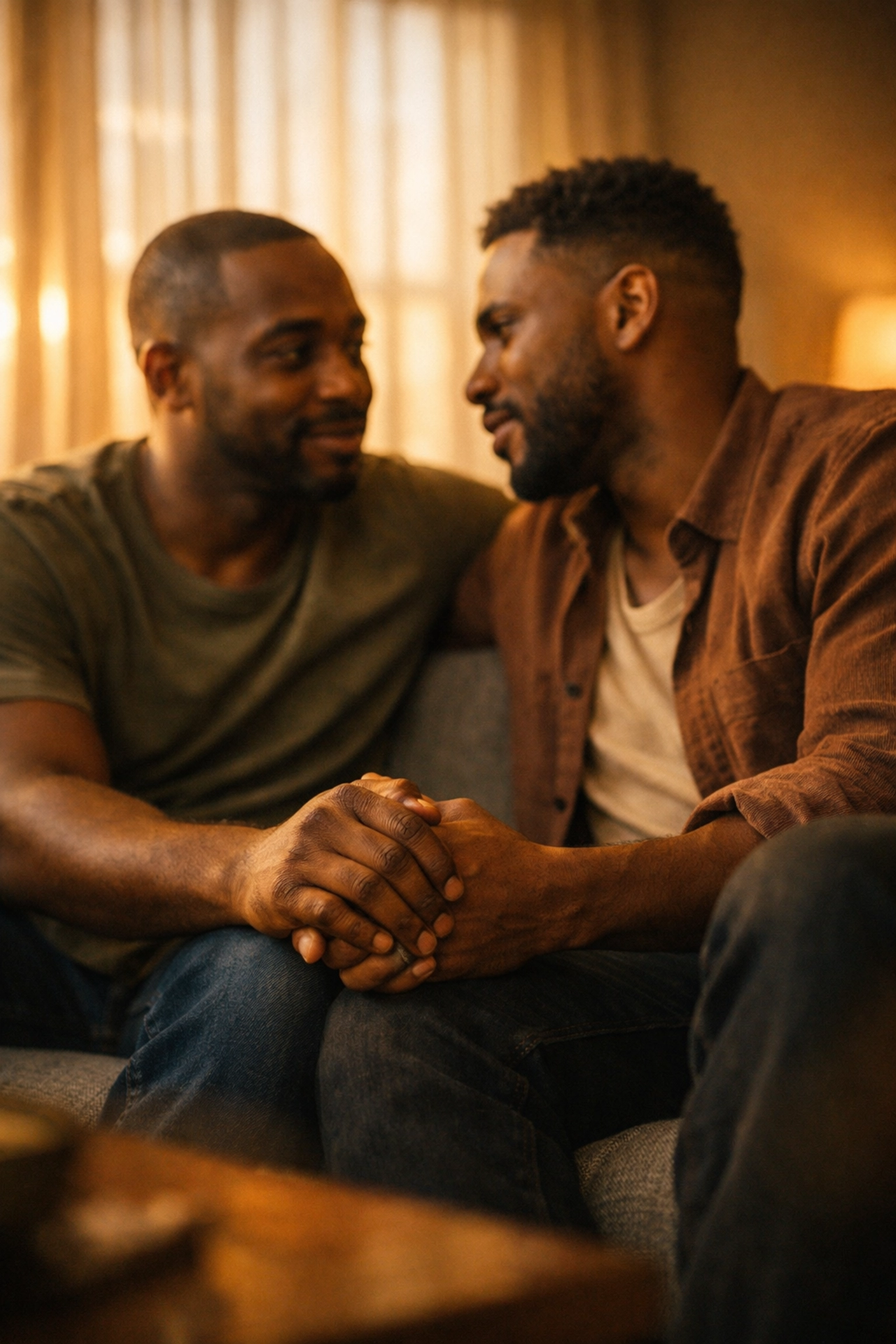
Jamal was a high school music teacher with an infectious smile and a way of making people feel seen. He'd grown up in a household where his sexuality wasn't discussed, not accepted, not rejected, just carefully avoided like a piece of furniture everyone had to step around. His mother loved him, he knew that, but she loved him in spite of who he was, not because of all that he was.
The social pressures they faced weren't just abstract concepts, they were Sunday dinners where Marcus changed "we" to "I" when talking about his weekend plans. They were Jamal's decision to keep his Instagram private after a colleague made an offhand comment about "lifestyle choices." They were the hypervigilance that kicked in automatically when they held hands in public, always scanning for potential threats.
Finding Each Other in the Storm
What made their relationship different wasn't the absence of pressure, it was how they chose to face it together.
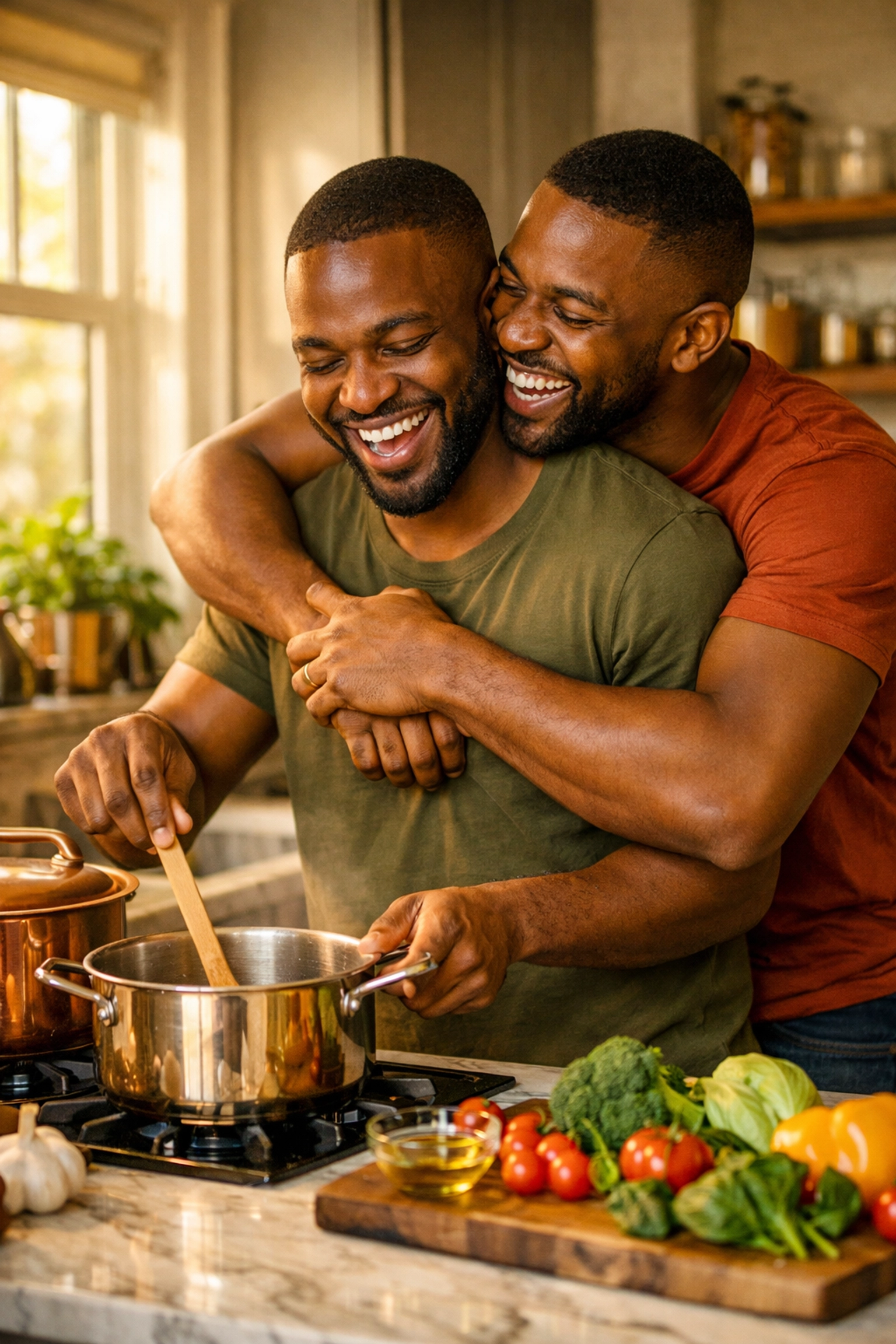
"I'm tired of editing myself," Marcus confessed one evening, six months into their relationship. They were cooking dinner together, a simple ritual that had become sacred. "At work, I avoid mentioning you. With my family, you don't exist. And I hate it. I hate that I'm making you invisible."
Jamal turned off the stove and pulled Marcus into an embrace. "Then let's start making different choices. Not all at once, we don't have to blow up our lives overnight. But maybe we stop shrinking ourselves to fit into spaces that were never built for us anyway."

That conversation became the foundation of their philosophy: mutual respect, or disconnect. They started setting boundaries with people who demanded they perform straightness or dilute their Blackness to be palatable. Marcus's cousin who kept making jokes about "the agenda"? They stopped attending his parties. Jamal's former college friend who fetishized their relationship with invasive questions? Firmly redirected, then eventually distanced.
It wasn't easy. Social pressure creates real consequences, strained family relationships, awkward work dynamics, the loss of friendships that turned out to be more conditional than they'd realized. But what they gained was something more valuable: authenticity.
Building Their Own Definition of Love
The best mm romance books 2026 often capture this beautiful tension, the push and pull between societal expectations and the raw need to be yourself with the person you love. Marcus started reading more queer fiction, finding solace in stories where Black men loved each other openly, unapologetically. He'd share passages with Jamal, who'd add them to his classroom reading recommendations when students asked for diverse book suggestions.
Their relationship became a radical act of self-determination. They created new traditions that honored both their identities, Juneteenth celebrations where they could be openly affectionate, Pride month parties at their apartment where other Black queer folks could gather without code-switching, game nights that centered their joy rather than their trauma.
"My therapist says we're practicing what she calls 'communal authenticity,'" Jamal mentioned one Saturday morning as they lounged in bed, sunlight streaming through the windows. "Building community with people who celebrate all of who we are."
Marcus kissed his shoulder. "Your therapist is smart. We should keep her."
They learned to communicate with a level of openness that felt revolutionary. When Marcus felt pressured by his boss to bring a date to the company gala, he and Jamal talked through the options: go together and face potential workplace discrimination, go separately and maintain his privacy, or skip it entirely. They chose to go together, Marcus in a sharp navy suit, Jamal in complementary charcoal gray.
The office gossip the following week was predictable, but so was the email from HR affirming the company's non-discrimination policy after Marcus quietly flagged some inappropriate comments. Small victories, but victories nonetheless.
The Power of Mutual Support
What the outside world didn't see were the quiet moments of profound support. Jamal holding Marcus through panic attacks when the weight of performance became too much. Marcus showing up to every one of Jamal's school concerts, sitting in the front row with unabashed pride. The way they'd developed their own language, a squeeze of the hand that meant "I've got you," a particular look that said "let's get out of here," a text that simply read "roof?" when they needed to escape to their building's rooftop and decompress.
They weren't trying to be perfect or to represent all Black gay relationships. They were just two men learning to love each other fully while navigating a world that often demanded they make themselves smaller.
Creating Space for Joy
One of their biggest acts of resistance was refusing to let social pressure steal their joy. Yes, they faced challenges: discrimination, microaggressions, the exhausting work of explaining their existence to people who should already understand. But they also had dance parties in the kitchen, planned spontaneous road trips, debated passionately about whether R&B or hip-hop made better love songs, and built a life that felt genuinely theirs.
"I used to think love meant sacrifice," Marcus said on their one-year anniversary, which they celebrated with takeout and a movie marathon of their favorite MM romance adaptations. "Like I'd have to give up parts of myself to make it work."
"And now?" Jamal asked, already knowing the answer but wanting to hear it anyway.
"Now I know love means expansion. You make me more myself, not less."
That's the truth the best queer fiction captures and what their relationship embodied: love doesn't diminish you to fit external expectations: it creates space for you to become more fully who you've always been. For Marcus and Jamal, that meant being unapologetically Black, unapologetically queer, and unapologetically in love.
Their story continues to unfold, not without challenges, but with the certainty that they're facing those challenges together, refusing to let social pressures define the boundaries of their love.
Looking for more authentic LGBTQ+ love stories? Explore our collection of MM romance books that celebrate diverse voices and experiences.
#ReadWithPride #MMRomance #BlackLoveMatters #QueerBlackLove #LGBTQFiction #AuthenticLove #GayRomance #MMRomanceBooks #QueerFiction #LoveIsLove #BlackGayLove #LGBTQ2026 #GayRomanceBooks #MMNovels #QueerBlackJoy #RepresentationMatters
Follow us for more LGBTQ+ stories and book recommendations:

Leave a Reply
You must be logged in to post a comment.