

readwithpride.com
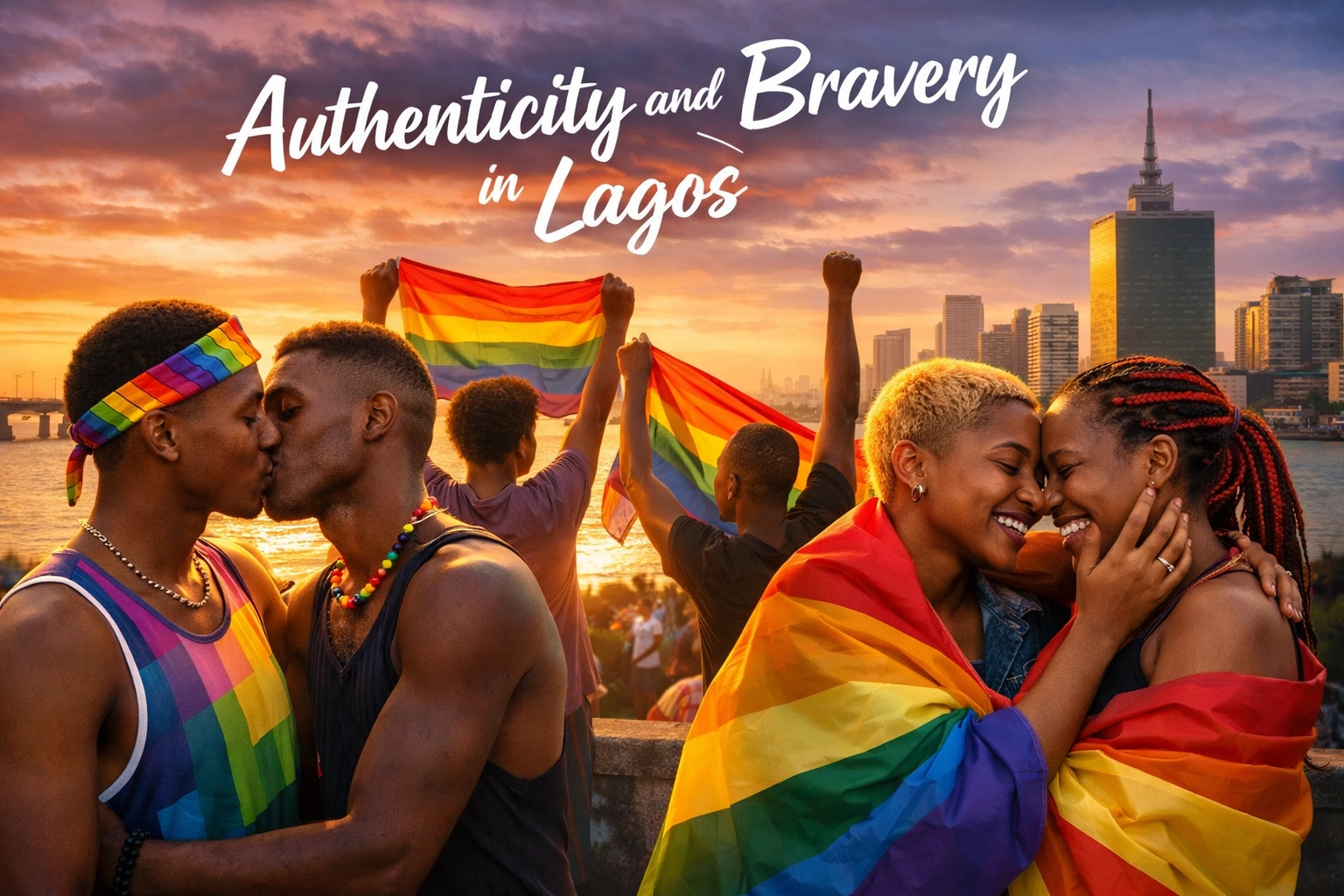
Living authentically shouldn't require courage. But for Black gay men in Lagos, Nigeria, simply existing as themselves is an act of defiance: a daily declaration of bravery that most of us will never fully comprehend.
Lagos is electric. It's a city of hustle and heat, where thirteen million people navigate life with an entrepreneurial spirit that's both infectious and exhausting. The streets pulse with Afrobeat, the smell of suya fills the air, and fashion-forward Lagosians blend traditional agbada with contemporary streetwear like it's the easiest thing in the world. But beneath this vibrant surface lies a reality that many queer people face: the constant calculation of safety, the weight of secrecy, and the extraordinary resilience required to love who you love.
The Weight of the Law
Nigeria's legal landscape is unforgiving. Same-sex relationships aren't just frowned upon: they're criminalized. The Same-Sex Marriage (Prohibition) Act of 2014 made things exponentially worse, criminalizing not just relationships but also public displays of affection, advocacy, and even membership in LGBTQ+ organizations. Penalties can include up to fourteen years in prison. In the northern states under Sharia law, the consequences are even more severe.
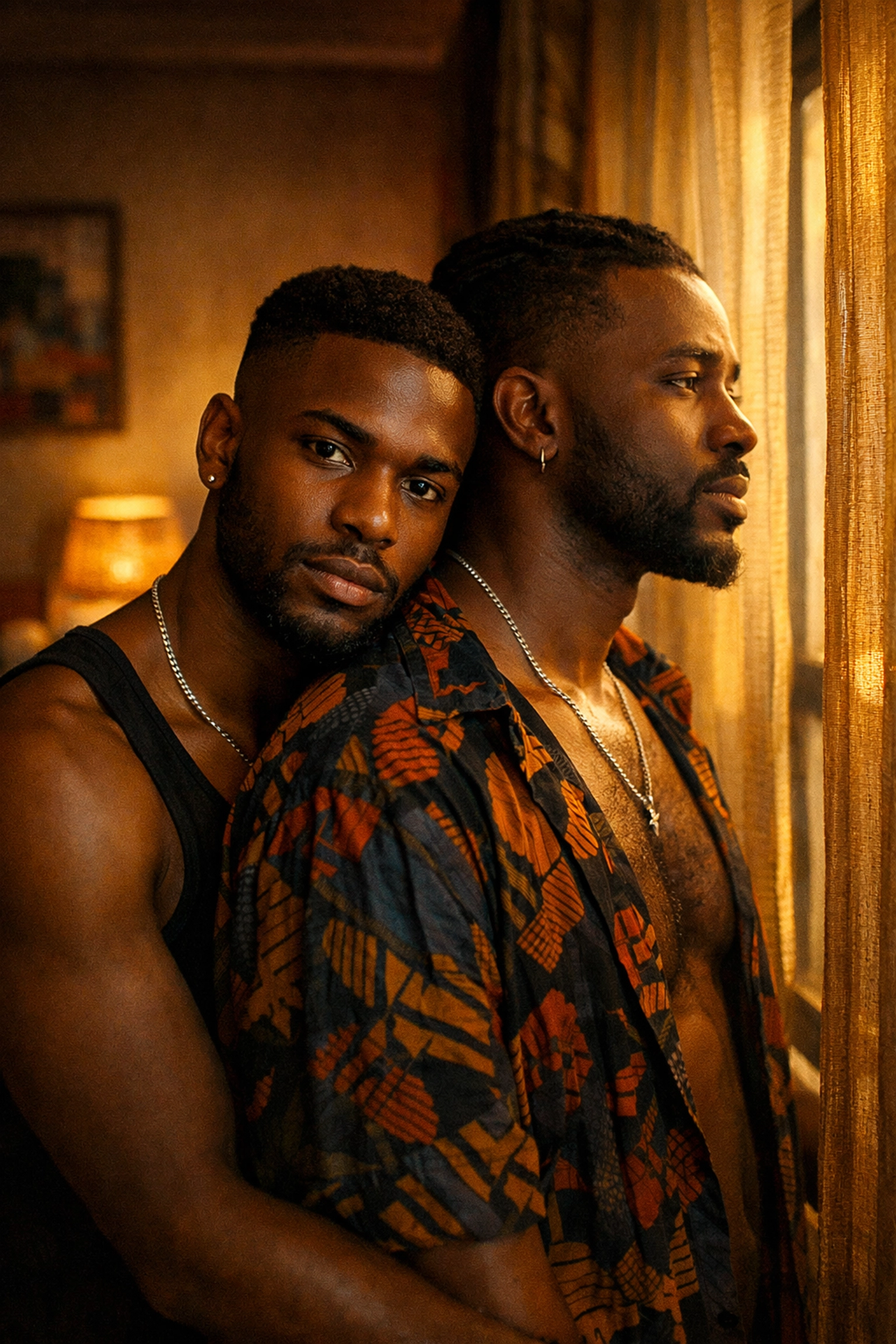
This isn't abstract legal theory. It's the backdrop against which every gay man in Lagos wakes up each morning. It's the reason coded language becomes second nature. It's why dating apps require elaborate vetting processes, why house parties happen behind locked doors with trusted lookouts, and why coming out to family can mean losing everything: your home, your financial security, your community.
Living in Double Consciousness
W.E.B. Du Bois wrote about double consciousness: the experience of viewing oneself through the eyes of a society that sees you as fundamentally "other." For Black gay men in Lagos, this experience is multiplied. You're navigating African masculinity expectations, religious conservatism (both Christian and Muslim communities often condemn homosexuality), family obligations, and the constant threat of exposure.
You learn to code-switch not just linguistically but existentially. There's the version of you at work, the version at family gatherings, the version in your church or mosque, and then: if you're fortunate enough to find safe spaces: there's the version of you that gets to breathe.
Many gay men in Lagos become masters of performance, not because they're being dishonest, but because survival demands it. You perfect the art of deflection when aunties ask about marriage prospects. You cultivate carefully curated social media presences. You become an expert at reading rooms, at knowing when a joke has gone too far, at sensing danger before it fully materializes.
Underground Networks of Resilience
But here's what often gets missed in conversations about LGBTQ+ life in restrictive environments: the extraordinary resilience, creativity, and joy that persist despite everything.
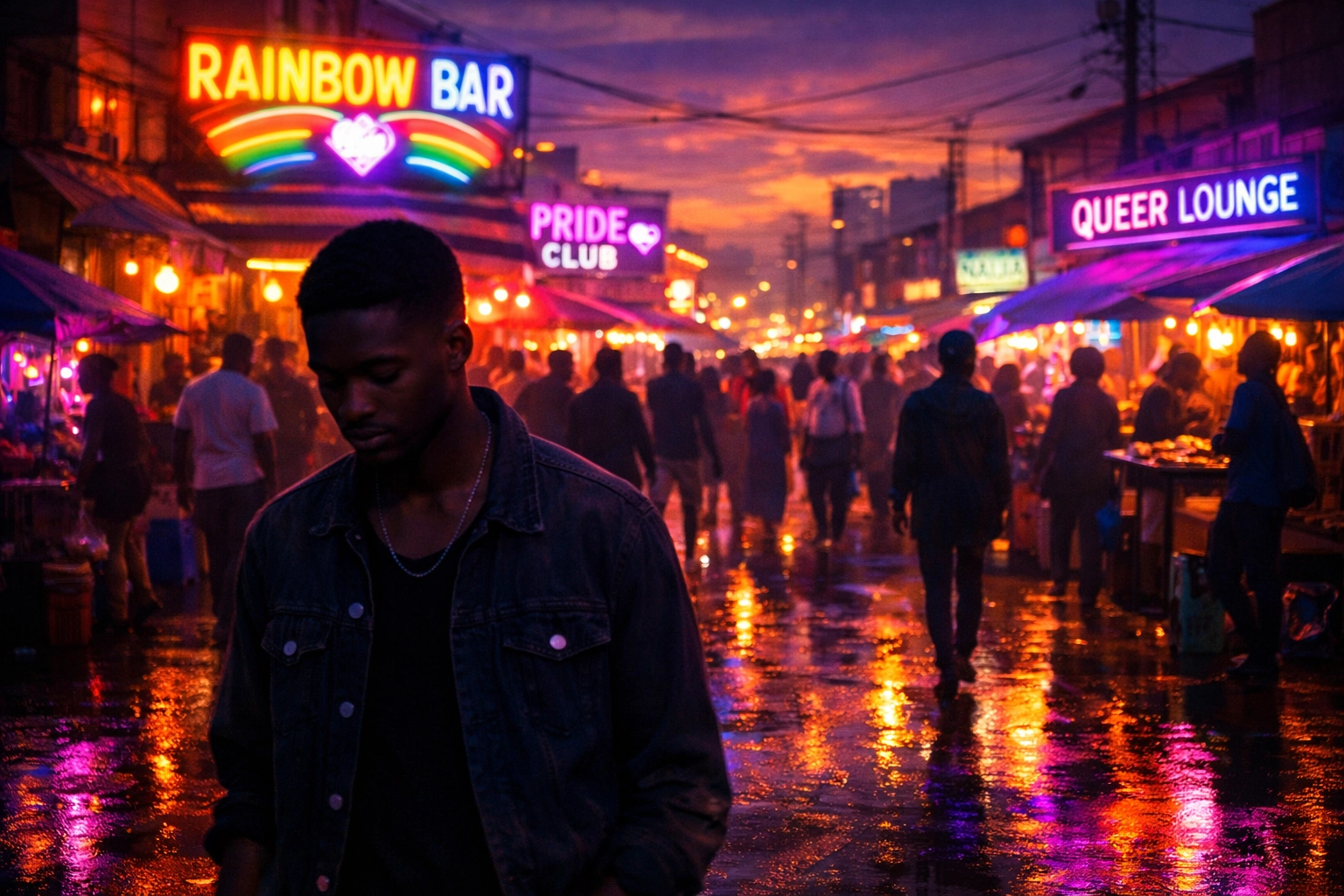
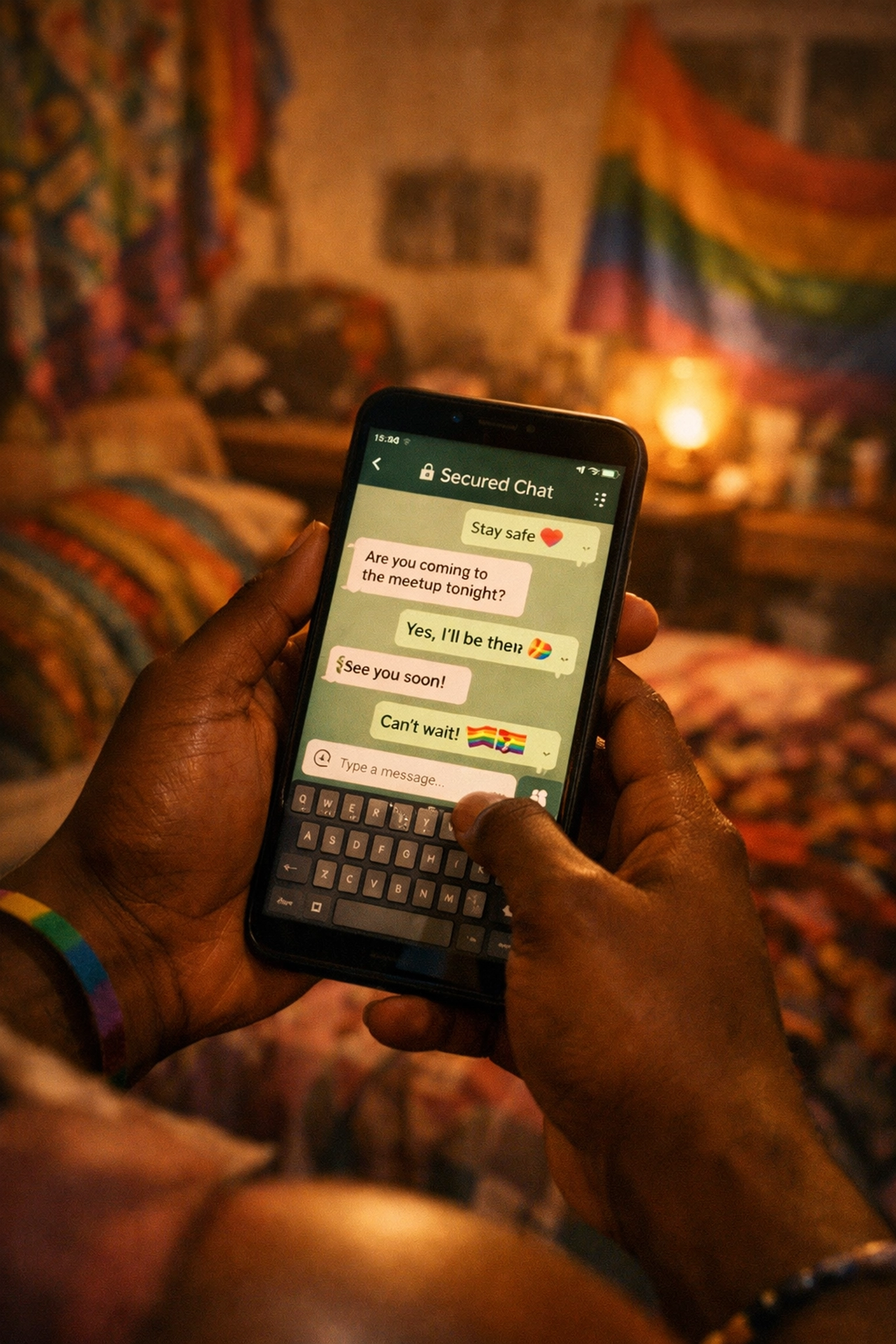
Lagos's gay community exists in whispered recommendations and private Instagram groups. House parties become sacred spaces where, for a few hours, people can drop their masks. Trusted salons and barbershops become unofficial community centers. Online forums and encrypted messaging apps create virtual support systems that transcend physical boundaries.
These networks aren't just about hookups or parties (though let's be clear: queer joy and pleasure are forms of resistance too). They're about survival. They're about sharing information on which areas are safe, which landlords don't ask questions, which employers have shown themselves to be quietly accepting. They're about finding chosen family when biological family rejects you.
There are LGBTQ+ organizations operating with incredible courage, providing HIV/AIDS education, mental health resources, and legal support when raids or blackmail occur. These activists risk their own safety to create infrastructure for others: that's bravery at its most fundamental level.
The Role of Literature and Escape
This is where the power of MM romance books and LGBTQ+ fiction becomes viscerally clear. For many gay men in Lagos, reading isn't just entertainment: it's oxygen. It's proof that happy endings are possible, even if they seem impossibly distant.
Gay romance novels offer windows into worlds where love isn't criminal, where two men can hold hands in public without calculating the risk, where the biggest obstacle might be miscommunication or family drama rather than prison sentences. They provide language for feelings that have been deemed unspeakable. They normalize experiences that local culture pathologizes.
Read with pride exists precisely for this reason: to ensure that queer stories are accessible to those who need them most. Digital books are especially valuable in restrictive environments; they're private, portable, and don't raise suspicions the way physical gay literature might.
For someone in Lagos reading an MM romance on their phone during a commute, that story might be the only affirmation they receive all week that their love is valid, that their desires are normal, that they deserve the same happiness as everyone else.
The Toll and the Hope
Let's not romanticize struggle. The psychological toll of living in constant fear is immense. Depression, anxiety, and suicidal ideation are higher among LGBTQ+ individuals in criminalized contexts. The stress of concealment affects physical health, career trajectories, and the ability to form deep, authentic connections.
Many gay Lagosians dream of migration: of reaching Europe, North America, or more accepting African nations like South Africa. But migration isn't possible for everyone, and those who remain deserve dignity too. They deserve to have their bravery recognized, not just their suffering.

And there is hope. Younger generations are increasingly vocal, despite the risks. Social media has made it harder to pretend LGBTQ+ people don't exist. International pressure, while imperfect, does have some impact. Slowly, conversations are shifting: not fast enough, not safely enough, but shifting nonetheless.
What Solidarity Looks Like
For those of us with the privilege of living in more accepting environments, there are tangible ways to support Black gay men in Lagos and similar contexts:
Support organizations doing on-the-ground work, like The Initiative for Equal Rights or Bisi Alimi Foundation. Amplify African LGBTQ+ voices rather than speaking over them. Consume and promote queer African literature and art. Challenge the Western narrative that paints Africa as uniformly homophobic while ignoring the colonial origins of many anti-LGBTQ+ laws.
Purchase books from queer authors and platforms like readwithpride.com that make LGBTQ+ fiction accessible globally. Representation matters, and ensuring that gay romance books reach readers in restrictive environments is a form of activism.
Most importantly, remember that LGBTQ+ people in places like Lagos aren't just victims to be pitied: they're fully realized humans with dreams, humor, creativity, and an incredible capacity for joy despite circumstances designed to crush them.
The Daily Act of Being
Every morning a gay man in Lagos chooses to get up, to navigate another day of code-switching and calculation, to find moments of connection and joy despite the weight of criminalization: that's bravery. When he reads an MM contemporary romance on his phone and allows himself to imagine a different life, that's hope. When he shows up for a friend who's been outed, when he shares resources with someone newly coming to terms with their sexuality, when he simply refuses to internalize the shame society projects onto him: that's resistance.
Authenticity and bravery in Lagos aren't abstract concepts. They're lived every single day by people whose names we'll likely never know, whose stories won't make international headlines, but whose existence is nonetheless revolutionary.
To every queer person in Lagos holding on, finding joy in margins, building community in shadows: you are seen, you are valid, and your bravery is extraordinary.
Follow us: Facebook | Instagram | Twitter/X
Explore LGBTQ+ fiction: readwithpride.com
#LGBTQRights #BlackGayMen #LagosPride #QueerResilience #GayRomance #MMRomance #LGBTQBooks #ReadWithPride #QueerFiction #GayFiction #RepresentationMatters #LGBTQAfrica #QueerAfrica #MMRomanceBooks #GayLoveStories #LGBTQSupport #BlackLGBTQ #AuthenticityMatters #QueerJoy #LGBTQLiterature #2026

Leave a Reply
You must be logged in to post a comment.