

readwithpride.com
The 1950s. Post-war prosperity, white picket fences, and families gathered around television sets watching Father Knows Best. But if you were a gay man in New York during this decade, you weren't living in that sanitized version of America. You were living in constant fear, one wrong glance away from losing everything.
Let's talk about what it really cost to be yourself in an era that demanded absolute conformity: and punished anyone who dared step outside the lines.
When Love Was a Crime
In 1950s New York, being gay wasn't just socially unacceptable. It was literally illegal. Anti-sodomy laws made same-sex intimacy a criminal offense, punishable by imprisonment. But the legal persecution went far beyond what happened in private bedrooms.
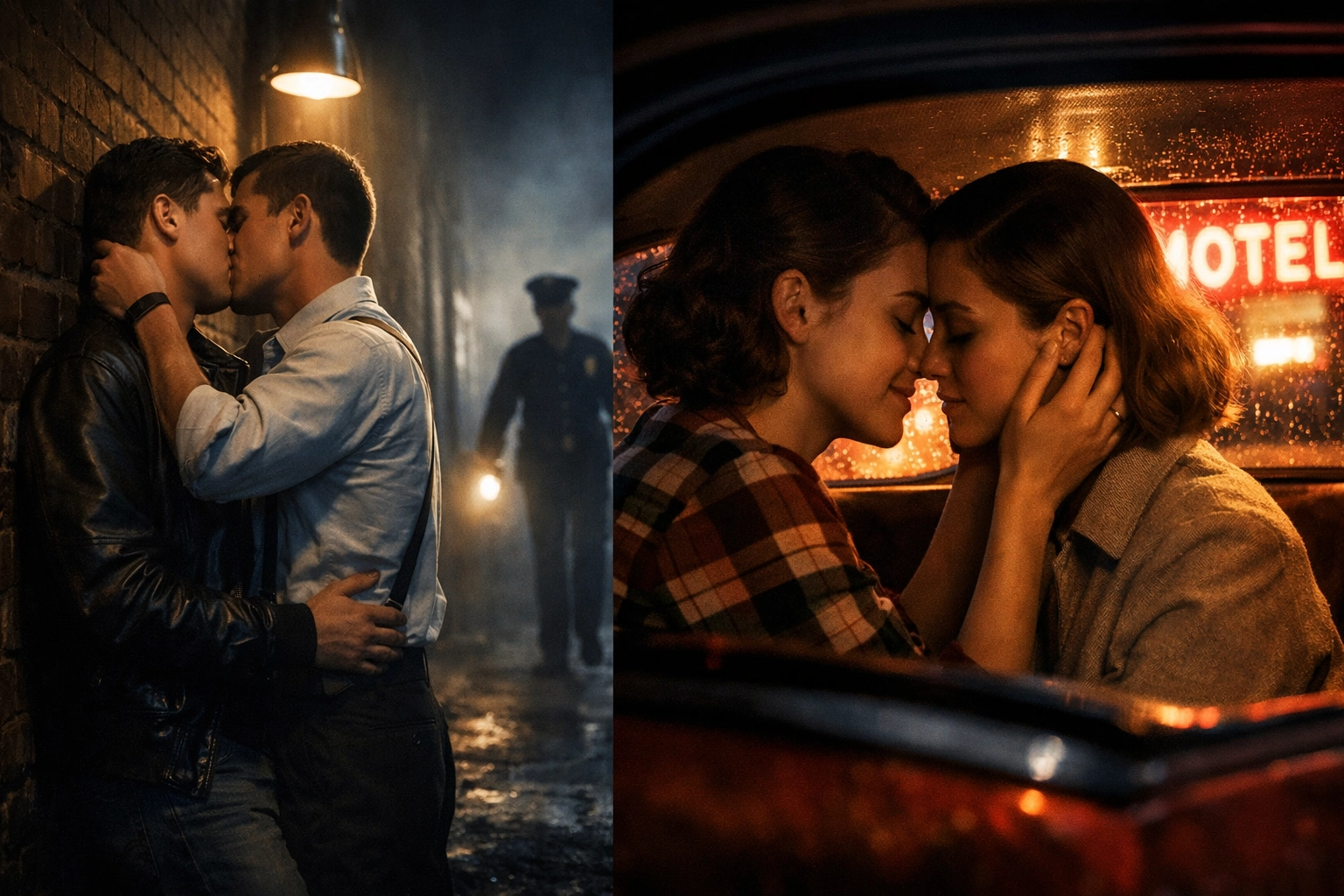
Gay men could be arrested simply for being in the "wrong" place at the "wrong" time. Loitering laws were weaponized against anyone suspected of homosexuality. Standing too long on a street corner in Greenwich Village? That could get you arrested. Making eye contact with another man for a few seconds too long? Police might claim you were "soliciting."
The NYPD had a dedicated vice squad whose sole purpose was to hunt down and arrest gay men. They employed plainclothes officers: often attractive young men: who would act as bait in parks, bars, and public restrooms. These officers would strike up conversations, flirt, and wait for any reciprocation. The moment a man showed interest or suggested meeting elsewhere, he'd be arrested for solicitation.
This wasn't hypothetical danger. Thousands of men were arrested each year in New York City alone on morals charges. And an arrest meant more than just a night in jail.
The Domino Effect of Getting Caught
If you were arrested for being gay: or even suspected of it: your entire life could unravel within days.
Your job? Gone. Most employment contracts included morals clauses. Teachers, government workers, and professionals could be fired immediately. But it wasn't just white-collar jobs at risk. Blue-collar workers, clerks, and service industry employees were equally vulnerable. Employers didn't want "that kind of person" associated with their business.
Your family? Likely to disown you. In an era obsessed with respectability and conformity, having a gay family member was considered deeply shameful. Parents would cut off contact, siblings would be forbidden from speaking to you, and your name might literally be erased from family records.
Your housing? Landlords could and did evict tenants suspected of homosexuality. Finding new housing became nearly impossible once you had that reputation.
Your reputation? Destroyed. Arrests were published in newspapers. Your name, address, and charges would appear in print for everyone to see. Neighbors, former friends, and acquaintances would all know. There was no privacy, no second chances.
Some men committed suicide rather than face the public humiliation. Others fled to different cities, hoping to start over where nobody knew their story. But New York was supposed to be the place where you could disappear into the crowd, where you could be yourself. Instead, it had become a trap.
The Underground World
So how did gay men survive? They created an underground world: a shadow society that existed in the cracks and margins of straight New York.
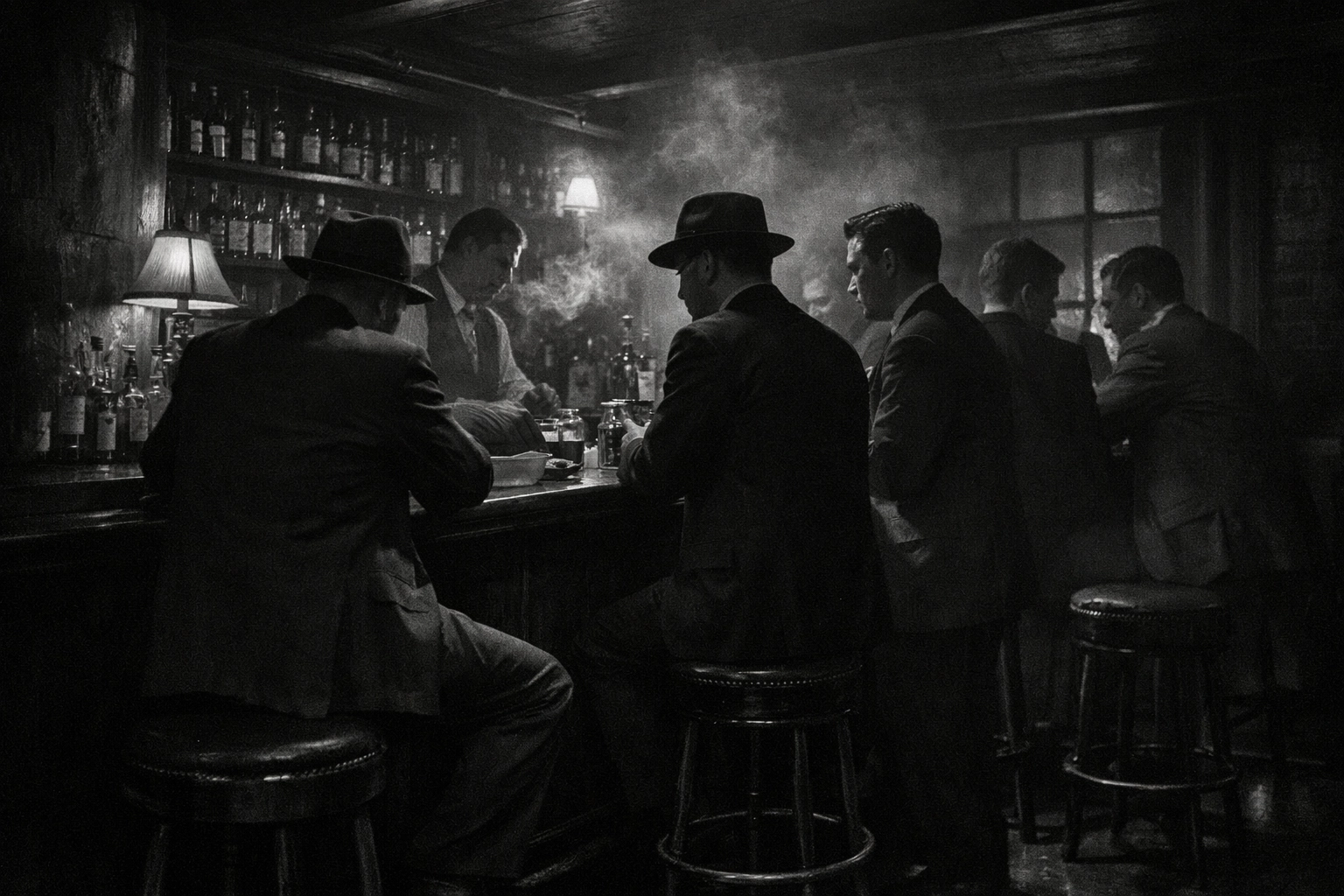
Secret bars operated throughout Manhattan, particularly in Greenwich Village and the West Village. These weren't the welcoming, rainbow-flag-draped establishments we know today. They were often Mafia-run operations in unmarked buildings with blacked-out windows. You needed to know someone who knew someone to find them. There were coded knocks, passwords, and lookouts watching for police.
Inside, men could briefly let their guard down: though never completely. Bar raids were common. Police would burst in without warning, lining everyone up, checking IDs, and arresting patrons on whatever charges they could manufacture. Sometimes they arrested everyone. The bars would pay off the police to reduce the frequency of raids, but raids still happened often enough to keep everyone on edge.
These establishments had no liquor licenses because the State Liquor Authority wouldn't grant them to places that "served homosexuals." So the drinks were illegal, the gathering itself was dangerous, and everyone there was risking everything just to spend an evening with people who understood them.
Coding and Surviving
Gay men in the 1950s developed elaborate systems of recognition and communication. You couldn't just walk up to someone and introduce yourself: not safely, anyway.
There were subtle signals: wearing certain colors, particularly red ties or green suits on Thursdays. Specific ways of carrying handkerchiefs in pockets (the handkerchief code would become more elaborate in later decades). Lingering eye contact followed by a specific kind of nod. References to Judy Garland or other cultural touchstones that meant something specific to those in the know.
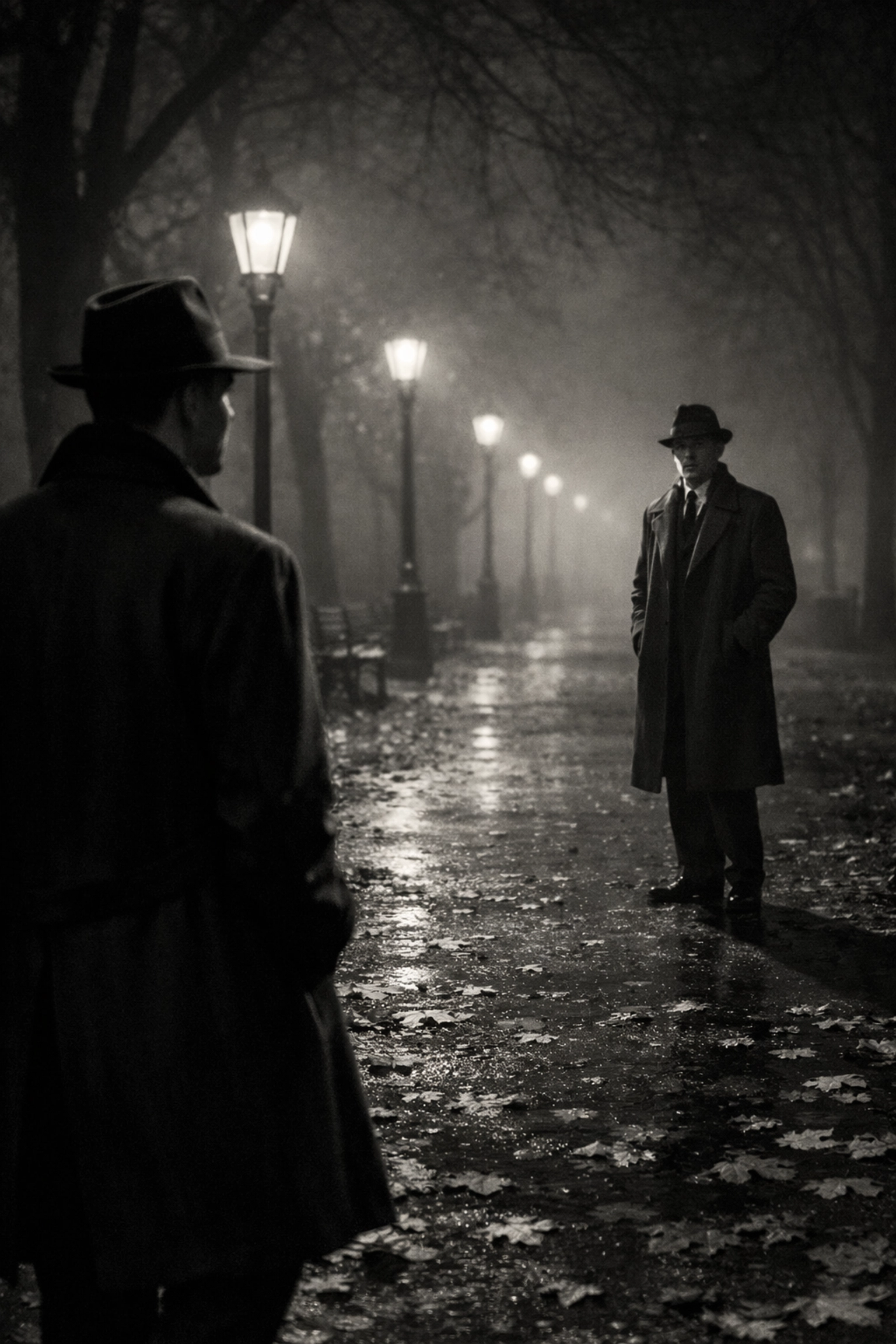
Parks like Washington Square and the Ramble in Central Park became unofficial meeting places, though they were also heavily policed. Men would stroll past each other, make subtle gestures, and perhaps arrange to meet elsewhere if they felt it was safe.
Some men married women to create a cover, living double lives that created suffering on all sides. Others found roommates who would pose as just friends, maintaining separate bedrooms for appearances while living as couples.
The psychological toll was immense. You couldn't trust anyone outside the community, and even within it, paranoia ran deep. Was that new person at the bar genuine, or a police informant? Was your neighbor suspicious? Could you trust your coworker who seemed friendly?
The McCarthy Era Made Everything Worse
While the 1950s were already dangerous for gay men, McCarthyism amplified the persecution. The government began aggressively purging suspected homosexuals from federal employment, claiming they were security risks who could be blackmailed by communists.
This "Lavender Scare" paralleled the Red Scare but received less attention at the time. Thousands lost government jobs. The FBI maintained lists of suspected homosexuals. State and local governments followed the federal lead, implementing their own purges.
The justification? Gay men couldn't be trusted because they were supposedly susceptible to blackmail. The cruel irony was that the only reason they could be blackmailed was because of the very laws and social stigma that made being gay so dangerous in the first place.
Why This History Matters Today
Reading gay romance novels today: like the heartfelt MM romance books available at Read with Pride: it's easy to forget how recent this history is. The 1950s weren't ancient history. They were less than one lifetime ago.
The men who lived through this era showed incredible courage. They built communities in the shadows. They took risks just to be themselves, even for a few hours in a illegal bar. They looked out for each other in a world that wanted them to disappear.
The Stonewall riots of 1969, which sparked the modern gay rights movement, didn't come from nowhere. They grew from decades of resistance, survival, and community-building in the face of systematic persecution. They came from men who decided they'd paid enough, lost enough, suffered enough.
When we celebrate Pride today, when we read gay fiction that centers queer joy and happy endings, when we live openly: we're standing on the shoulders of those who couldn't. They paid the cost so we wouldn't have to.
Understanding this history makes every gay love story more precious. Every MM romance novel with a happy ending isn't just entertainment: it's a defiant celebration of what those men in the 1950s were arrested for wanting. It's proof that we survived, we thrived, and we're still here.
Explore LGBTQ+ fiction and celebrate queer stories at Read with Pride, where every book honors the resilience of our community.
Follow us: Facebook | Instagram | X/Twitter
#GayHistory #LGBTQHistory #NewYorkHistory #GayRomance #MMRomance #ReadWithPride #QueerHistory #GayFiction #LGBTQBooks #GayRomanceBooks #HistoricalGayRights #PrideHistory #QueerResilience #GayLiterature #MMRomanceBooks #LGBTQFiction #GayNovels

Leave a Reply
You must be logged in to post a comment.