

readwithpride.com
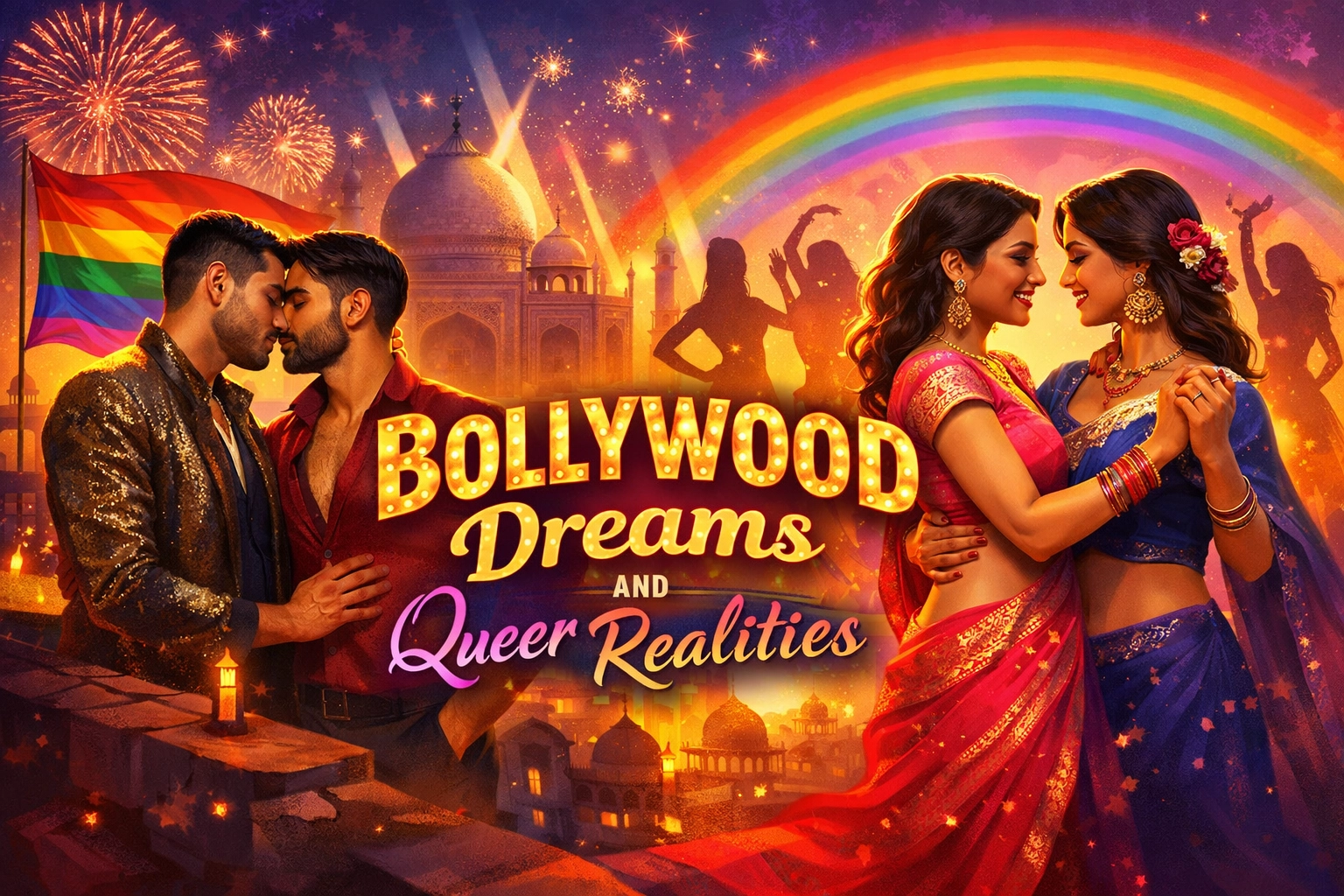
If you've ever watched a Bollywood film and caught yourself thinking, "Wait, are they…?" then you're not alone. For decades, queer Indians have been reading between the lines, finding themselves in stolen glances, intimate friendships, and songs that spoke to longing in ways the dialogue never could. Bollywood: India's massive dream factory: has had a complicated, often contradictory relationship with LGBTQ+ identity. But here's the thing: even when the industry stayed silent, the spirit of queer existence found ways to shine through.
Let's talk about how Bollywood has both reflected and shaped gay identity in India, from the days of coded subtext to the tentative visibility we're seeing today.
The Art of Reading Between the Frames
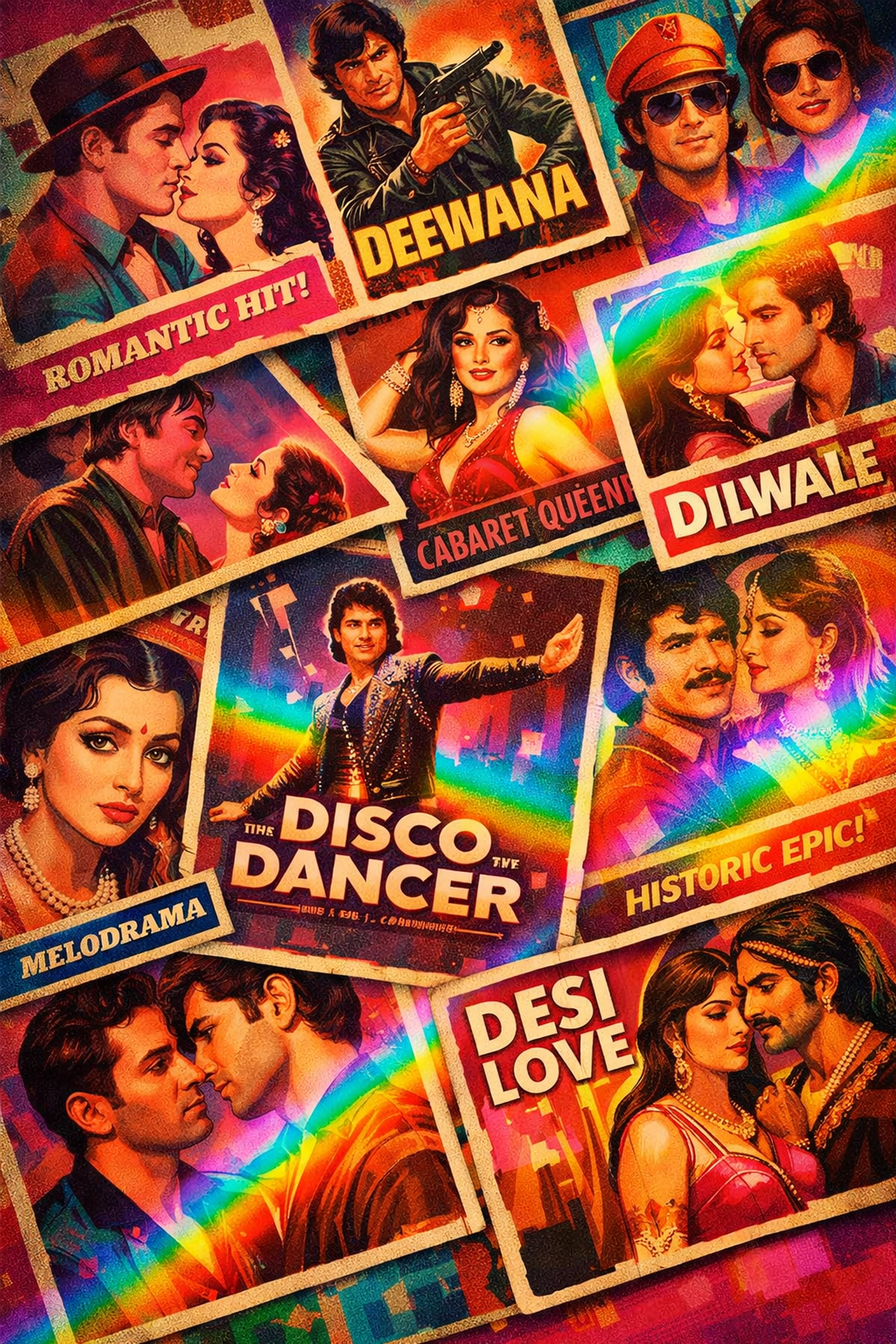
Back in the day: we're talking the '70s, '80s, and '90s: you wouldn't find openly gay characters in mainstream Bollywood films. What you'd find instead was a whole language of subtext. Close male friendships that felt a little too intense. Songs where two women danced together with an intimacy that went beyond sisterhood. The iconic "yaari hai imaan mera" (friendship is my faith) moments that queer audiences claimed as their own.
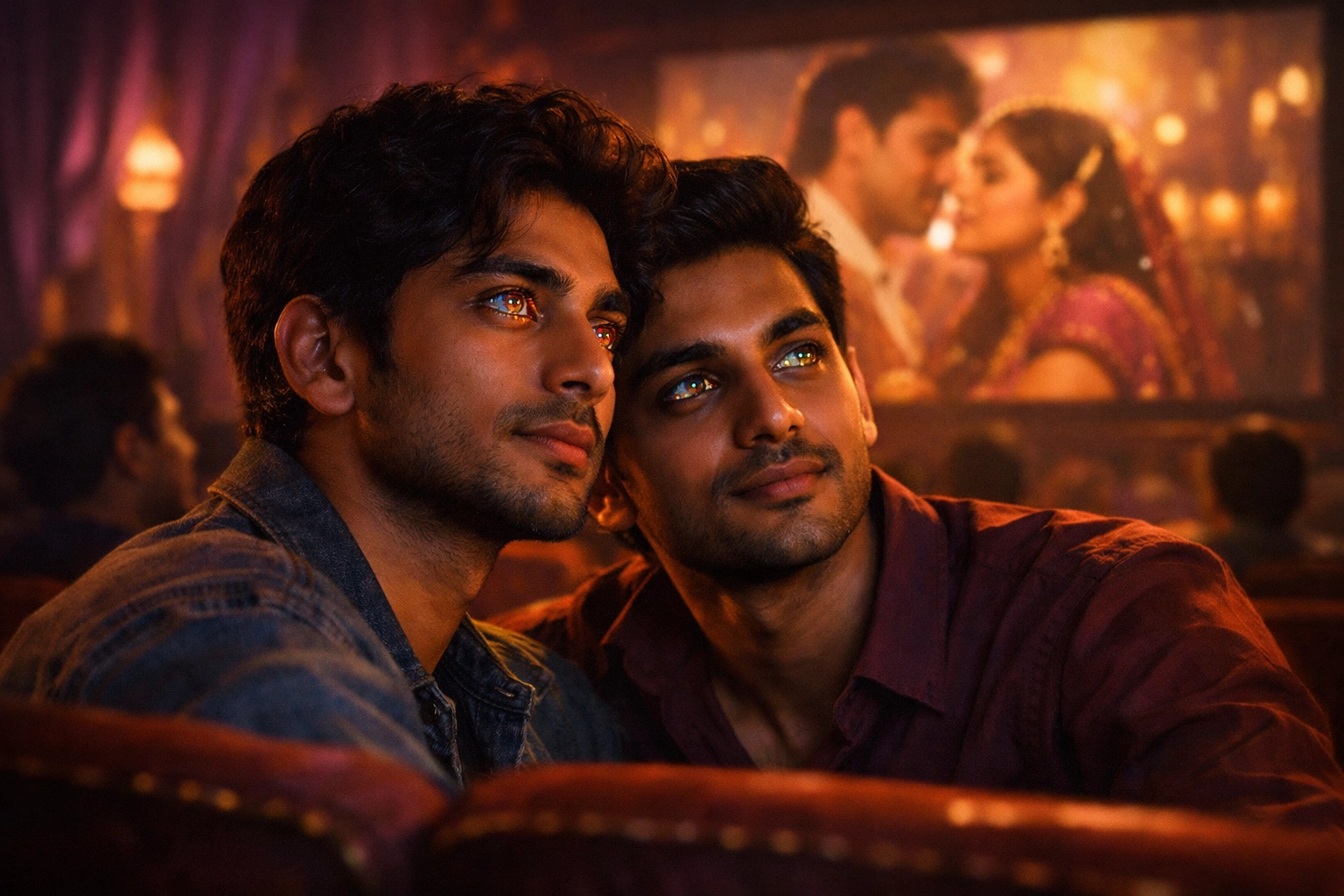
These weren't intentional queer narratives, but they became queer touchstones anyway. When you're starved for representation, you learn to read the margins. You find yourself in the way Shah Rukh Khan and Salman Khan looked at each other in Karan Arjun. You see lesbian potential in every female friendship that the filmmakers clearly didn't intend. It was exhausting and exhilarating in equal measure.
The few explicitly queer characters that did appear were usually comic relief: effeminate men played for laughs, their queerness treated as a punchline rather than an identity. Or worse, they were villains. The trans character in Sangharsh (1999) wasn't just antagonistic; she was portrayed as fundamentally disturbed, reinforcing every harmful stereotype about queer people being dangerous or mentally ill.
When Fire Sparked a Revolution
Then came 1996, and Deepa Mehta's Fire changed everything. This wasn't subtext: this was two women, Radha and Sita, falling in love on screen. In a country where homosexuality was still criminalized under Section 377, a colonial-era law, Fire was revolutionary. It was also controversial as hell.
Right-wing groups protested. Theaters were attacked. The film sparked national debates about morality, culture, and what it meant to be Indian. But it also opened a door. For the first time, queer Indians saw themselves reflected back: not as jokes or villains, but as people capable of love, desire, and complex emotional lives.
Fire proved there was an audience hungry for authentic queer stories, even if the establishment wasn't ready to provide them. It laid groundwork that would take another decade to truly build upon.
The 2000s: Baby Steps Toward Visibility
The early 2000s brought incremental change. My Brother… Nikhil (2005) told the story of a gay man with HIV, tackling two massive taboos simultaneously. It was compassionate, nuanced, and heartbreaking: a far cry from the stereotypes that had dominated earlier.
Then Dostana (2008) happened, and things got… complicated. On one hand, here was a mainstream Bollywood blockbuster with gay characters and themes. On the other hand, it was largely played for laughs, with two straight men pretending to be a gay couple. The film's heart was arguably in the right place: it normalized same-sex attraction to some degree: but it also reinforced the idea that actual gay relationships were still too taboo for the mainstream.
Still, Dostana got people talking. In drawing rooms and college hostels across India, conversations about homosexuality were happening more openly. That mattered, even if the representation itself was imperfect.
The Breakthrough Era
The real shift came in 2016. Aligarh, based on the true story of professor Ramchandra Siras, was a gut-punch of a film about privacy, dignity, and the violence of exposure. Around the same time, Kapoor & Sons casually included a gay character whose sexuality was just one part of his identity, not his entire storyline.
These films signaled a new era: queer characters with depth, complexity, and humanity. They weren't defined solely by their sexuality or their suffering. They were people first.
Ek Ladki Ko Dekha Toh Aisa Laga (2019) gave us a lesbian protagonist in a mainstream Bollywood romance: something that felt impossible just a few years earlier. The film explored family acceptance, coming out, and the intersection of tradition and identity within a conservative Punjabi household. Was it perfect? No. But it was progress.
And then Shubh Mangal Zyada Saavdhan (2020) went full rom-com with a gay couple, complete with Bollywood song-and-dance numbers, family drama, and a happy ending. It was loud, unapologetic, and wonderfully mainstream. For queer Indians, seeing a same-sex love story get the full Bollywood treatment felt like finally being invited to the party.
The Cultural Context: It's Complicated
Here's what makes Bollywood's evolution particularly fascinating: India itself is a study in contradictions. This is a country with ancient texts acknowledging diverse genders and sexualities, where hijras (transgender individuals) have been part of the social fabric for centuries. Yet it's also a country where Section 377 remained law until 2018, and where conservative attitudes about sexuality run deep.
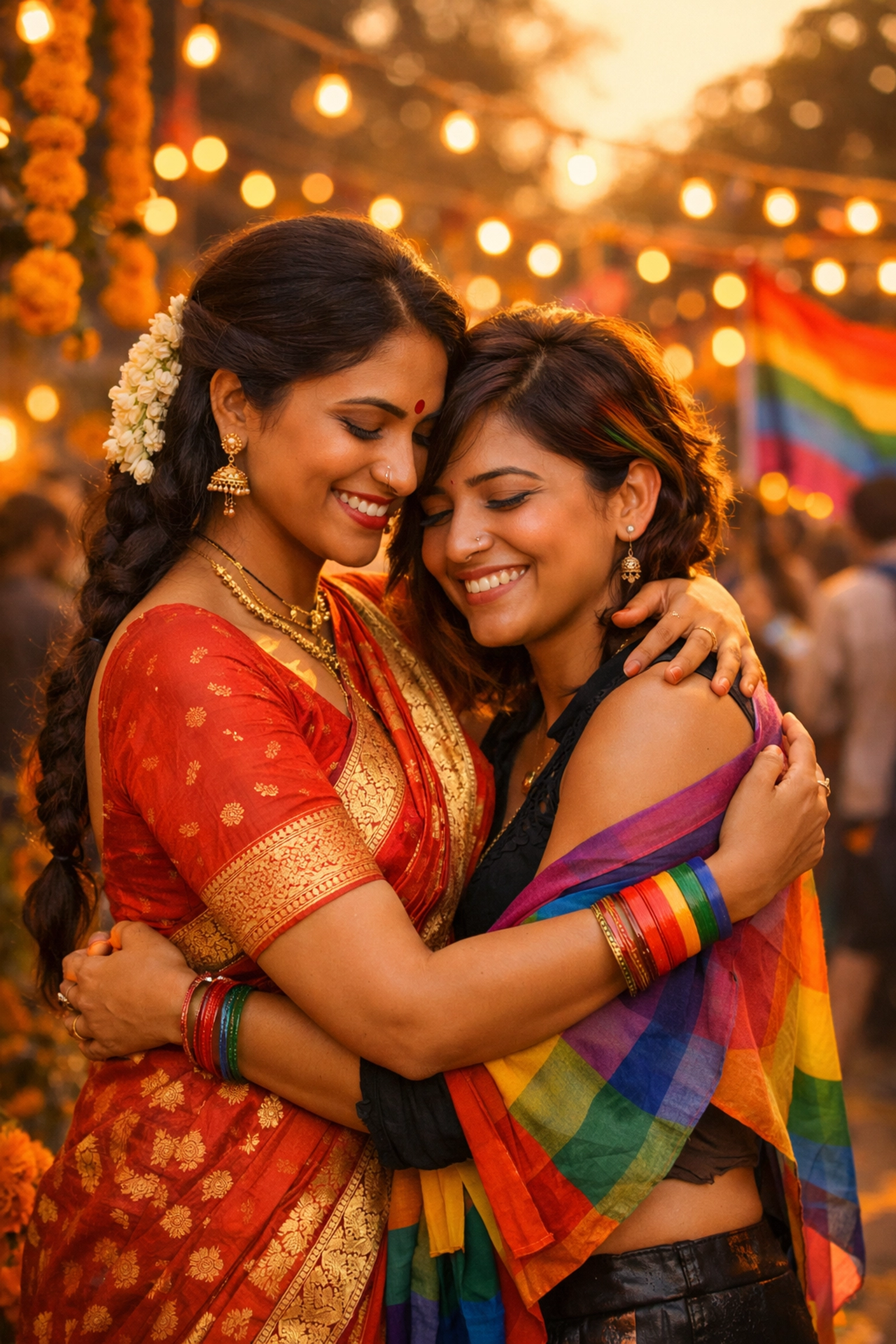
Bollywood operates within this tension. It's a commercial industry that needs to appeal to massive, diverse audiences: from metropolitan Mumbai to small towns in rural India. Taking risks on queer content means potentially alienating conservative viewers and losing box office revenue.
But here's the thing about the spirit of queer identity in India: it exists anyway. In whispered conversations and secret relationships. In underground parties and chosen families. In the resilience of people who refuse to be erased, even when society tries its hardest to ignore them.
The Global Diaspora Effect
Bollywood's influence extends far beyond India's borders. For queer Indians in the diaspora: in London, New York, Toronto, Dubai: these films became bridges to a culture that often felt distant. They sparked conversations across generations about identity, acceptance, and what it means to be both Indian and queer.
When you're navigating life as a gay man of Indian descent in San Francisco, seeing gay romance books with characters who share your cultural background matters. When you're reading MM romance novels and finding stories that reflect the specific tensions between tradition and identity that you live daily, that's powerful. This is why platforms like Read With Pride are so crucial: they provide access to diverse queer fiction that mainstream publishing often overlooks.
What's Still Missing
Let's be real: Bollywood still has a long way to go. Transgender and non-binary representation remains virtually nonexistent in mainstream films. When LGBTQ+ characters do appear, they're often relegated to supporting roles with minimal screen time. The happy endings are rare, and the stories told are frequently trauma-focused rather than joy-centered.
Intersectionality is another gap. Where are the stories about queer Dalits? About Muslim LGBTQ+ individuals navigating religious identity alongside sexual orientation? About disabled queer people? Films like Margarita with a Straw (2014) showed what's possible when we explore these intersections, but such films remain exceptions.
And let's not forget: many of these progressive films are made by independent filmmakers working outside the big studio system. Mainstream Bollywood is still playing it safe more often than not.
The Spirit That Exists
Despite everything: the censorship, the stereotypes, the slow pace of change: the spirit of queer identity in Indian culture persists. It exists in the underground club scenes of Mumbai and Delhi. In online communities where young queer Indians find each other. In the courage of activists who fought for the repeal of Section 377 and continue fighting for anti-discrimination protections.
It exists in the films being made by queer filmmakers like Onir, Faraz Arif Ansari, and Sridhar Rangayan, who are telling authentic stories without apology. In the actors who are slowly, carefully beginning to come out. In the audiences who show up for queer films, proving there's a market for these stories.
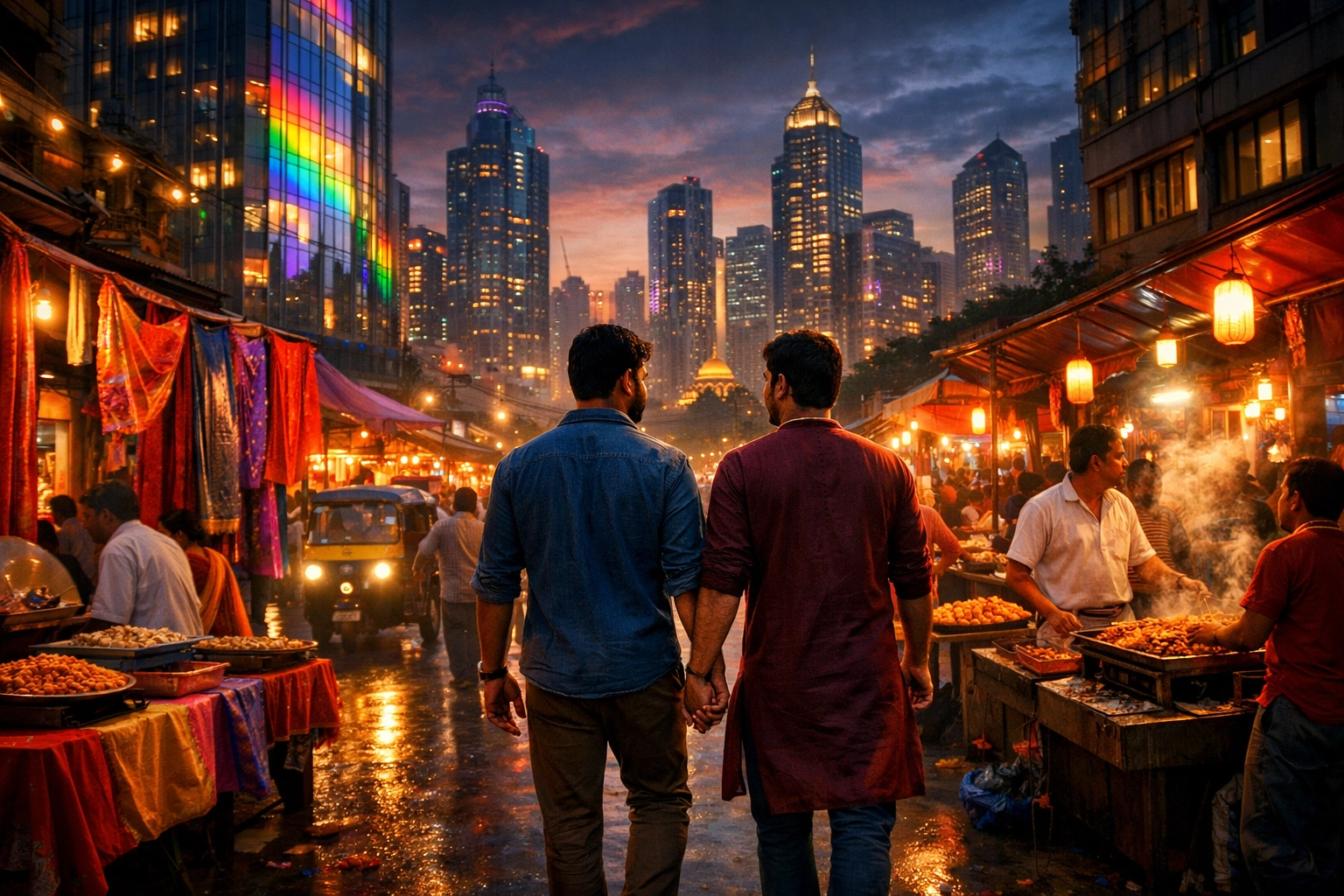
And it exists in the literature: in gay romance books and MM romance novels written by Indian authors, in the queer fiction that's finding readers both in India and the diaspora. When you're exploring LGBTQ+ ebooks, you're discovering stories that Bollywood hasn't yet had the courage to tell. You're finding the representation that mainstream media still struggles to provide.
Looking Forward
The journey of queer representation in Bollywood mirrors the larger journey of LGBTQ+ rights in India: it's messy, it's slow, and it's far from over. But there's real movement happening. The decriminalization of homosexuality in 2018 changed the cultural conversation. A new generation of filmmakers is emerging with different priorities and perspectives.
Will we see a mainstream Bollywood blockbuster with a trans protagonist anytime soon? A big-budget romance where both leads are unapologetically queer? A story that centers joy rather than struggle? Maybe not tomorrow, but the trajectory suggests we're heading in that direction.
In the meantime, queer Indians: and queer people everywhere: continue to find themselves in the stories being told, and create their own when those stories aren't available. They're writing gay fiction, producing independent films, building communities, and refusing to stay invisible.
Because that's the thing about the spirit of queer identity: it doesn't need permission to exist. It just does.
Ready to explore more LGBTQ+ stories? Check out our collection of gay romance novels and MM romance books that celebrate diverse identities and authentic love stories. From contemporary romance to historical fiction, from sweet to steamy, there's something for every reader.
Follow us on Instagram, Facebook, and X for daily book recommendations, author spotlights, and community conversations.
#ReadWithPride #BollywoodQueer #LGBTQIndia #QueerCinema #MMRomance #GayRomanceBooks #QueerFiction #IndianLGBTQ #BollywoodHistory #GayBollywood #LGBTQRepresentation #QueerVisibility #IndianQueer #MMRomanceBooks #GayFiction #LGBTQBooks #QueerStories #RepresentationMatters #BollywoodLGBTQ #GayRomance2026

Leave a Reply
You must be logged in to post a comment.