

readwithpride.com
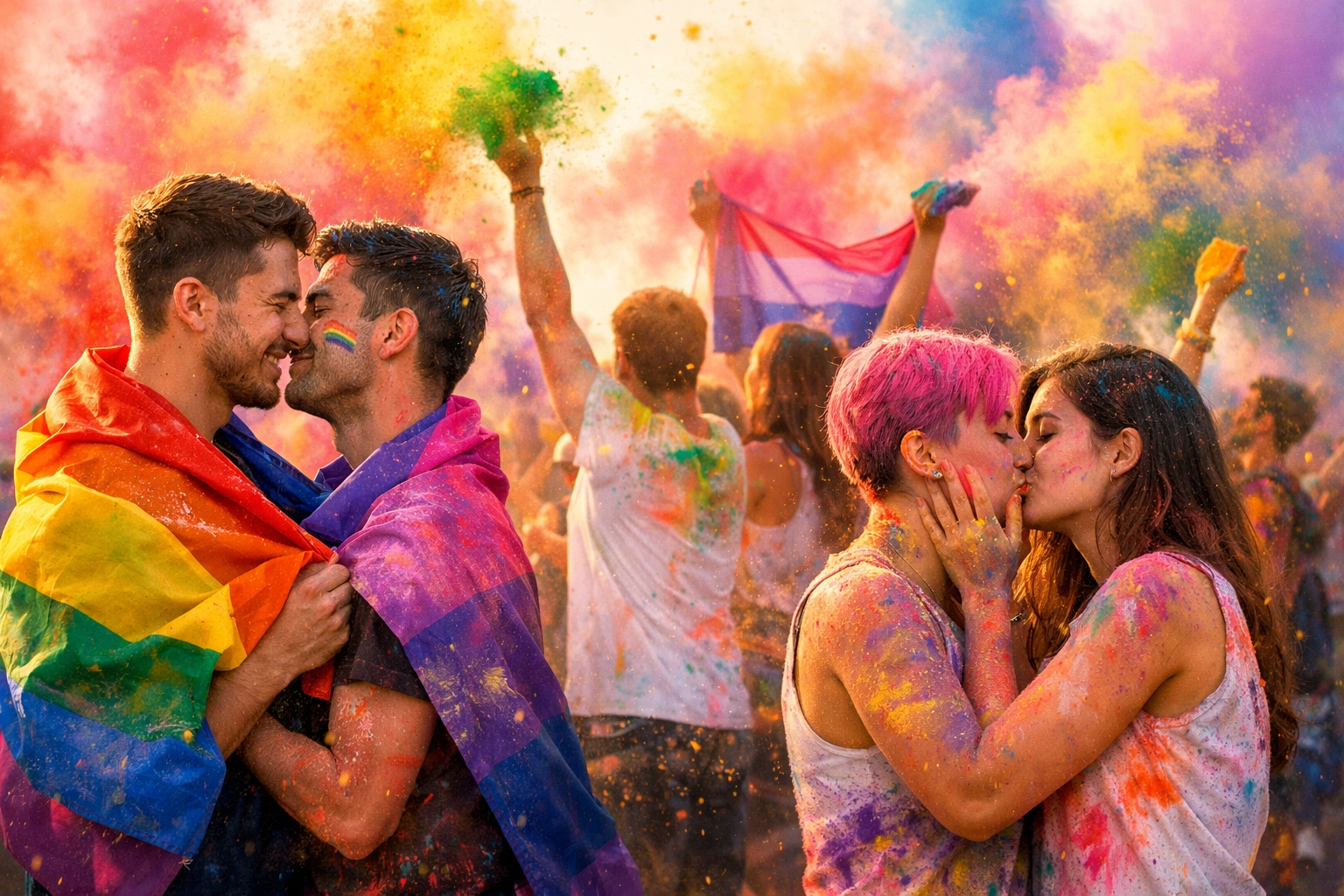
There's something magical about watching clouds of colored powder explode into the air during Holi, creating a kaleidoscope that rivals any pride parade. For India's LGBTQ+ community, this ancient festival of colors has become an unexpected symbol of joy, authenticity, and the beautiful messiness of being yourself. When red, blue, yellow, and green powders blend together on faces and clothing, they don't just celebrate spring, they celebrate the vibrant spectrum of human identity itself.
When Tradition Meets Pride
Holi has always been about breaking down barriers. It's the one day when social hierarchies dissolve, strangers become friends, and everyone gets equally covered in color regardless of who they are. Sound familiar? For queer Indians, this spirit of radical equality resonates deeply. The festival's message, that differences disappear when we embrace joy together, feels like a perfect metaphor for LGBTQ+ acceptance.
In cities like Mumbai, Delhi, and Bangalore, gay community centers and queer collectives have started hosting their own Holi celebrations. These aren't just parties (though they're definitely fun). They're powerful statements that LGBTQ+ Indians belong in every tradition, every celebration, every colorful moment of their culture's heritage.
The Rainbow in Every Color
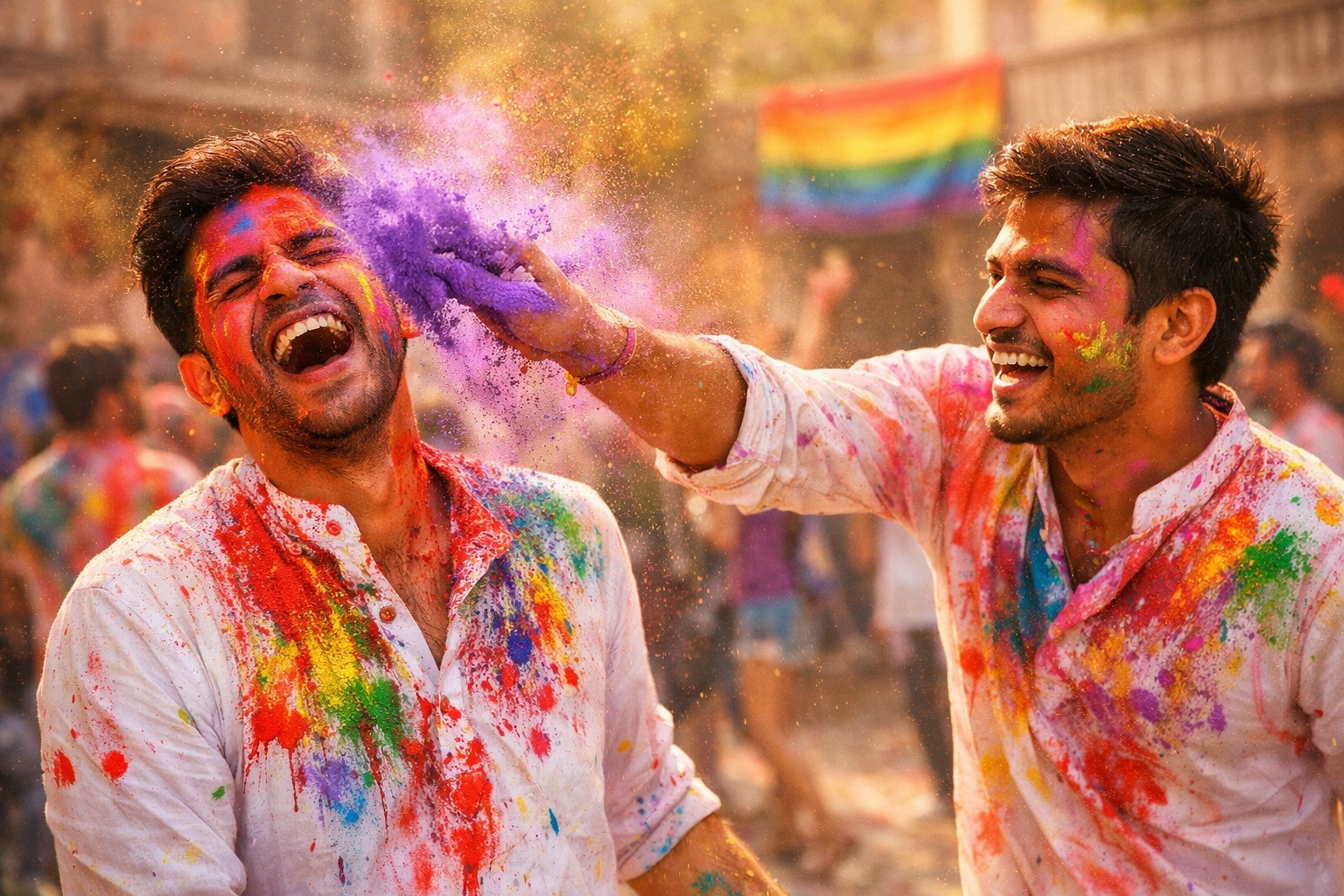
Here's where it gets really beautiful: the colors of Holi carry meanings that speak directly to the queer experience. Red symbolizes love and passion, the kind of authentic love that Section 377's repeal finally allowed to exist openly. Blue represents Krishna, sure, but also courage and the determination it takes to live openly in a society still finding its way toward full acceptance.
Yellow honors divine light and spiritual energy, which plenty of LGBTQ+ Indians connect with as they navigate their own paths between tradition and authenticity. Green celebrates new beginnings, like the new chapter that started when India's Supreme Court decriminalized homosexuality in 2018. And pink? Well, pink brings joy and youthfulness to everything, which feels pretty on-brand for a community that refuses to let prejudice dim its sparkle.
When queer folks throw these colors on each other during Holi, they're not just following tradition. They're reclaiming it, infusing it with their own stories of resilience, love, and pride.
Secret Celebrations to Street Parties
The evolution of LGBTQ+ Holi celebrations in India tells its own story. Not that long ago, queer Indians celebrated behind closed doors, in private homes or discrete venues where they could be themselves without judgment. These gatherings were precious: safe spaces filled with laughter, color, and the relief of not having to hide.
But things are changing. More LGBTQ+ organizations now host public Holi events that anyone can attend. The Humsafar Trust in Mumbai, the Naz Foundation in Delhi, and countless other groups throw parties where rainbow flags fly alongside color clouds. It's still not everywhere: India's a massive country with wildly different attitudes toward LGBTQ+ rights depending on where you are: but the spirit absolutely exists.
These modern celebrations blend traditional Holi elements with pride culture in ways that would make both your grandmother and your drag mother proud. Think bhangra music mixed with Bollywood remixes of pop hits. Traditional sweets like gujiya served alongside rainbow-decorated cupcakes. MM romance books from Readwithpride.com passed around as party favors, because nothing says "celebrate love" like a good gay love story.
Beyond Holi: Diwali's Light in the Darkness
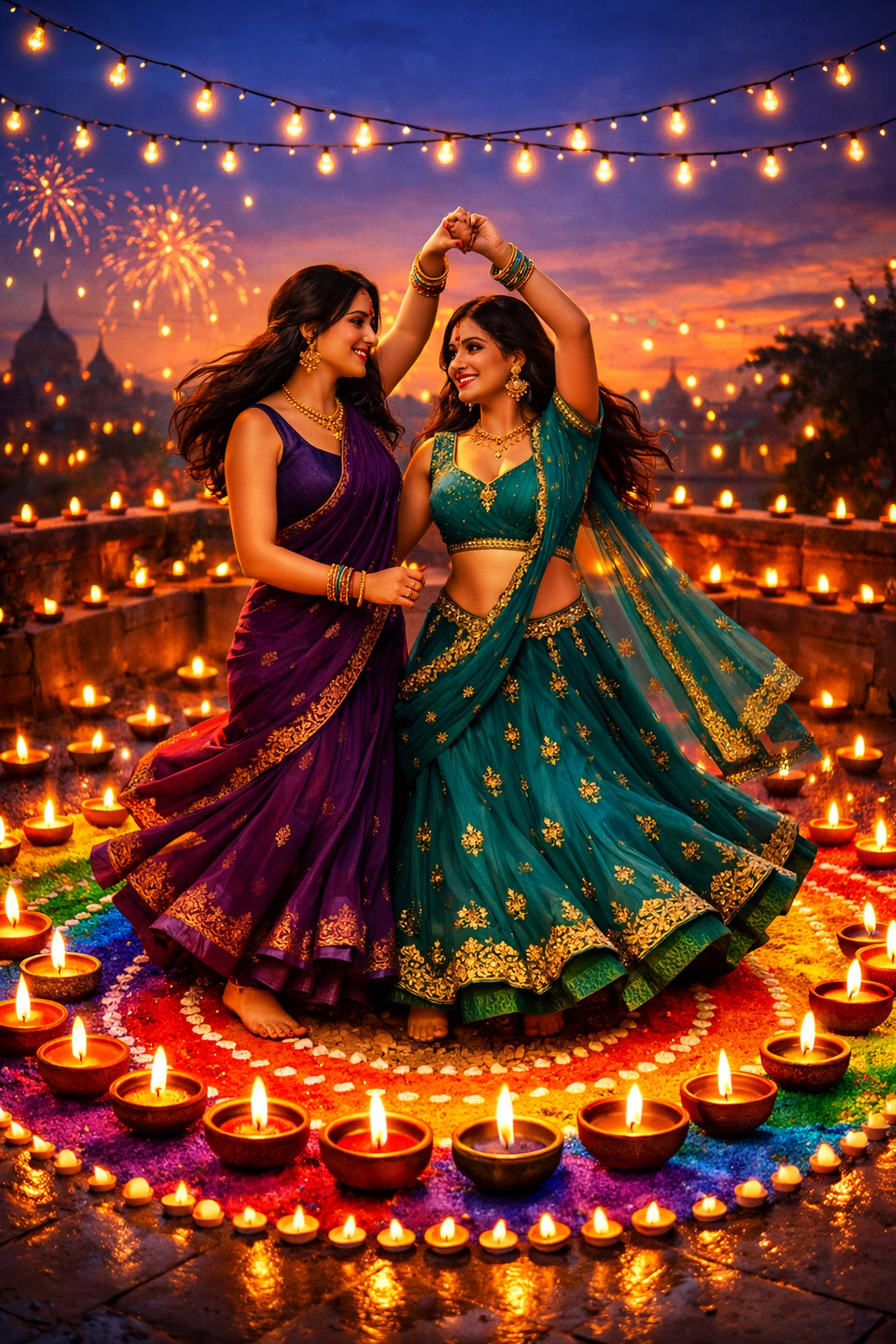
If Holi is about visible, exuberant color, then Diwali speaks to something equally important: the light that pushes back darkness. For LGBTQ+ Indians, this festival of lights carries profound meaning. Every diya lamp lit becomes a small act of defiance against the shadows of discrimination, a reminder that even the smallest light can illuminate a path forward.
Queer Indians celebrate Diwali with the same blend of tradition and authenticity. They light lamps, exchange gifts, and gather with chosen family: the friends who became siblings when blood relatives didn't understand. Some host "Rainbow Diwali" parties where traditional rangoli patterns incorporate pride colors. Others simply celebrate with their partners openly, which in itself is revolutionary.
The mythology behind Diwali: about good triumphing over evil, light conquering darkness: resonates with anyone who's fought for the right to love openly. When you've had to be your own light in dark times, lighting those lamps during Diwali hits different.
Bollywood's Complicated Dance with Color
Let's be real: Bollywood has had a complicated relationship with LGBTQ+ representation. For decades, gay characters were either invisible or played for laughs: the effeminate sidekick, the tragic figure, the villain with coded queerness. But even in those problematic portrayals, something interesting happened during festival scenes.
Watch older Bollywood films during their Holi sequences, and you'll catch glimpses of gender-bending play that the rest of the movie wouldn't dare attempt. Men dancing with men, boundaries dissolving in the chaos of color. These moments weren't explicitly queer, but they created space where different kinds of expression became acceptable, even celebrated. It's like Holi gave filmmakers permission to show fluidity they couldn't otherwise depict.
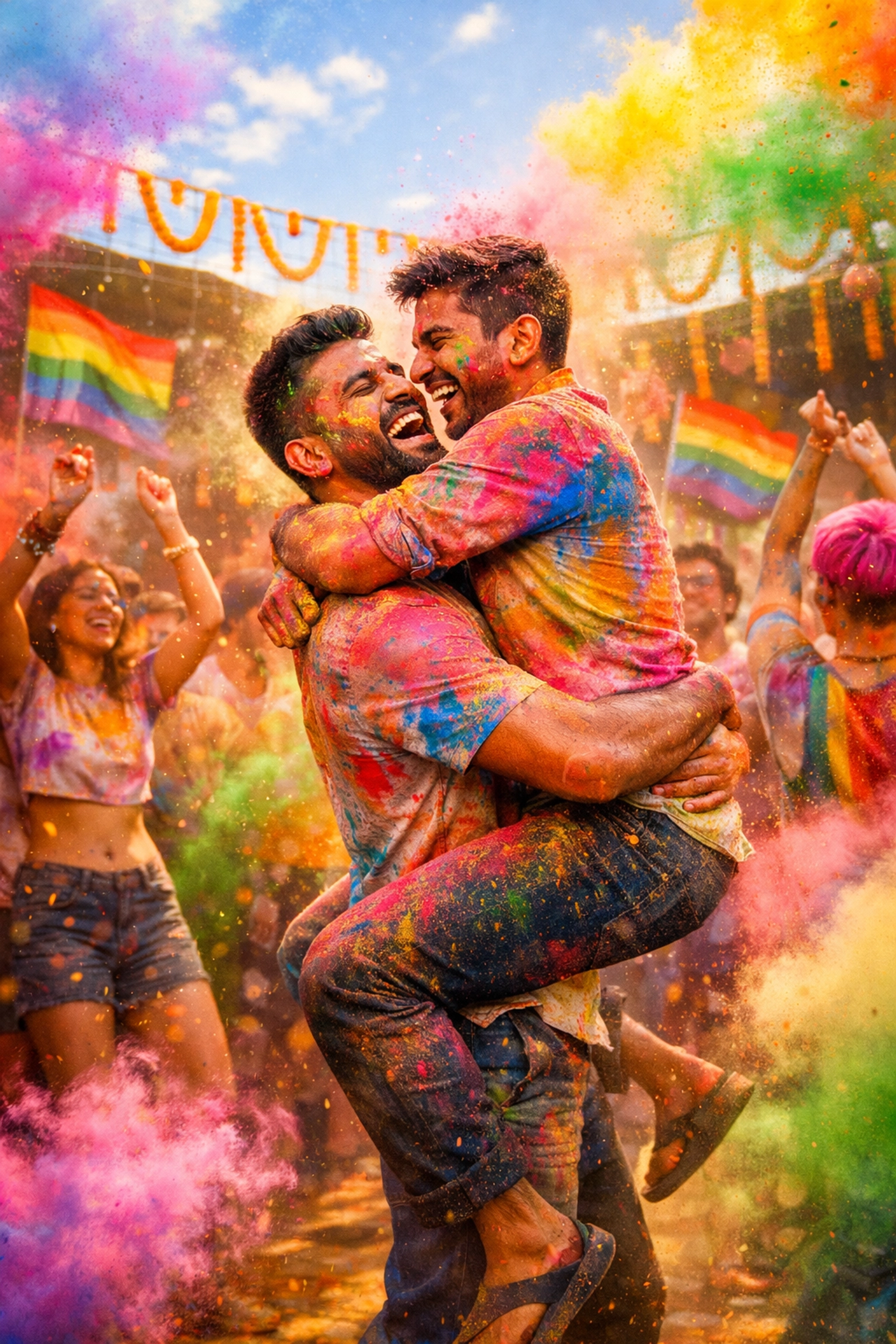
Recent films are doing better. Movies like "Ek Ladki Ko Dekha Toh Aisa Laga" and "Badhaai Do" show LGBTQ+ characters participating fully in family celebrations, including festivals. When you see a lesbian couple celebrating Diwali with their families on screen, or gay characters dancing at Holi without their sexuality being the punchline, it normalizes something crucial: that queer Indians aren't separate from their culture: they're part of it.
The Global Indian Queer Diaspora
Indian LGBTQ+ folks living abroad have created their own versions of these celebrations, blending traditions from home with the freedoms of their adopted countries. In New York, London, Toronto, and San Francisco, you'll find "Queer Holi" and "Pride Diwali" events that pack dance floors with desi queers and their allies.
These celebrations serve a dual purpose. They honor cultural roots while creating space for identities that might not have had room back home. A queer Indian in London can throw colors during Holi while wearing a pride shirt, dance to bhangra remixes at a gay club, and not feel like they're choosing between being Indian and being out.
For many, these global celebrations also keep them connected to family and traditions even when acceptance is complicated. You can love your culture, celebrate its festivals, and still be unapologetically queer. The colors and lights don't judge: they just shine.
Finding Your Own Colors
The beautiful thing about Holi is that there's no wrong way to throw color. Gentle or wild, traditional or experimental: it all ends up creating something beautiful. The same goes for being LGBTQ+ in Indian culture. There's no single right way to navigate the intersection of tradition and identity.
Some queer Indians fully embrace every festival and tradition, finding ways to infuse them with pride. Others create new traditions that blend what resonates from their heritage with what they're building in their own lives. Both approaches are valid. Both are celebrations of authenticity.
At Readwithpride.com, we believe every love story deserves to be celebrated in full color. Whether you're looking for gay romance books that reflect South Asian experiences or MM romance novels that capture the complexity of navigating culture and identity, we've got stories that honor both tradition and transformation.
The colors of Holi remind us that beauty comes from mixing things up, from letting different hues blend and create something new. That's what happens when LGBTQ+ Indians claim their space in cultural celebrations: they don't erase tradition, they add to it. They make it richer, more inclusive, more colorful.
So this Holi season, whether you're in Mumbai or Manhattan, throw some color with pride. Light those Diwali lamps with intention. Celebrate every festival like the vibrant, authentic, unapologetically queer person you are. Your identity doesn't diminish your culture: it makes it more beautiful.
Because when love, tradition, and pride come together? That's when the real celebration begins.
Connect with us and join the conversation:
- Website: readwithpride.com
- Facebook: facebook.com/readwithpride
- Instagram: @read.withpride
- Twitter/X: @Read_With_Pride
#ReadWithPride #LGBTQIndia #QueerHoli #PrideDiwali #IndianLGBTQ #GayBollywood #MMRomance #QueerFiction #GayRomanceBooks #LGBTQBooks #DesiPride #QueerSouthAsian #GayIndian #HoliPride #CulturalPride #QueerJoy #LGBTQCelebration #GayLoveStories #MMRomanceBooks #Readwithpride

Leave a Reply
You must be logged in to post a comment.