

readwithpride.com
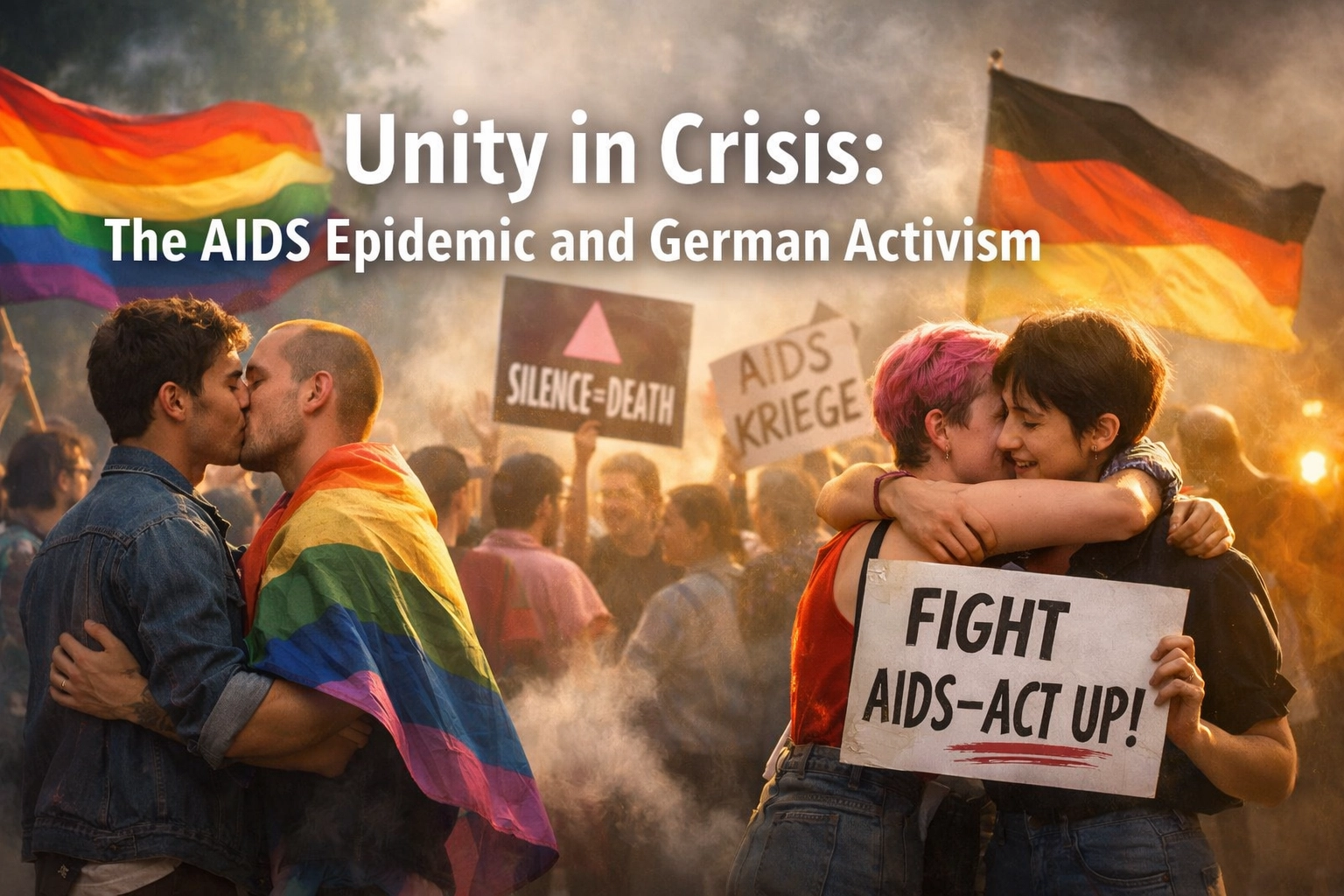
When terrifying reports from San Francisco and New York began filtering into Germany in the early 1980s, the gay community faced a decision: would they respond with fear and isolation, or with unprecedented unity and action? What emerged was something remarkable: a grassroots movement that would fundamentally reshape both AIDS activism and the relationship between LGBTQ+ communities and the German state.
When Crisis Met Courage
September 1983 marked a turning point. While many Western nations were still debating whether AIDS even warranted a response, a group of concerned activists in Germany founded Deutsche AIDS-Hilfe (DAH). This wasn't just another support group: it was the beginning of what would become one of the most comprehensive and well-funded AIDS responses in the world.
Initially conceived as a gay self-help organization, DAH quickly realized that the crisis demanded something bigger. The virus didn't discriminate, and neither could their response. Within just a few years, DAH evolved from a small collective of concerned individuals into a sophisticated national network.
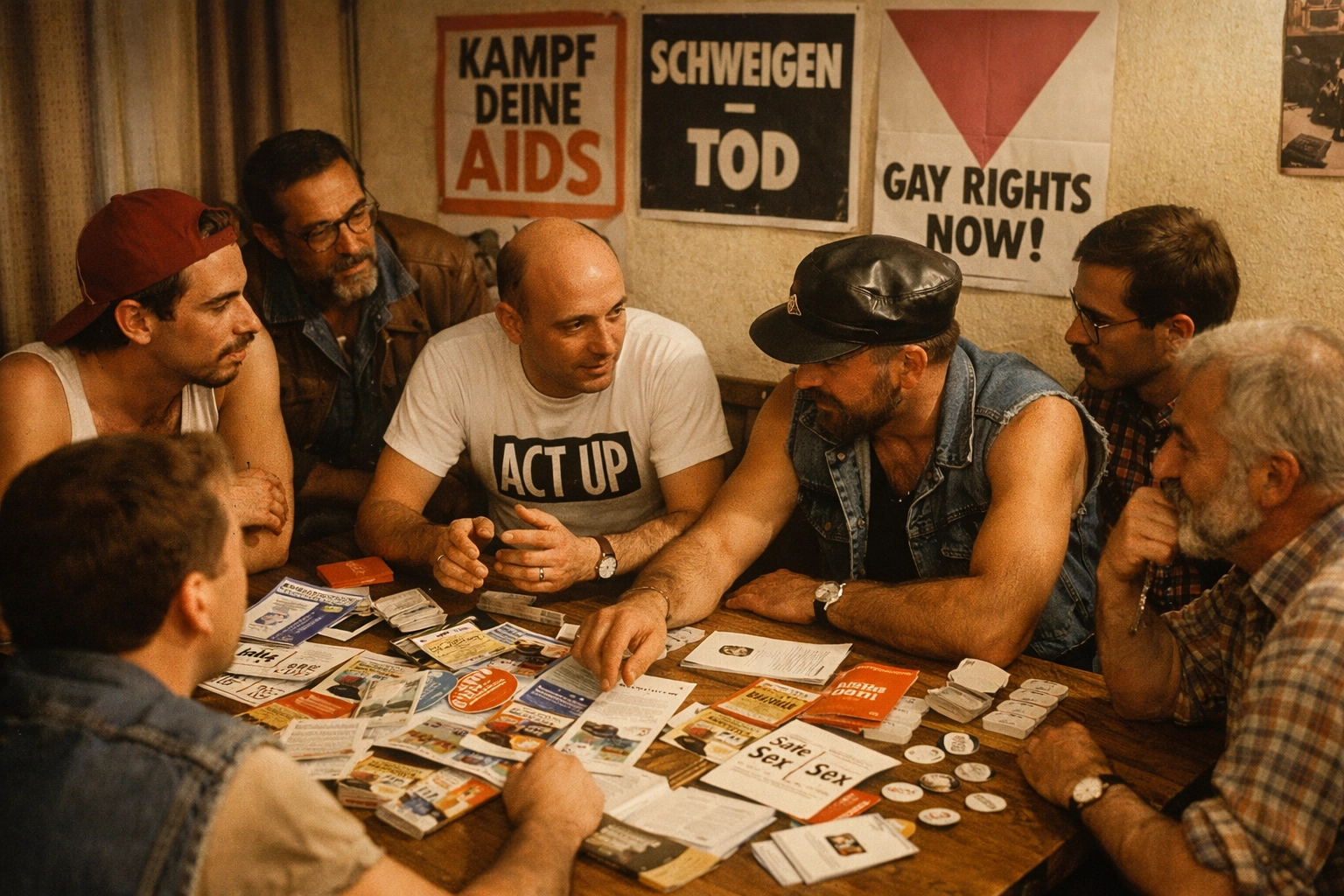
By the end of the 1980s, DAH had become an umbrella organization coordinating more than 80 regional AIDS-Hilfen across West Germany. This wasn't just impressive organizational growth: it represented a fundamental shift in how German society approached public health crises affecting marginalized communities.
Beyond Boundaries
What made the German response truly distinctive was its refusal to see AIDS as solely a "gay disease." DAH deliberately expanded its mission to serve all at-risk populations: intravenous drug users, sex workers, and anyone vulnerable to the epidemic. This inclusive approach reflected a profound understanding of collective vulnerability and solidarity: values deeply rooted in German gay activism of the era.
The activists didn't just provide services; they became translators of complex virological knowledge, making Safer Sex practices accessible and empowering. They created educational materials that were frank, sex-positive, and culturally relevant: a far cry from the moralistic, fear-based campaigns dominating elsewhere.
This approach gave gay activists a seat at the table in emerging expert networks of AIDS politics. By 1985-1986, they weren't just recipients of public health messaging: they were shaping it.
An Unlikely Partnership
Here's where the German story gets really interesting. While activists in Paris, London, and especially the United States were battling hostile governments and woefully inadequate funding, West Germany developed something different: a genuine partnership between state institutions and activist organizations.
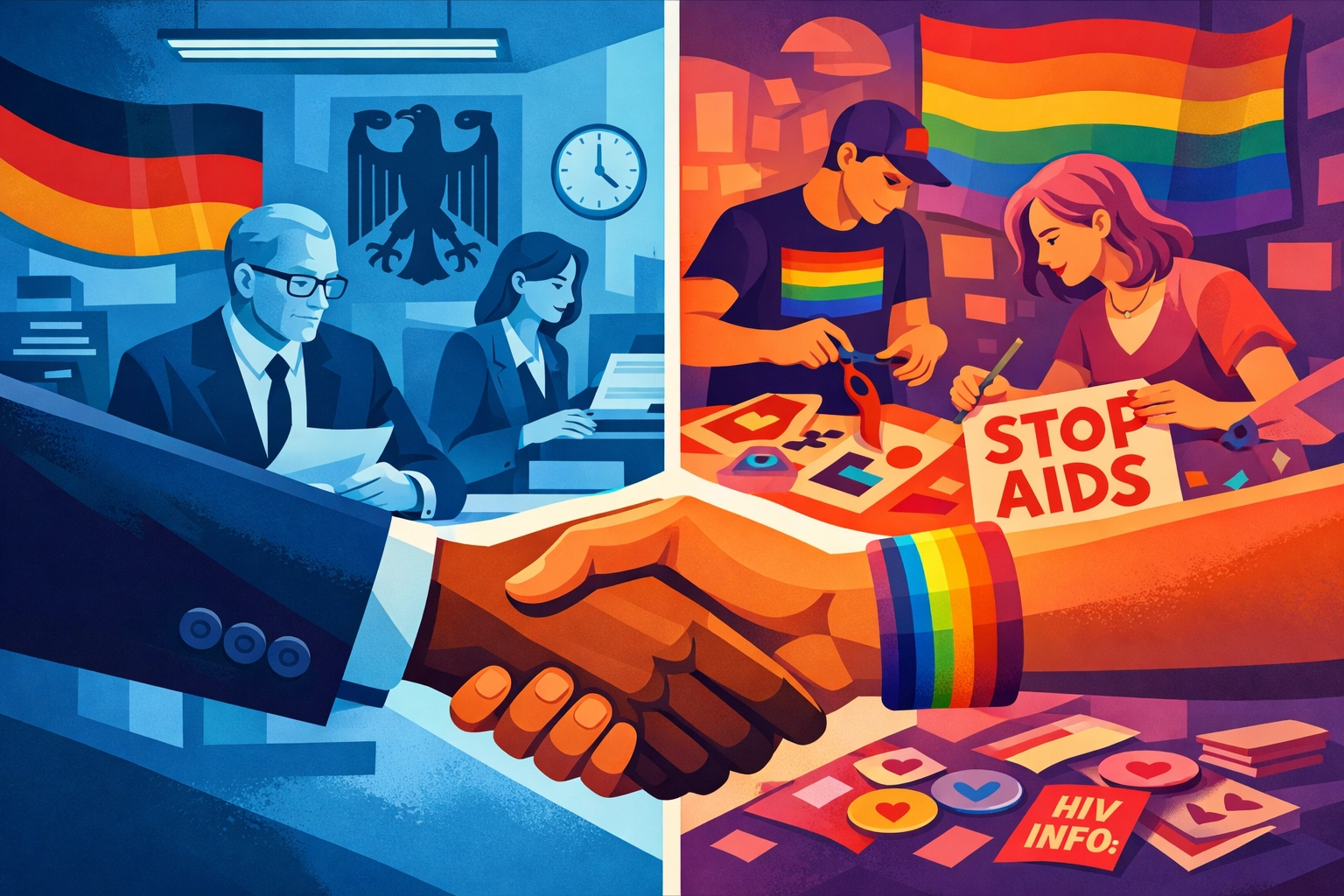
By the late 1980s, West Germany was providing remarkably high government funding for AIDS self-help groups: levels that exceeded support in comparable Western nations. This wasn't accidental. It was the result of strategic advocacy and the presence of key political allies who understood what was at stake.
Minister Rita Süssmuth at the federal level and Senator Ulf Fink in Berlin became known among activists as "lovely Rita" and her political partner: not mockingly, but affectionately. They recognized that AIDS organizations needed both material resources and genuine political support. They delivered both.
The arrangement that emerged was surprisingly pragmatic: the Federal Center for Health Education focused on messaging for the general population, while DAH concentrated its expertise on high-risk communities. Each organization played to its strengths, and crucially, gay activists maintained autonomy over how they reached their own communities.
The Complicated Legacy of Success
But this unity came at a cost that's often overlooked. As DAH grew more institutionalized and well-funded, something unexpected happened: the AIDS self-help movement effectively displaced the broader gay liberation movement. AIDS-Hilfen organizations became surrogates for general gay activism rather than complementing it.

When all your energy, resources, and political capital are focused on crisis response, other forms of advocacy inevitably suffer. The professionalization of AIDS activism: while producing tangible results in terms of services and prevention: also meant that radical gay liberation politics took a backseat to public health pragmatism.
Not everyone was comfortable with this cooperation either. Bavaria's conservative AIDS policy sparked significant protests in the second half of the 1980s, revealing that consensus had its limits. Some activists remained deeply skeptical of becoming too cozy with state institutions, fearing co-optation.
There were also troubling signs of internal tensions. Efforts to address xenophobia emerging within gay-led AIDS activist groups suggested that even in crisis, communities could replicate broader social prejudices. Unity, it turned out, was complicated.
Bridging Two Germanys
Then came November 1989 and the fall of the Berlin Wall. Suddenly, the AIDS crisis provided an unexpected opportunity for connection across what had been an ideological chasm.
In January 1990, activists in East Germany founded AIDS-Hilfe DDR. Just one year later, in January 1991, it merged with Deutsche AIDS-Hilfe, incorporating 16 local AIDS-Hilfe groups from the former East Germany. The epidemic's urgency transcended political divisions that had seemed permanent.
This integration wasn't seamless: East and West Germany had vastly different social, political, and healthcare systems. But the shared commitment to AIDS activism provided common ground and a practical framework for collaboration during a period of profound national transformation.
What Germany's Response Teaches Us
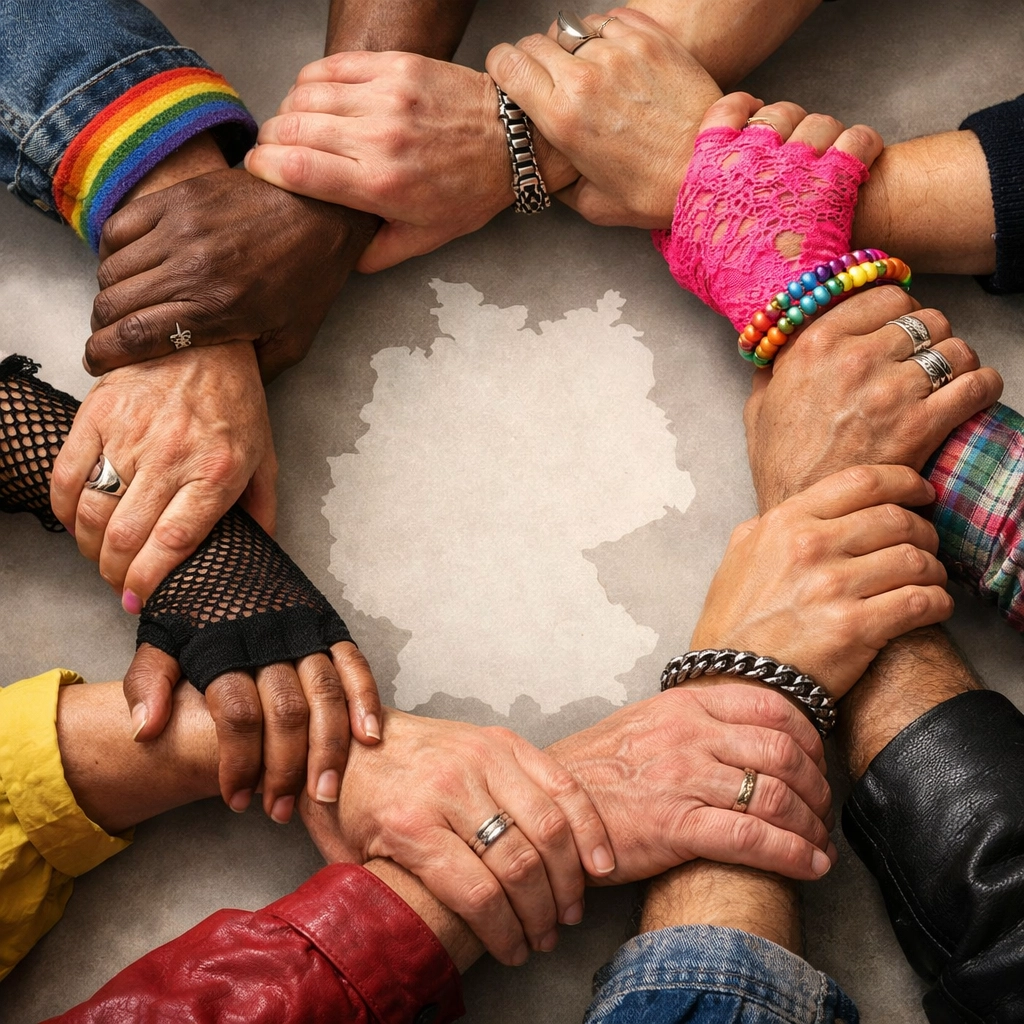
Looking back from 2026, the German AIDS response offers important lessons for queer communities facing crises today. It demonstrated that institutional cooperation doesn't have to mean selling out: but it does require vigilance about maintaining community autonomy and radical values.
The German model showed that well-funded, professional activism can achieve remarkable things: comprehensive services, effective prevention campaigns, and genuine political influence. But it also revealed the trade-offs: the displacement of broader liberation politics, the challenges of maintaining grassroots energy within institutionalized structures, and the constant negotiation between pragmatism and principle.
For those of us at Read with Pride who explore LGBTQ+ history through books and storytelling, these stories matter. They remind us that our community's greatest achievements have come from balancing idealism with pragmatism, solidarity with self-care, and crisis response with long-term vision.
The activists who founded DAH in 1983 didn't have a playbook. They were responding to terrifying uncertainty with courage, creativity, and an unwavering commitment to their communities. That spirit: messy, complicated, and profoundly human: deserves to be remembered and celebrated.
Whether you're interested in gay historical fiction, LGBTQ+ literature, or simply want to understand the forces that shaped today's queer world, the German AIDS activism story is essential reading. It's a reminder that our history is rich with examples of ordinary people doing extraordinary things when their communities needed them most.
Find more stories of LGBTQ+ resilience and resistance at Read with Pride: because our history deserves to be read, remembered, and celebrated.
#ReadWithPride #LGBTQHistory #AIDSActivism #GermanHistory #QueerHistory #MMRomance #LGBTQBooks #GayFiction #QueerLiterature #LGBTQCommunity #HistoricalLGBTQ #AIDSAwareness #QueerActivism #GayRights #LGBTQReading

Leave a Reply
You must be logged in to post a comment.