

readwithpride.com
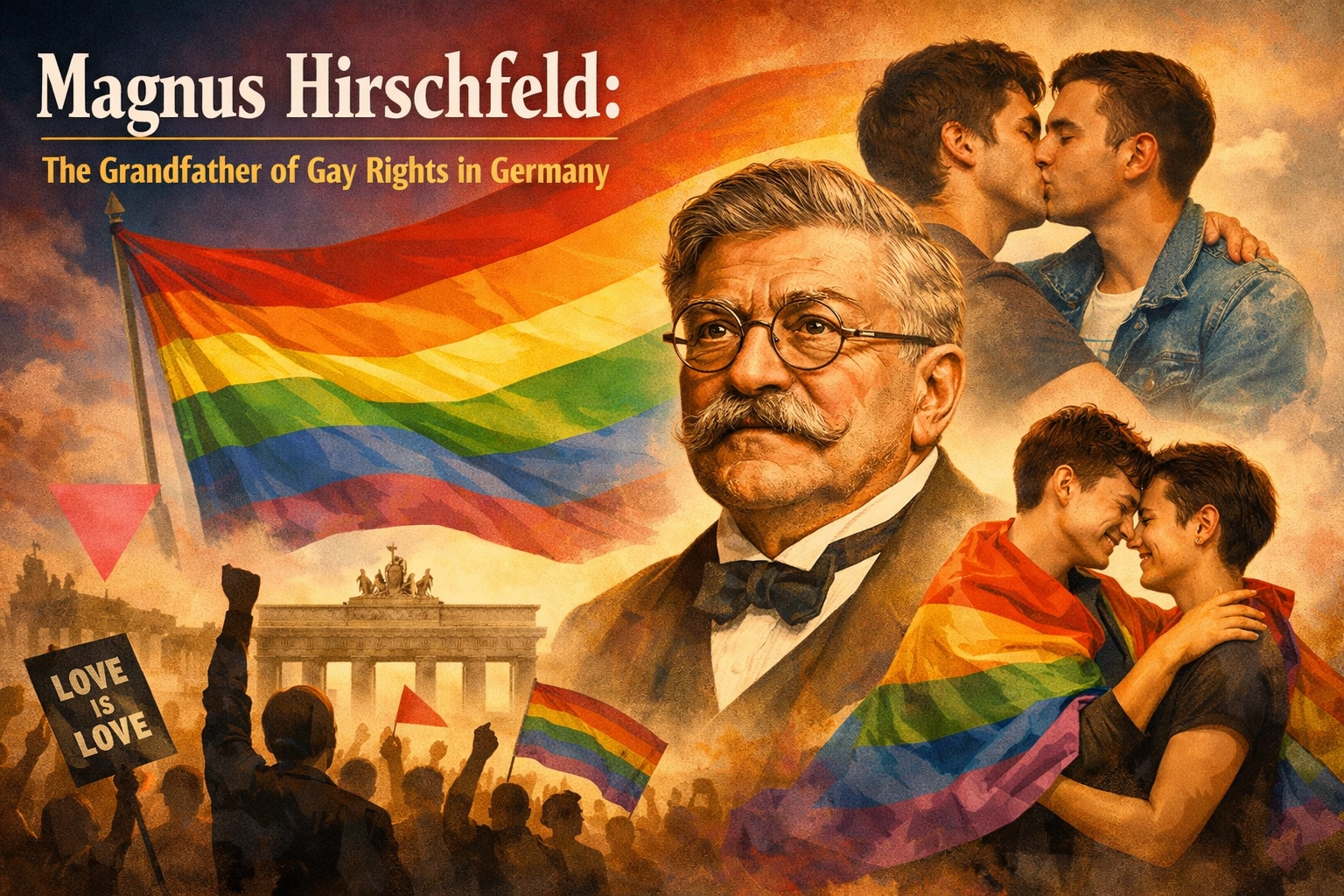
Long before Pride parades filled the streets and rainbow flags flew proudly, one man in Germany was already fighting the battle for LGBTQ+ rights: and he was doing it with science, courage, and an unapologetic flair for life. Meet Magnus Hirschfeld, the Jewish doctor and sexologist who essentially invented the gay rights movement as we know it today.
The Revolutionary Who Started It All
Picture Berlin in 1897. Oscar Wilde's trial is still fresh in everyone's minds, homosexuality is criminalized across Europe, and simply being yourself could land you in prison. This is when Magnus Hirschfeld, a 29-year-old physician, decided enough was enough. He co-founded the Scientific-Humanitarian Committee with a motto that still hits hard today: "Through science to justice."
This wasn't just some underground resistance group: it was the world's first organization dedicated to gay and transgender rights. Let that sink in for a moment. While most of the world was busy pretending LGBTQ+ people didn't exist, Hirschfeld was organizing, advocating, and building a movement that would echo through generations.
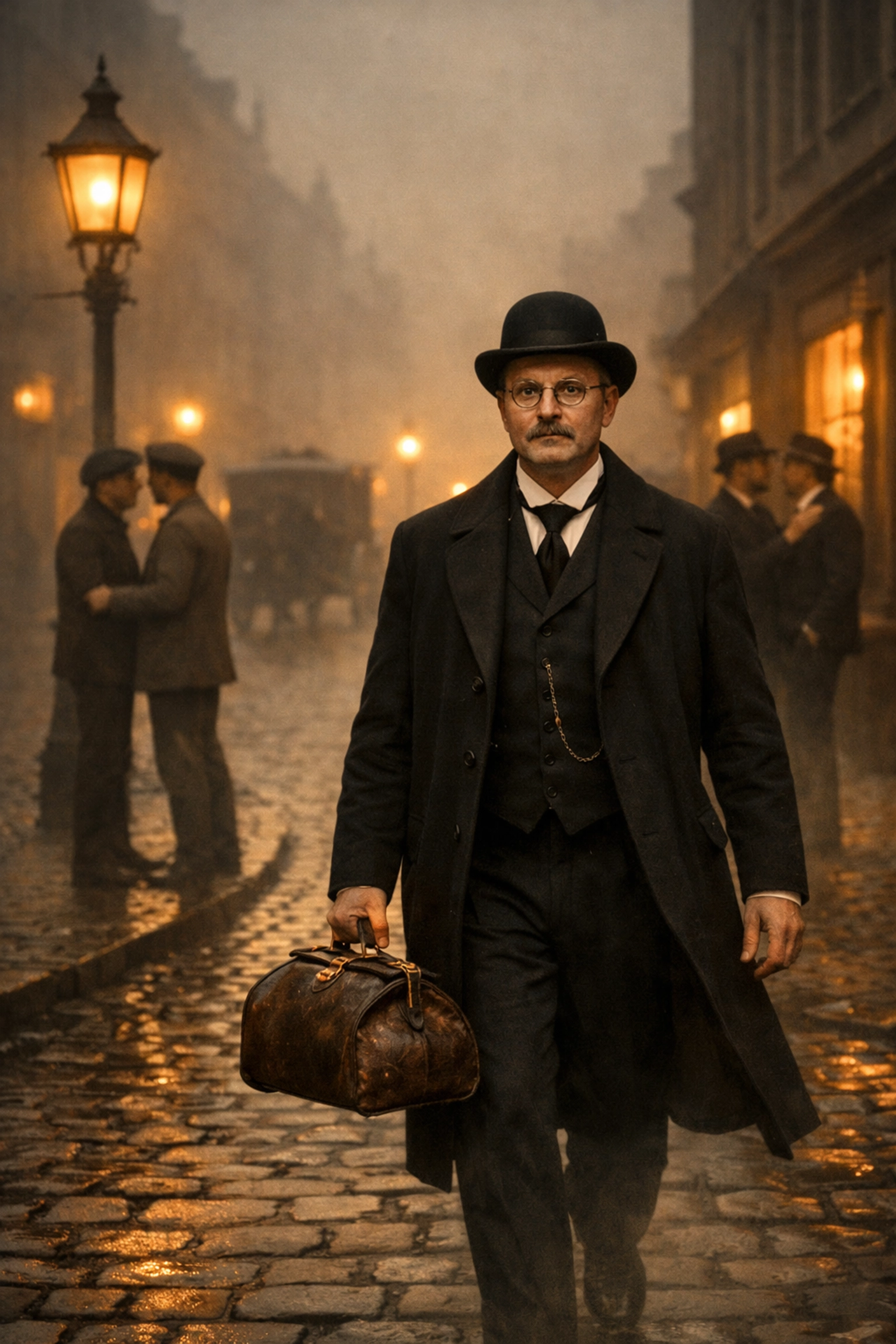
The committee's primary target? Paragraph 175, Germany's notorious law that made homosexual acts between men punishable by imprisonment. But Hirschfeld didn't stop at legal reform. He understood that changing laws meant changing minds, so he threw himself into public education, encouraging LGBTQ+ folks to advocate for themselves at a time when visibility could literally destroy your life.
A Scientist First, Activist Always
What made Hirschfeld different from other advocates of his time was his commitment to hard science. This wasn't about feelings or morality debates: he brought data to the table. Hirschfeld conducted the first statistical surveys proving that gay people faced significantly higher suicide risks, understanding that their lives were shrouded in taboo and shame.
His research methodology was simple but revolutionary: prove that homosexuality is natural, universal, and occurs across all cultures. By demonstrating that being gay wasn't some German peculiarity or Western "degeneracy" but a fundamental aspect of human diversity found everywhere from Berlin to Boston, he dismantled the pseudo-scientific arguments used to justify persecution.
In 1919, Hirschfeld took his activism to the silver screen, co-writing and acting in "Different From the Others" (Anders als die Andern): a groundbreaking film that depicted homosexual love with dignity and humanity. The movie aligned perfectly with his therapeutic philosophy: help patients accept their sexuality rather than repress it. Radical? Absolutely. And decades ahead of its time.

Perhaps one of his most practical and compassionate innovations was issuing transvestite certificates: essentially police ID cards that confirmed the importance of cross-dressing for people's physical and mental well-being. These certificates protected transgender individuals from arrest during police raids, offering a small measure of safety in an increasingly hostile world.
The Institute: A Beacon of Hope
In 1919, Hirschfeld established the Institute for Sexual Science in Berlin, and it quickly became what we'd now call a safe space: but on a massive scale. This wasn't just a research facility; it was a global epicenter for sexuality studies, a community gathering place, and a beacon of hope for LGBTQ+ people across Europe.
The Institute offered marriage and sex counseling, contraceptive services, and treatment for sexually transmitted infections. It housed an extensive library and archive documenting LGBTQ+ history and lives. For the first time, queer people had a place where their existence wasn't just tolerated: it was studied, celebrated, and affirmed.
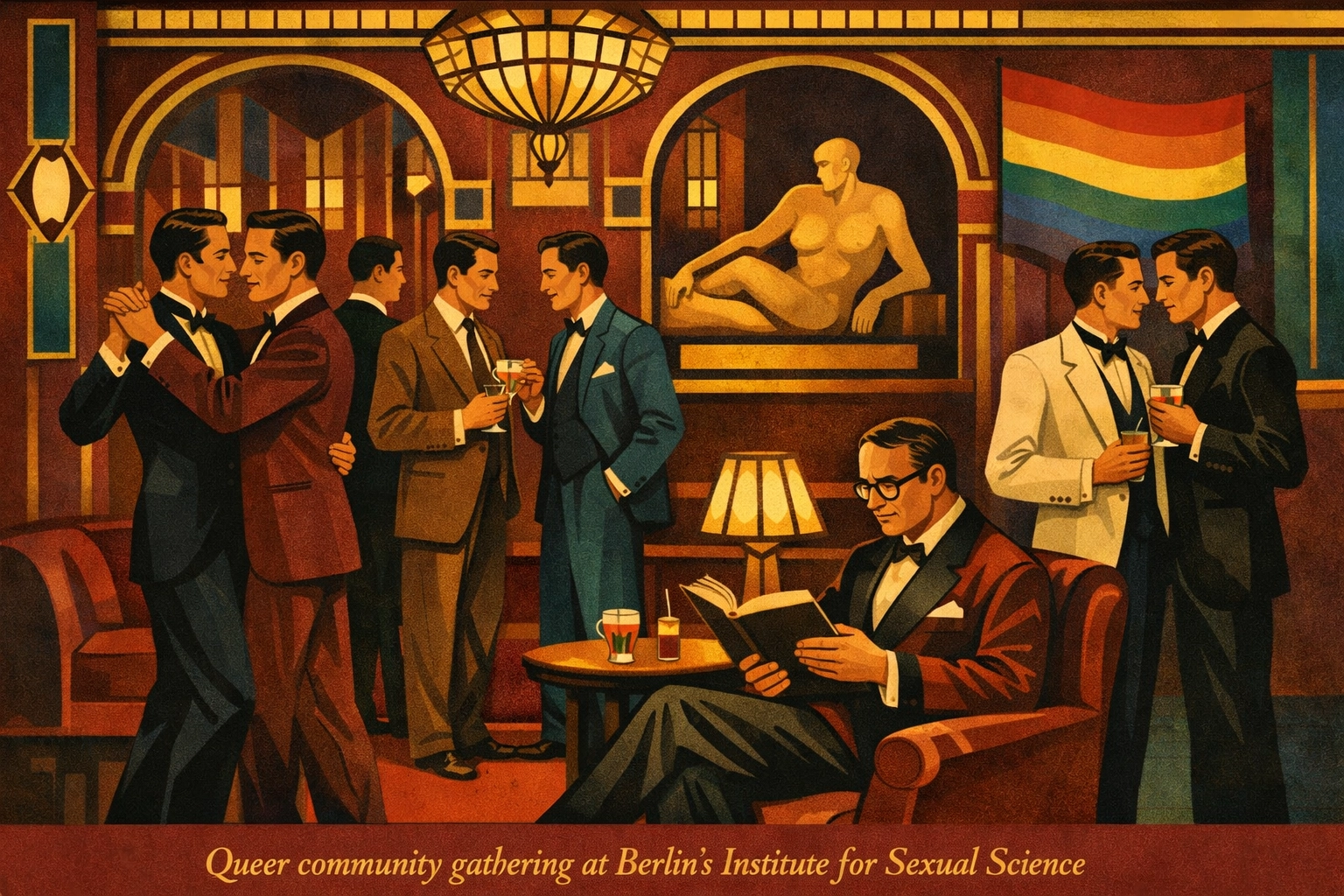
Hirschfeld himself lived openly at the Institute with his lover, becoming a fixture of Berlin's vibrant drag scene. His friends affectionately nicknamed him "Tante Magnesia" (Aunt Magnesia), and he embraced the role with characteristic warmth and humor. This was Berlin's golden age of queer culture, and Hirschfeld was at its heart.
The Price of Visibility
But visibility comes with a price, especially when you're threatening the status quo. In 1907, Hirschfeld testified in court that "homosexuality was part of the plan of nature and creation just like normal love." For this, he earned the label of "public danger" and found his face plastered on posters alongside vile antisemitic slurs.
The threats escalated. In 1920, völkisch nationalist activists in Munich nearly beat him to death. The violence was both homophobic and antisemitic: a preview of the nightmare to come. Yet Hirschfeld persisted, understanding that backing down meant abandoning everyone who came after him.
As the political climate darkened throughout the 1920s, Hirschfeld kept working, kept advocating, kept believing in a better future. But by 1930, with Nazi power growing and violence against LGBTQ+ people and Jews intensifying, he made the painful decision to leave Germany.
When the Nazis Came
On May 10, 1933, students and Nazi paramilitary groups stormed the Institute for Sexual Science. They looted everything: decades of research, irreplaceable archives, thousands of books documenting LGBTQ+ lives and history. Then they burned it all in the infamous book burning at Bebelplatz, with newsreel cameras capturing the destruction for the world to see.
Among the photographs lost that day: thousands of images of LGBTQ+ people living authentic lives, loving openly, existing proudly. It was cultural genocide, an attempt to erase not just Hirschfeld's work but proof that LGBTQ+ people had ever existed at all.
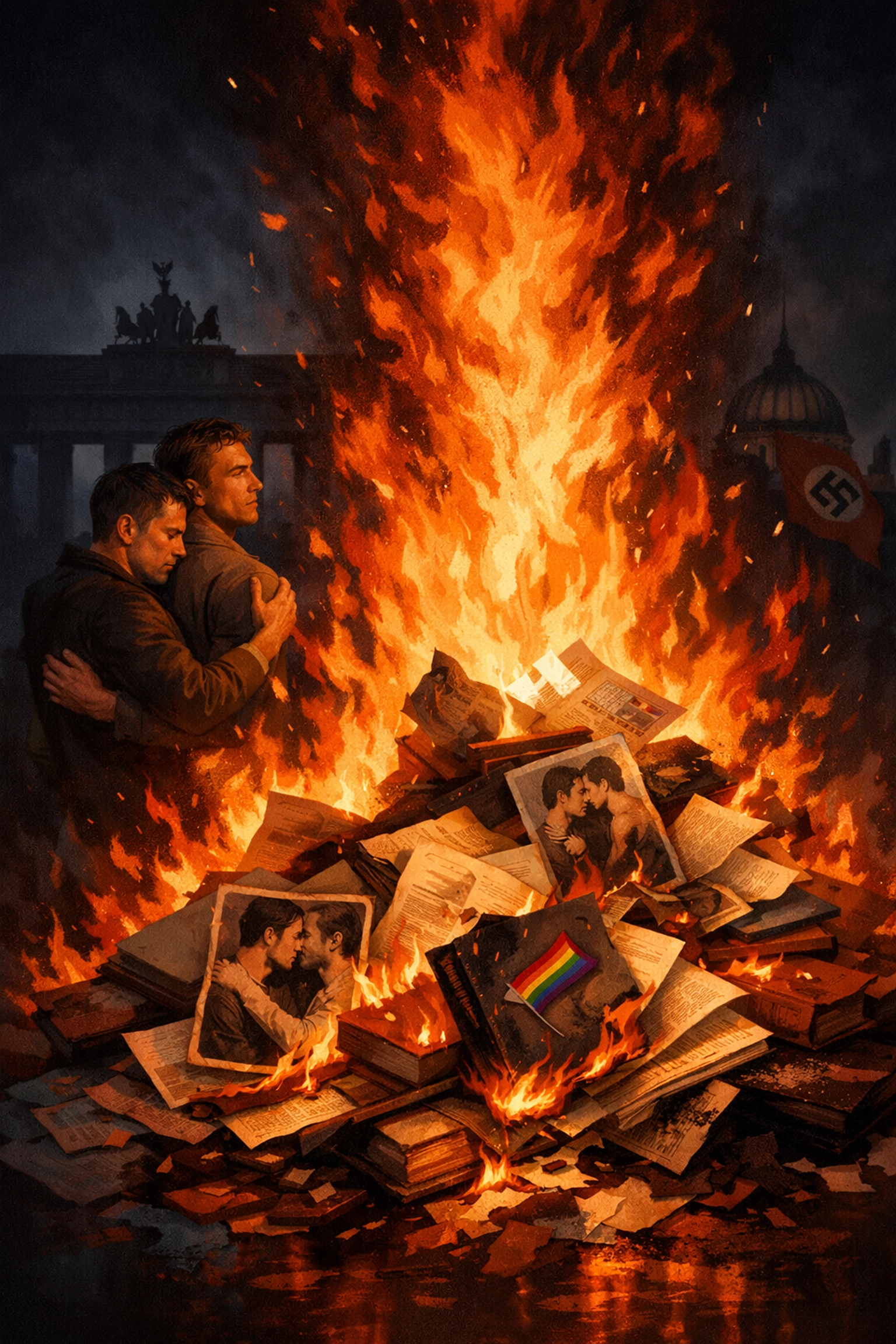
Hirschfeld watched the newsreels from exile in France. Can you imagine? Seeing your life's work: everything you'd built, every person you'd helped, every document you'd preserved: reduced to ash and smoke while the world looked on?
He died in Nice on May 14, 1935: his 67th birthday. Germany now commemorates this date as Magnus Hirschfeld Day, a bittersweet recognition of a man whose country failed him but whose legacy refuses to die.
The Long Shadow of History
Here's the kicker: despite everything Hirschfeld accomplished, despite his science and advocacy and sacrifice, Paragraph 175 remained law until 1994. That's not a typo. Germany didn't fully repeal the law criminalizing homosexuality until two years after the reunification of East and West Germany. Same-sex marriage? That didn't happen until 2017.
Hirschfeld fought his whole life for rights that wouldn't materialize for another 80 years after his death. That's the reality of progress: it's slow, it's frustrating, and the people who start the fight rarely see the finish line.
But his legacy lives on in every Pride parade, every LGBTQ+ organization, every piece of queer literature and MM romance that celebrates authentic love. When we read gay fiction that treats our relationships with dignity, when we access LGBTQ+ books that affirm our identities, when we build communities where being yourself isn't a crime: we're standing on foundations that Magnus Hirschfeld helped lay.
Why His Story Matters Today
At Read with Pride, we believe that knowing our history isn't just about honoring the past: it's about understanding how we got here and where we're going. Hirschfeld's story reminds us that the fight for LGBTQ+ rights wasn't born yesterday, and it won't be finished tomorrow.
Every time you pick up gay romance books, every time you support LGBTQ+ fiction and queer authors, you're participating in the tradition Hirschfeld started: the radical act of saying we exist, we matter, and our stories deserve to be told.
His motto: "Through science to justice": resonates today as we continue fighting for transgender rights, marriage equality globally, and basic dignity for LGBTQ+ people everywhere. The methods evolve, but the mission remains: prove our humanity is real, natural, and worthy of respect.
So here's to Magnus Hirschfeld: doctor, scientist, activist, and the grandfather of gay rights in Germany. May we carry his torch forward with the same courage, compassion, and unshakeable belief that love and justice will prevail.
Looking for more LGBTQ+ content and history? Follow us on Facebook, Instagram, and X/Twitter for daily updates, book recommendations, and stories that celebrate our community.
#MagnusHirschfeld #LGBTQHistory #GayRights #QueerHistory #GermanHistory #ReadWithPride #MMRomance #GayFiction #LGBTQBooks #QueerLiterature #GayRomanceBooks #PrideHistory #LGBTQActivism #Representation #LoveIsLove #QueerCommunity #GayHistoricalRomance #LGBTQFiction #2026Pride #ReadMore

Leave a Reply
You must be logged in to post a comment.