

readwithpride.com
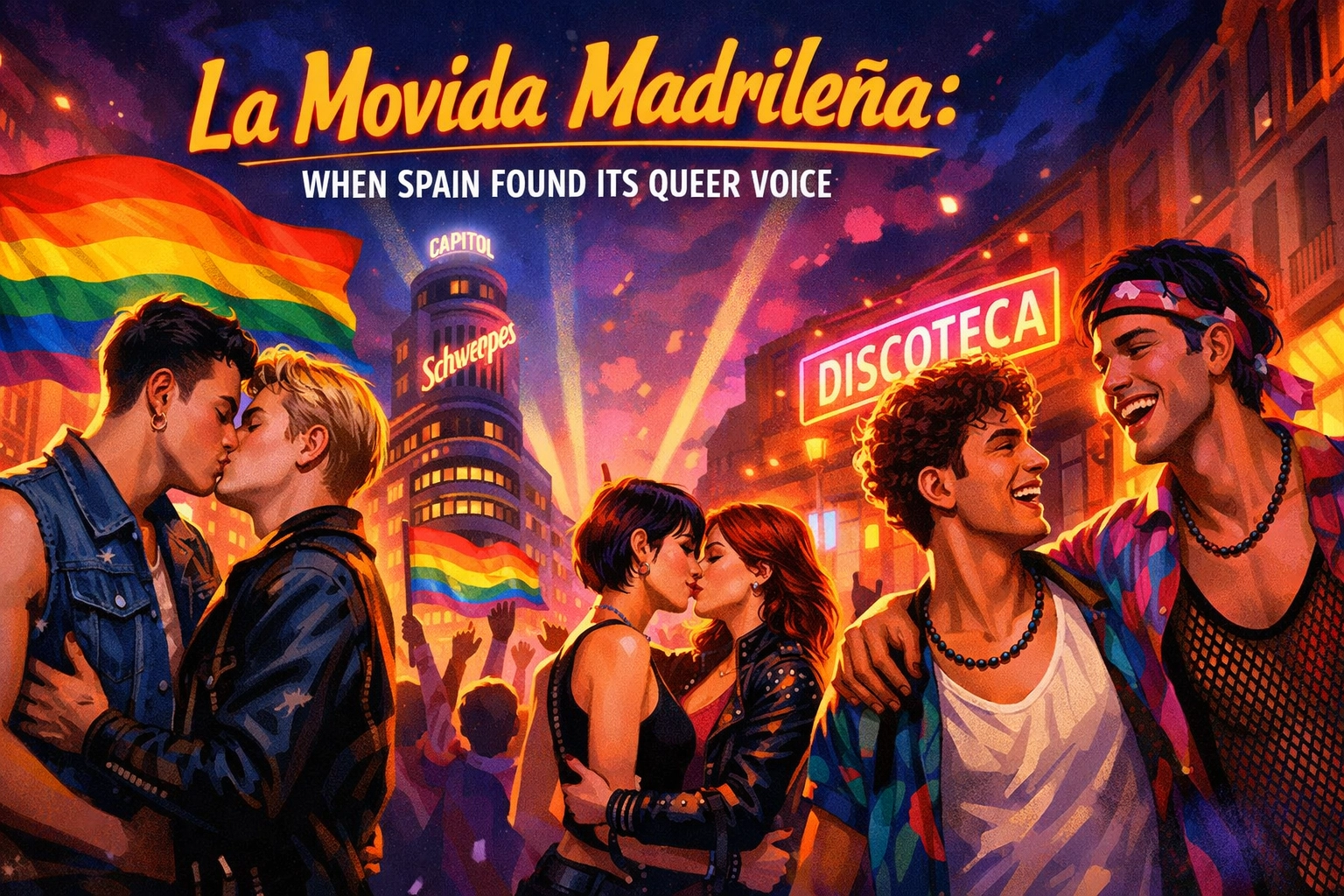
Picture this: It's 1975, and Francisco Franco, Spain's dictator for nearly four decades, has finally died. The country is holding its breath. For LGBTQ+ people, those forty years meant hiding, fear, and laws that literally criminalized who you loved. But what happened next? Madrid didn't just exhale. It exploded.
Welcome to La Movida Madrileña, the countercultural movement that turned Madrid into the queer capital of Europe and proved that when you suppress people for long enough, their creativity doesn't die. It just waits for the perfect moment to burst into glorious, chaotic color.
The Grey Years: Understanding What Came Before
To really get La Movida, you need to understand what Spain was like under Franco. This wasn't just "conservative", this was full-on authoritarian control wrapped in ultra-Catholic values. Homosexuality was criminalized. People could be arrested for looking too "different" under laws about "dangerousness and social rehabilitation." (Yes, that was the actual legal term. Chilling, right?)
Madrid was grey. Not just metaphorically: actually grey. Fashion was restricted, music was censored, and anything remotely related to sexual freedom was absolutely forbidden. The government wanted good Catholic citizens who married the opposite sex, had babies, and never, ever questioned authority.
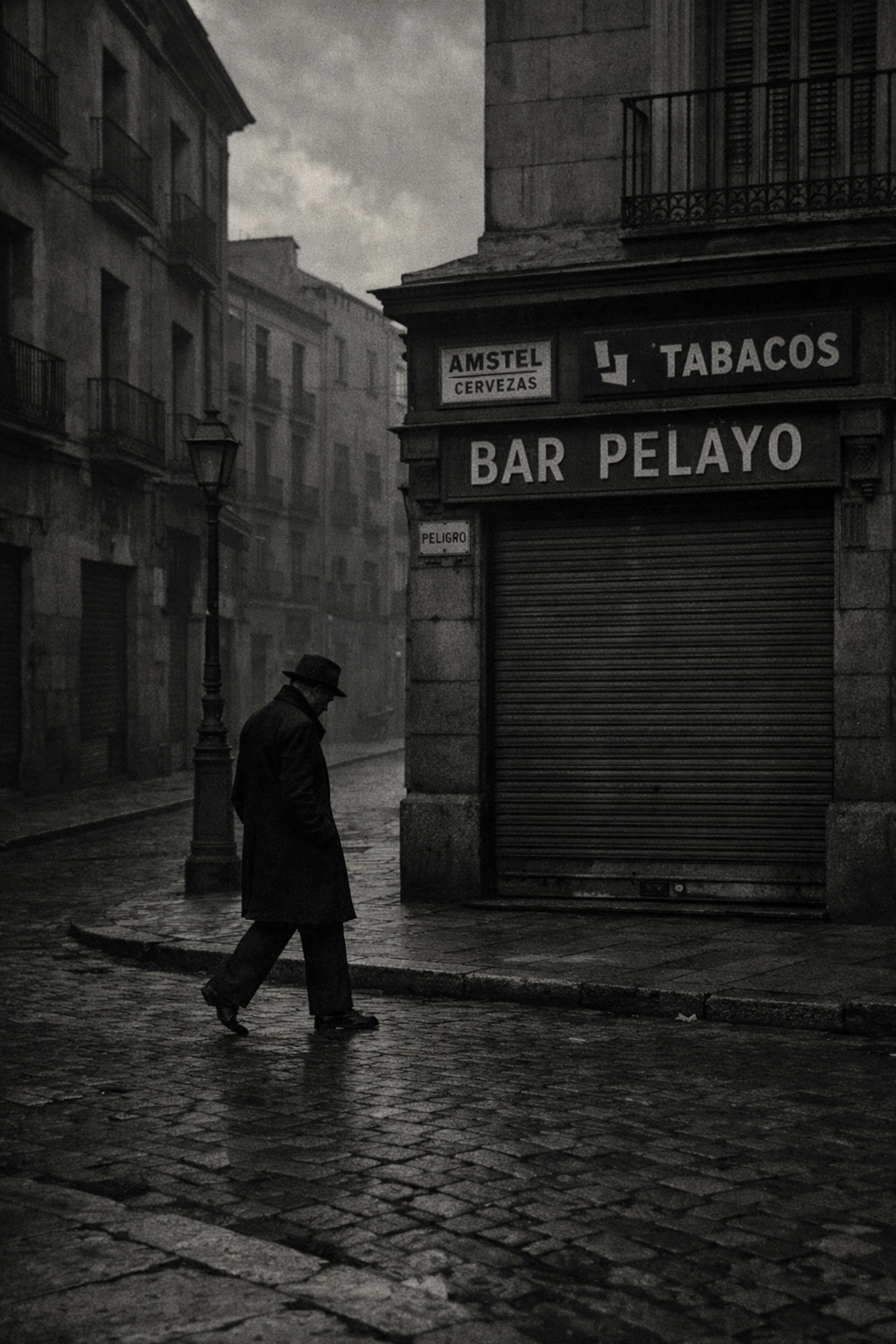
For queer people, life meant living in shadows. Secret meetings. Coded language. Constant fear. The very idea of openly celebrating gay identity was as foreign as landing on Mars. Spain's LGBTQ+ community learned to survive, but surviving isn't living. And when Franco died, a whole generation was ready to truly live.
February 9, 1980: The Night Everything Changed
La Movida didn't just happen: it announced itself. The Canito Memorial Concert on February 9, 1980, is often marked as the movement's symbolic beginning. It was a tribute concert that became something much bigger: a declaration that Madrid's youth were done with the old rules.
The energy was electric. Young people flooded into venues across the city, particularly in the Malasaña neighborhood, which became the beating heart of the movement. They weren't asking permission anymore. They were taking up space, making noise, and demanding the freedom to be exactly who they were.
The mantra was simple and perfect: "Solo se vive una vez": we only live once. After decades of being told to repress everything, Madrid's queer community and their allies were ready to express everything. Sexual freedom, artistic experimentation, gender nonconformity, wild fashion: it all came pouring out at once.
The Icons Who Led the Revolution
Every movement needs its icons, and La Movida had some absolute legends. Pedro Almodóvar, who would go on to become one of the world's most celebrated filmmakers, was right there in the thick of it. His early films captured the movement's spirit perfectly: colorful, transgressive, unapologetically queer, and deeply human.
Then there was Alaska (Olvido Gara Jova), the punk singer whose style and attitude embodied everything La Movida stood for. With her band Alaska y los Pegamoides, she brought a fierce, gender-bending energy that challenged every assumption about what Spanish women: and Spanish people in general: were "supposed" to be.
These weren't just artists making work about the movement. They were the movement. Their music, films, fashion, and performances created a new visual language for Spanish identity: one that was vibrant, sexual, and gloriously queer.
Malasaña: The Neighborhood That Became a Symbol
If La Movida had a home address, it was definitely Malasaña. This Madrid neighborhood transformed into a 24/7 celebration of everything Franco had tried to suppress. Nightclubs opened where underground and alternative cultures could flourish. International artists performed. Fashion became an art form unto itself.
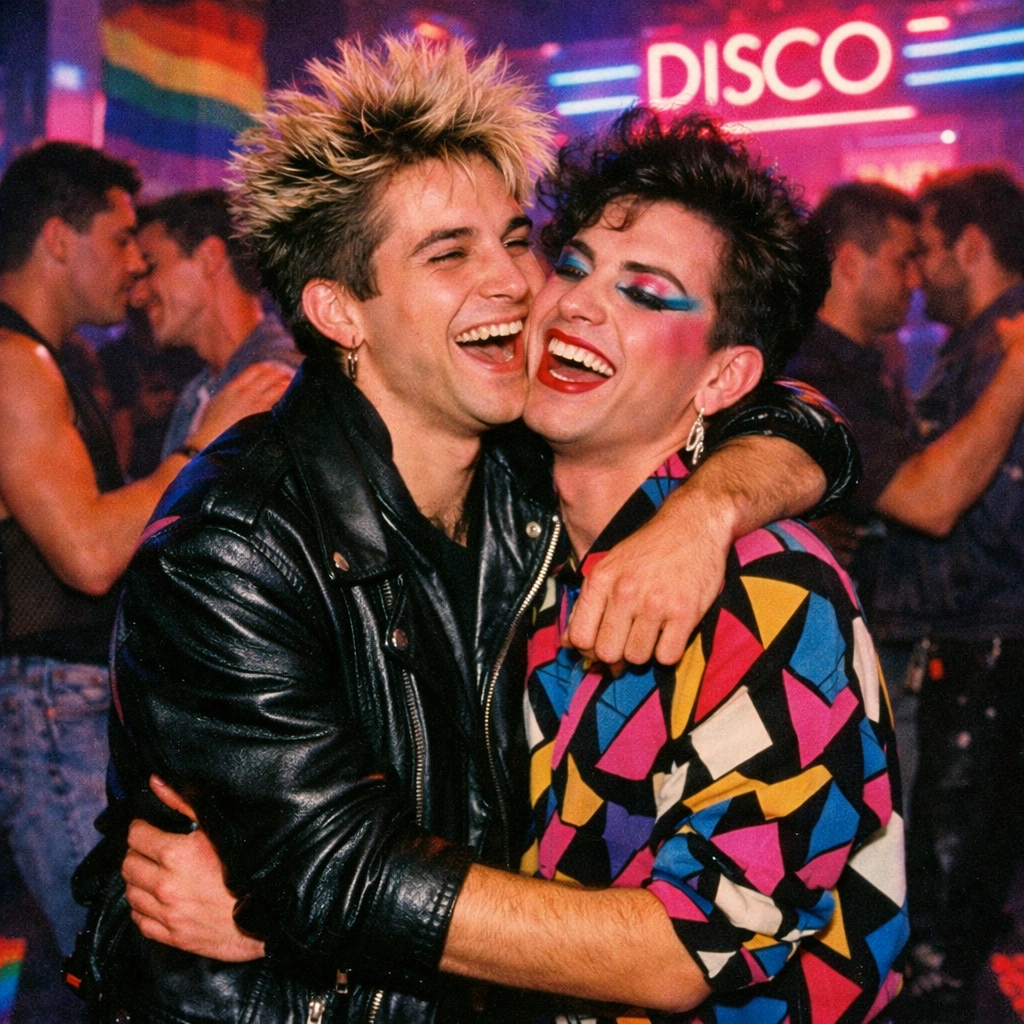
Walking through Malasaña in the early 1980s meant seeing people who looked like they'd stepped out of a David Bowie fever dream. Makeup wasn't just for women. Gender became something to play with, not something to conform to. And everywhere: the clubs, the streets, the bars: there was this palpable sense of freedom.
The clubs weren't just entertainment venues. They were laboratories for new identities. They were safe spaces where queer people could be open in ways that had been unthinkable just years before. And they were where Madrid's LGBTQ+ community found each other, built networks, and created a culture that would influence all of Spain.
Political Support: When the Government Says Yes
Here's something that made La Movida unique: it had support from the top. Socialist mayor Enrique Tierno Galván didn't try to shut down the movement. Instead, he actively encouraged it, positioning Madrid as a progressive cultural capital. This wasn't just tolerance: it was celebration.
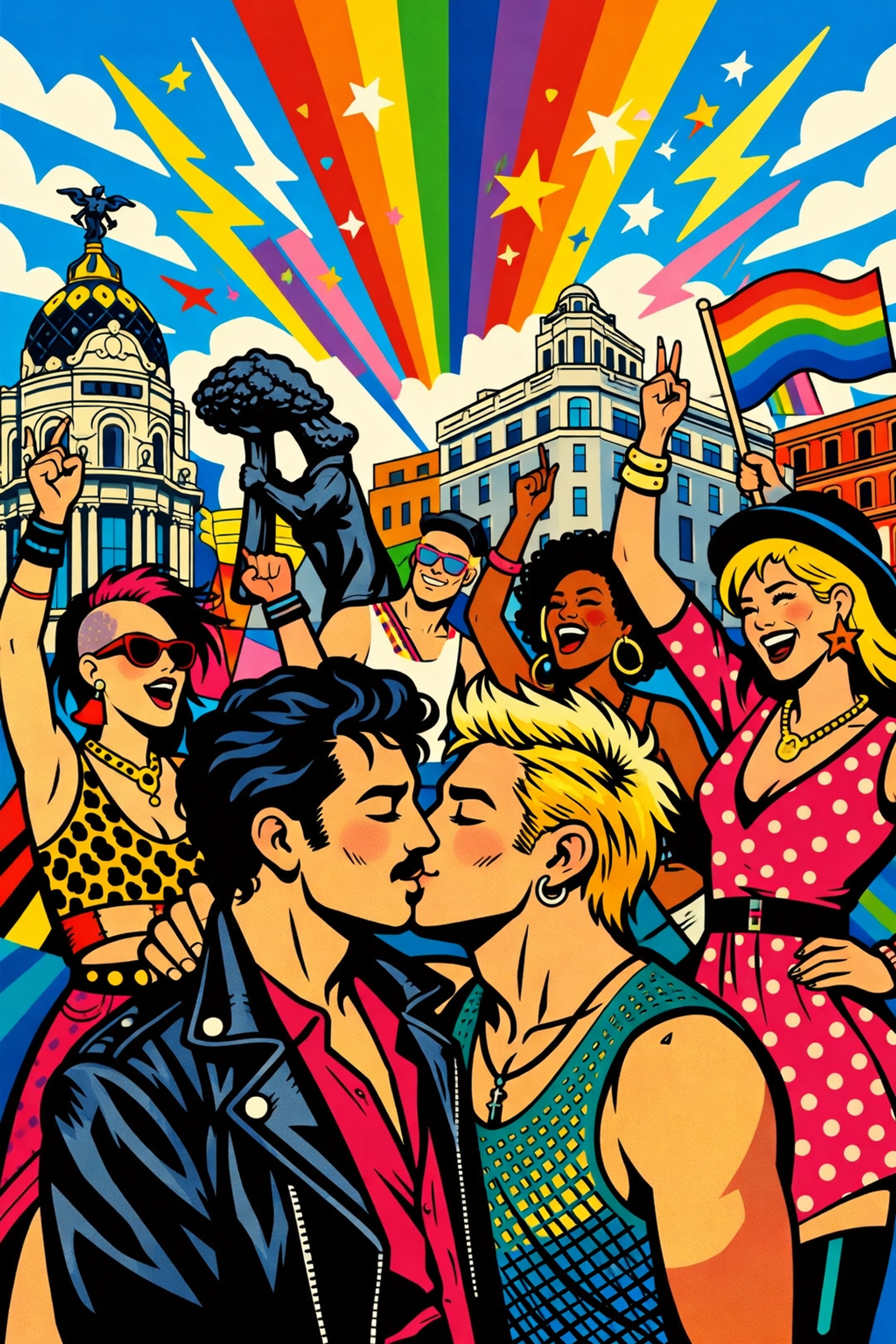
Tierno Galván understood that Madrid needed to shake off its Francoist image and show the world that Spain was ready to join democratic Europe. What better way than to support a vibrant, creative movement that showcased freedom and diversity? His policies gave La Movida breathing room to develop from underground rebellion into mainstream culture.
This institutional openness meant venues could operate without constant fear of raids. Artists could create without censorship. And queer people could gather publicly without expecting police intervention. It wasn't perfect: discrimination certainly didn't disappear overnight: but it was revolutionary compared to what had come before.
Beyond Politics: A Cultural Explosion
While sexual freedom was central to La Movida, the movement was about so much more than politics or activism. It was a full-spectrum cultural explosion that touched music, fashion, film, photography, literature, and visual arts. The energy was hedonistic, creative, and deliberately excessive: a middle finger to Franco's austere, controlled Spain.
MM romance fans would appreciate La Movida's celebration of same-sex love stories told openly and proudly for the first time in Spanish culture. Almodóvar's films, in particular, featured complex gay characters whose relationships were treated as normal, passionate, and worthy of cinematic attention.
The movement also challenged the concept of Spanish identity itself. What did it mean to be Spanish if you weren't Catholic, straight, and traditional? La Movida answered: it could mean anything you wanted. You could be punk, new wave, gender-fluid, queer, artistic, wild: and still be authentically Spanish.
The Legacy: How La Movida Changed Everything
La Movida eventually mellowed by the late 1980s, but its impact on Spanish LGBTQ+ life cannot be overstated. It proved that queer culture could thrive openly in Spain. It created networks and communities that continue today. And it established Madrid as one of Europe's most welcoming cities for LGBTQ+ people.
Modern Spain's progressive LGBTQ+ laws: including marriage equality since 2005: have roots in La Movida's cultural revolution. The movement normalized queer visibility and showed an entire country that diversity made culture richer, not weaker.
For those of us who love gay romance books and queer fiction, La Movida represents a real-world moment when LGBTQ+ stories moved from whispered secrets to celebrated art. It's the kind of historical movement that deserves to be captured in novels, memoirs, and films: and many have tried.
Why La Movida Still Matters Today
In 2026, when LGBTQ+ rights face challenges even in countries that once seemed progressive, La Movida reminds us of something crucial: liberation is possible, even after decades of repression. The movement shows that when communities are finally given space to breathe, they create something magnificent.
For young queer people discovering their identities today, La Movida's story offers hope and inspiration. It shows that culture can change rapidly when brave people decide they're done hiding. And it proves that the impulse to celebrate queer identity: through art, fashion, music, love, and life: can't be permanently suppressed.
Madrid in the 1980s was messy, chaotic, occasionally problematic, and absolutely necessary. It was Spain finding its queer voice after decades of enforced silence. And that voice didn't whisper: it sang, shouted, and danced until dawn.
Discover more LGBTQ+ stories and celebrate queer history at Read with Pride. Explore our collection of MM romance books, gay fiction, and queer literature that honors the communities and movements that paved the way for today's freedom.
Connect with our community:
- Facebook: Read with Pride
- Instagram: @read.withpride
- Twitter: @Read_With_Pride
#ReadWithPride #LGBTQHistory #SpanishCulture #QueerHistory #LaMovida #GayRomance #MMRomance #QueerFiction #GayBooks #LGBTQBooks #PrideHistory #MadridPride #QueerCulture #GayLiterature #MMBooks #LGBTQReading #GayFiction #QueerStories #LGBTQCommunity #GayHistoricalRomance

Leave a Reply
You must be logged in to post a comment.