

readwithpride.com
When Flowers Replaced Bullets
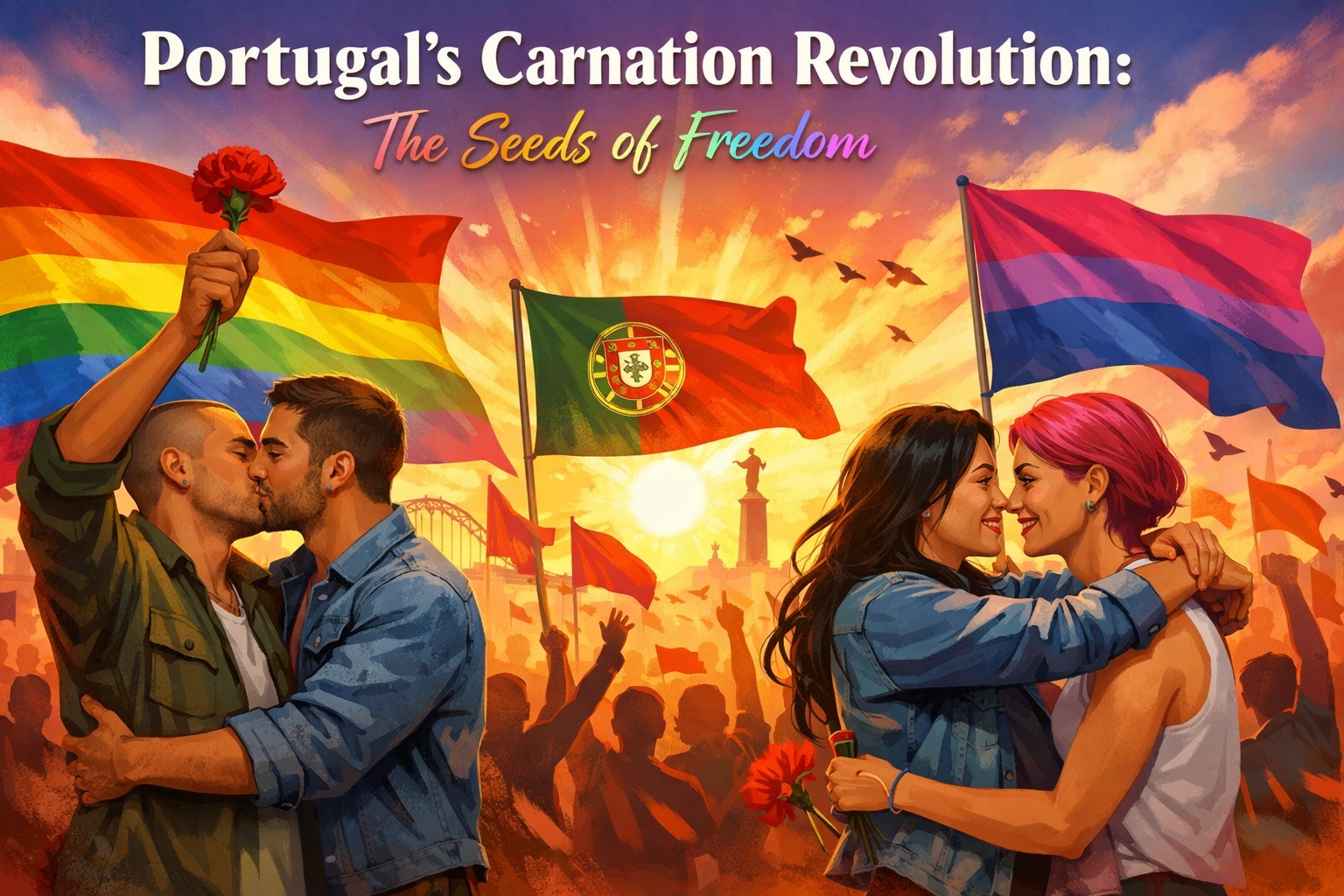
April 25, 1974. A date that changed everything for Portugal: and set the stage for a queer liberation movement that would flourish in ways unimaginable just days before. On that spring morning, soldiers rolled through Lisbon's streets with red carnations tucked into their rifle barrels, courtesy of grateful civilians who saw not invaders but liberators. The nearly bloodless coup lasted just 19 hours, but its impact would echo through generations of Portuguese LGBTQ+ people who finally glimpsed a future where they could exist openly.
The Carnation Revolution didn't just topple a dictatorship. It planted seeds of freedom that would eventually bloom into one of Europe's most progressive stances on LGBTQ+ rights. But to understand how profound that transformation was, you need to know what life was like before those carnations appeared.
Living in the Shadows: Queer Life Under Estado Novo
For nearly five decades, Portugal lived under the iron grip of the Estado Novo regime: a authoritarian government that made "traditional values" its calling card and crushed anything that didn't fit its narrow vision of Portuguese identity. António de Oliveira Salazar, the dictator who ruled from 1932 to 1968, built a state apparatus that controlled everything from newspapers to bedroom behaviors.
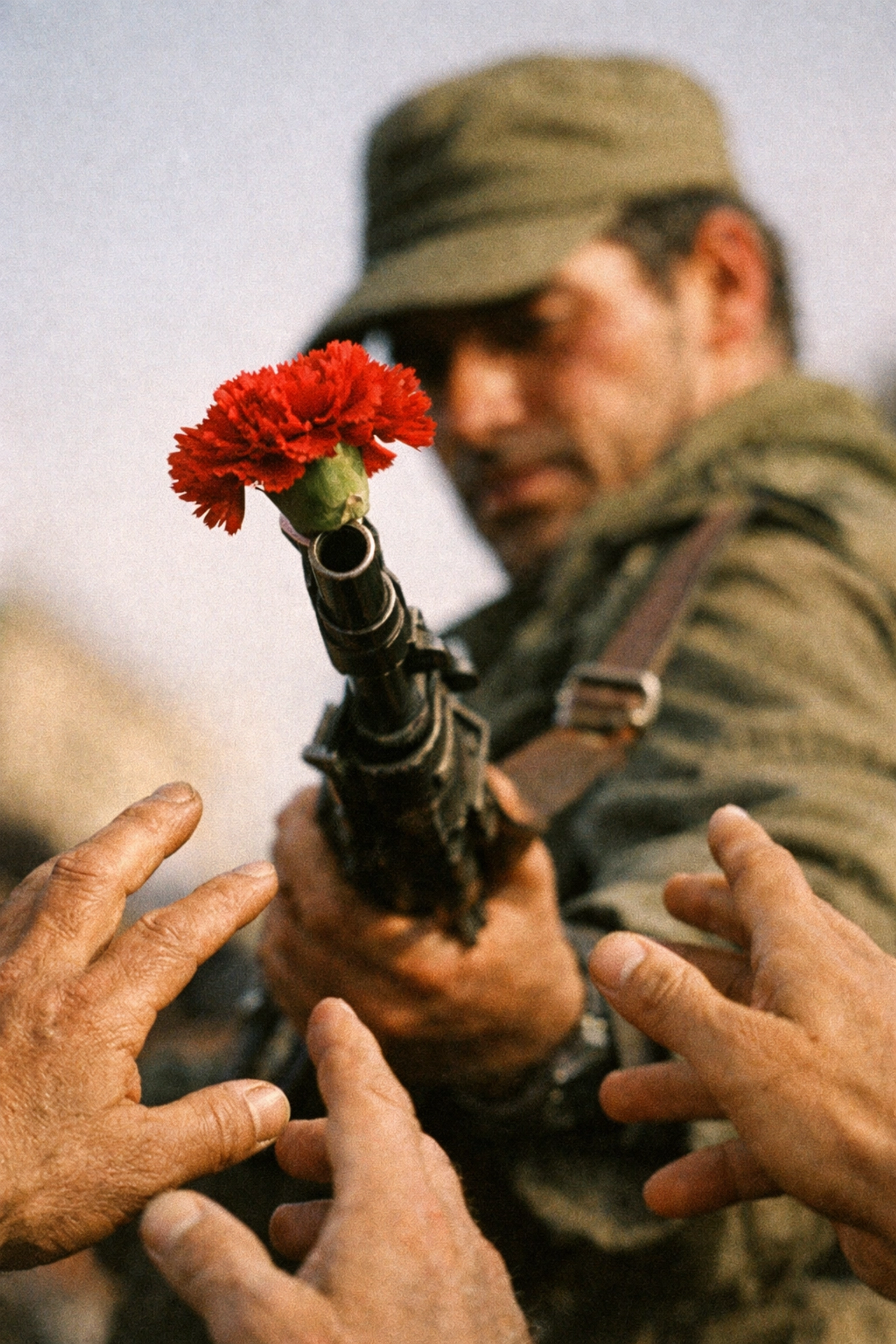
Under this regime, being queer wasn't just stigmatized: it was dangerous. The PIDE, Portugal's feared secret police, maintained extensive surveillance networks. Homosexuality was classified as a "social danger," and anyone suspected of same-sex relationships could face arrest, imprisonment, or forced psychiatric "treatment." Gay men and lesbians lived double lives, meeting in secret, speaking in codes, always looking over their shoulders.
The regime's propaganda machine reinforced traditional gender roles relentlessly. Men were expected to be masculine breadwinners, women to be submissive wives and mothers. Anyone deviating from these scripts faced consequences ranging from social ostracism to state violence. Censorship meant that any representation of LGBTQ+ life: whether in books, films, or theater: was simply erased.
When Marcelo Caetano replaced the stroke-stricken Salazar in 1968, there were whispers of liberalization. Caetano talked about "continuous evolution" and slightly loosened some restrictions. But for Portugal's queer community? The fear remained. The secret police still knocked on doors at midnight. People still disappeared.
The Revolution Nobody Expected
By 1974, Portugal was exhausted. Colonial wars in Africa were draining the nation's resources and its soul. Young men were dying in Angola, Mozambique, and Guinea-Bissau for an empire that made no sense in the modern world. Within the military, discontent was brewing. When General António de Spínola published his book arguing that these wars couldn't be won militarily, it was like someone finally said what everyone was thinking.
The Armed Forces Movement: a group of 200 to 300 mid-ranking officers: began quietly organizing. They weren't just fed up with the wars; they wanted democracy, freedom, and a Portugal that could join the rest of Europe in moving forward. On April 25, coordinated military units moved swiftly to secure key locations across Lisbon. The signal to begin? The song "Grândola, Vila Morena" played on the radio at 12:20 AM: a banned anthem of resistance that sent soldiers into action.
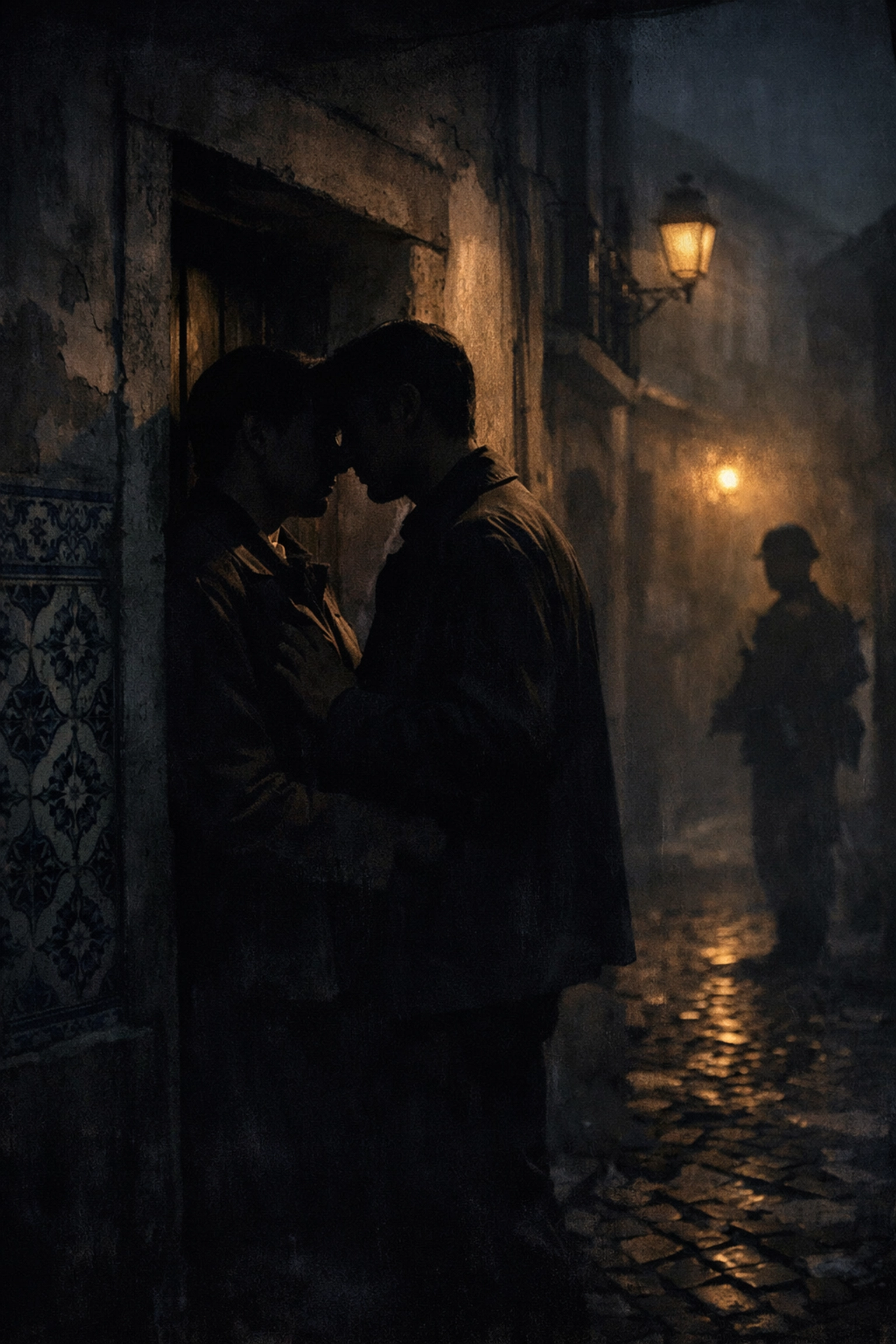
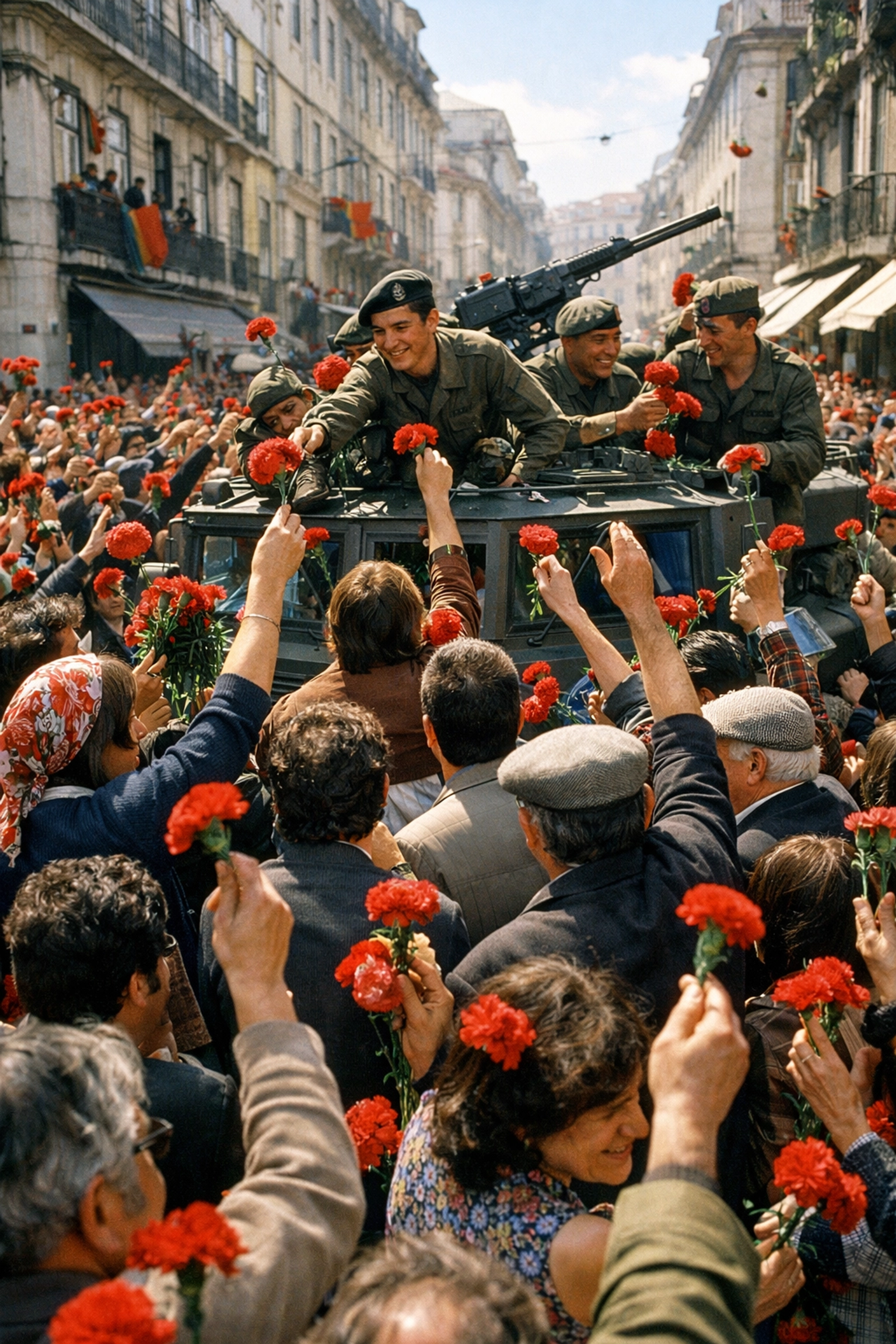
What happened next surprised even the revolutionaries themselves. Despite government radio broadcasts urging people to stay home, thousands poured into the streets. They didn't come to fight: they came to celebrate. At the Lisbon flower market, civilians grabbed armfuls of carnations (which happened to be in season) and began offering them to soldiers. The image of those red flowers in gun barrels became the revolution's defining symbol.
Only four people died during the coup: a remarkably low toll for such a momentous change. By the end of the day, Prime Minister Caetano had surrendered, and the dictatorship that had ruled for 48 years simply… collapsed.
Freedom's First Breath
For Portugal's LGBTQ+ community, the immediate aftermath of the revolution was disorienting. Suddenly, the omnipresent fear began to lift. The PIDE was disbanded. Political prisoners were released. Censorship evaporated overnight. Banned books appeared in shop windows. People spoke freely on street corners, debating Portugal's future without whispering.
But this wasn't an instant transformation for queer rights: it was the opening of a door that had been welded shut. The revolution guaranteed civil liberties, freedom of expression, and the right to organize. These weren't specifically LGBTQ+ rights, but they were the foundation upon which those rights would be built.
In 1976, Portugal adopted a new democratic constitution that enshrined equality principles. While it didn't explicitly mention sexual orientation (that would come later), the document's commitment to human dignity and non-discrimination created legal space that hadn't existed before. For the first time in generations, Portuguese LGBTQ+ people could imagine organizing, speaking out, demanding recognition.
The revolution also ended Portugal's colonial wars and began the process of decolonization. This might seem unrelated to queer liberation, but it was crucial. The wars had drained resources and maintained a militarized, hypermasculine national culture that was fundamentally hostile to LGBTQ+ visibility. Peace meant Portugal could finally look inward and question the values the dictatorship had force-fed its citizens.
Building on Revolutionary Ground
The seeds planted in 1974 took time to germinate, but they grew into something remarkable. In 1982, Portugal decriminalized homosexuality: just eight years after the revolution. Compare that to other European nations where decriminalization took decades longer, and you see how profoundly the Carnation Revolution shifted the country's trajectory.
Throughout the 1980s and 1990s, Portuguese LGBTQ+ activists built organizations, published magazines, and created community spaces. They were building on the freedoms won in 1974: the freedom to assemble, to publish, to organize politically without fear of midnight raids. The revolution hadn't given them LGBTQ+ rights specifically, but it had given them the tools to fight for those rights.
Portugal's evolution continued: anti-discrimination laws in the 2000s, same-sex marriage legalization in 2010, adoption rights in 2016, and comprehensive gender identity legislation in 2018. Today, Portugal consistently ranks among the most LGBTQ+-friendly nations in Europe. That journey started with carnations in rifle barrels.
Why This History Matters
Reading about Portugal's queer history reminds us that liberation isn't linear, and it rarely arrives fully formed. The Carnation Revolution didn't explicitly free LGBTQ+ people: it freed everyone from authoritarianism, and that created space for marginalized communities to organize and demand their rights.
It's a pattern we see repeated throughout history: democratic openings create opportunities for queer liberation, but those opportunities require brave people willing to step forward and claim them. The Portuguese LGBTQ+ activists who organized in the late 1970s and 1980s were building on a foundation of freedom that soldiers and civilians created together in 1974.
For those of us who love gay romance books and MM fiction, there's something deeply moving about understanding the real-world struggles that make our stories possible. Every gay love story we read at Read with Pride exists because people fought for the freedom to tell those stories, to live those lives openly.
Portugal's journey from dictatorship to one of Europe's most progressive nations happened in living memory. There are people alive today who remember both the suffocating fear of the Estado Novo and the intoxicating possibility of that April morning when flowers appeared in gun barrels. Their stories deserve to be remembered, celebrated, and shared.
The Revolution Continues
The Carnation Revolution reminds us that change is possible, even when it seems impossible. A 48-year dictatorship fell in less than a day. Decades of fear evaporated when people chose courage. Seeds planted in 1974 grew into a society where LGBTQ+ people can marry, adopt children, and live openly.
That's the power of revolution: not just the dramatic moment of change, but the long, patient work of building something better on the ground that's been cleared. Portugal's queer community did that work, and they're still doing it, because liberation isn't a destination. It's a practice.
So the next time you pick up an MM romance novel or explore LGBTQ+ fiction, remember that every love story: every happily ever after: is built on the courage of people who demanded the freedom to exist. The Carnation Revolution was Portugal's moment. The work continues everywhere.
Explore more LGBTQ+ stories and discover your next favorite read at readwithpride.com
Follow us on Facebook | Instagram | X/Twitter
#CarnationRevolution #LGBTQHistory #PortugalHistory #QueerLiberation #ReadWithPride #GayRomance #MMRomance #LGBTQBooks #QueerHistory #PortuguesePride #FreedomStories #LGBTQRights #GayFiction #MMBooks #QueerReads

Leave a Reply
You must be logged in to post a comment.