

readwithpride.com
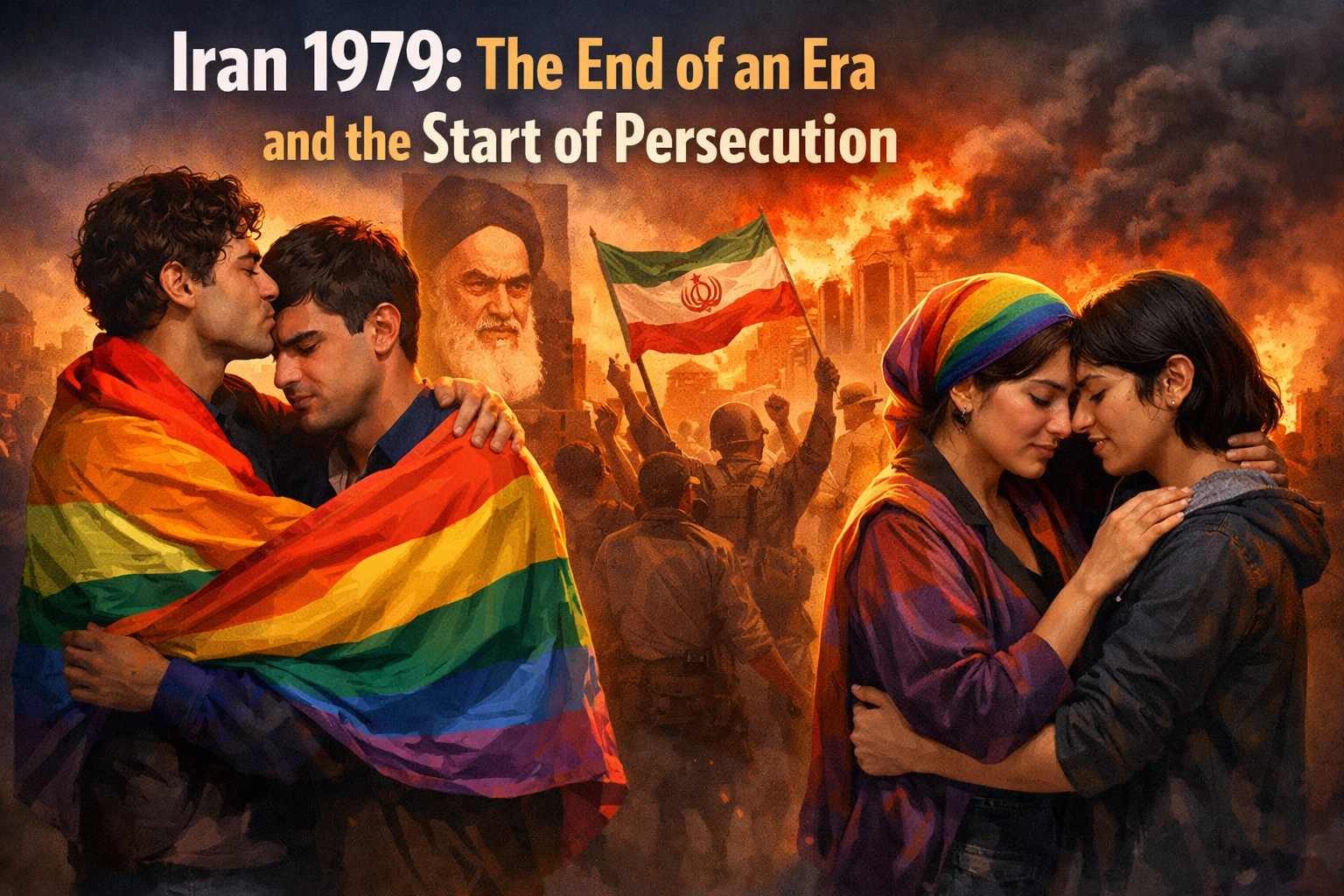
If you're looking for a turning point in modern LGBTQ+ history: a moment when everything changed overnight: Iran in 1979 is one of the most devastating examples. This wasn't a gradual shift or a slow erosion of rights. This was a revolution that promised freedom but delivered something entirely different for queer people: systematic persecution backed by the full force of a new theocratic state.
The story of what happened in Iran matters because it's a stark reminder of how quickly progress can be reversed, how vulnerable LGBTQ+ communities remain when religious fundamentalism takes power, and how the promise of liberation can turn into something far more sinister.
Before the Fall: A Complicated Picture
Let's be clear: pre-revolutionary Iran under Shah Mohammad Reza Pahlavi was no queer paradise. The shah's regime was autocratic, repressive, and often brutal to political dissidents. But when it comes to LGBTQ+ life, there was a notable difference between the Pahlavi era and what came after.
readwithpride.com
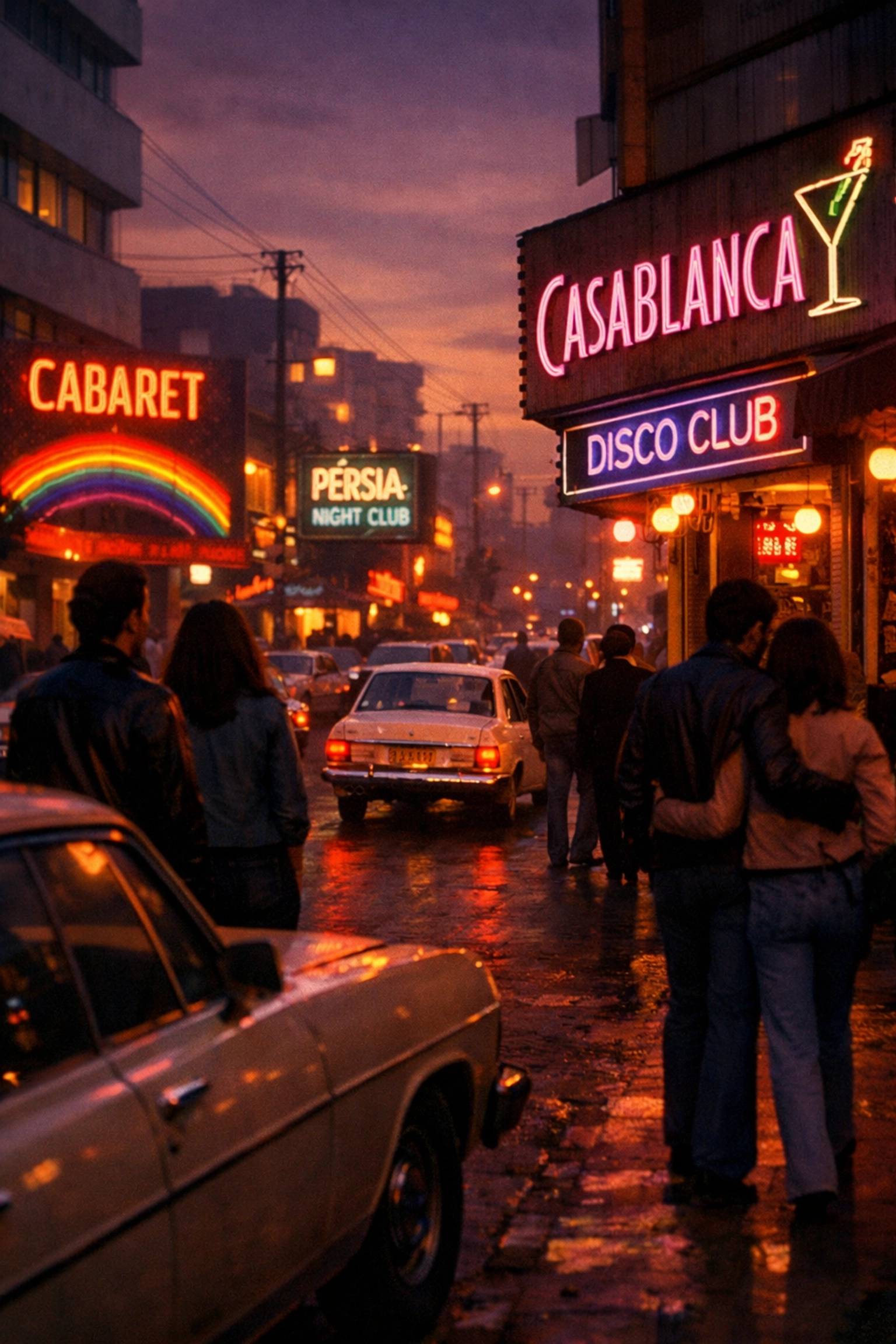
Under the shah's modernization program: known as the White Revolution: Iran experienced rapid Westernization. Tehran had nightclubs, cinemas, and a growing cosmopolitan culture where certain behaviors, while not explicitly legal, existed in a grey zone of tolerance. Queer people could find spaces to exist, even if they had to be discreet. Cross-dressing performers appeared in films. Same-sex relationships, while not openly discussed, weren't subject to the death penalty.
This doesn't mean life was easy. Iranian society remained conservative, families enforced traditional expectations, and visibility came with risks. But compared to what would follow, this period represented relative breathing room: a moment when it seemed Iran might continue on a path toward greater personal freedoms.
The shah's regime faced mounting opposition for legitimate reasons: economic inequality, corruption, political repression, torture of dissidents, and the concentration of wealth among elites. Western influence was resented by many, and the secret police (SAVAK) terrorized political opponents. By 1978, protests erupted across the country, strikes crippled the economy, and oil production: Iran's lifeblood: dropped by 80 percent.
The Revolution That Changed Everything
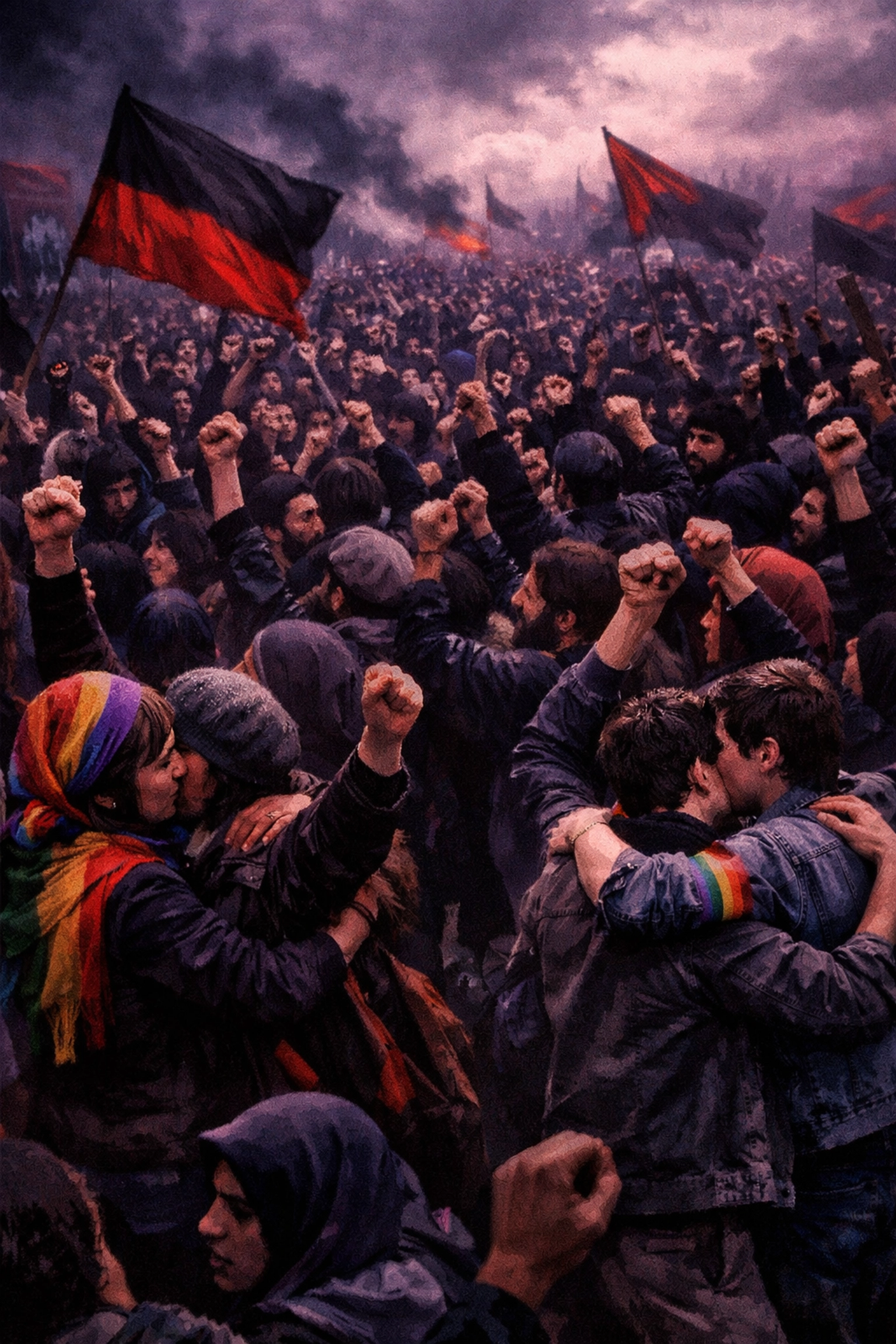
When Ayatollah Ruhollah Khomeini returned to Iran on February 1, 1979, after 15 years in exile, millions greeted him. The shah had fled weeks earlier, and the old regime was collapsing. The revolution drew support from an unlikely coalition: Islamists, secularists, communists, nationalists, students, workers, and ethnic minorities. Everyone had their own vision of what post-shah Iran would become.
readwithpride.com
For a brief moment, anything seemed possible. But Khomeini and the Shi'a clerical establishment had no intention of sharing power. What followed wasn't democracy or pluralism: it was consolidation through violence.
The coalition that had toppled the shah quickly turned on itself. Left-wing groups, secular intellectuals, moderate Islamists, and anyone who didn't align with Khomeini's vision of an Islamic Republic found themselves targeted. By some estimates, around 12,000 political opponents were executed in the chaotic years following the revolution. The assassination of over 1,000 government officials by militants in 1980 showed just how fractured and violent the post-revolutionary period had become.
By 1981, the moderate president Abolhassan Bani-Sadr had been purged, and Khomeini's totalitarian system was firmly in place. The U.S. Embassy hostage crisis (November 1979 to January 1981) and Iraq's invasion in September 1980 gave the regime convenient enemies to rally against while crushing internal opposition.
The New Reality for LGBTQ+ People
For queer Iranians, the revolution was catastrophic. The new Islamic Republic didn't just criminalize homosexuality: it made it punishable by death.
The regime based its laws on strict interpretations of Sharia, and same-sex relationships were classified as lavat (sodomy) and mosahegheh (lesbianism), both carrying severe penalties. Under Article 108 of Iran's penal code, lavat could result in execution. Lesbian relationships could result in lashes for the first three offenses, with death for the fourth.
readwithpride.com
Public executions became tools of terror. Queer people were hanged from cranes in city squares, their deaths broadcast as warnings. The regime's propaganda painted LGBTQ+ individuals as symbols of Western corruption and moral decay: exactly the kind of influence the revolution claimed to be purging.
There were no more grey zones. No discreet nightlife. No cosmopolitan spaces. Just fear, secrecy, and the very real threat of death. Families who might have once turned a blind eye to a queer relative now faced impossible choices: reject them, force them into heterosexual marriages, or risk association with what the state deemed criminal perversion.
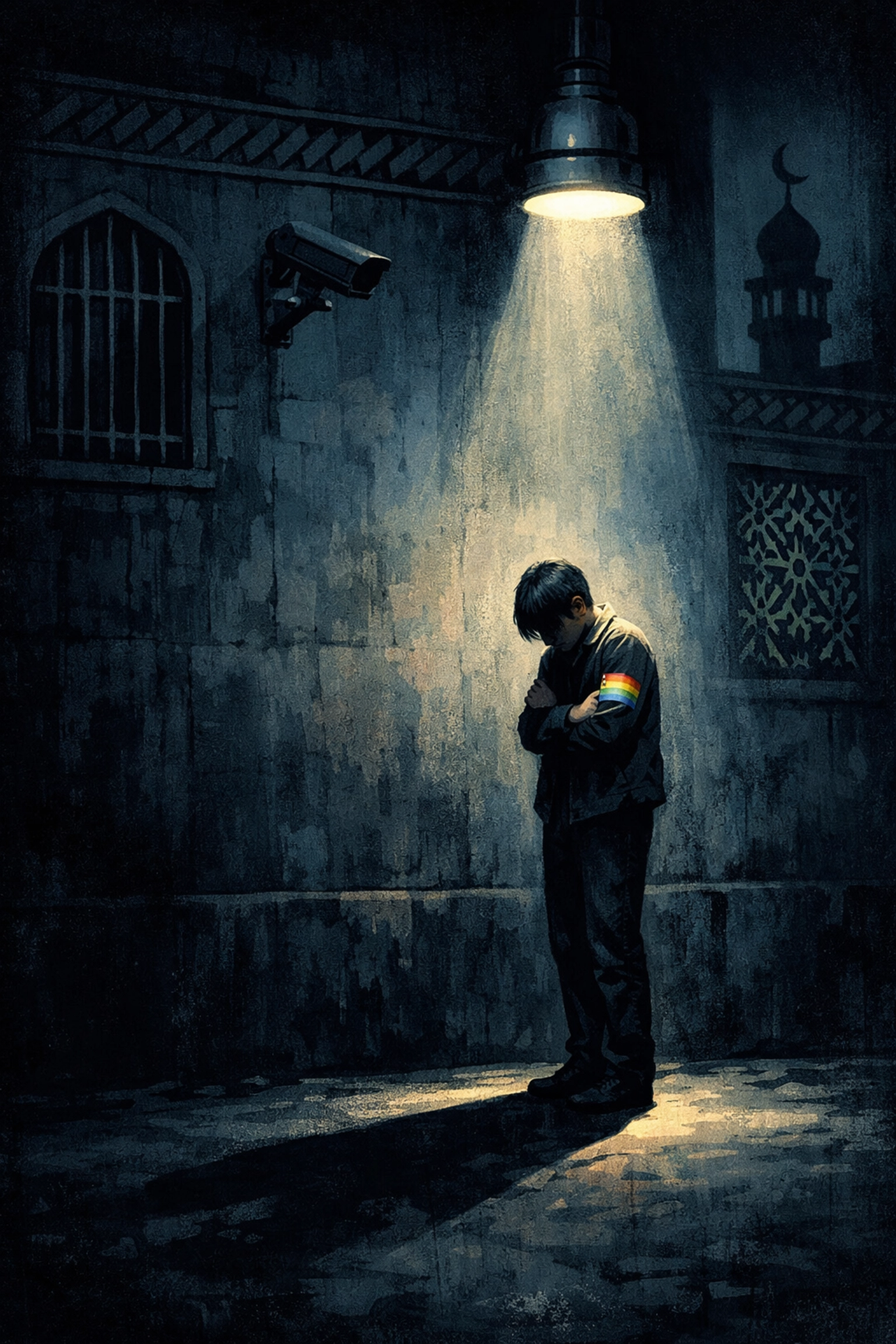
The revolution didn't just change laws: it reshaped society. Surveillance intensified. Neighbors informed on neighbors. Revolutionary Guards enforced morality codes. For LGBTQ+ Iranians, survival meant absolute invisibility or exile.
The Long Shadow
More than four decades later, Iran remains one of the most dangerous countries in the world for LGBTQ+ people. The Islamic Republic continues to deny that gay people even exist in Iran, with former President Mahmoud Ahmadinejad infamously claiming in 2007 that "we don't have homosexuals" in Iran.
But of course, they do exist. They've always existed. They live in fear, meet in secret, use coded language online, and risk everything for moments of connection. Many flee: seeking asylum in Turkey, Europe, or North America: while others remain trapped, forced into heterosexual marriages or pressured into gender reassignment surgery (which Iran oddly permits as an "cure" for homosexuality, making it one of the few legal transitions available but under horrific circumstances).
The story of Iran 1979 matters for LGBTQ+ history because it shows how quickly rights can vanish, how rhetoric about "moral decay" and "Western corruption" can justify atrocities, and how religious fundamentalism remains one of the greatest threats to queer liberation worldwide.
It's a reminder that progress is never guaranteed, that visibility can become a death sentence under the wrong regime, and that the fight for LGBTQ+ rights is never truly won: it must be defended constantly.
For those of us who have the privilege of living in places where we can be openly queer, where we can access gay romance books and MM fiction without fear, where we can find community and love freely: we owe it to those who can't to remember their stories, support their struggles, and never take our freedoms for granted.
Looking for LGBTQ+ stories that celebrate resilience and hope? Explore our collection of MM romance books and gay fiction at readwithpride.com.
Follow us for more LGBTQ+ history and content:
- Facebook: Read With Pride
- Instagram: @read.withpride
- X/Twitter: @Read_With_Pride
#ReadWithPride #LGBTQHistory #QueerHistory #IranianRevolution #Iran1979 #LGBTQRights #GayHistory #QueerResilience #MMRomance #GayBooks #LGBTQBooks #QueerFiction #GayRomanceBooks #LGBTQCommunity #NeverForget #HumanRights #QueerLiberation #Readwithpride

Leave a Reply
You must be logged in to post a comment.