

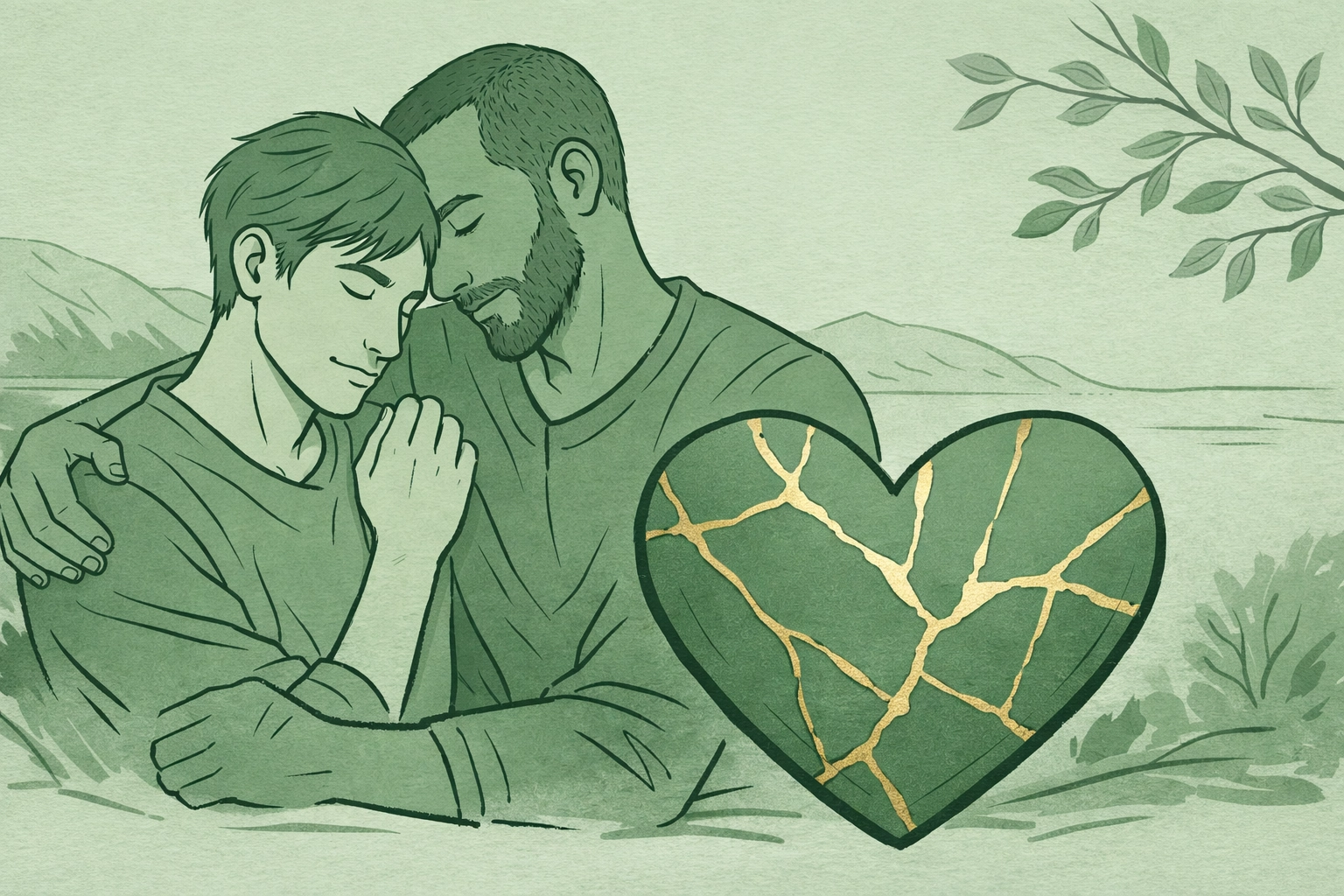
There's a workshop in eastern Kyoto where broken things become whole again. Not the way they were: never that: but something different. Something luminous. The artisan who works there doesn't hide the cracks; he fills them with molten gold, tracing every fracture until the vessel gleams with its own history of breaking.
Takeshi found the workshop by accident, three months after Hiro left.
When Everything Shatters
The end came like it always does in gay romance stories: not with thunder, but with silence. Hiro's things disappeared from their apartment in careful increments. A toothbrush. A jacket. The scent of his aftershave fading from the pillow until Takeshi woke one morning and couldn't remember what it smelled like anymore.
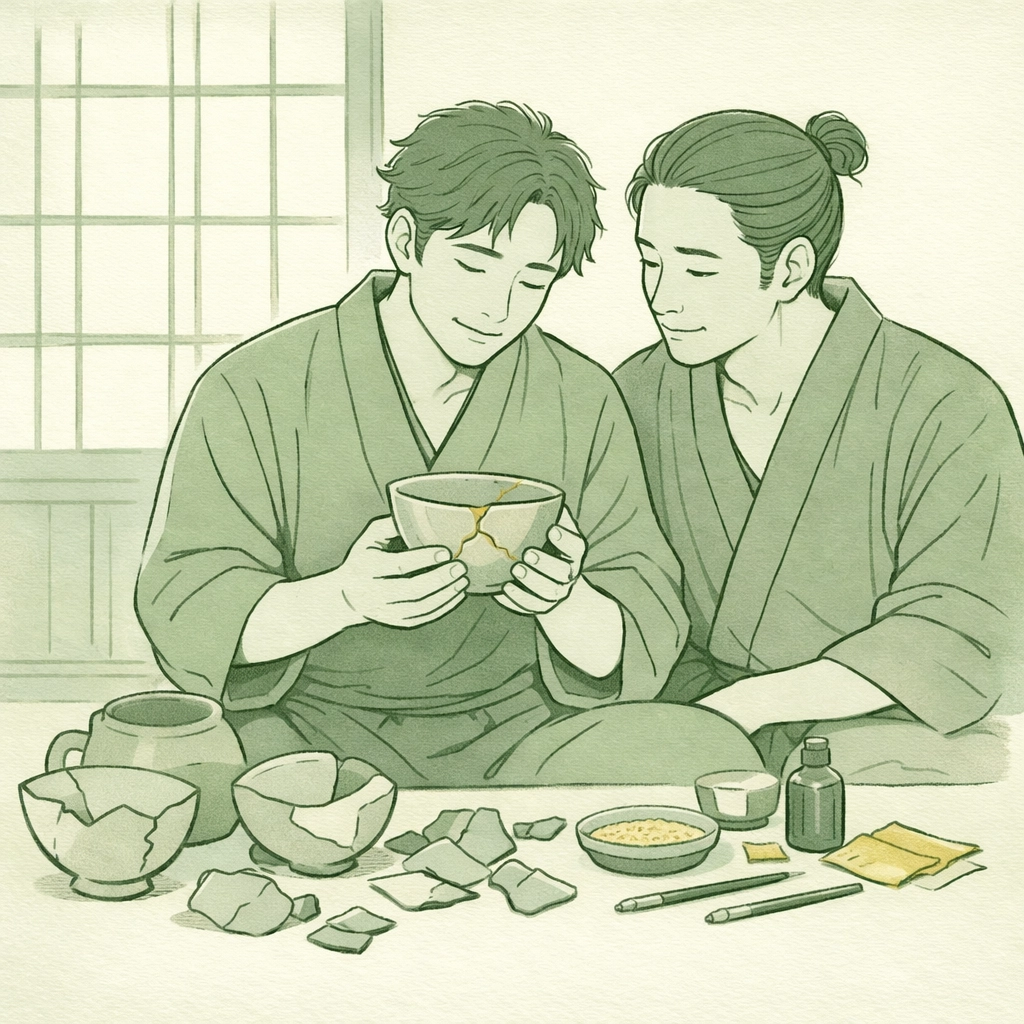
In Japan, there's a concept called mono no aware: the gentle sadness of impermanence. But there was nothing gentle about this. Takeshi felt like one of those tea bowls he'd seen in the museum, the ones that survived centuries only to shatter during the earthquake. Irreparable. Finished.
He stopped going to Shinjuku Ni-chōme, where he and Hiro used to find refuge in the tiny bars that understood what it meant to live authentically in a country that preferred its truths unspoken. He stopped answering messages from friends who tried to coax him out. He became a ghost in his own life, transparent and untouchable.
The Art of Breaking
The kintsugi workshop sat between a ramen shop and a Buddhist temple, easy to miss if you weren't looking. Takeshi found it because he was lost, literally lost, wandering through streets he didn't recognize, clutching the pieces of a ceramic bowl his grandmother had given him. He'd dropped it the night before in a moment of particular darkness, and something about the sound it made breaking had pulled him back from an edge he didn't want to examine too closely.
The artisan's name was Kenji. Seventy years old, with hands that moved like water, he examined the broken bowl without judgment.
"Will you repair it?" Takeshi asked.
"I will make it more than it was," Kenji replied.
Over green tea in the back room, Kenji explained the philosophy. Kintsugi wasn't about restoration. It was about transformation. The gold didn't hide the damage: it celebrated it. Every crack became a testament to survival. Every fracture, a story of resilience.
"Why gold?" Takeshi asked.
"Because," Kenji said, his eyes crinkling with something that looked like wisdom earned through breaking, "the broken places are where the light gets in. They deserve to shine."
Learning to Mend
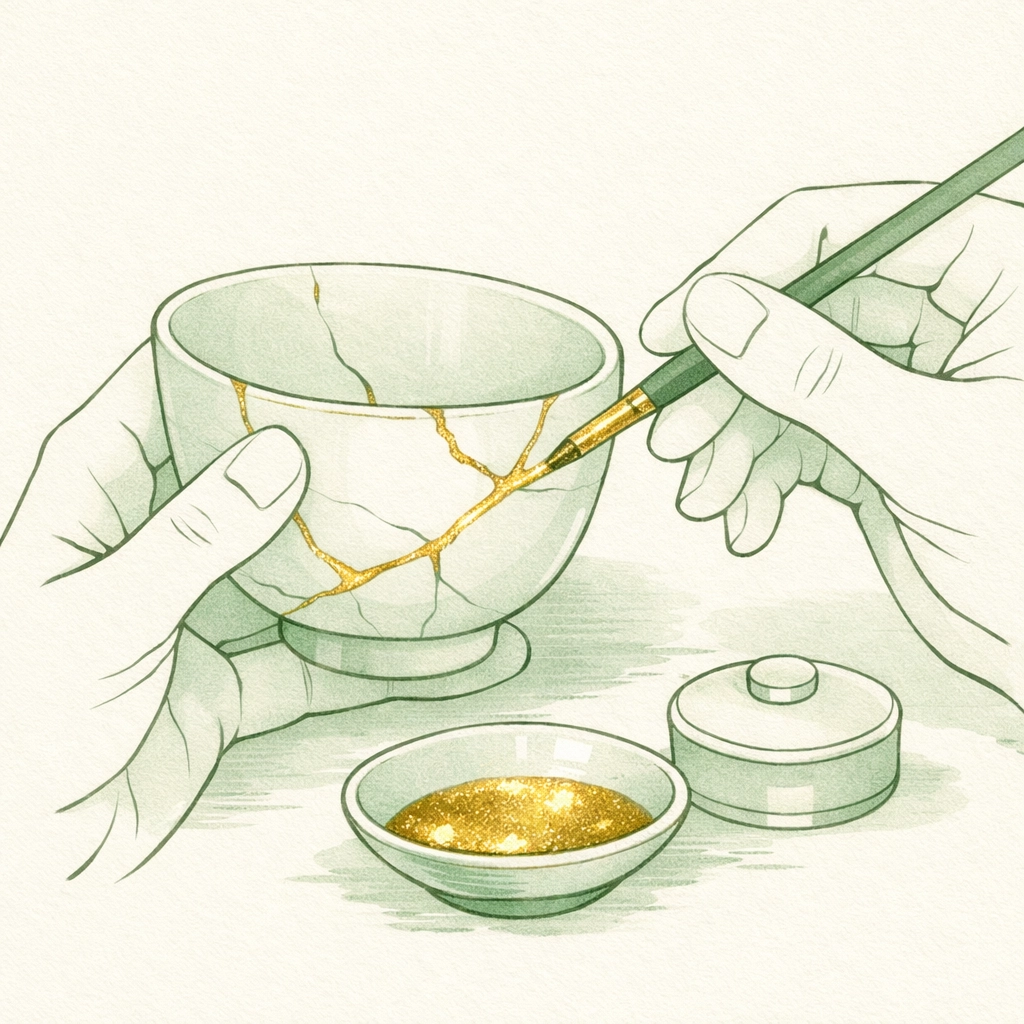
Takeshi began coming to the workshop twice a week. Kenji taught him to mix the lacquer, to apply the gold powder with infinite patience, to understand that healing couldn't be rushed. Like the best MM romance novels with emotional depth, the process required attention to detail, an acceptance of vulnerability, and time: so much time.
"You're thinking about someone," Kenji observed one afternoon, watching Takeshi work on a tea cup that had been shattered into seventeen pieces.
Takeshi's hands stilled. "How did you know?"
"We don't learn kintsugi to repair bowls," Kenji said softly. "We learn it to repair ourselves."
The truth poured out. Hiro. The five years together. The secret life they'd constructed in a society that offered them visibility without true acceptance. The dutiful son Takeshi was supposed to be versus the queer man he actually was. The impossibility of reconciling honne and tatemae: private truth and public face: when your private truth was someone else's shame.
Kenji listened without interrupting. When Takeshi finished, the old man simply nodded.
"The gold doesn't erase what broke you," he said. "It honors it. Your scars aren't something to hide. They're proof you survived something that tried to destroy you."
Finding Gold in the Fractures
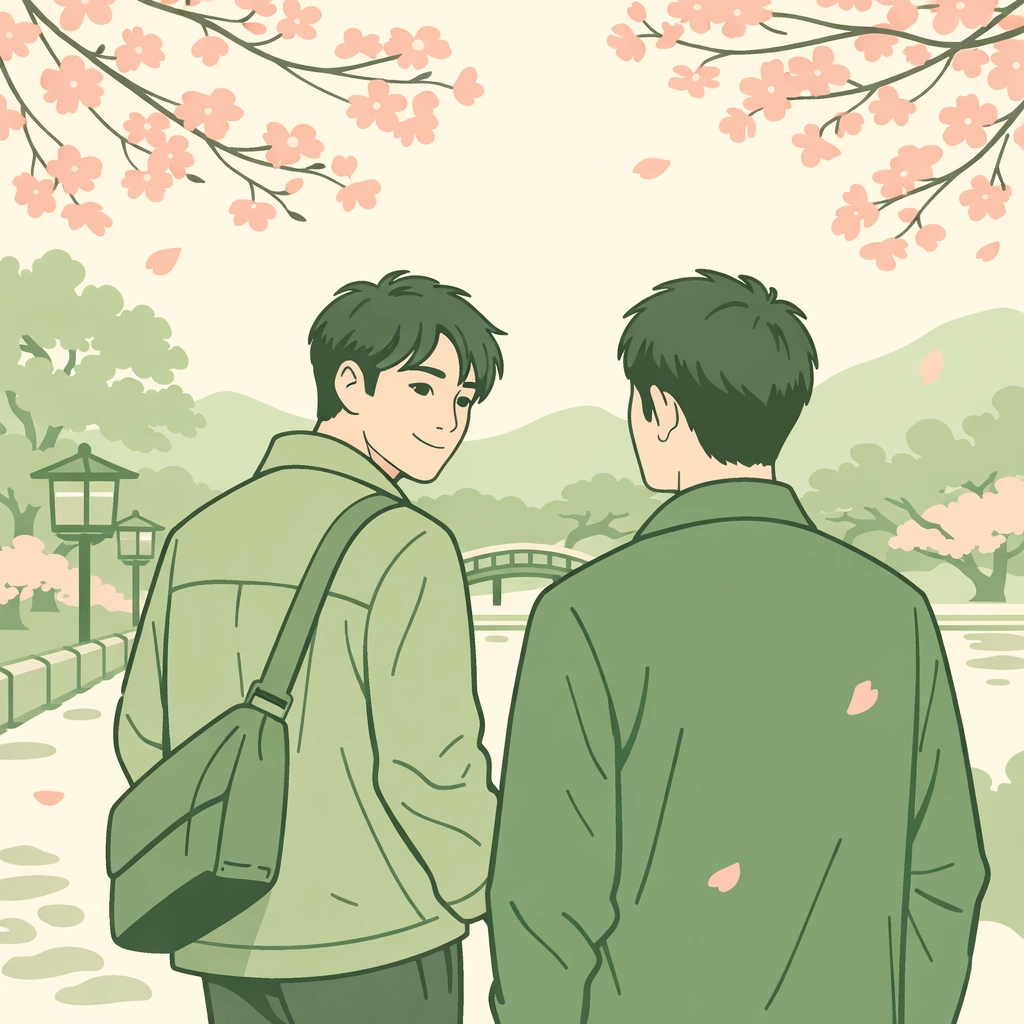
Spring arrived in Kyoto the way it always did: suddenly, violently pink with cherry blossoms. Takeshi walked through Maruyama Park and felt something he hadn't expected: not the absence of pain, but the presence of something else. Space for possibility.
He'd started writing again: not the corporate reports his job demanded, but poetry. Raw, messy verses about heartbreak and healing, about being a gay man in Japan where tradition and authenticity waged constant war. He submitted one poem to a small LGBTQ+ literary journal. They accepted it.
The night he received the acceptance email, he sat in his apartment: the apartment that was finally, fully his, decorated with pieces he'd chosen: and cried. Not from sadness, but from something more complex. Recognition, maybe. The understanding that he was becoming a different version of himself. Not the man he was before Hiro. Not the man he was during those dark months after. Someone new. Someone whose cracks gleamed gold.
When the Past Reaches Forward
He ran into Hiro at a bookstore in Kawaramachi. Of all the gin joints, in all the towns, in all the world: except this wasn't Casablanca, and neither of them was Humphrey Bogart. This was contemporary gay romance in its most uncomfortable form: two ex-lovers navigating the narrow aisles of a shop specializing in queer literature.
"You look good," Hiro said, and there was surprise in his voice. Maybe hurt.
Takeshi realized he did feel good. Stronger. The kind of strength that comes from being broken and choosing to put yourself back together, piece by careful piece.
"I learned kintsugi," he said, which wasn't really an answer but was somehow the only answer that mattered.
They talked for twenty minutes. Careful. Polite. Two people who'd once known each other's breath recognizing they'd become strangers. When they parted, Takeshi felt neither relief nor regret. Just closure: the kind you can't force, the kind that arrives like cherry blossoms: in its own time.
The Beauty of Scars
Kenji's workshop became Takeshi's sanctuary. He repaired his grandmother's bowl, then pieces for friends, then commissions from strangers who heard about the young man who understood that broken things could become art. Each piece he mended taught him something about his own healing.
The rice bowl with the radiating crack? That was the night he admitted he was lonely and started actually showing up when friends invited him out. The sake cup shattered in three places? That was the week he told his mother about Hiro, about who he really was, and survived her complicated mix of disappointment and acceptance. The vase with its spiderweb of fractures? That was the day he realized he could love again: maybe not soon, maybe not the same way, but love nonetheless.
This is what the best MM romance books with healing themes understand: recovery isn't linear. It's not about going back to who you were. It's about alchemy: taking the broken pieces and creating something that never existed before. Something stronger for having been broken. Something luminous with its own scars.
Discover stories of healing, resilience, and authentic gay romance at Read with Pride. Explore our collection of emotional MM fiction and LGBTQ+ literature that celebrates the beauty of our community's stories: including titles like The Berlin Companions and The Phoenix of Ludgate.
Follow us on social media:
- Instagram: @dickfergusonwriter
- X/Twitter: @DickFergus94902
- Facebook: Dick Ferguson Writer
Visit our home at dickfergusonwriter.com and readwithpride.com for more heartfelt gay fiction and MM romance.
#KintsugiHearts #MMRomance #GayRomance #LGBTQBooks #ReadWithPride #GayFiction #QueerLiterature #EmotionalMMRomance #GayRomanceBooks #HealingThroughLove #JapaneseCulture #MMNovels #GayLoveStories #LGBTQFiction #QueerBooks #GayContemporaryRomance #ReadingWithPride #AuthenticGayStories #MMFiction #LiteraryMMRomance

Leave a Reply
You must be logged in to post a comment.