

readwithpride.com
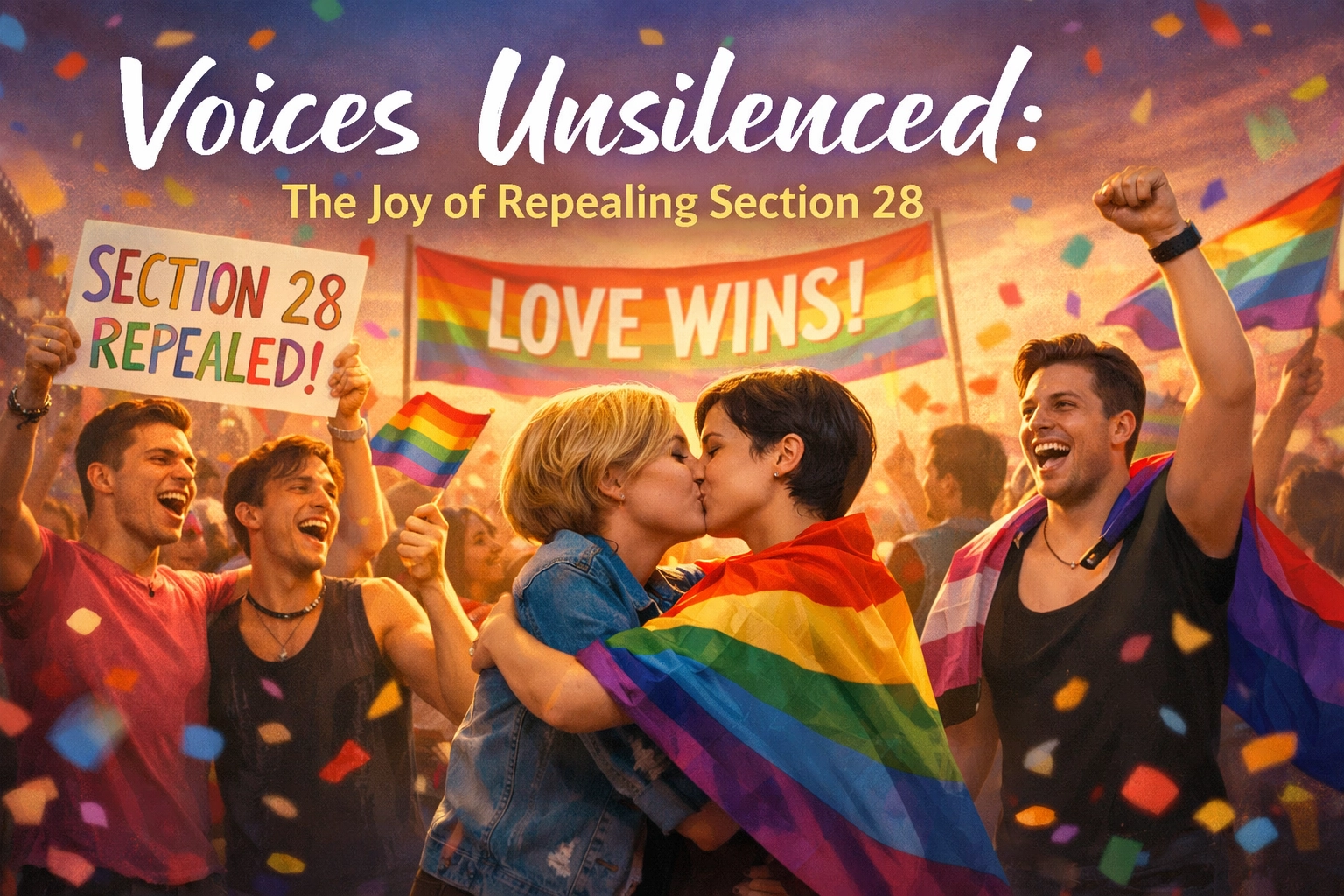
There are moments in history when you can literally feel the weight lift. When a generation collectively exhales after holding their breath for far too long. The repeal of Section 28 was one of those moments, a legislative victory that meant so much more than just words on paper. It was about reclaiming voices, validating identities, and finally being able to say: we exist, and that's not something to hide.
What Was Section 28, Anyway?
Let's rewind to 1988. Margaret Thatcher's government passed the Local Government Act, and buried within it was a clause that would cast a shadow over LGBTQ+ lives for years to come. Section 28 prohibited local authorities and schools from "promoting homosexuality" or teaching about same-sex relationships as a "pretended family relationship."
Sounds pretty specific, right? Wrong. The language was deliberately vague and all-encompassing, which made it even more dangerous. No one knew exactly where the line was, so everyone played it safe: which meant LGBTQ+ people, especially young ones, were left completely in the cold.

The law itself was virtually unworkable from a legal standpoint. There were never any prosecutions under Section 28. But here's the thing: it didn't need court cases to do its damage. The real impact was psychological and cultural. It created what activists called "a landscape of self-censorship": teachers couldn't support queer students, librarians worried about stocking books with gay characters, youth workers couldn't run LGBTQ+ support groups, and counselling services faced disruption.
An entire generation of queer people grew up without seeing themselves reflected in their education, without access to support when they needed it most, without even the basic acknowledgment that they existed. The message was clear: you're something to be ashamed of, something that shouldn't be talked about, something that doesn't deserve protection or visibility.
Living in the Shadow
For those who lived through it, Section 28 wasn't just an abstract legal concept: it was a daily reality that shaped lives in profound ways. Teachers who wanted to support struggling LGBTQ+ students had to bite their tongues. School libraries couldn't stock books that might help a questioning teenager understand themselves. Youth groups operated in constant fear of losing funding or facing legal challenges.
The atmosphere of fear and shame was pervasive. Even artists and writers felt the chill. Would their work be considered "promotion"? Would funding be pulled? Would venues refuse to host them? This wasn't just about schools: it was about creating a society where queer lives were systematically erased from public view.
And let's be real: this all happened against the backdrop of the AIDS crisis, when LGBTQ+ communities desperately needed support, education, and compassionate care. Instead, Section 28 reinforced stigma and made it harder to provide life-saving information. The cruelty was breathtaking.
The Fight Back
But here's where the story gets good. Because LGBTQ+ communities and their allies didn't just accept this discrimination. They fought back, organized, and refused to be silenced.
When the Scottish Parliament opened in 1999, LGBTQ+ organizations saw an opportunity and launched intensive lobbying efforts. They built coalitions, made reasoned arguments, and gathered evidence of the harm Section 28 was causing. It wasn't easy: opponents fought dirty, including a wealthy businessman who organized a flawed "referendum" using outdated voter rolls in a desperate attempt to preserve the discriminatory law.
But the movement persisted. By March 2000, when the Scottish Executive held a public consultation, the results were clear: three-quarters of respondents supported abolishing Section 28. The people had spoken, and they'd said enough was enough.
Victory in Scotland, Then Beyond
June 21, 2000. That's a date worth remembering. The Scottish Parliament voted to repeal Section 28, with 99 MSPs in favor and only 17 against. Scotland became the first part of the UK to strike down this discriminatory legislation, and the significance rippled far beyond its borders.
The victory in Scotland proved that change was possible and gave momentum to campaigns in England and Wales. For three more years, activists continued their work, building support across party lines. Liberal Democrat MP Ed Davey championed a cross-party backbench amendment, and in a moment that showed how far things had come, even Conservative leader Iain Duncan Smith supported the repeal.
On November 18, 2003, Section 28 was finally wiped from the statute book in England and Wales. After fifteen years, the law that had symbolized Thatcher-era conservatism and anti-LGBTQ+ prejudice was gone.
The Liberation Felt by a Generation
The repeal wasn't just a political victory: it was deeply, profoundly personal for countless people. Teachers could finally support their LGBTQ+ students without fear. School libraries could stock books featuring queer characters and relationships. Youth workers could openly provide support services. Parents could talk about their same-sex relationships in school communities.

For young LGBTQ+ people especially, the change was transformative. Suddenly, their existence wasn't something shameful to be hidden. They could see themselves in their education, access support when they needed it, and grow up knowing that the law recognized their right to exist openly and proudly.
Think about what this meant for the stories we tell. At Read with Pride, we're passionate about LGBTQ+ fiction, MM romance novels, and queer literature because we know how powerful representation is. Section 28 tried to erase those stories from public life. Its repeal meant that gay books, gay romance novels, and LGBTQ+ fiction could finally be part of mainstream education and culture without fear of legal consequences.
Writers could create gay love stories knowing they might actually reach the young people who needed them. Librarians could recommend MM romance books and queer fiction without worrying about legal challenges. Teachers could use LGBTQ+ literature in their classrooms. The creative and educational spaces that had been closed for so long finally began to open.
The Legacy Lives On
The repeal of Section 28 didn't solve everything: let's be clear about that. LGBTQ+ people still face discrimination, prejudice, and violence. The fight for equality continues on many fronts. But the repeal was a crucial turning point that demonstrated the power of organized activism and the possibility of legislative change.
It also serves as a reminder of how quickly rights can be taken away and how important it is to remain vigilant. Section 28 happened in living memory. There are people reading this who grew up under its shadow, who remember what it felt like to be told they were something that shouldn't be "promoted."
That's why we continue to celebrate LGBTQ+ stories, champion queer voices, and create spaces where everyone can read with pride. Whether it's contemporary gay romance, MM historical romance, gay fantasy romance, or any other genre of LGBTQ+ fiction, these stories matter. They're not just entertainment: they're validation, representation, and proof that we exist and deserve to be celebrated.
Moving Forward Together
The joy of Section 28's repeal wasn't just about the end of a bad law. It was about the beginning of something better: a future where LGBTQ+ lives are visible, valued, and protected. Where young people can see themselves in the books they read at school. Where teachers can support all their students. Where love in all its forms can be acknowledged and celebrated.
Every time someone picks up a gay romance book, shares an LGBTQ+ story, or recommends MM fiction to a friend, they're participating in the legacy of that victory. They're saying that our stories matter, our loves are real, and our lives deserve to be told.
So here's to the activists who fought for repeal. Here's to the generation that survived Section 28's shadow. And here's to everyone continuing the work of creating a world where no one has to hide who they are.
Because we're not going back. We're moving forward, reading with pride, and making sure the voices that were once silenced are heard loud and clear.
Discover more LGBTQ+ stories and join our community at Read with Pride. Follow us on Instagram, Facebook, and X for daily recommendations, community discussions, and celebrations of queer literature.
#Section 28 #LGBTQHistory #GayRights #QueerActivism #MMRomance #GayBooks #LGBTQFiction #ReadWithPride #QueerLiterature #GayRomanceBooks #LGBTQRights #QueerVoices #GayLoveStories #MMFiction #LGBTQCommunity #QueerJoy #GayLiberation

Leave a Reply
You must be logged in to post a comment.