

readwithpride.com
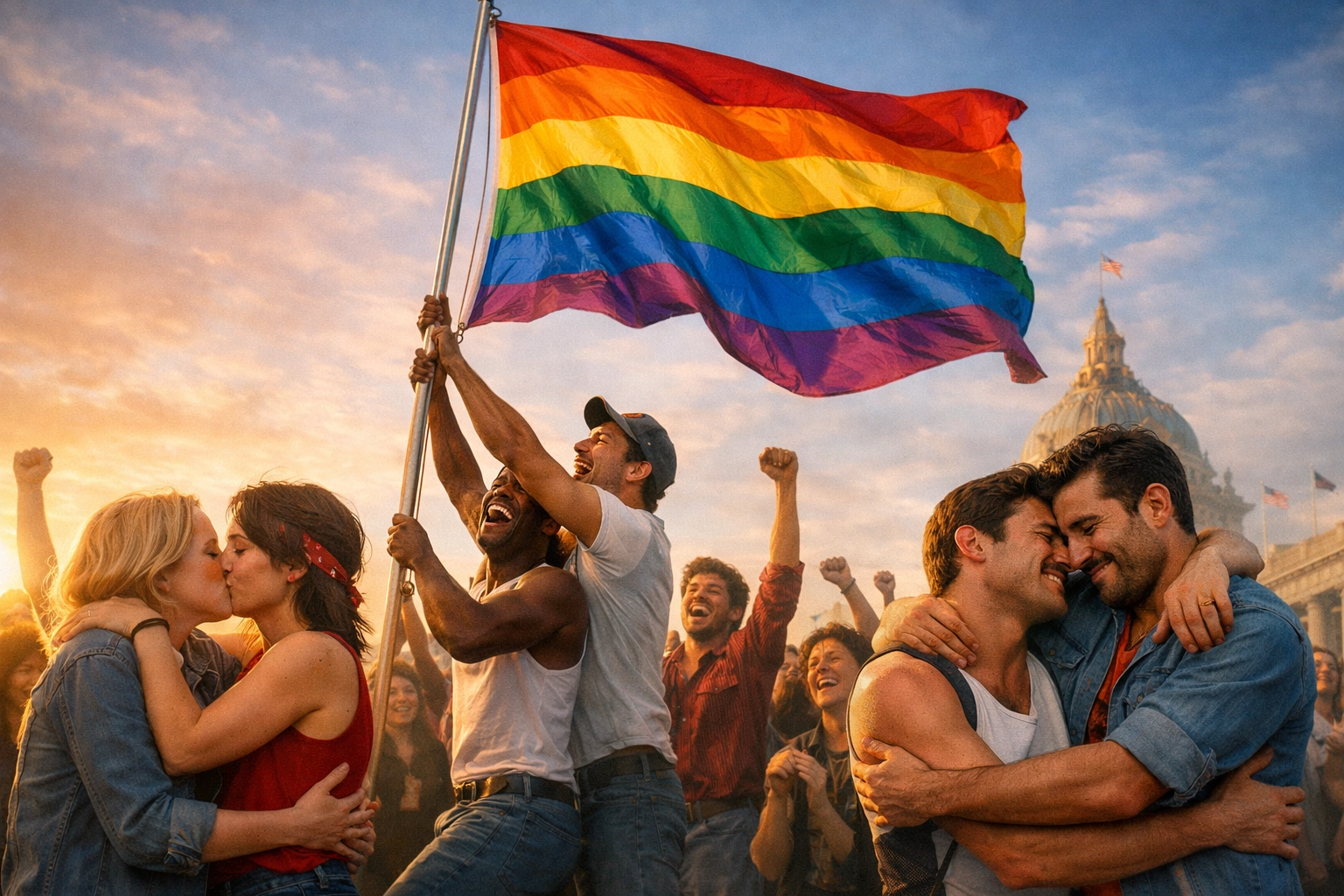
There are moments in history that shimmer with a kind of magic: when something so simple becomes something so profound that it changes everything. June 25, 1978, was one of those days. The San Francisco Gay Freedom Day Parade was underway, and among the crowds, the chants, and the celebration, something new caught the wind. Eight brilliant stripes of color unfurled against the California sky, and the world would never quite be the same.
This was the birth of the rainbow flag. And the man who stitched those colors together, who hand-dyed the fabric and poured his heart into every seam, was Gilbert Baker: an artist, an activist, and a dreamer who understood that sometimes, symbols speak louder than words.
A Flag is Born
Harvey Milk knew what he was doing when he approached Gilbert Baker with an idea. The LGBTQ+ community needed something: not just a slogan or a movement, but a symbol. Something that could be held high, recognized instantly, and claimed as our own. Baker, already known for his political banners and theatrical flair, was the perfect person to make that vision real.
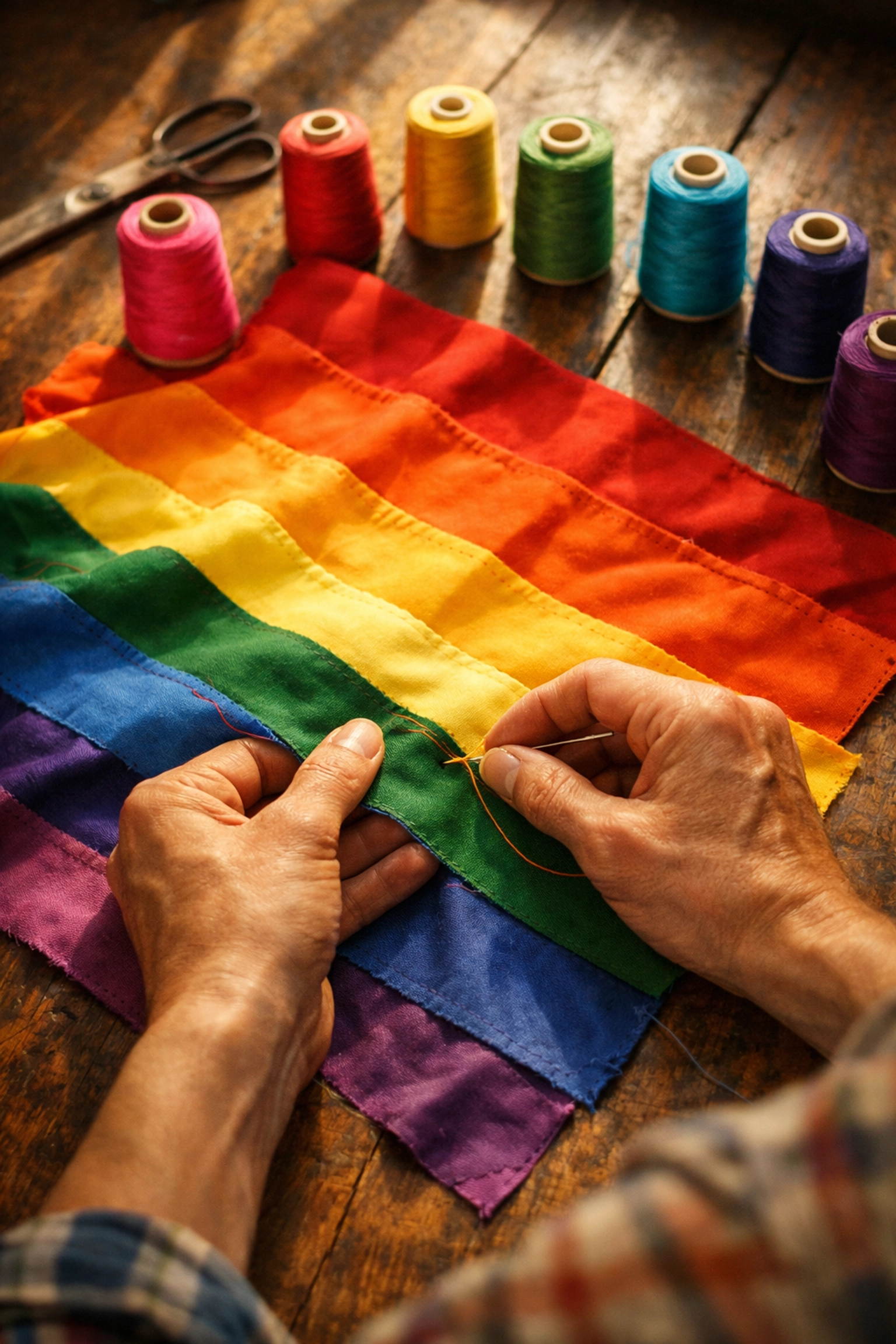
But this wasn't going to be just another flag. Baker didn't want something clinical or corporate. He wanted life. He wanted joy. So he gathered a small team of volunteers: Lynn Segerblom, James McNamara, Glenne McElhinney, Joe Duran, and Paul Langlotz: and together, in the attic of the Gay Community Center in San Francisco, they dyed fabric by hand and stitched eight colors into being.
Hot pink for sexuality. Red for life. Orange for healing. Yellow for the sun. Green for nature. Turquoise for art. Indigo for harmony. Violet for spirit.
Each stripe was intentional. Each color carried weight. This wasn't decoration: it was a declaration.
That First Moment
Gilbert Baker would later describe the moment the flag was raised for the first time, and his words carry the kind of electricity that only truth can hold: "It all goes back to the first moment of the first flag back in 1978 for me. Raising it up and seeing it there blowing in the wind for everyone to see. It completely astounded me that people just got it, in an instant like a bolt of lightning: that this was their flag."
People got it. Without explanation, without a manual, without needing to be told what it meant: they understood. The rainbow spoke a language that transcended words, a visual anthem that said: We are here. We are vibrant. We are alive.
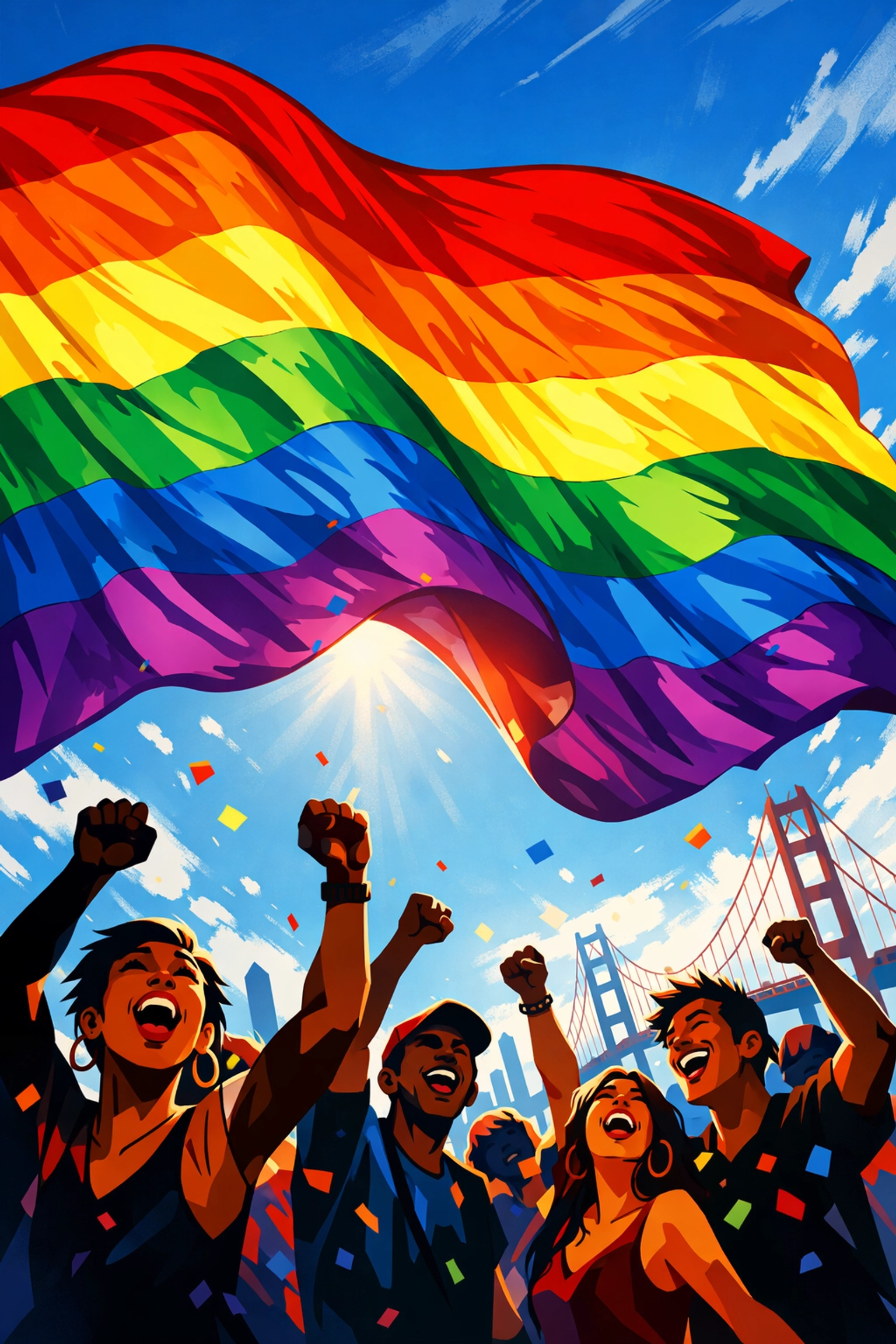
It's hard to overstate how powerful that was. In 1978, being openly gay meant risking everything: your job, your family, your safety. The world wasn't kind. But in that moment, under that flag, there was defiance. There was pride. There was a refusal to hide.
At Read with Pride, we believe in the power of stories: whether they're woven into gay romance novels, queer fiction, or the fabric of a flag. And Baker's flag told a story that resonated across generations.
From Eight to Six
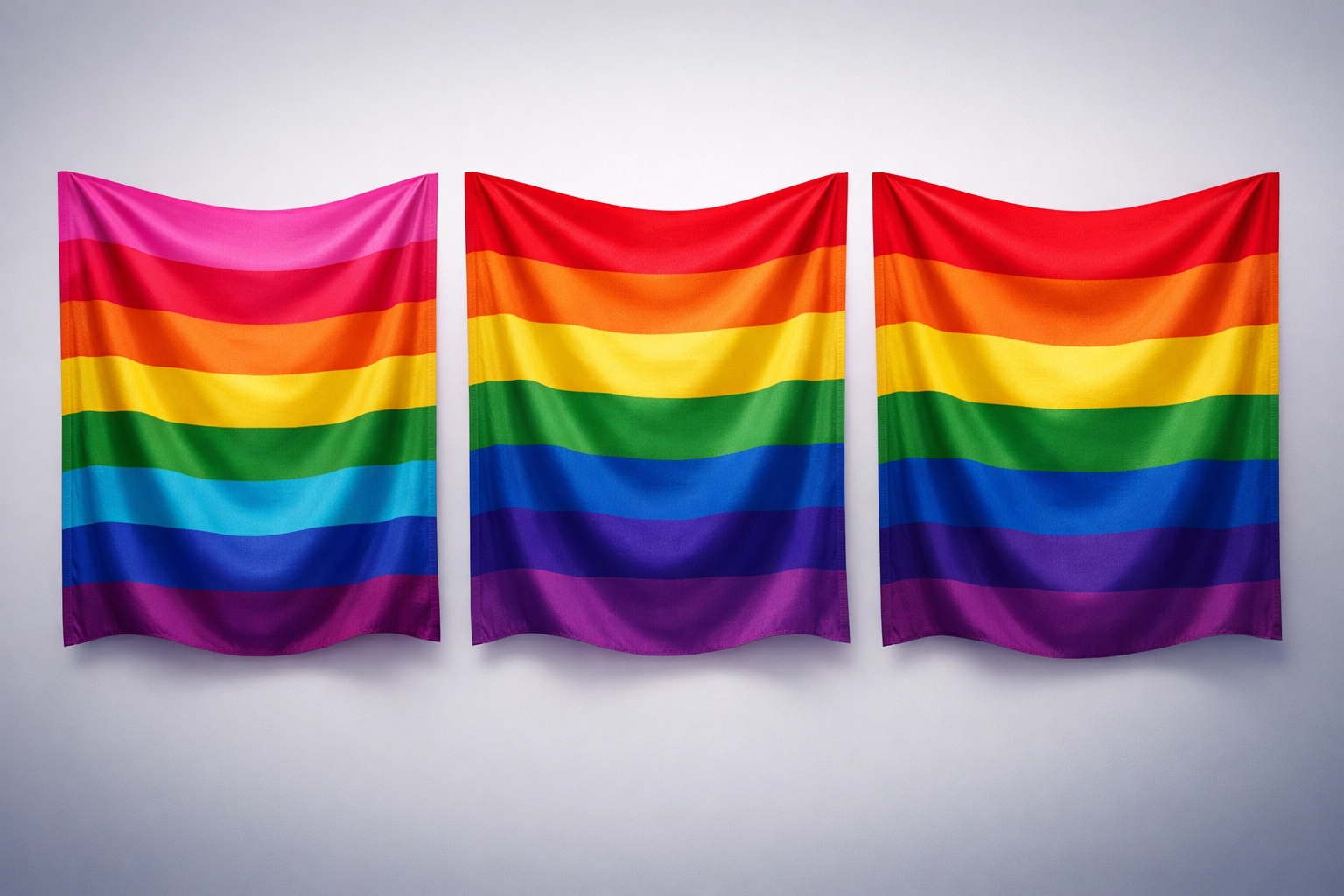
The original eight-stripe flag was glorious, but logistics have a way of intervening in even the most beautiful moments. When Harvey Milk was assassinated in November 1978: just months after that first flag flew: the community's grief was immense. People wanted to honor him. They wanted to carry the flag further, to mass-produce it so it could be seen everywhere.
But there was a problem. Hot pink fabric wasn't commercially available. And when the Paramount Flag Company took on production, they had to make a choice. The hot pink was dropped. Then, to create an even number of stripes for symmetrical street displays along Market Street, the turquoise was eliminated as well.
What remained were six stripes: red, orange, yellow, green, blue, and violet. This version: the one most of us know today: became the standard. And while purists might mourn the loss of those original two colors, there's something poetic about the flag's evolution. It adapted. It survived. It spread.
Just like the community it represents.
A Global Symbol
What started in San Francisco didn't stay there. The rainbow flag traveled. It appeared at protests and pride parades. It was raised in bedrooms and boardrooms. It became shorthand for acceptance, for resistance, for hope. You could see it on a pin or painted on an entire building, and the message was always the same: You are not alone.
Today, variations of the flag honor specific communities within the LGBTQ+ spectrum: trans pride, bisexual pride, progress flags that center marginalized voices. But the original rainbow remains the foundation. It's the visual heartbeat of a movement that refuses to be silenced.
And for those of us who love MM romance books, gay fiction, and LGBTQ+ stories in all their forms, the flag is a reminder of why representation matters. Every gay romance novel, every piece of queer fiction, every love story told without apology: they're all threads in the same tapestry that Gilbert Baker began stitching in 1978.
The Man Behind the Colors
Gilbert Baker wasn't just a flag-maker; he was a storyteller. Born in Kansas, he served in the Army before finding his way to San Francisco in the early 1970s: right in the thick of the city's burgeoning gay liberation movement. He became friends with Harvey Milk, made costumes and banners for protests, and threw himself into activism with the kind of passion that changes the world.
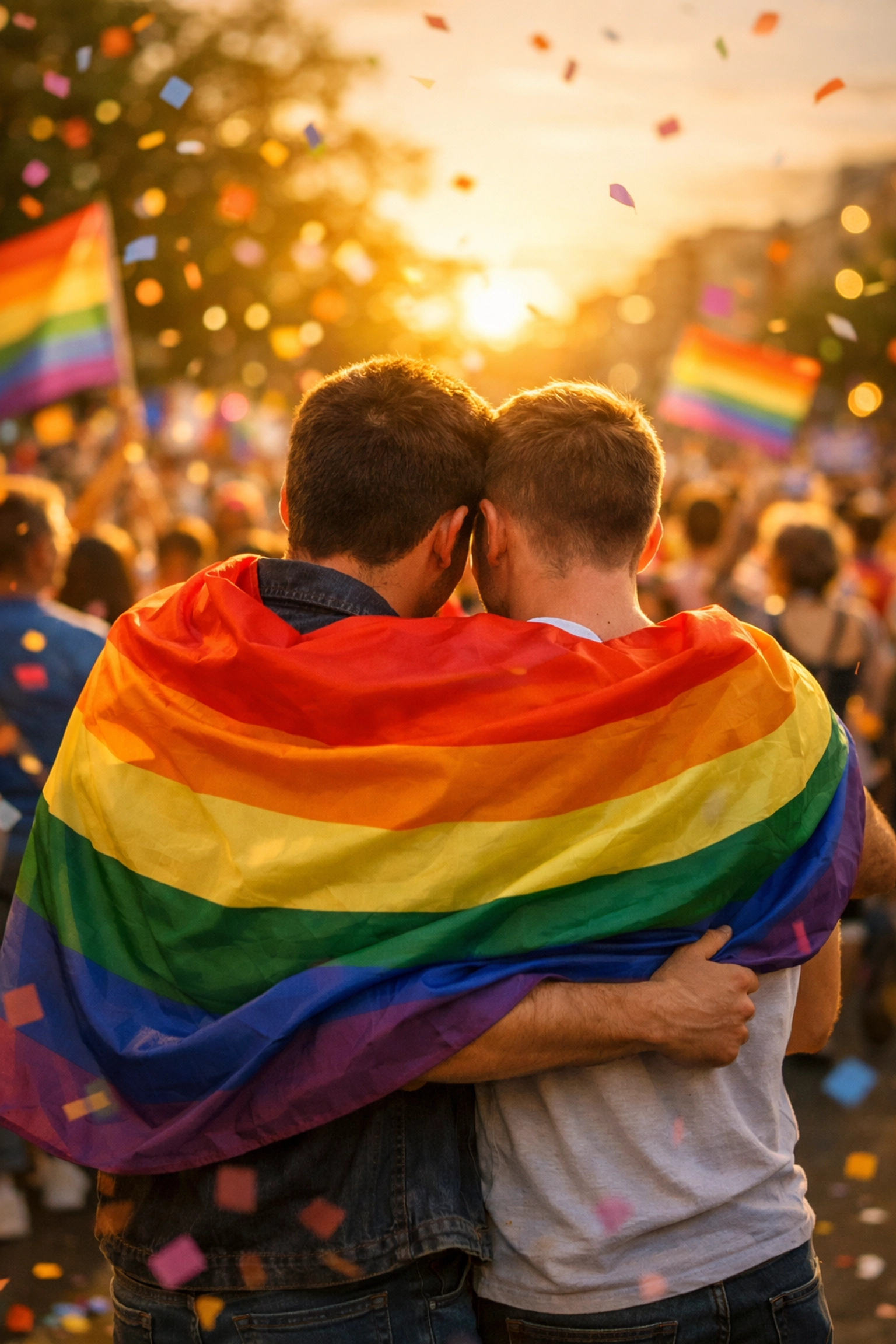
When he created the rainbow flag, he didn't patent it. He didn't try to own it. He gave it away. He wanted it to belong to everyone, to be claimed and reclaimed by anyone who needed it. That kind of generosity is rare, and it's one of the reasons the flag has endured.
Baker passed away in 2017, but his legacy lives on every time a flag is raised, every time someone sees those colors and feels seen in return.
Why It Still Matters
In 2026, the rainbow flag is everywhere. It's on coffee mugs and corporate logos. It's waved at sports events and hung in classrooms. Some might argue it's been co-opted, commodified, stripped of its radical roots.
But here's the thing: symbols only have the power we give them. And for millions of people around the world, the rainbow flag still means everything. It means safety. It means pride. It means I can be myself here.
For readers exploring gay romance books or diving into the best MM romance of 2026, for anyone searching for LGBTQ+ fiction that reflects their truth: the flag is a beacon. It says: These stories matter. Your love matters. You matter.
At Read with Pride, we're honored to be part of that ongoing narrative. Whether it's through steamy MM contemporary romance, gay historical fiction, or heartfelt queer love stories, we're committed to celebrating the diversity and beauty of LGBTQ+ experiences. Because every book, every story, every word is a thread in the tapestry that Baker began.
The Colors Endure
June 25, 1978, wasn't just the day a flag flew. It was the day the heart of a community found a voice that didn't need words. Gilbert Baker gave us more than fabric and dye: he gave us a way to say we exist that could be understood in any language, in any country, in any era.
So the next time you see those colors: whether it's at a pride parade, on a book cover, or fluttering outside a bookstore: take a moment. Remember the hands that stitched them. Remember the hope that lifted them. Remember that joy, resilience, and love are worth celebrating, always.
Because colors don't just represent the heart. They are the heart: vibrant, unapologetic, and endlessly proud.
Explore more LGBTQ+ stories and discover your next great read at Read with Pride.
Follow us for more queer fiction, MM romance recommendations, and celebrations of LGBTQ+ history:
- Facebook: Read With Pride
- Instagram: @read.withpride
- X (Twitter): @Read_With_Pride
#ReadWithPride #RainbowFlag #GilbertBaker #LGBTQHistory #GayPride #QueerHistory #MMRomance #GayRomanceBooks #LGBTQFiction #GayBooks #QueerFiction #PrideHistory #LGBTQCommunity #GayLiterature #MMRomanceBooks #2026Pride #LGBTQReading #GayRomanceNovels #QueerLove #PrideMonth

Leave a Reply
You must be logged in to post a comment.