

readwithpride.com
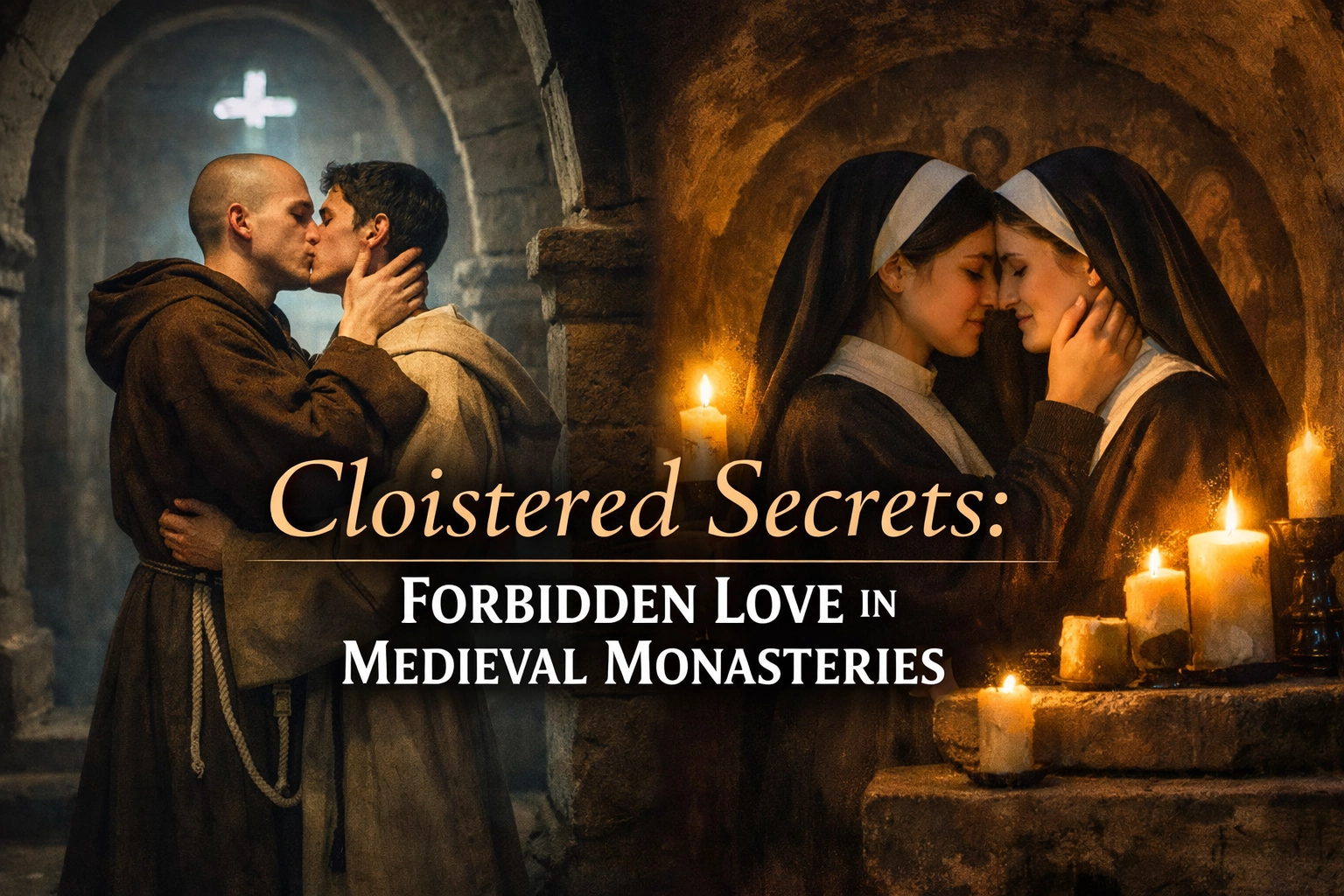
Behind the stone walls of medieval monasteries, where men devoted their lives to God and solitude, another story unfolded: one of forbidden desire, secret glances across candlelit chapels, and love that dared not speak its name. While history books often sanitize the past, the reality is far more complex and decidedly more human than we've been led to believe.
The Silence That Spoke Volumes
Medieval monasteries were supposed to be havens of celibacy and spiritual devotion. Monks took vows of chastity, poverty, and obedience, committing themselves to a life of prayer and contemplation. But here's the thing about putting hundreds of men together in isolated communities with strict rules against human connection: human nature has a way of finding an outlet.
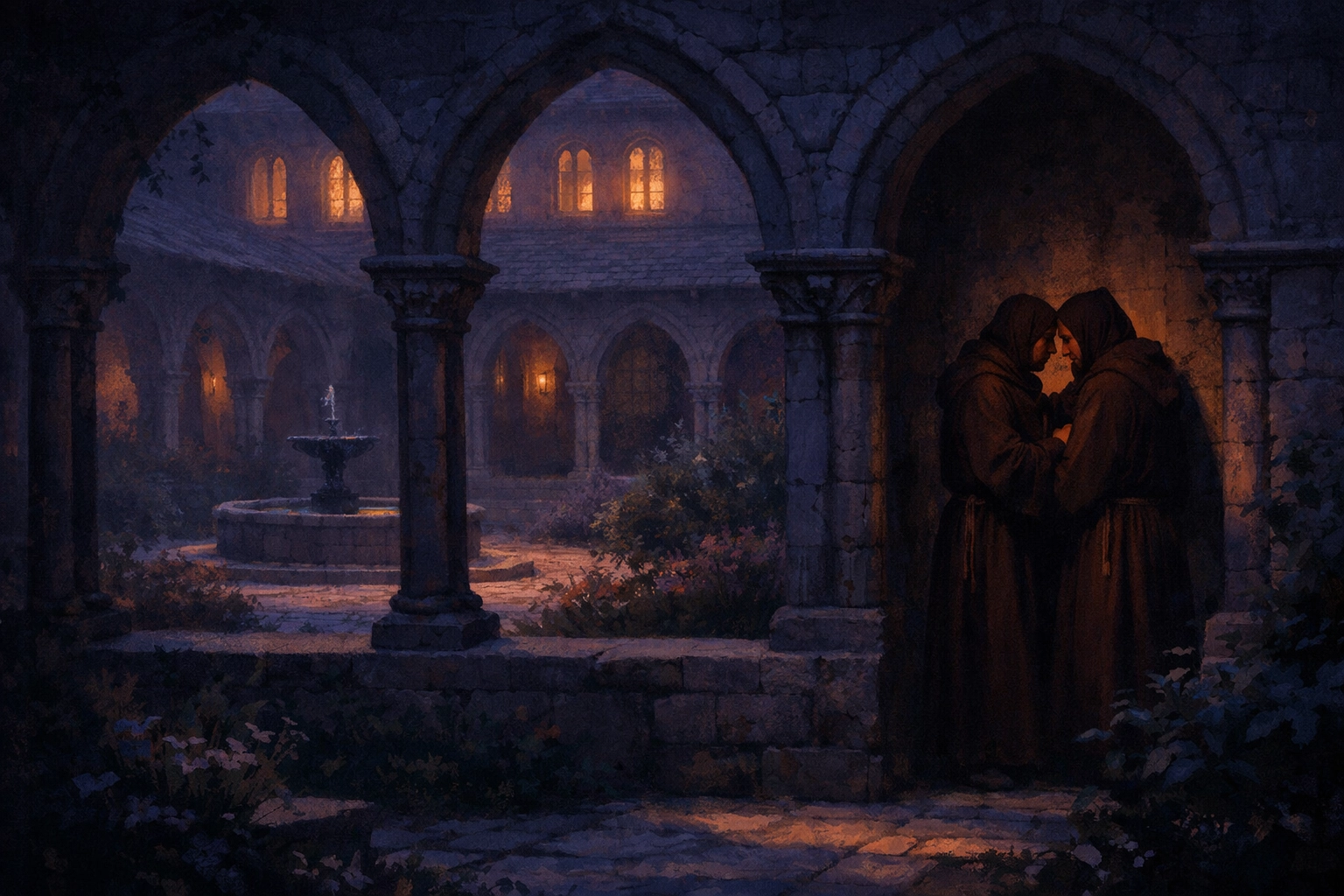
The very architecture of monastic life created the perfect conditions for clandestine relationships. Shared dormitories, communal bathing areas, and the necessity of close physical proximity during daily routines meant that emotional and physical intimacy was often unavoidable. The rules designed to prevent "worldly distractions" sometimes had the opposite effect, making forbidden connections all the more intense.
What the Historical Records Really Tell Us
If you dig into medieval church documents, you'll find something fascinating: ecclesiastical authorities were obsessed with addressing same-sex relationships among clergy. And you don't create detailed rules and punishments for something that isn't happening.
Penitential manuals: essentially guidebooks for confessors: are filled with specific references to sexual acts between monks. These weren't vague warnings; they included detailed classifications and corresponding penances. The 11th-century theologian Peter Damian wrote an entire treatise called the "Book of Gomorrah," specifically addressing what he called the "vice against nature" among clergy and monks. His passionate condemnation suggests this was far from a rare occurrence.
Church councils repeatedly issued decrees forbidding monks from sharing beds: a rule that wouldn't need constant repetition if it wasn't being regularly broken. The Council of Paris in 1212 explicitly ordered that beds be positioned far apart and that a lamp remain burning all night in dormitories. They weren't worried about monks staying up late reading scripture.
Love Letters from the Cloisters
Some of the most compelling evidence comes from the letters themselves. Medieval correspondence between monks sometimes reveals deep emotional bonds that go well beyond platonic friendship. While many of these letters use the coded language of "spiritual brotherhood," the intensity of emotion is unmistakable.
Anselm of Canterbury, one of the most respected church figures of his time, wrote letters to fellow monks that were breathtakingly intimate. To one monk, he wrote of his "soul bound to his soul" and expressed longing that sounds distinctly romantic. Were these purely spiritual friendships? Perhaps. But the line between spiritual and romantic love was often deliberately blurred, allowing for plausible deniability while expressing genuine feeling.
The Underground Network
Rumors persisted throughout medieval Europe of secret passageways connecting monasteries to convents, ostensibly for illicit meetings. While some of these stories are likely embellished, archaeological evidence has revealed hidden corridors and concealed rooms in several medieval religious buildings. What happened in those shadowy spaces? We can only imagine, but it's clear that not all monastic encounters happened in plain sight.
One documented case from medieval Dubrovnik tells of monks helping a young man rescue a nun from her convent: a heterosexual love story, but one that reveals the complicity and understanding among religious who themselves lived under similar constraints. If monks were willing to risk severe punishment to help others escape for love, it stands to reason they might take similar risks for their own hearts.
When Punishment Couldn't Stop Passion
The penalties for breaking celibacy vows: particularly for same-sex relationships: were severe. Punishments ranged from extended fasting on bread and water to public flogging, exile from the monastery, or in extreme cases, execution. Yet despite these harsh consequences, the behavior continued.
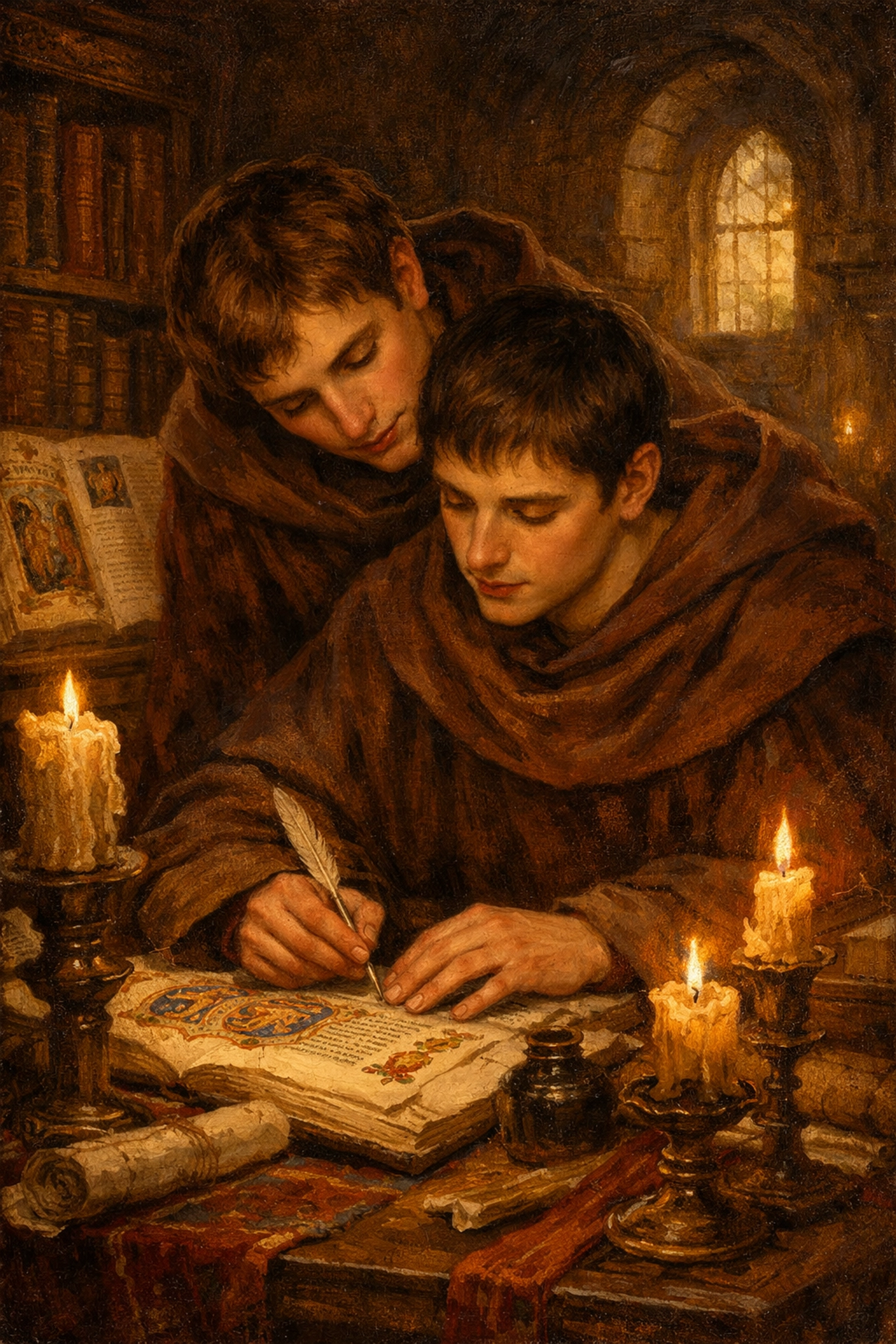
This persistence speaks to something important: you can't legislate away human connection. The very intensity of the prohibitions created a culture where forbidden love became even more powerful. Stolen moments in the scriptorium, coded messages in the margins of illuminated manuscripts, brief touches during prayer: these small acts of defiance against an impossible standard of purity.
Even some of the most devout monks admitted to struggling. Aelred of Rievaulx, a 12th-century Cistercian abbot who wrote extensively about spiritual friendship, described relationships between monks that sound remarkably like romantic partnerships, complete with jealousy, longing, and deep emotional attachment. He argued that such friendships were valuable and holy: a radical position that allowed for the expression of love while maintaining a veneer of acceptability.
The Human Cost of Denial
What often gets lost in historical accounts is the psychological toll of living in constant denial. Monks who felt attraction to their brothers faced an impossible choice: suppress their nature completely or risk everything for moments of authentic connection. Many chose a middle path: forming deep "spiritual friendships" that may or may not have crossed physical boundaries but provided emotional sustenance.
The institutional church's response to these relationships reveals its own anxieties about masculinity, power, and control. Same-sex relationships between clergy threatened the church's authority in multiple ways: they violated celibacy vows, challenged the gender hierarchy, and created loyalties that competed with obedience to superiors.
Reading Between the Lines
Today, scholars continue to debate the nature of many medieval monastic relationships. Some argue for purely platonic interpretations of passionate letters and close bonds. Others see clear evidence of romantic and sexual relationships. The truth likely exists on a spectrum, as it does in any community.
What's undeniable is that medieval monasteries were far from the austere, emotion-free zones we often imagine. They were communities of flesh-and-blood humans, with all the messy complications that entails. Love happened. Desire happened. Connection happened: despite the rules, despite the risks, despite everything.
These stories matter because they remind us that LGBTQ+ people have always existed, even in places and times that tried hardest to erase us. Behind every stern prohibition in church law lies the shadow of the people who made those rules necessary. Their love was real, even if it had to remain secret.
At Read with Pride, we believe in uncovering these hidden histories and celebrating the courage it took to love authentically in hostile times. These medieval monks and their forbidden connections are part of our story: proof that love finds a way, even through stone walls and centuries of silence.
Discover more untold LGBTQ+ stories and find your next compelling read at readwithpride.com.
#LGBTQHistory #GayHistory #MedievalHistory #ReadWithPride #QueerHistory #HiddenHistory #LGBTQLiterature #MMRomance #GayRomanceBooks #HistoricalLGBTQ #QueerFiction #ChurchSecrets #ForbiddenLove #MonasterySecrets #2026

Leave a Reply
You must be logged in to post a comment.