

readwithpride.com
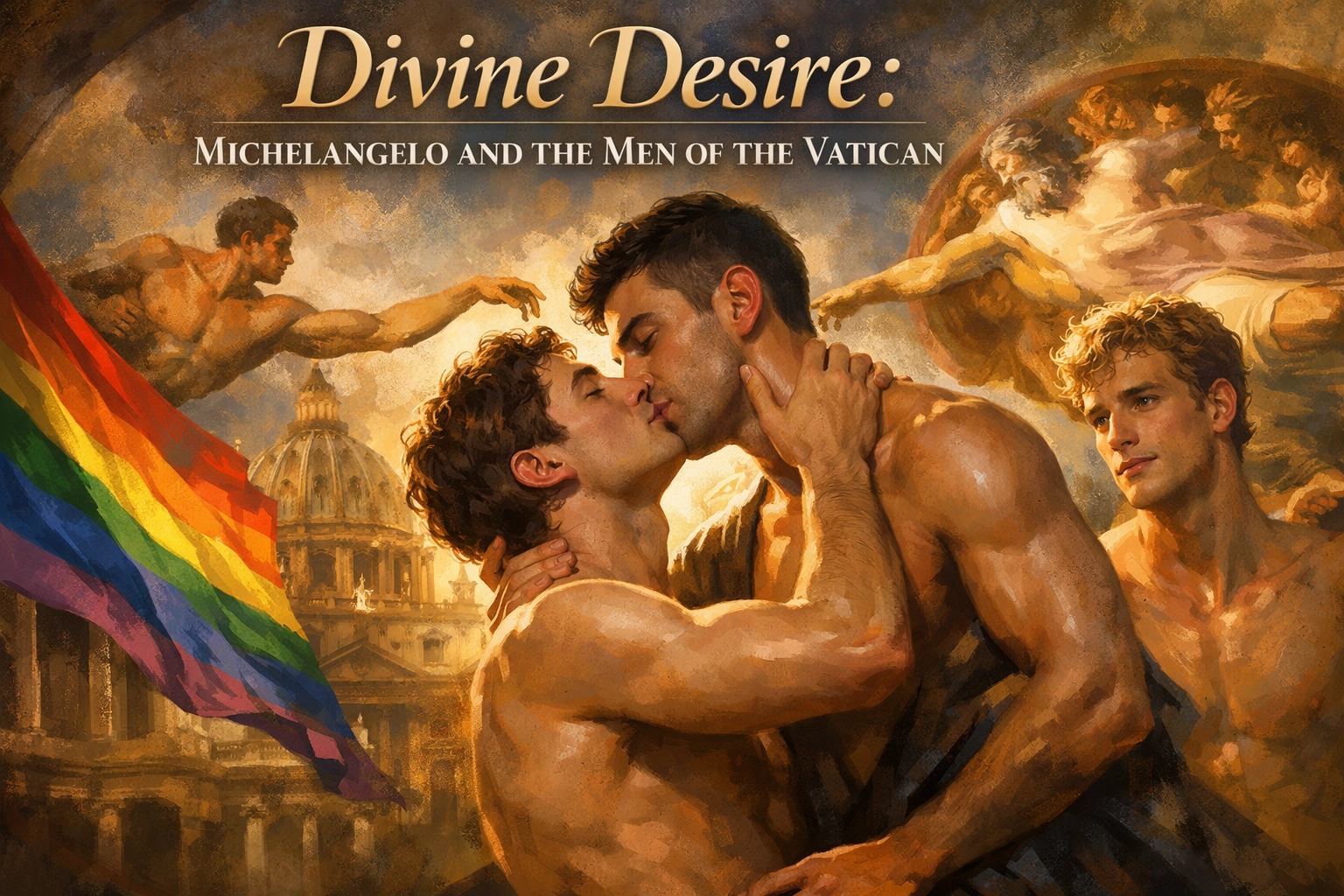
When you look up at the Sistine Chapel ceiling, you're not just seeing biblical scenes painted by a Renaissance master. You're witnessing one of history's most profound acts of queer resistance: a gay man creating divine beauty for an institution that condemned his very nature. Michelangelo Buonarroti spent decades painting the Vatican's most sacred spaces, all while harboring desires that could have gotten him executed. His story is one of passion, coded messages, and the intersection of art and forbidden love.
The Man Behind the Masterpiece
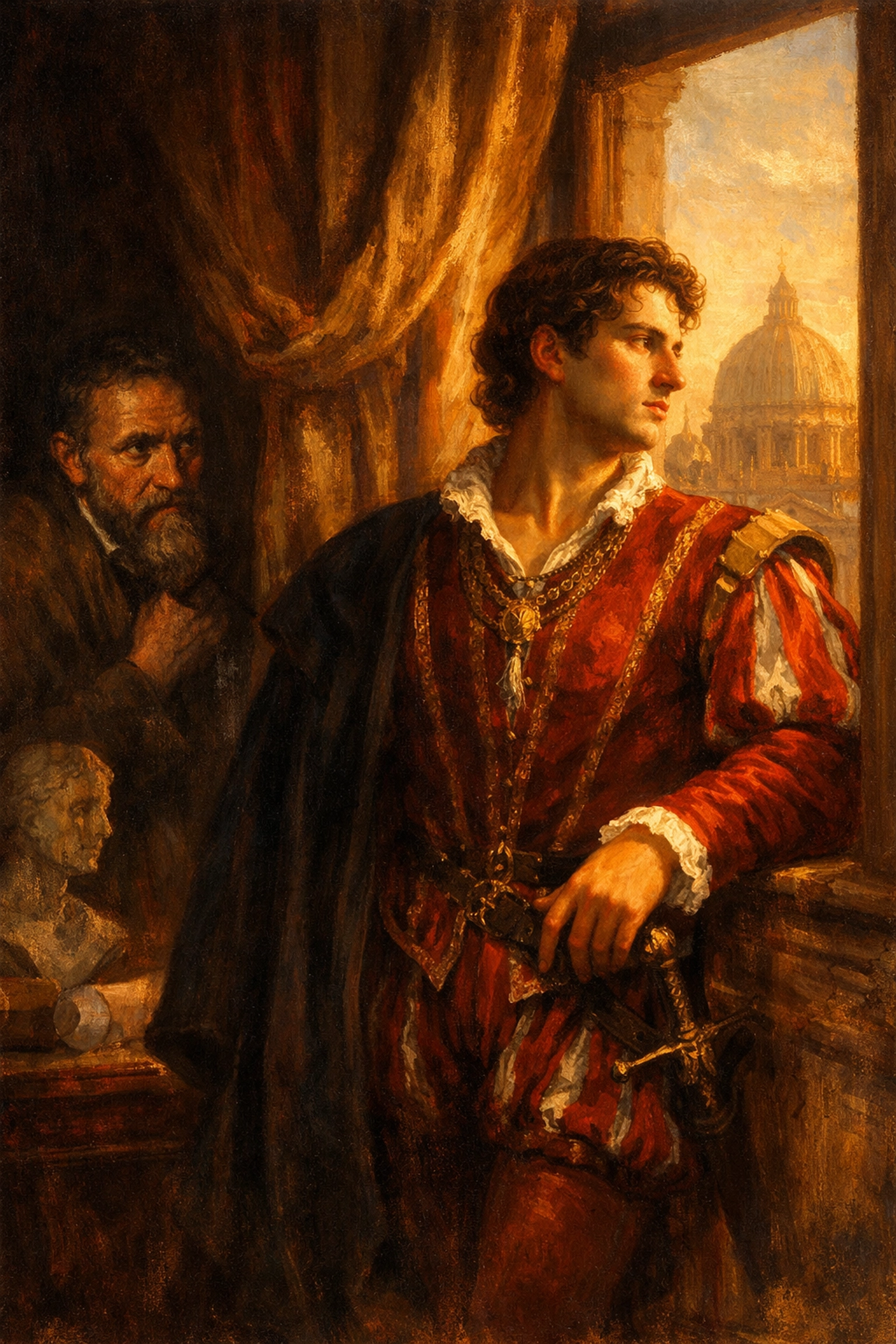
Michelangelo wasn't subtle about his attractions, at least not in his private writings. The artist penned numerous sonnets and letters expressing deep, romantic love for men: most notably Tommaso dei Cavalieri, a Roman nobleman who captured his heart when Michelangelo was in his late fifties. These weren't casual friendships. These were declarations of passion that make modern romance novels look tame.
"I see in your beautiful face, my lord, what in this life one can scarcely narrate," he wrote to Tommaso. "My soul, already close to death, with you clothed, ascends to God." This wasn't metaphor for the sake of art. This was a man utterly consumed by desire for another man, writing with the kind of intensity that would fit perfectly in today's MM romance books.
Painting the Divine While Living the Forbidden
The irony is delicious and heartbreaking in equal measure. Here was Michelangelo, spending year after year on his back painting the Sistine Chapel ceiling, creating images of divine creation and biblical judgment: all commissioned by popes who represented an institution that viewed same-sex love as a mortal sin. In Renaissance Rome, sodomy could lead to execution, imprisonment, or at minimum, public humiliation.
Yet Michelangelo painted on. And if you look closely, really closely, you can see him leaving his mark in ways the Church fathers never quite caught onto.
The Bodies That Tell the Truth
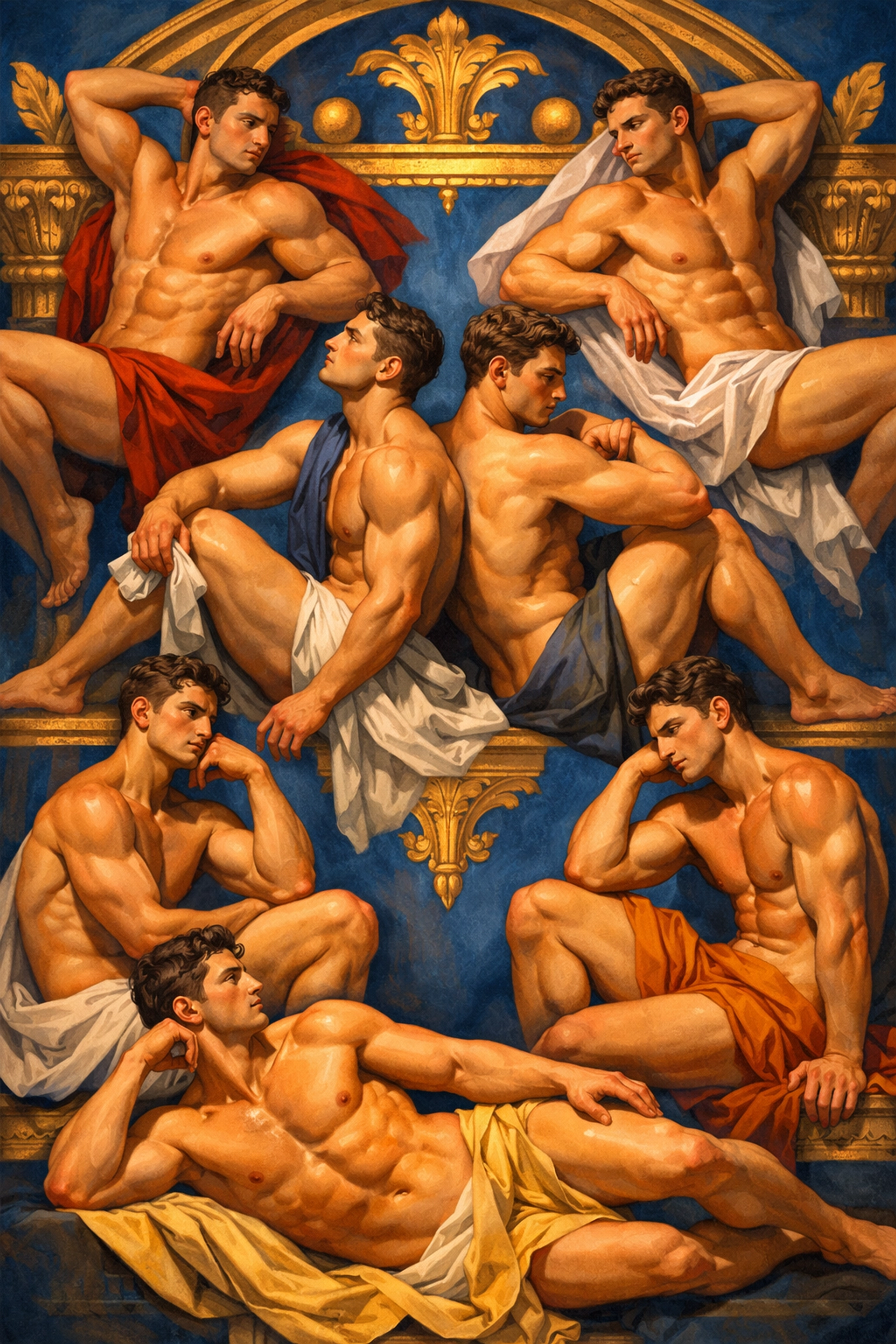
Walk into the Sistine Chapel today and you'll notice something immediately: those biblical figures don't look particularly modest or traditionally religious. They're muscular, sensual, often nude or barely draped. Adam's creation scene? That's not just artistic anatomy: that's appreciation. The ignudi (nude youths) positioned around the ceiling's architectural frames? They serve no biblical purpose. They're there because Michelangelo wanted them there, wanted to paint the male form in all its glory.
Some scholars have suggested these figures represent Michelangelo's own desires made permanent in sacred space. He was essentially decorating the Pope's private chapel with the very beauty that society told him was sinful. It's subversive. It's bold. It's incredibly queer.
Tommaso: The Love That Changed Everything
Tommaso dei Cavalieri entered Michelangelo's life around 1532, and the artist never recovered. At 57, Michelangelo fell hard for the handsome 23-year-old nobleman. Their relationship lasted until Michelangelo's death over three decades later. While historians debate whether their relationship was physical (spoiler: we'll never know for certain), what's undeniable is the emotional and romantic intensity.
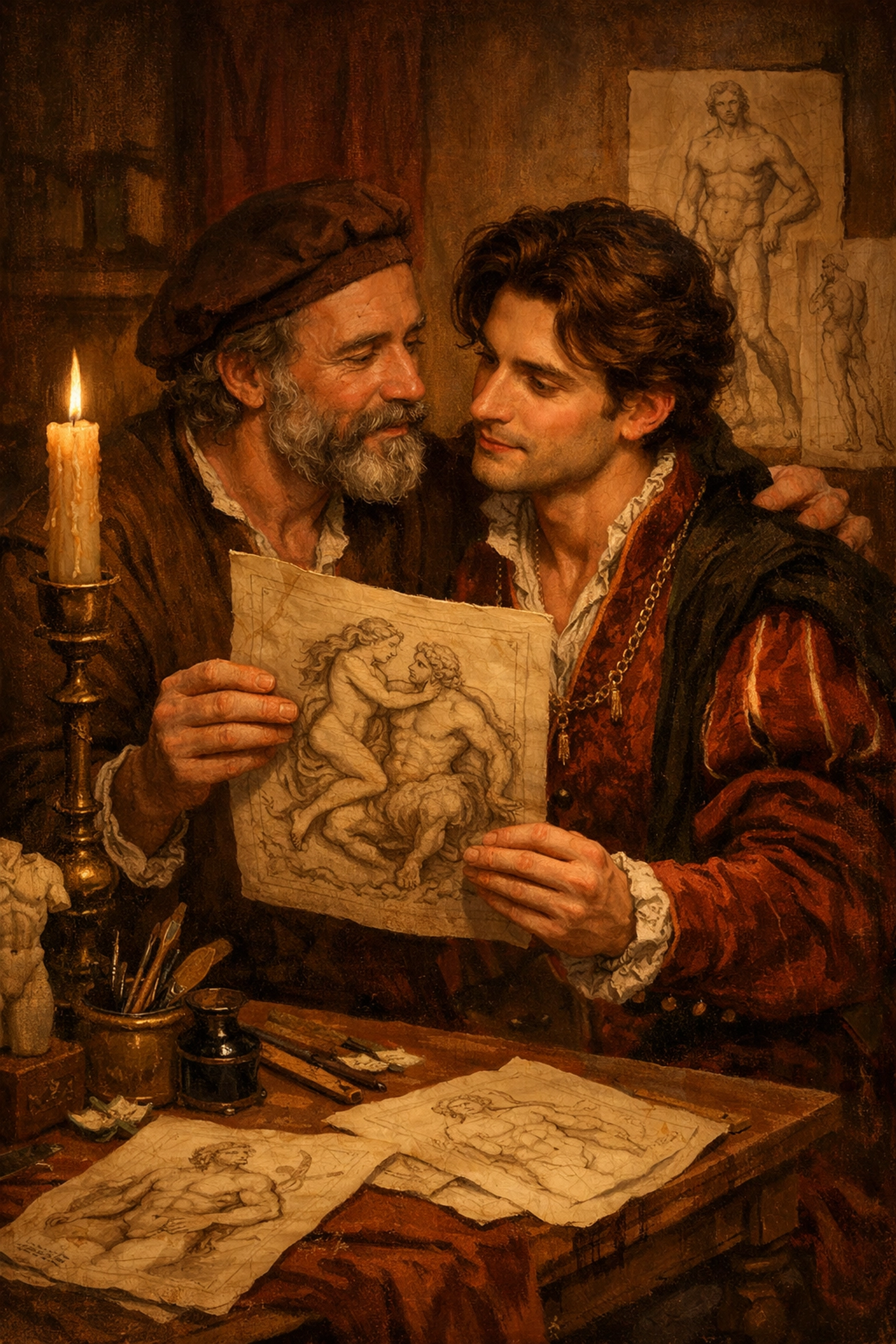
Michelangelo created drawings specifically for Tommaso: gifts of art that depicted mythological scenes of male beauty and passion. The "Rape of Ganymede," for instance, shows Zeus (disguised as an eagle) carrying the beautiful youth to Olympus to be his cupbearer and lover. The symbolism wasn't exactly subtle. Michelangelo was essentially saying: "Here's a mythological scene about divine love for a young man, and I made it just for you."
The Vatican's Queer Contradiction
What makes this story even more complex is that Michelangelo wasn't the only queer man working in the Vatican's orbit. Renaissance Italy, despite its harsh laws, was rife with same-sex relationships, particularly among artists, clergy, and nobility. The Church publicly condemned sodomy while privately tolerating it within certain elite circles: as long as you were discreet and valuable enough.
Michelangelo was definitely valuable. Pope Julius II commissioned the Sistine Chapel ceiling. Pope Paul III later commissioned "The Last Judgment" on the chapel's altar wall. These popes needed Michelangelo's genius more than they needed to investigate his personal life. It was a don't-ask-don't-tell arrangement centuries before that phrase existed.
Coded Messages in Plain Sight
Modern scholars have identified numerous elements in Michelangelo's Vatican works that seem to push back against Church doctrine. In "The Last Judgment," Saint Bartholomew holds his own flayed skin: and the face on that skin is believed to be Michelangelo's self-portrait. It's been interpreted as the artist's commentary on his own suffering, possibly including the pain of living a life in conflict with Church teaching.
The inclusion of pagan elements, the sensual treatment of religious figures, the emphasis on human beauty over divine authority: these weren't accidents. They were choices made by a man who understood he was creating art for an institution that would condemn his loves if they knew the full truth.
The Letters They Tried to Erase
After Michelangelo's death, his grandnephew Michelangelo the Younger published edited versions of the artist's poems, changing masculine pronouns to feminine ones. For centuries, the world believed Michelangelo wrote love poetry to women. It wasn't until the 20th century that scholars restored the original texts and confirmed what had been sanitized away: Michelangelo's primary romantic and sexual interests were men.
This erasure is part of a larger pattern of straight-washing queer history, particularly when it involves beloved cultural figures. The world wanted to claim Michelangelo's genius without acknowledging his queerness. But his own words betray the truth: "I live of dying and if I do not deceive myself, I live of that of which others die: love."
Legacy of Longing
What's remarkable about Michelangelo's story isn't just that he was gay (or bisexual: historical labels are always complicated). It's that he created some of Western civilization's most celebrated art while navigating the tension between his authentic self and the expectations of a hostile institution. Every brushstroke in the Sistine Chapel represents not just religious devotion or artistic mastery, but also a queer man's complicated relationship with faith, power, and desire.
When you read gay romance novels today about characters navigating hostile worlds while finding love, remember that these stories have historical precedent. Michelangelo lived it: writing passionate poetry, creating intimate art, and maintaining a lifelong devotion to Tommaso, all while painting prophets and saints on Vatican walls.
His life reminds us that queer people have always existed, even in the most unlikely places, creating beauty and meaning against all odds. The Sistine Chapel ceiling isn't just a masterpiece of Renaissance art. It's a monument to queer survival, to the persistence of desire in the face of condemnation, and to the radical act of leaving your truth hidden in plain sight for future generations to discover.
The next time someone tries to claim that LGBTQ+ history is a modern invention, point them toward Rome. Point them up toward that ceiling. Tell them about the gay man who painted heaven while loving someone the Church said would send him to hell. Tell them about Michelangelo.
Discover more queer history and stories at Read with Pride.
Follow us on Facebook | Instagram | X/Twitter
#MichelangeloHistory #QueerRenaissance #LGBTQHistory #GayHistory #VaticanSecrets #QueerArt #MMRomance #ReadWithPride #GayRomanceBooks #LGBTQFiction #QueerLove #HistoricalLGBTQ #RenaissanceQueer #TommasoDeiCavalieri #SistineChapel #QueerArtHistory #GayLiterature

Leave a Reply
You must be logged in to post a comment.