

readwithpride.com
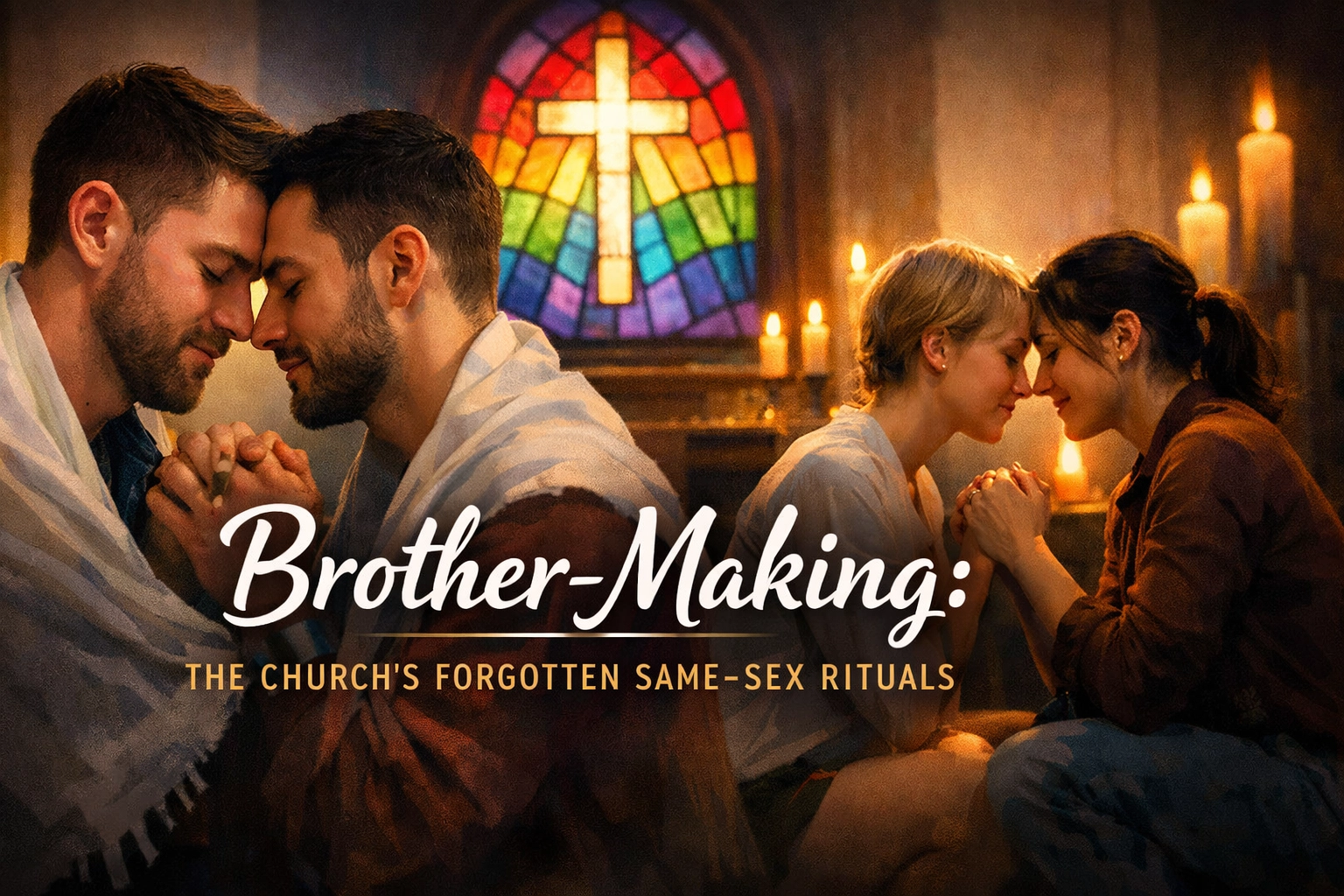
Tucked away in the dusty archives of Byzantine manuscripts and early Christian texts lies a ceremony that most people have never heard of, and one that the Church would rather you didn't know about. It's called adelphopoiesis, which literally translates to "brother-making," and for over a thousand years, it was an official Church ritual that bound two people together in a formal, blessed union.
Sound familiar?
Before you think this is just another tale of spiritual friendship with no romantic undertones, hold that thought. The history of adelphopoiesis is far more complex, contested, and yes, potentially queer than mainstream religious narratives would have you believe.
What Exactly Was Brother-Making?
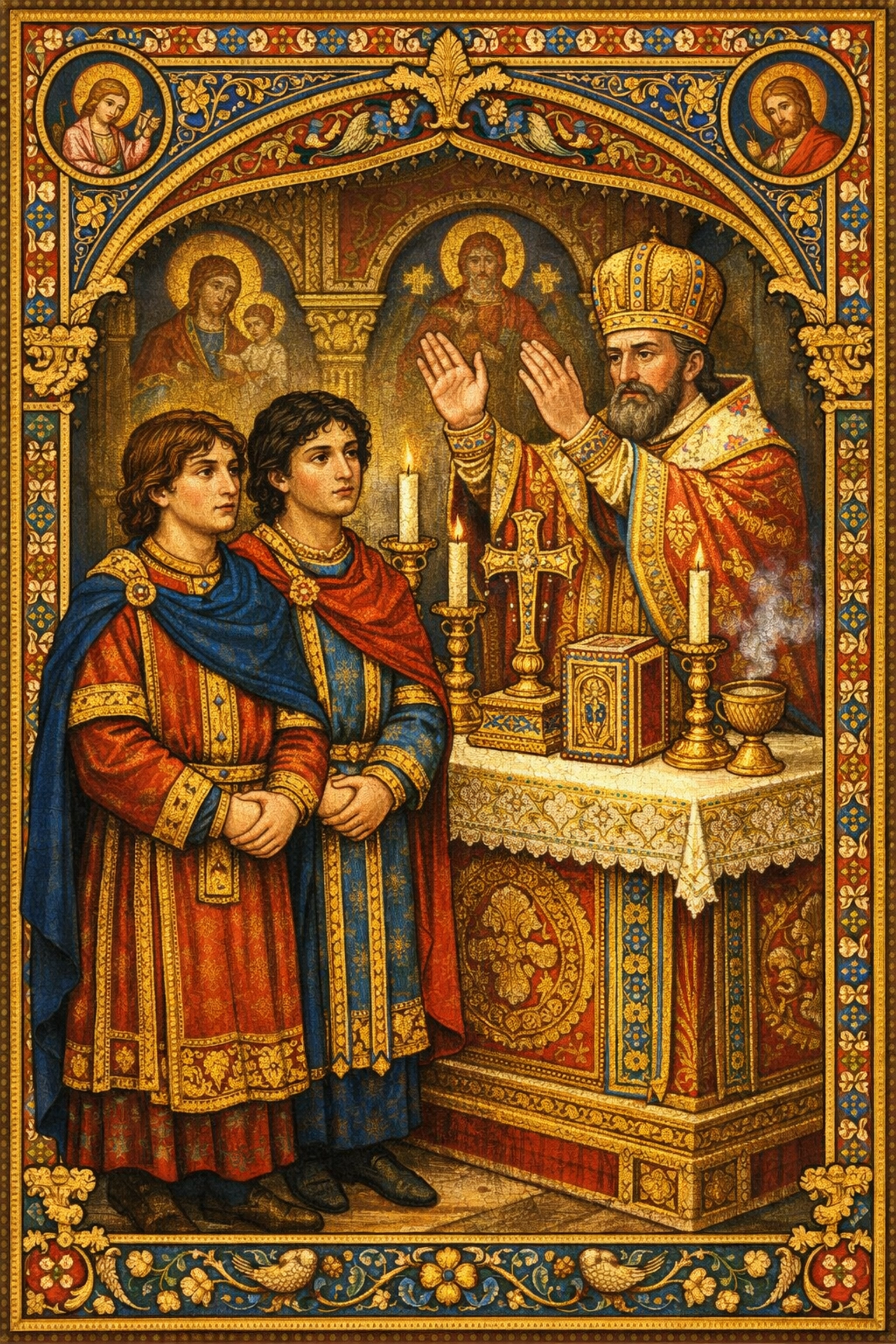
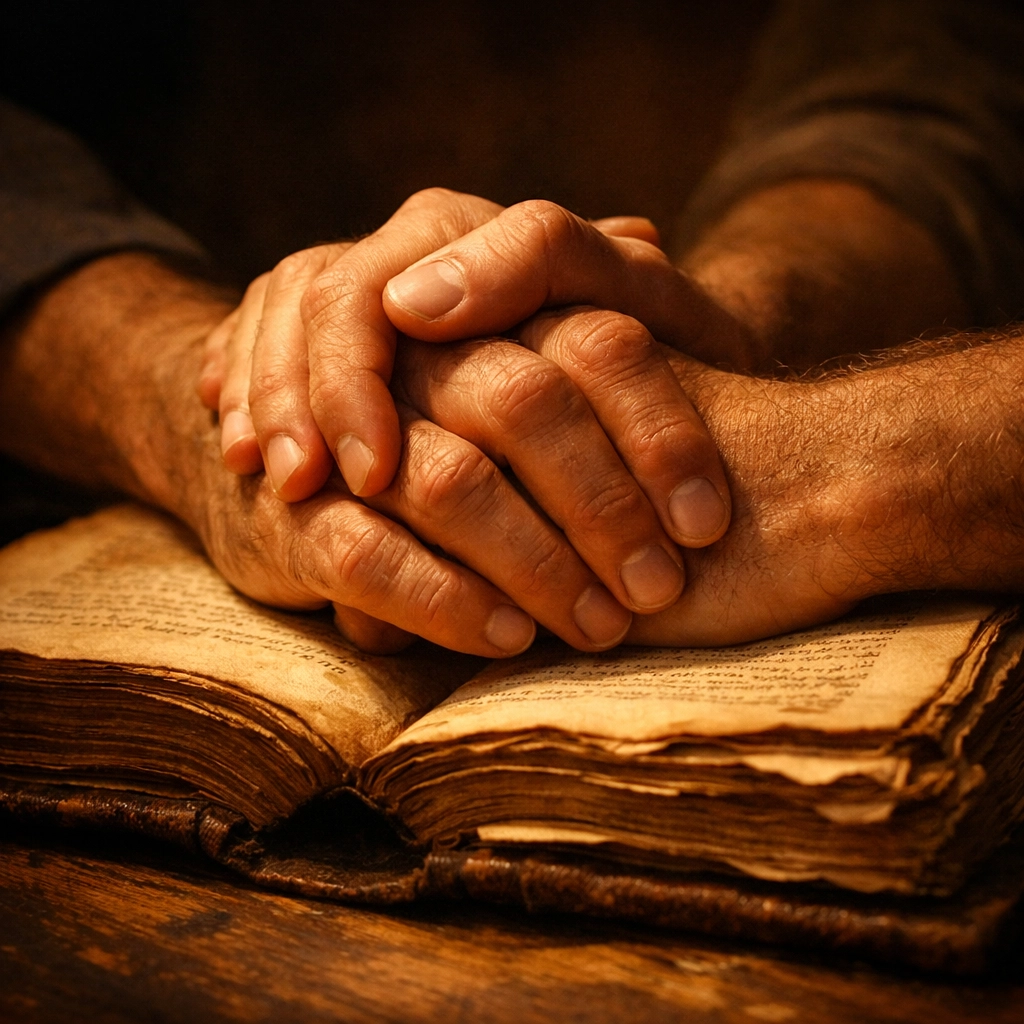
Picture this: Two men standing before an altar in an Eastern Christian church, somewhere between the 4th and 15th centuries. A priest offers prayers over them, asking God to bless their union in faith and love. They receive communion together. They exchange a fraternal kiss, with each other and with the priest. The ceremony recognizes them as pneumatikoi adelphoi, spiritual brothers, bound together in the eyes of God and the Church.
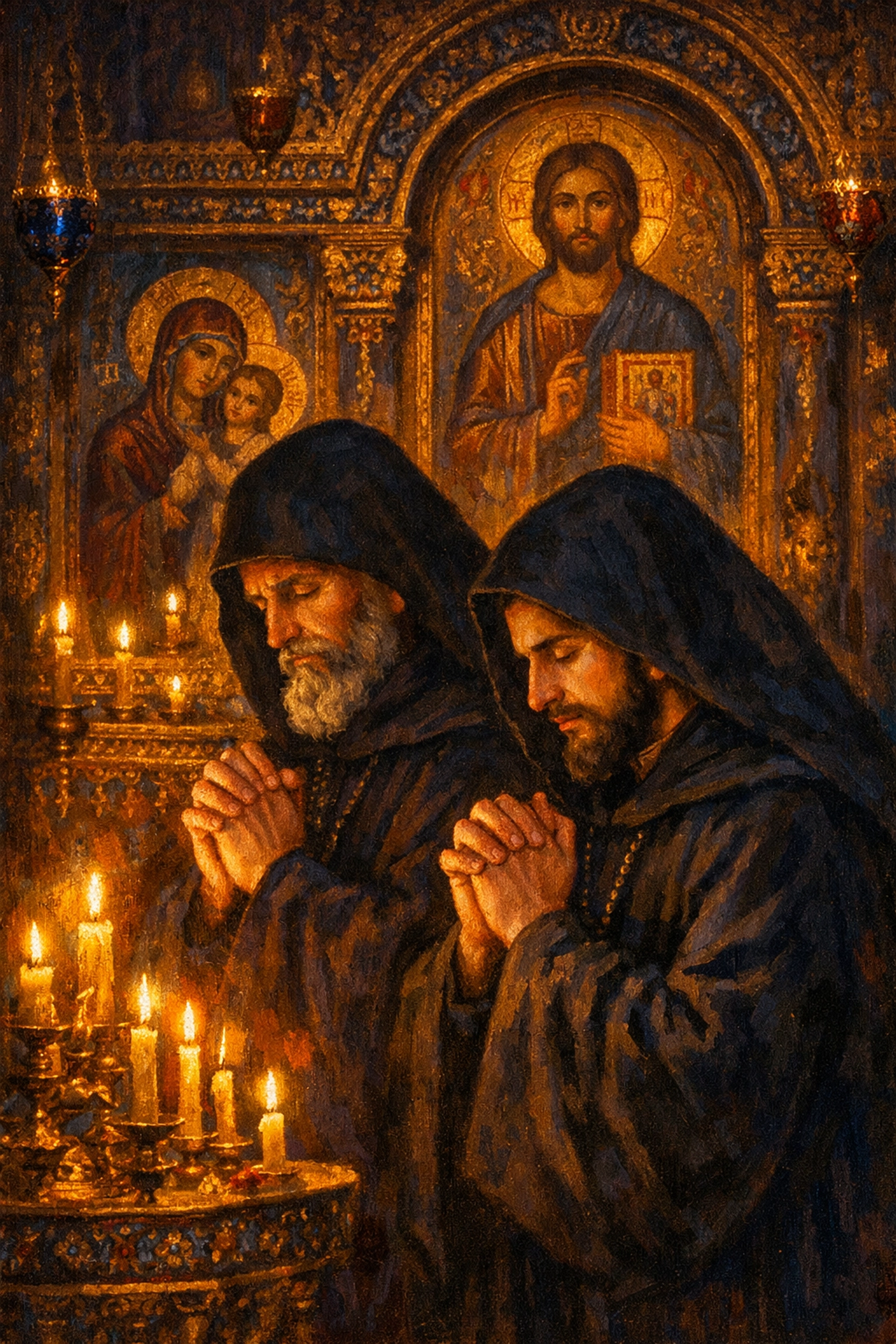
This wasn't some underground, scandalous practice. Adelphopoiesis was documented in Byzantine manuscripts, practiced widely in Southern Italy, and embraced among Slavic peoples. The Catholic Church continued the tradition until the 14th century, while the Eastern Orthodox Church kept it going into the early 20th century.
The ceremony had all the hallmarks of what we'd recognize today as a formal union: public declaration, religious blessing, ritual acts symbolizing unity, and community recognition. The prayers invoked sainted pairs known for their deep bonds, most notably Saints Sergius and Bacchus, two Roman soldiers whose relationship has been the subject of much historical debate (and more than a few gay romance novels, let's be honest).
The Monastic Connection
The roots of brother-making trace back to early Christian monasticism, around the 4th century. Claudia Rapp, a prominent Byzantine historian, points to a 7th-century account of two monks, Symeon and John, whose abbot blessed their life together with prayers emphasizing their spiritual union.
Now, here's where it gets interesting. Monastic life was built on the concept of spiritual kinship, chosen family, if you will. Monks took vows together, lived communally, shared their lives in intimate proximity. The bonds they formed were intense, emotionally charged, and explicitly celebrated as mirrors of divine love.
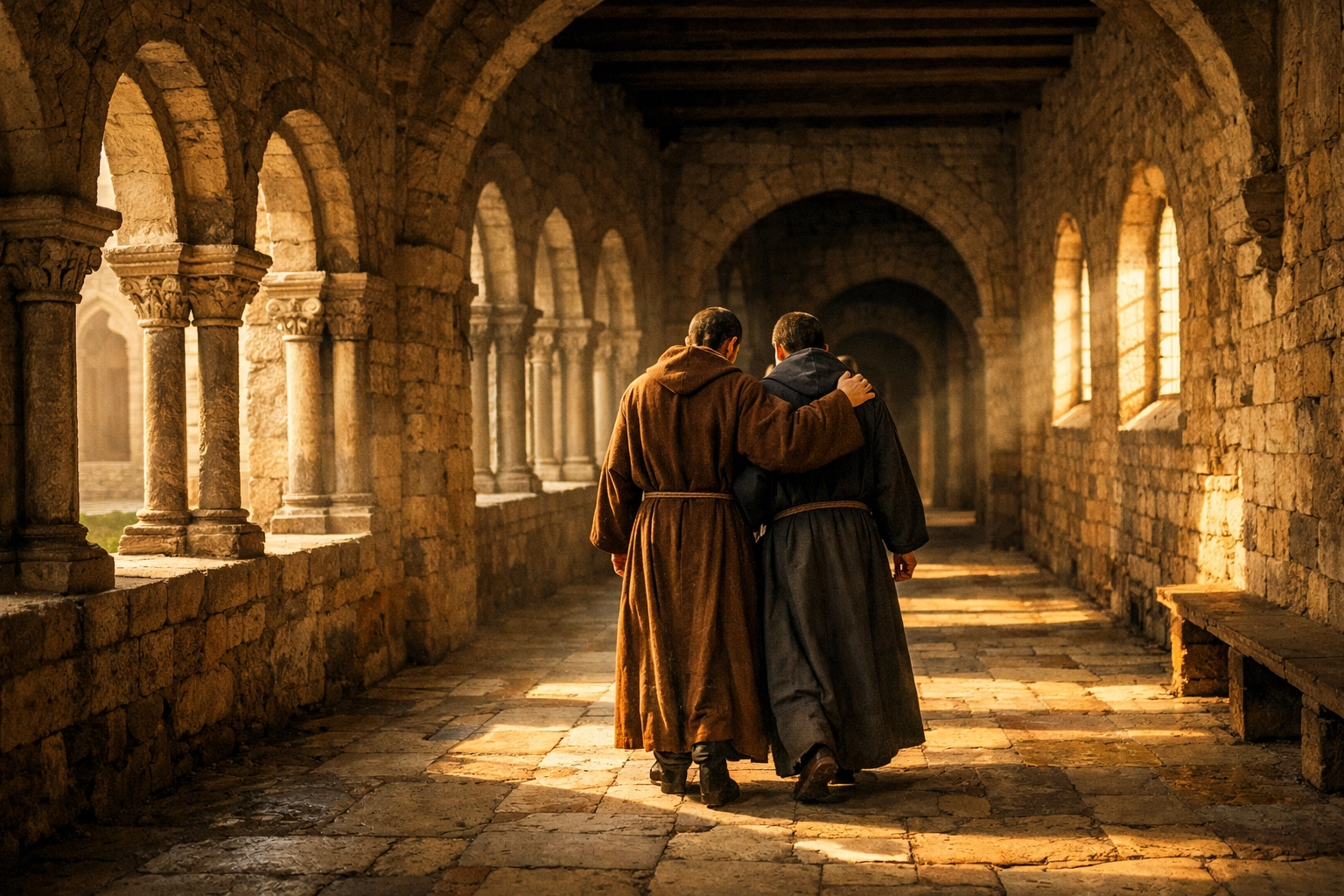
In this context, adelphopoiesis formalized what was already happening organically: deep, committed relationships between men who shared their entire lives. Whether these relationships included a physical or romantic dimension is where historians start arguing over their coffee and ancient manuscripts.
The Great Scholarly Showdown
Let's talk about the elephant in the sanctuary: Was adelphopoiesis a medieval same-sex marriage ceremony, or purely a spiritual friendship ritual?
The late historian John Boswell made waves (and enemies) with his 1994 book Same-Sex Unions in Premodern Europe, arguing that adelphopoiesis was essentially the Church's way of blessing same-sex partnerships. He pointed to the ceremony's striking similarities to heterosexual marriage rites, the invocation of saint pairs with suspiciously romantic overtones, and the fact that, let's be real, the Church doesn't usually go around blessing casual friendships with elaborate altar ceremonies.
Claudia Rapp and other scholars push back hard against this interpretation. They emphasize that adelphopoiesis created bonds of shared holiness and spiritual kinship within Christian tradition, not romantic or sexual partnerships. Rapp explicitly argues the ritual was not created to sanction homosexual relationships.
But here's what we know for sure: Recent scholarship acknowledges the practice remains "ambiguous." Some sources suggest it created peace among families, think strategic alliances sealed with divine blessing. Others propose it formalized chaste spiritual brotherhoods. And then there's the admission that makes everything more complicated: There's evidence the ceremony was "sometimes used illicitly to bind together men with erotic intentions."
Sometimes. Illicitly. With erotic intentions.
That's the historical equivalent of "well, technically…"
What the Ritual Actually Looked Like
Beyond the academic debate, the ceremony itself is fascinating. Adelphopoiesis involved several key components that created a recognized, sanctified bond:
The two participants stood before the altar: the most sacred space in the church. The priest offered formal blessings, prayers specifically asking God to watch over their union in faith and love. In many versions of the ceremony, the brothers received communion together using presanctified gifts, which is about as intimate as Christian ritual gets. The ceremony concluded with the fraternal kiss, exchanged between the brothers and with the priest, sealing their commitment before God and witnesses.
The prayers themselves referenced biblical and sainted pairs: Sergius and Bacchus (again), but also Philip and Bartholomew, and other apostolic partnerships. The liturgical texts framed the relationship in terms of love, devotion, and lifelong commitment: language that's hard to distinguish from marriage vows.
Why It Matters Today
For those of us reading gay romance, exploring LGBTQ+ fiction, or simply trying to find ourselves in history, adelphopoiesis offers something precious: evidence that same-sex bonds have always existed, and that they weren't always condemned by religious institutions. Whether you interpret these ceremonies as marriages, strategic alliances, or intense spiritual friendships, they represent a tradition where the Church formally recognized and blessed the unions of same-sex couples.
That's huge.
The existence of adelphopoiesis challenges the narrative that Christianity has always been uniformly hostile to queer relationships. It complicates the story. It shows that history is messier, queerer, and more interesting than we've been told. And it gives us something that many LGBTQ+ people have been denied: ancestors, precedents, and proof that we're not inventing something new: we're reclaiming something old.
The ritual's eventual disappearance tells its own story. As the Church became increasingly obsessed with sexual purity and rigid gender roles, practices like adelphopoiesis became suspect. What was once celebrated became dangerous. What was blessed became forbidden.
Sound familiar? It's the same pattern we see repeated throughout LGBTQ+ history: acceptance, backlash, erasure, rediscovery.
The Stories We Tell Ourselves
At Read with Pride, we're fascinated by stories like this: the hidden histories, the ambiguous documents, the relationships that refuse neat categorization. Whether you're into MM romance books that explore historical settings or gay fiction that imagines what these ceremonies might have really meant, adelphopoiesis gives us rich material to work with.
Because ultimately, the scholarly debate misses something crucial: the lived experiences of the people involved. What did these men feel standing at that altar? What promises did they make to each other, beyond what the liturgy required? What did their lives together look like after the ceremony?
Those stories are lost to time, but they live on in the gay romance novels and LGBTQ+ fiction we write and read today: stories where love finds a way, where commitments are honored, where two people create their own definitions of family and partnership despite what society dictates.
The Church may have forgotten its brother-making rituals, but we haven't forgotten the truth they represent: that love between men has always existed, and that it has always sought recognition, blessing, and celebration.
Maybe that's the real reason adelphopoiesis makes some historians so uncomfortable. It's not just about what happened a thousand years ago. It's about what it means today: that our love stories aren't aberrations. They're continuations.
Discover more LGBTQ+ history and compelling MM romance at readwithpride.com
Follow us for more queer stories and gay fiction:
📘 Facebook
🐦 X/Twitter
📸 Instagram
#ReadWithPride #MMRomance #GayRomance #LGBTQHistory #QueerHistory #GayFiction #MMBooks #LGBTQFiction #GayRomanceBooks #QueerFiction #HistoricalLGBTQ #GayLiterature #MMRomanceBooks #LGBTQBooks #GayHistoricalRomance #ChristianHistory #Adelphopoiesis #QueerChristianity #SameSexHistory #GayChurchHistory

Leave a Reply
You must be logged in to post a comment.