

readwithpride.com
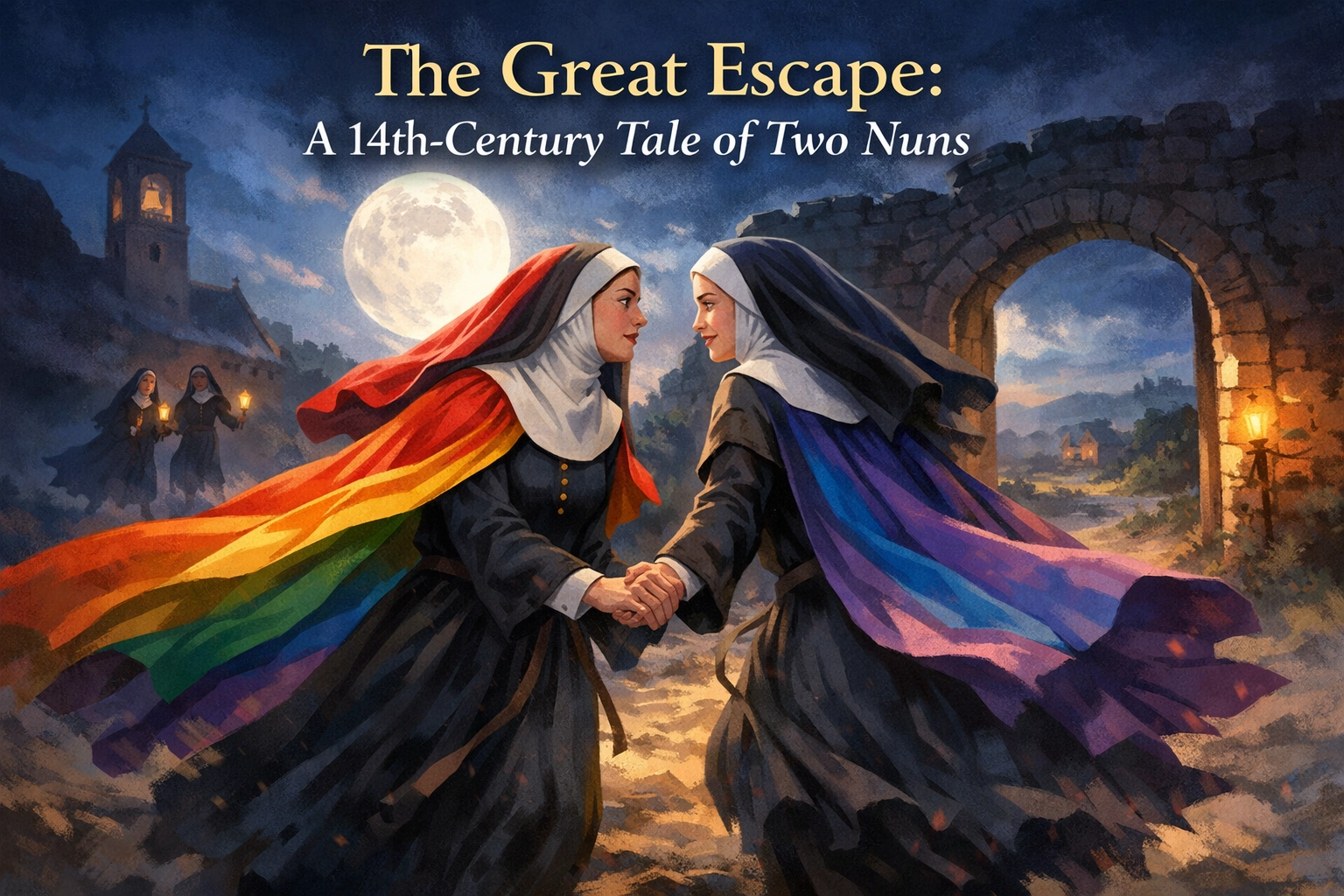
History loves a good escape story. Whether it's prisoners tunneling out of medieval dungeons or lovers fleeing disapproving families, there's something universally thrilling about breaking free. But what about when the escapees are two nuns, bound by vows of chastity and obedience, who decide that their devotion to each other matters more than the stone walls confining them?
Welcome to one of the most whispered-about legends from 14th-century Italy: a tale of two women who chose love over doctrine, freedom over fear, and each other over everything the Church told them they should be.
The Monastery Walls That Couldn't Hold Them
Picture a Tuscan monastery in the 1300s. Stone corridors echo with Latin prayers, incense clings to heavy wool habits, and young women spend their days in silence, their lives mapped out by bells that call them to prayer seven times daily. Many of these women didn't choose the convent: they were sent there by families who couldn't afford dowries or who needed to secure political alliances through other daughters' marriages.
But among these reluctant residents, legend tells us, two women found something the Church never intended: each other.
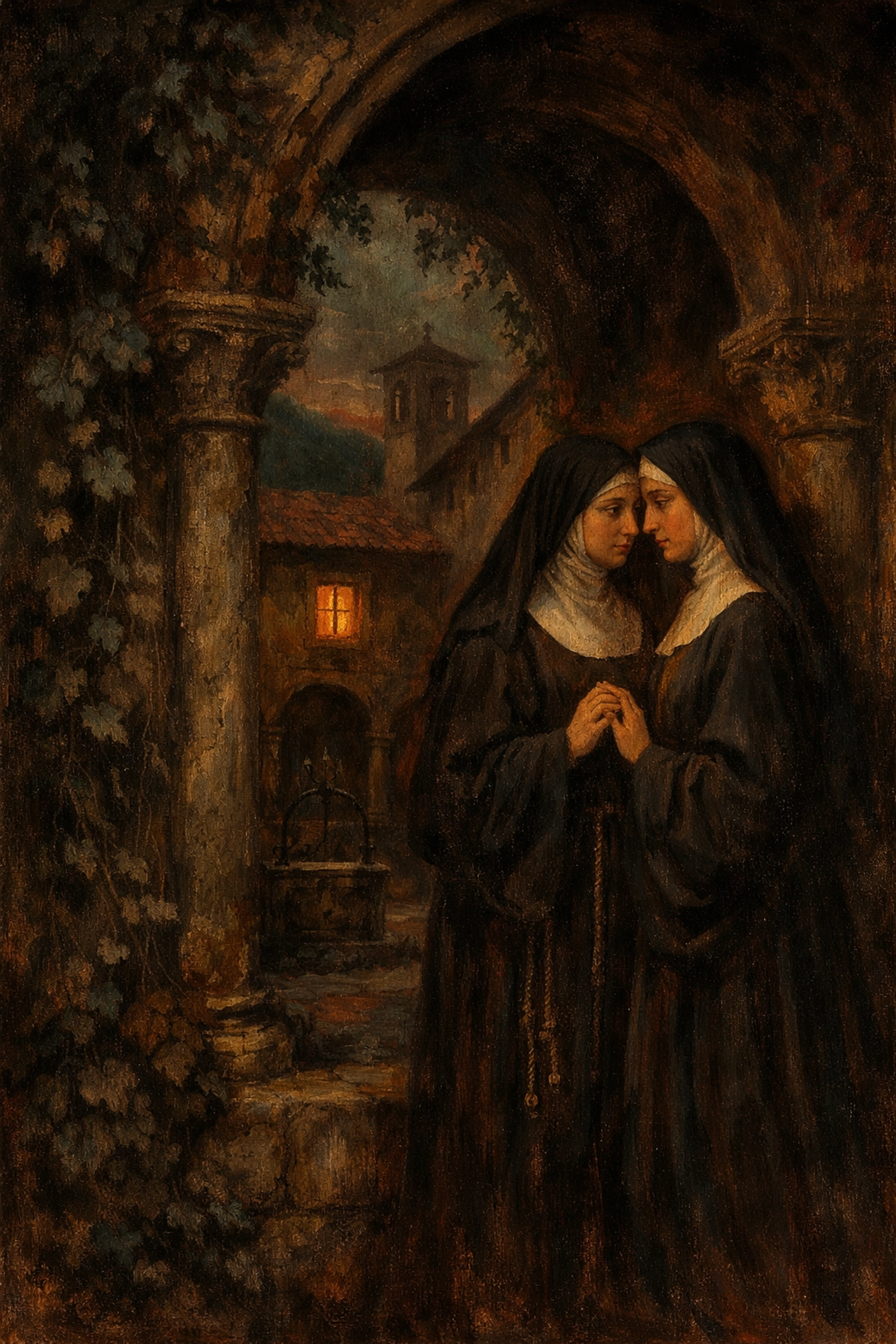
The details vary depending on which dusty manuscript or oral tradition you follow, but the core story remains consistent. Two nuns: let's call them Sister Caterina and Sister Margherita, though their real names are lost to time: developed a bond that went far beyond the "sisterly love" their Mother Superior would have approved of. They prayed together, worked together in the monastery gardens, and somewhere between the Matins and Vespers, they fell deeply, impossibly in love.
When Devotion Becomes Dangerous
In the rigid hierarchy of medieval religious life, any hint of "particular friendships" between nuns was considered scandalous. The Church feared that intimate bonds between women would distract from their spiritual duties or, worse, awaken desires that were supposed to be dead and buried beneath layers of piety and repression.
For Caterina and Margherita, keeping their love secret became a daily performance. Stolen glances during Compline. Hands touching briefly while washing communion vessels. Whispered conversations in the herb garden where the scent of rosemary might mask their intimacy from prying ears.
But secrets in convents were like water through stone: they found their way through eventually.
The Plan
What drives someone to risk eternal damnation for love? Whatever that force was, it burned bright enough in both women that they began planning their escape.
Historical records show us that runaway nuns weren't as rare as you might think. Take Joan of Leeds, a real 14th-century nun who faked her own death in 1318 to escape St. Clement's convent near York. She crafted a dummy in her likeness, staged an elaborate deathbed scene, and had her accomplices bury the fake body among the actual deceased nuns while she fled to Beverley, about 30 miles away, to live what the scandalized Archbishop William Melton called a "more racy lifestyle."

If one woman could pull off such an audacious escape, imagine what two determined lovers could accomplish together. According to the legend, Caterina and Margherita spent months preparing. They stockpiled bread from the refectory, stole peasant clothing from the monastery's charity stores, and waited for the perfect moment: a feast day when the monastery would be bustling with visiting priests and benefactors, when two figures slipping out into the twilight might go unnoticed.
The Flight to Freedom
The night they chose was supposedly during the Feast of San Giovanni, when bonfires lit up the Tuscan hills and the monastery gates stayed open later than usual to accommodate pilgrims. As bells rang out across the valley and the other sisters gathered for evening prayers, Caterina and Margherita simply walked out.
No dramatic rope ladders. No elaborate disguises. Just two women in borrowed cloaks, hearts pounding, putting one foot in front of the other until the monastery walls were swallowed by darkness behind them.
Where did they go? The legend offers several possibilities. Some say they found shelter in a small farming community where they posed as widowed sisters, tending a garden and living quietly. Others claim they joined a group of Beguines: semi-religious women who lived communally but outside formal Church structures, a medieval loophole that allowed women some independence.

The most romantic version suggests they found an abandoned hermitage in the mountains, where they lived out their days in their own version of religious devotion: one that honored their love for God and each other, without the suffocating rules of institutional religion.
What History Teaches Us (And What It Hides)
Here's the thing about queer history, especially when it involves women: the historical record is maddeningly sparse. While male clergy who engaged in same-sex relationships sometimes left behind letters, poetry, or court records, women's lives: especially cloistered women: were considered less worthy of documentation.
What we do know is that medieval convents were hotbeds of female intellectual and emotional life. Nuns wrote mystical poetry dripping with erotic language about their love for Christ: language that scholars have noted bears striking similarities to secular love poetry. They formed intense bonds with each other, sometimes explicitly romantic in nature, though these were often reframed by the Church as "spiritual friendships."
The legend of our two Italian nuns might not be verifiable in church archives, but it reflects a truth we're increasingly uncovering: LGBTQ+ people have always existed, even in the most unexpected places, and love has always found a way.
Why This Story Still Matters
Fast forward to 2026, and you might wonder why we're still talking about two nuns who may or may not have escaped a monastery seven centuries ago. Here's why it matters:
Every time we uncover a story: whether legendary or documented: of queer people choosing authenticity over conformity, we're reclaiming our history. For too long, LGBTQ+ narratives were erased, rewritten, or hidden in plain sight behind euphemisms like "devoted companions" or "romantic friendships."
Stories like Caterina and Margherita's remind us that the impulse to live authentically, to love who we love, isn't some modern invention. It's as old as humanity itself. Our ancestors were brave, resourceful, and willing to risk everything for the chance to be themselves: even when "themselves" meant heretics in the eyes of the Church.
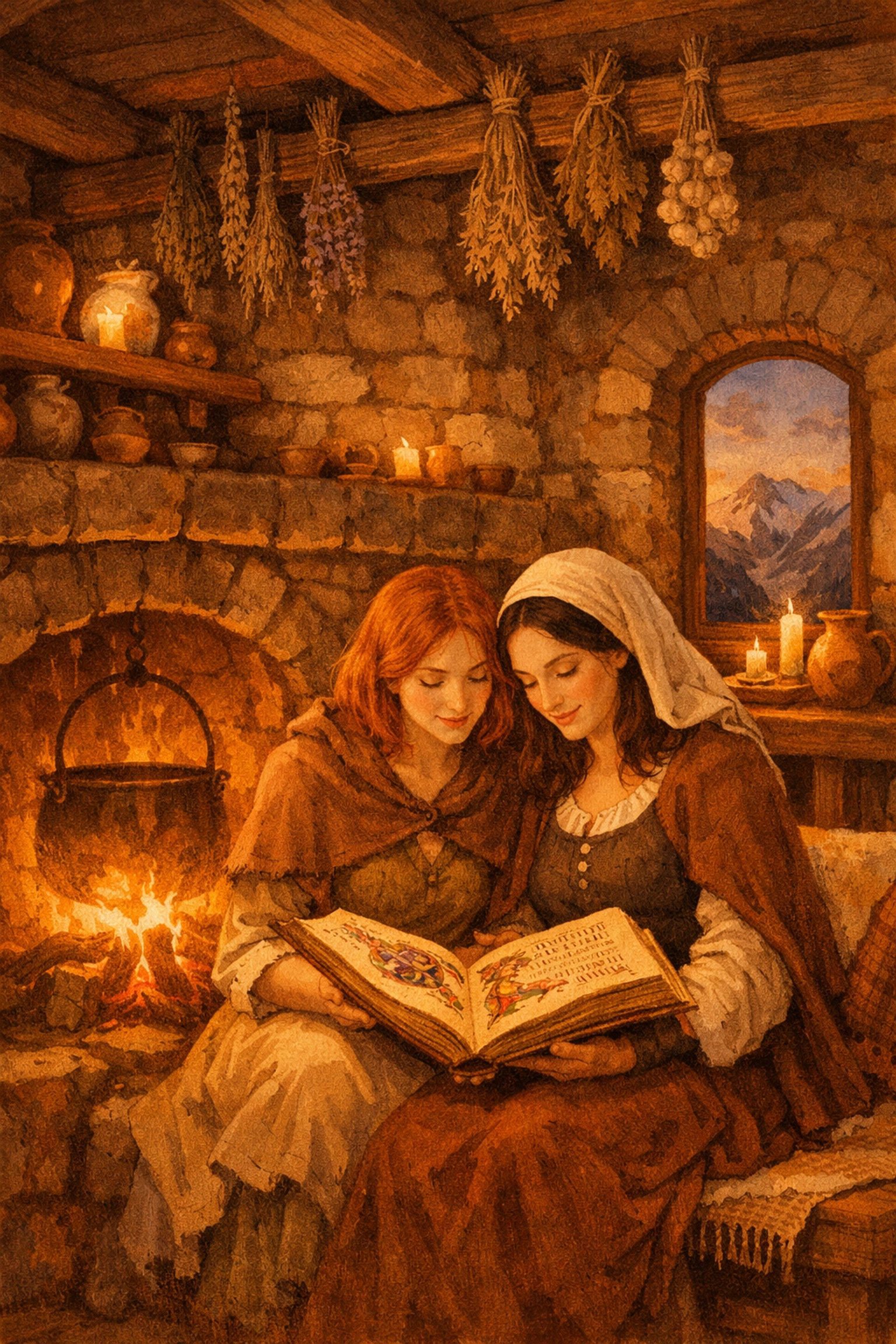
This tale also speaks to something deeply resonant in queer culture: the chosen family. These two women, if the legend holds true, chose each other over biological families, over the Church that raised them, over the eternal salvation they'd been promised since childhood. They built their own version of devotion, their own sacred space, their own rules.
The Legacy of the Great Escape
Whether our two nuns really existed or are a composite of many such stories, their legend has inspired LGBTQ+ writers, historians, and artists for generations. You can find echoes of their story in contemporary MM romance books that feature clergy characters, in queer historical fiction that imagines what medieval queer life might have looked like, and in the ongoing conversation about religion and LGBTQ+ identity.
If you're drawn to stories of forbidden love, historical courage, and women who refuse to be confined by the expectations of their era, there's a whole world of LGBTQ+ fiction waiting for you. From gay historical romance to contemporary tales of coming out and coming home, queer literature keeps these legacies alive and thriving.
Finding Your Own Escape Route
The beautiful thing about reading queer history: real or legendary: is that it gives us permission to imagine our own great escapes. Maybe you're not fleeing a medieval monastery, but perhaps you're navigating a conservative workplace, a religious family, or an inner landscape that tells you who you're "supposed" to be.
Caterina and Margherita's story, whether factual or folklore, whispers across the centuries: You are not alone. Others have walked this path. Love is worth the risk.
And if you're looking for more stories that celebrate queer love, resilience, and the courage to live authentically, Read with Pride offers a treasure trove of gay romance novels, queer fiction, and MM romance books that honor our past while celebrating our present.
Want more LGBTQ+ history, book recommendations, and community stories?
Follow us:
- Instagram: @read.withpride
- Facebook: Read With Pride
- Twitter/X: @Read_With_Pride
- Website: readwithpride.com
#ReadWithPride #LGBTQHistory #QueerHistory #MedievalQueerStory #WLWHistory #NunHistory #LGBTQBooks #QueerFiction #HistoricalLGBTQ #GayRomance #MMRomance #QueerLove #LGBTQCommunity #AuthenticLove #ForbiddenLove #14thCentury #QueerMedievalHistory #LGBTQLiterature #PrideReading #LoveWins

Leave a Reply
You must be logged in to post a comment.