

readwithpride.com
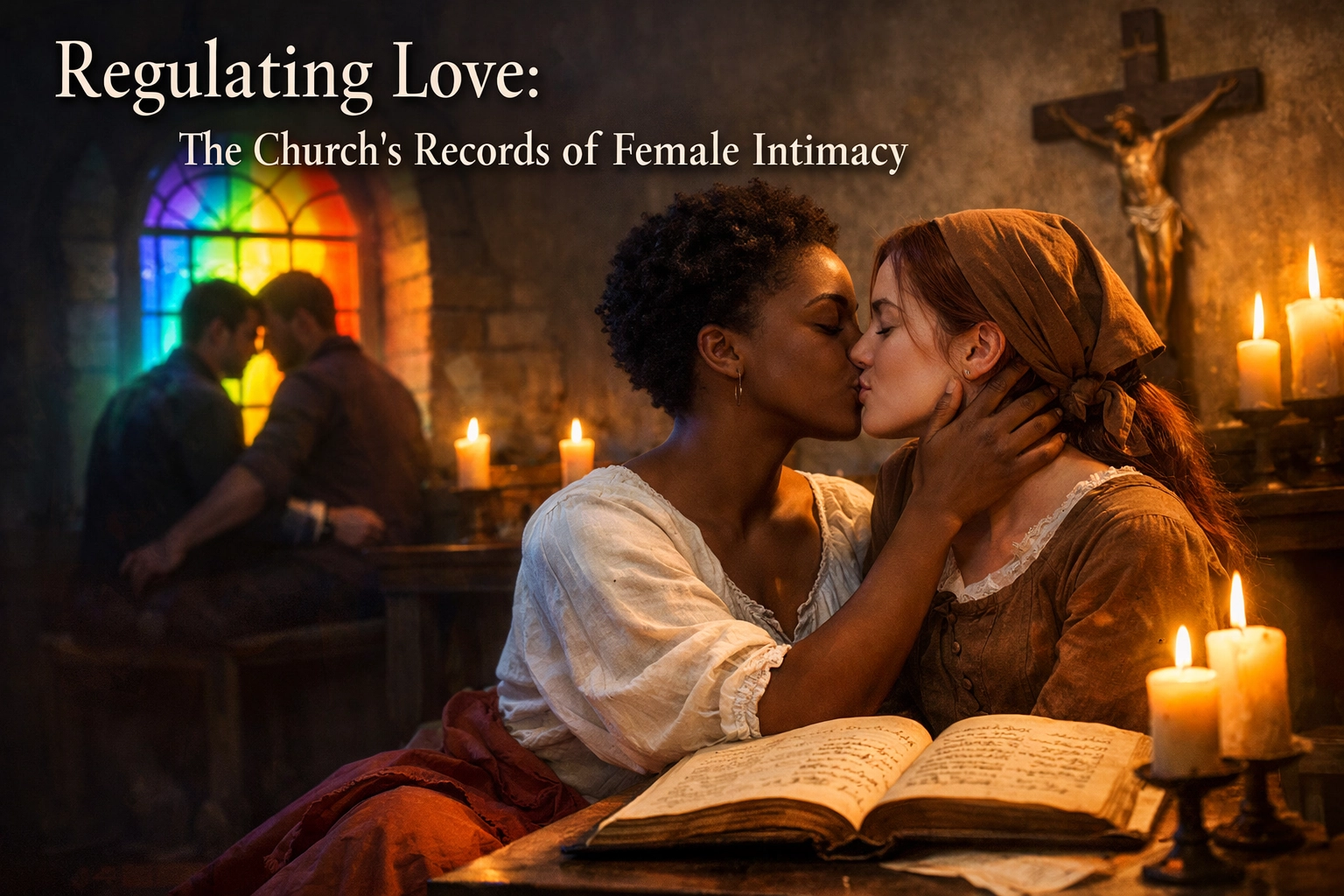
The Church has always had a thing about controlling who loves whom, how, and when. But while most people know about the persecution of gay men throughout history, there's a lesser-known story hiding in dusty ecclesiastical archives: the Church's obsessive documentation of women's intimate relationships, especially within religious communities.
For centuries, Church authorities didn't just condemn female intimacy, they meticulously recorded it, investigated it, and created entire bureaucratic systems to regulate it. These records, preserved in church courts, meeting minutes, and institutional documents, tell us something the Church never intended: that love between women has always existed, even within the walls of convents and monasteries.
The Surveillance State in Holy Robes
Imagine living in a world where your neighbors were encouraged, no, expected: to report your intimate life to religious authorities. That was reality for women in religious communities and beyond from the medieval period through the 19th century.
The Church created formal surveillance systems that would make modern governments jealous. In 16th-century ecclesiastical courts, "suspect" relationships between nuns were documented with the same bureaucratic precision used for financial transactions. Every whispered confession, every witnessed embrace, every shared bed was potential evidence.
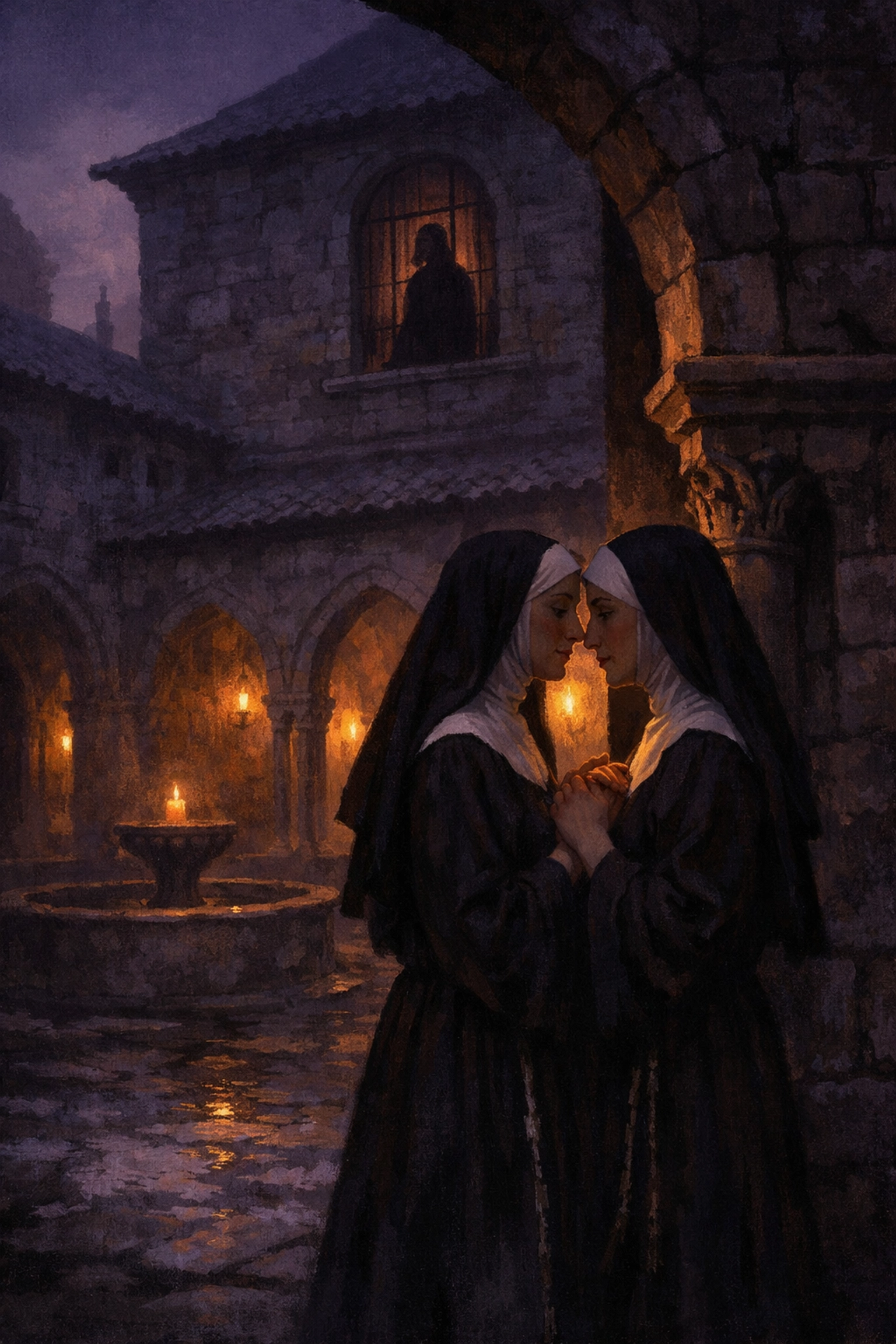
In 18th and 19th century Presbyterian communities, Kirk Sessions (local church courts) became the primary mechanism for disciplining anyone who stepped outside sexual norms. Sexual misconduct sent more people to these courts than drunkenness, skipping services, or any other violation. Neighbors were expected to report what they saw: or thought they saw: to church authorities.
The documentation was extensive. Church scribes recorded who slept where, who spent too much time together, who showed "particular friendships" that seemed too intense for the Church's comfort. These weren't casual notes scribbled in margins. They were official records, filed and preserved, forming an accidental archive of female intimacy across centuries.
The Rules Were Ridiculous (and Revealing)
To understand how the Church regulated female intimacy, you first need to understand how absurdly controlling they were about all sexuality. In medieval times, married heterosexual couples: the only "acceptable" sexual relationship according to the Church: could legally have sex less than once a week.
No sex on Sundays, Thursdays, Fridays, religious feast days, fast days, during menstruation, while breastfeeding, or for forty days after childbirth. The Church micromanaged heterosexual married bedrooms with mathematical precision.
So imagine how they felt about women loving women in convents.
For the Church, only male-female procreative sex was acceptable. Everything else was documented, investigated, and punished. But here's the thing: the very existence of these elaborate regulatory systems proves that women were finding love and intimacy with each other, regardless of what the Church wanted.

Women as Witnesses and Subjects
The irony of Church surveillance is that women themselves often played dual roles: both as subjects of investigation and as witnesses providing testimony.
Young female servants in religious households were crucial sources of information. Their domestic proximity meant they saw and heard things that male authorities couldn't access. Church courts relied on their testimony about who visited whom at night, who shared beds (a common practice explained away as "warmth" or "economy" but heavily scrutinized when it involved particular pairs), and who showed affection that seemed to cross invisible boundaries.
Quaker Women's Meetings created their own documentation systems, recording investigative processes into relationships with detail that would shock modern privacy advocates. These records included intimate details about emotional tensions, family consent issues, and the nature of bonds between women.
The documentation was supposedly about maintaining religious discipline. But read between the lines, and you'll find evidence of love stories, resistance, and women creating intimate lives despite: or perhaps in defiance of: Church control.
The Paper Trail of "Particular Friendships"
Religious institutions developed specific vocabulary for relationships that made them uncomfortable. "Particular friendships" was a favorite euphemism: used to describe bonds between nuns that seemed too close, too exclusive, too emotionally intense.
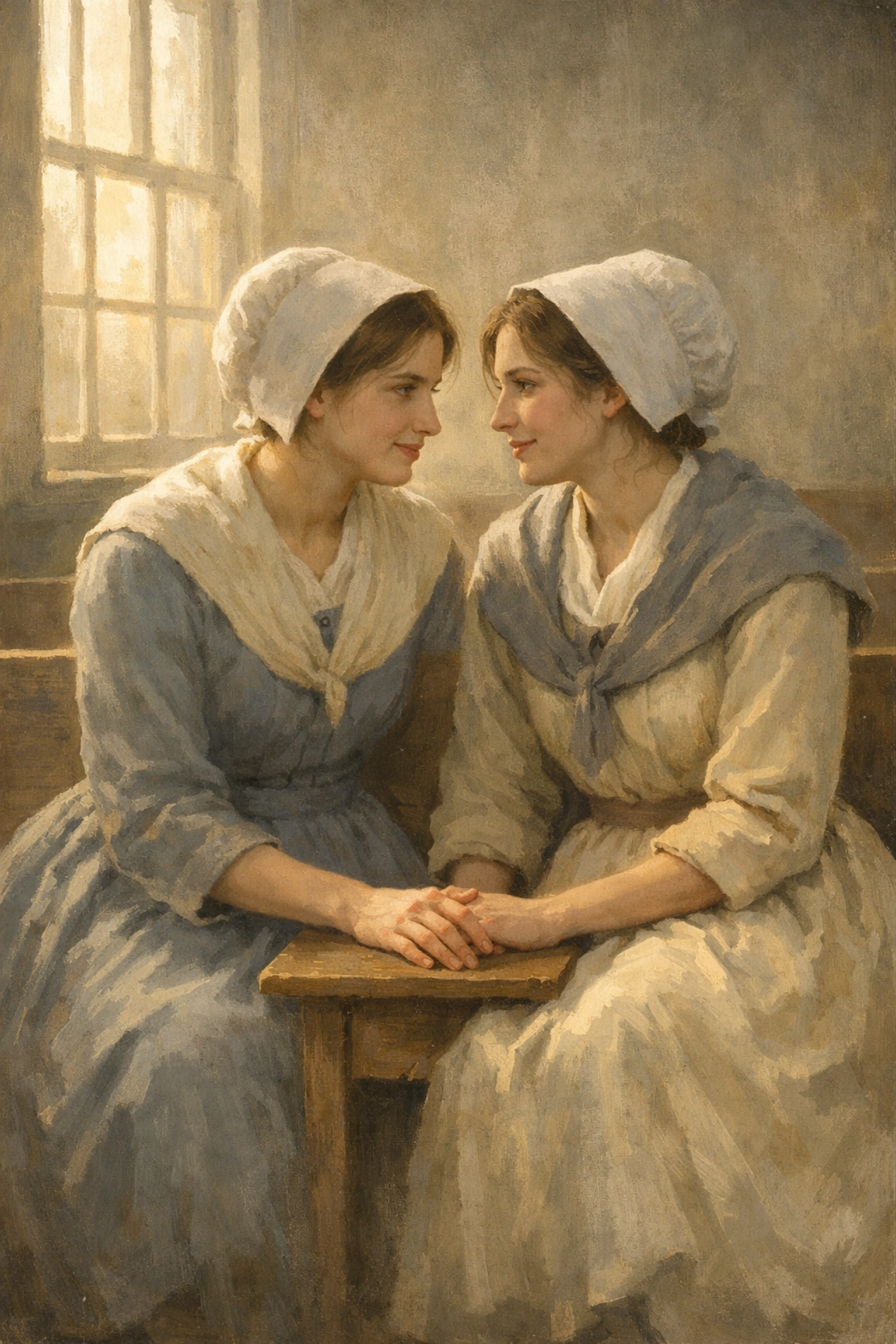
Ecclesiastical records from the 16th century onward document investigations into these friendships with forensic detail. Authorities questioned whether two nuns spent too much time together in private. Whether their correspondence was too frequent or too affectionate. Whether they showed preference for each other's company over communal activities.
The Church required proof of proper behavior. In some cases, they even documented "evidence of consummation" in marriages: records stating that couples had engaged in "carnal copulation": as proof of marriage validity. This obsession with documenting private intimacy extended to monitoring women in religious life, where any hint of physical or emotional intimacy between women triggered investigations.
These records were meant to be evidence of sin. But for modern LGBTQ+ historians, they're evidence of something else entirely: that women have always loved women, even when the world told them not to.
What the Records Really Tell Us
Here's what the Church never intended: their meticulous documentation of "suspect" female intimacy became an accidental archive of queer women's history.
Every investigation they launched, every relationship they condemned, every "particular friendship" they tried to suppress is now evidence that female intimacy existed throughout history, even in the most controlled religious environments.
The records show women finding ways to love each other despite surveillance. They show communities of women creating intimate bonds that authorities couldn't quite define but definitely feared. They show resistance, resilience, and the simple truth that love finds a way, even through stone convent walls and ecclesiastical bureaucracy.

The Legacy Lives On
The Church's attempts to regulate and document female intimacy in religious houses failed spectacularly at their intended purpose. They couldn't stop women from loving each other. They couldn't prevent intimacy through surveillance. They couldn't bureaucratize love out of existence.
What they did do was create a paper trail that tells us something far more important: queer women's history is deeper, richer, and more resilient than official narratives admit.
These ecclesiastical records: meant to condemn and control: now serve as evidence of our community's long existence. Every documented "suspect friendship," every investigated intimacy, every attempted regulation is proof that we've always been here.
The Church tried to write us out of history through condemnation. Instead, their obsessive documentation wrote us into history, one ecclesiastical record at a time.
At Read with Pride, we believe in uncovering these hidden stories. Whether it's MM romance books that celebrate queer love today or historical records that prove our community's ancient roots, every story matters. Our ancestors loved against impossible odds: and their stories deserve to be read with pride.
Follow us for more hidden LGBTQ+ history:
- Facebook: Read With Pride
- Instagram: @read.withpride
- X/Twitter: @Read_With_Pride
- Website: readwithpride.com
#LGBTQHistory #QueerHistory #WomenLovingWomen #ConventSecrets #ReadWithPride #LGBTQBooks #QueerFiction #HiddenHistory #SapphicHistory #ChurchSecrets #FemaleFriendships #ReligiousHistory #QueerArchives #LGBTQLiterature #MMRomance #GayRomanceBooks #LGBTQReading #QueerCommunity #HistoricalLGBTQ #PrideReading

Leave a Reply
You must be logged in to post a comment.