

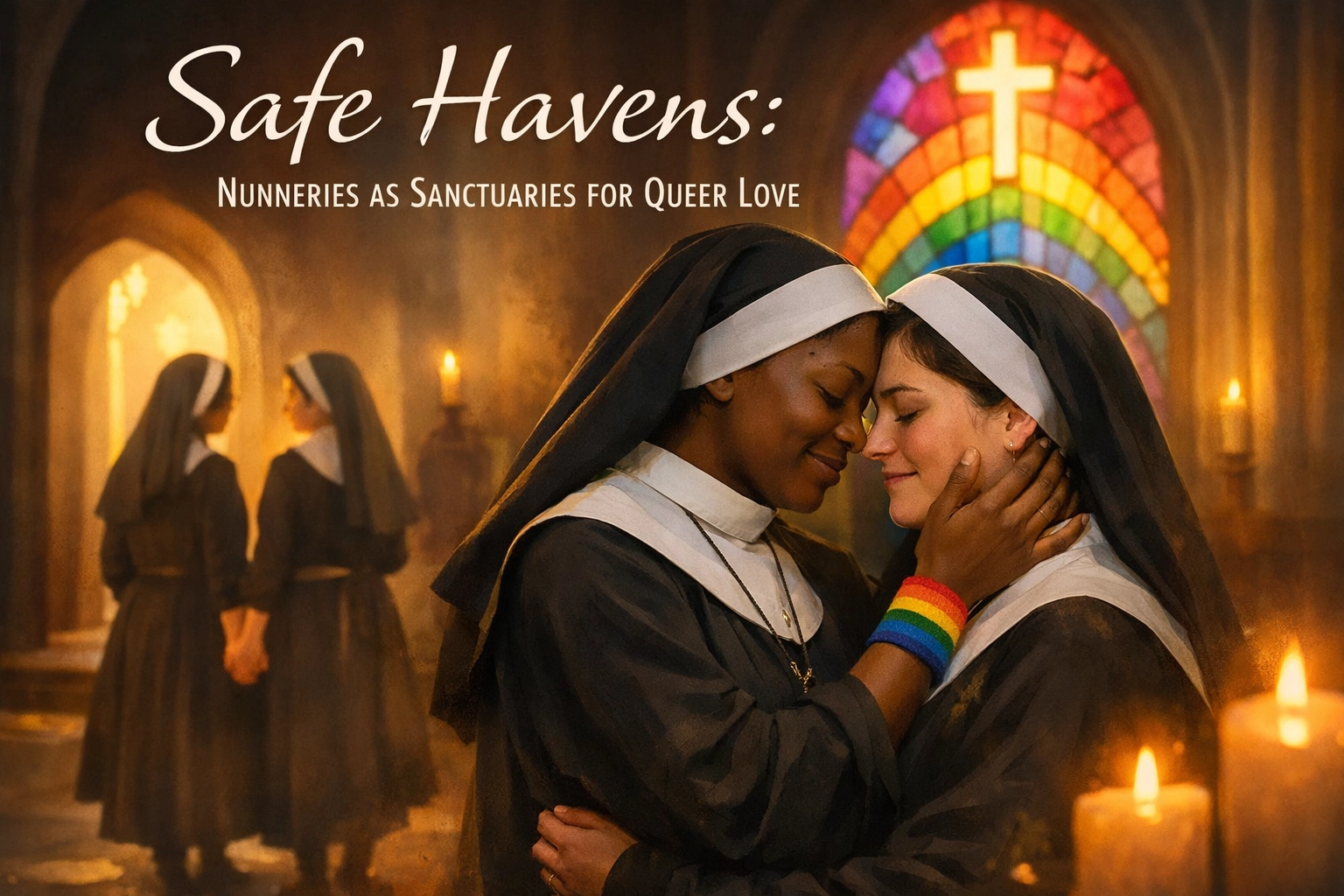
readwithpride.com
Let's talk about something that doesn't get nearly enough attention in LGBTQ+ history: the nunnery. Yeah, you heard that right. Behind those ancient stone walls and beneath those modest habits, countless queer women found something radical, freedom.
For centuries, when society demanded that every woman must marry a man, bear his children, and submit to his authority, the convent offered a revolutionary alternative. It was a loophole in the patriarchal system, a backdoor to autonomy, and for many queer women, it was quite literally a lifesaver.
The Ultimate Escape Route
Picture this: You're a noblewoman in medieval Europe. You're expected to marry some lord your father picked out, produce heirs, and spend your life managing a household. But what if you had zero interest in men? What if the thought of heterosexual marriage felt like a prison sentence?
Enter the nunnery, a perfectly respectable way to opt out of the whole marriage-and-motherhood game. Released from the threat of compulsory heterosexual marriage and living in an all-female community, a nunnery must have seemed like paradise to queer noble women. You could dedicate your life to God (conveniently avoiding questions about why you never wanted a husband), live communally with other women, and actually have some control over your own existence.
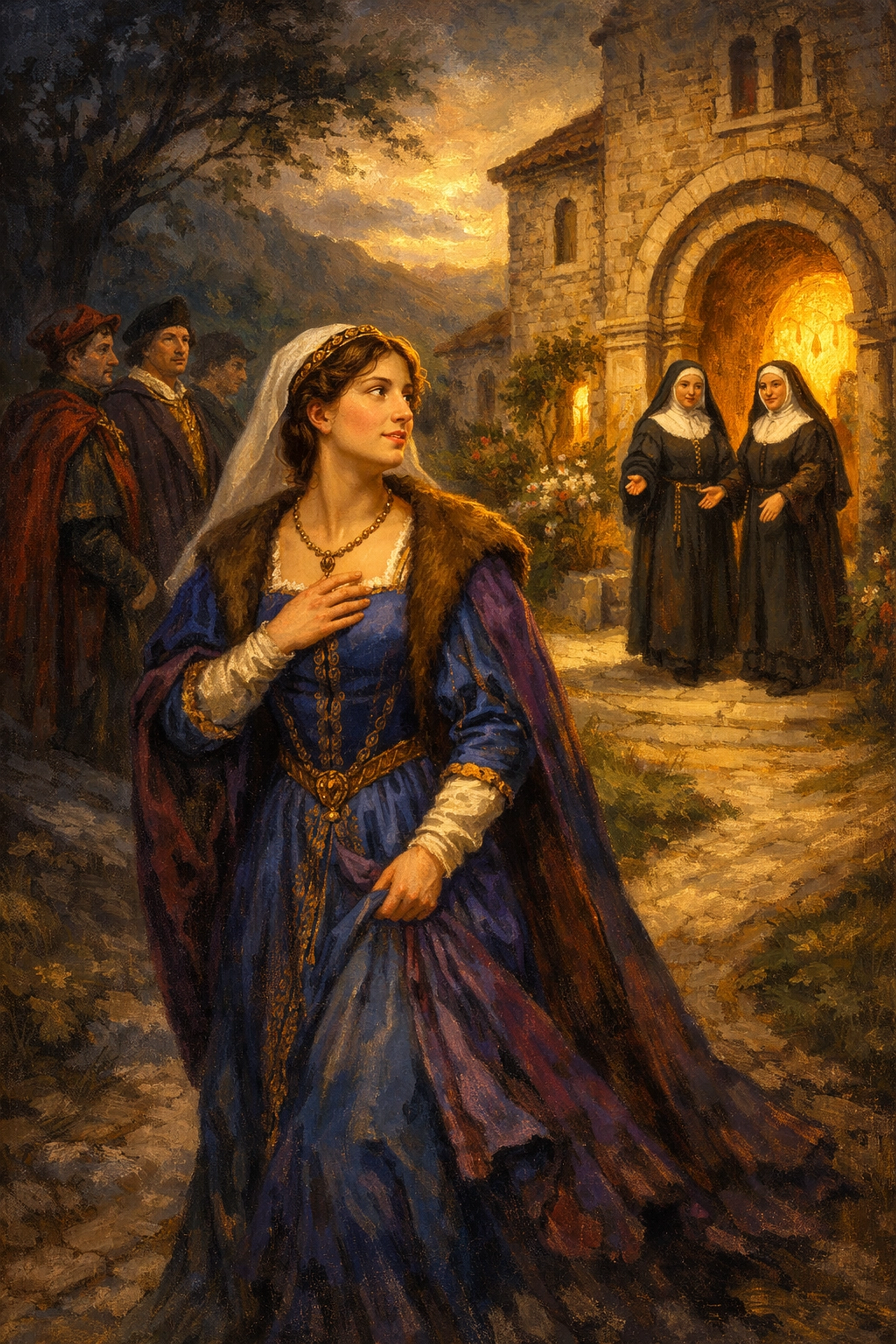
The beauty of it? Society actually respected this choice. Being a bride of Christ was considered noble, even admirable. Your family got social prestige, you got freedom, and everyone was happy. Well, except maybe the guy who didn't get to marry you, but honestly, he wasn't going to make you happy anyway.
Romantic Friendships Behind Closed Doors
Here's where it gets really interesting. Once you had communities of women living together, sharing dormitories, working side by side, and spending their entire lives in each other's company, relationships naturally developed. And not just casual friendships, we're talking deep, passionate bonds that historical records delicately called "romantic friendships."
Evidence of same-sex relationships among nuns dates back to at least the 11th century, though let's be real, they probably existed long before anyone bothered to write them down. Letters between nuns often express feelings so intense they'd make modern romance novels blush. They wrote about longing, devotion, physical affection, and emotional intimacy that went way beyond what we'd call "just friends."
Medieval and Renaissance nuns shared beds, exchanged love tokens, and formed exclusive partnerships that lasted decades. They created their own little worlds where women could love women openly, even if they had to frame it in religious language. "Sisterly love" became code for something much deeper.
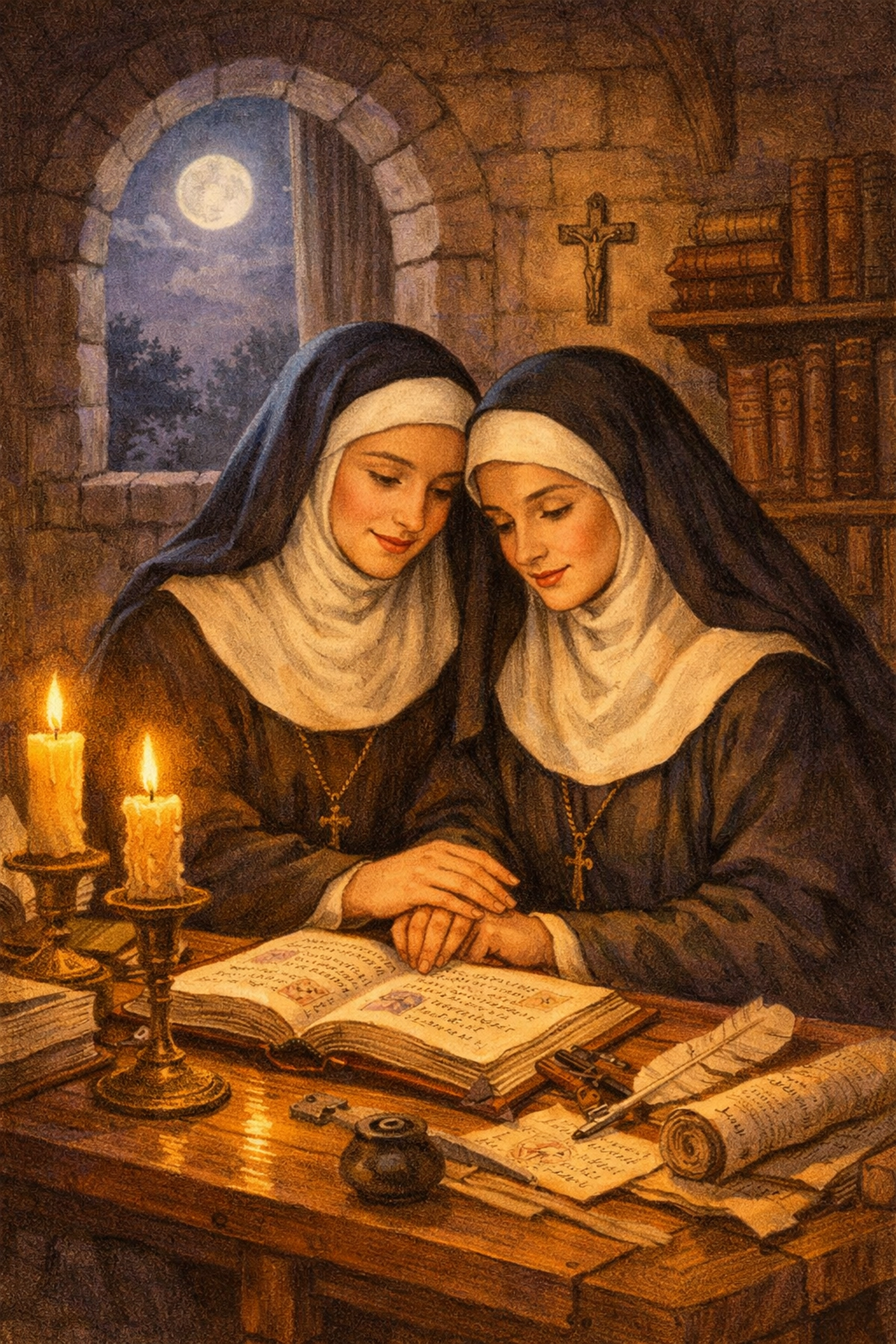
The church authorities? They mostly looked the other way. As long as nuns performed their religious duties and maintained the convent's reputation, what happened in the private spaces between women was considered less threatening than if these same women were out in society, potentially disrupting male authority or refusing marriage proposals.
Not Just Medieval History
Fast forward to the 20th and 21st centuries, and nuns are still creating sanctuaries for LGBTQ+ people, but now they're doing it loudly and proudly. This is where the story gets genuinely moving.
In 1974, yes, 1974, when most institutions were still treating queer people like we had a contagious disease, the National Coalition of American Nuns publicly called for civil rights for gay and lesbian people. They were the first Catholic organization to openly support LGBTQ+ rights. Let that sink in. While the Vatican was preaching condemnation, American nuns said, "Nope, we're going with love instead."
From the 1970s onward, women religious like Sister Jeannine conducted formal LGBT ministry despite Vatican investigations and pressure from bishops and cardinals. These weren't quiet, behind-the-scenes efforts. These nuns were actively creating safe spaces, offering counseling, and most importantly, delivering a message that contradicted official church doctrine: "God loves you for who you are."
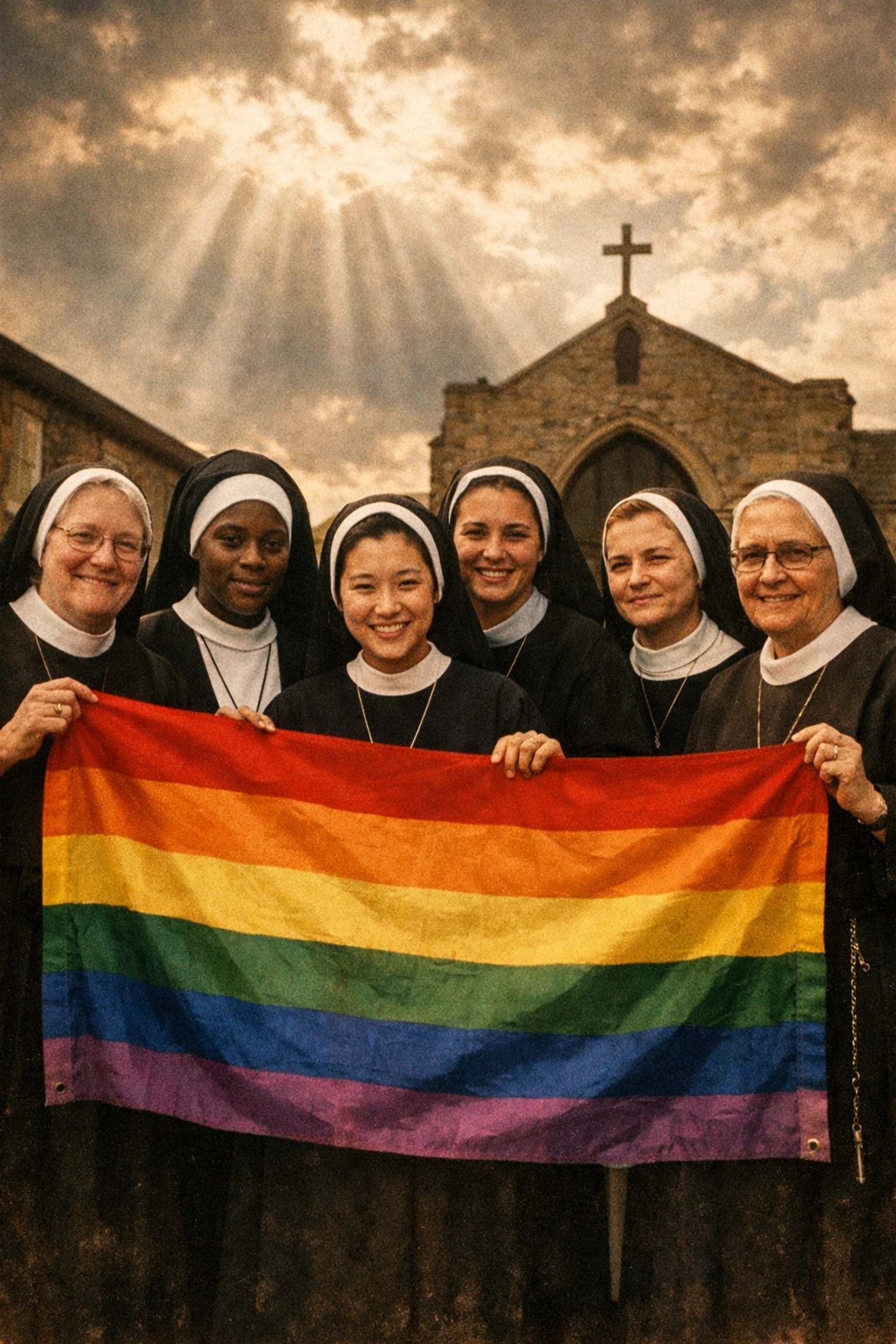
Modern Sanctuary Work
The scope of nuns' sanctuary work expanded massively over the following decades. Since the late 1990s, sisters from congregations like the Racine Dominicans, Dominican Sisters of Peace, and Sisters of St. Joseph of Carondelet have ministered specifically to transgender people, offering what they call "presence and accompaniment" while welcoming trans folks into their communities.
Think about what that means. While politicians debated bathroom bills and churches argued about pronouns, nuns were simply opening their doors and saying, "You're welcome here. You're safe here. You belong here."
Sisters opened retreat centers and motherhouses for LGBTQ+ programs. They provided public support for transgender employees at Catholic institutions who faced discrimination. They organized prayer vigils after violence against LGBTQ+ people, showing up physically and spiritually when the community needed them most.
What drives this work? It's not blind obedience to church doctrine: it's something more fundamental. These women religious develop their ministries "based on whom they encounter, and with whom they enter into dialogue." They prioritize relationship over restrictive tradition. They choose people over policies.
The Radical Act of Choosing Love
Here's what makes this whole history so powerful: For two millennia, when almost every other institution told queer people we were wrong, sinful, or broken, nuns: women who supposedly embodied religious orthodoxy: said, "Actually, no."
They created spaces where queer women could live authentically. They built communities based on female autonomy and mutual support. They preserved stories of same-sex love in their letters and diaries. And in modern times, they've actively fought for LGBTQ+ rights while facing serious consequences from their own church hierarchy.

These weren't random acts of kindness. This was a centuries-long tradition of resistance. Nunneries functioned as a parallel society where different rules applied, where women had authority, and where love between women wasn't just tolerated but could actually flourish.
Why This Matters Today
This history matters because it reminds us that LGBTQ+ people have always found ways to survive and thrive, even in the most restrictive societies. It matters because it shows that religious institutions aren't monoliths: within them, there have always been people working for justice and inclusion.
And it matters because the next time someone tries to claim that LGBTQ+ identities are "modern inventions" or that religious life is inherently opposed to queer existence, you can point to two thousand years of nuns who lived differently.
The stories preserved in convent archives, the modern ministries run by women religious, the sanctuary spaces that nuns continue to create: these aren't footnotes in LGBTQ+ history. They're central chapters in a much longer story about finding freedom, building community, and choosing love over fear.
So here's to the nuns, past and present, who built havens for queer love behind convent walls. Who wrote passionate letters to their "dear companions." Who told LGBTQ+ youth that God loves them exactly as they are. Who created spaces where being different wasn't just accepted: it was sacred.
At Read with Pride, we believe in celebrating all the ways queer people have found sanctuary throughout history. These stories of nuns and nunneries remind us that safe havens have always existed, even in the most unexpected places. And that's pretty damn beautiful.
#LGBTQHistory #QueerHistory #ReadWithPride #MMRomance #QueerFiction #HistoricalLGBTQ #SapphicHistory #NunsSupportingLGBTQ #QueerSanctuaries #LGBTQBooks #GayRomanceBooks #LesbianHistory #QueerCommunity #ReligiousHistory #WomensHistory
Follow us on Instagram, Facebook, and X/Twitter for more LGBTQ+ history, book recommendations, and stories that celebrate our community.
Discover more queer stories and MM romance books at readwithpride.com 🌈

Leave a Reply
You must be logged in to post a comment.