

readwithpride.com
When we talk about grand gestures in gay romance novels, we think of dramatic declarations, stolen kisses in the rain, maybe a cross-country dash to the airport. But Emperor Hadrian? This man literally founded a city, created a god, and established a religion for his deceased lover. Try topping that in your next MM romance book.
The love story between Roman Emperor Hadrian and the beautiful Greek youth Antinous remains one of the most documented and most profound same-sex relationships in ancient history. But it's what happened after Antinous's death that truly set this relationship apart: and scandalized Rome for centuries.
A Love That Ruled an Empire
Around 123 CE, during one of his many tours through the provinces, Emperor Hadrian encountered a young man from Bithynia named Antinous. The exact details of their meeting have been lost to time (no dating apps back then to preserve the receipts), but what we do know is that their connection was immediate and intense.
Their relationship officially began around 127 CE, when Antinous would have been in his late teens. This wasn't unusual for Roman society: powerful men often had younger male lovers, and nobody batted an eye. What was unusual was the depth of Hadrian's attachment. This wasn't just a fling or a casual arrangement. Hadrian brought Antinous everywhere, integrated him into court life, and made no secret of their bond.
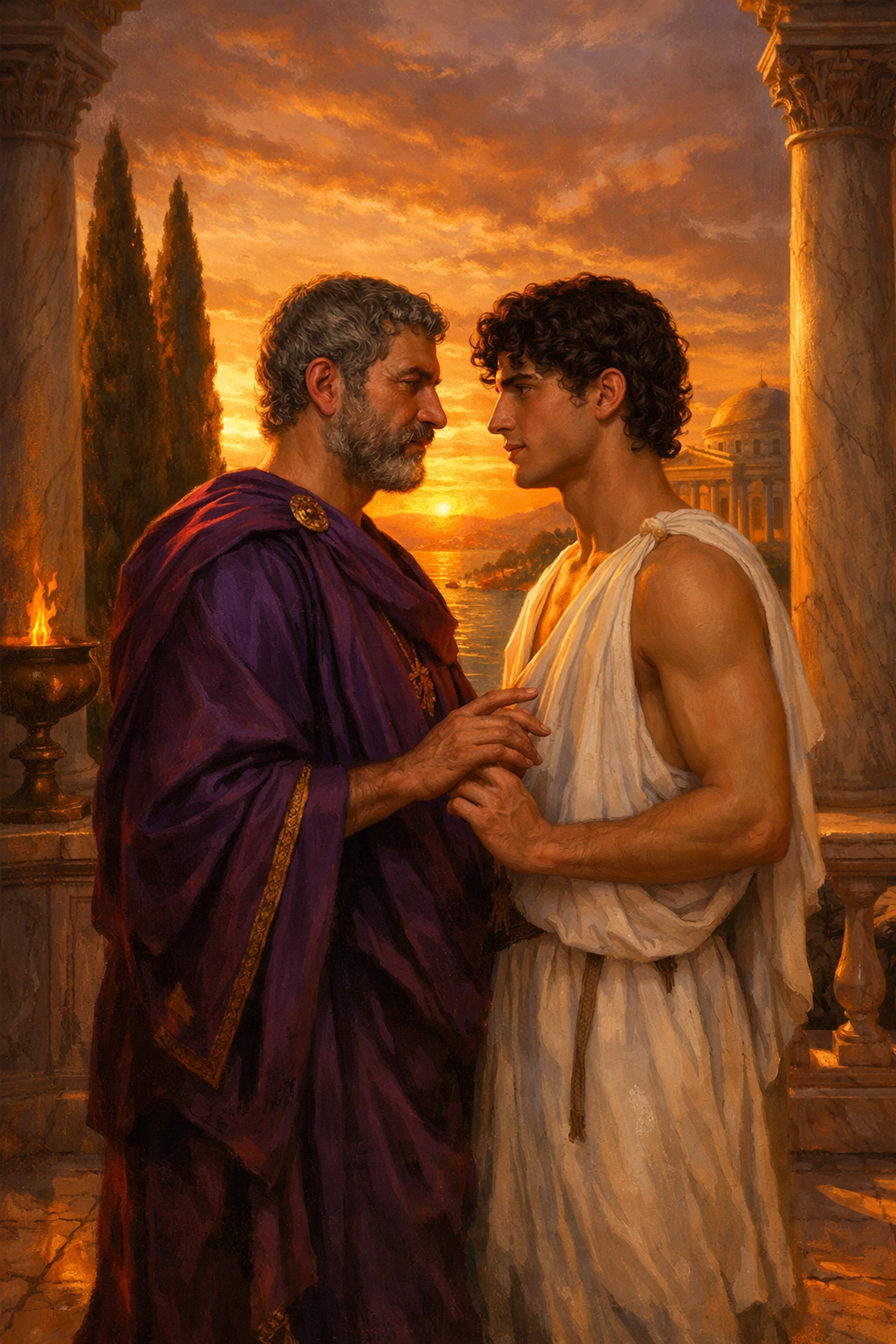
For roughly three years, they were inseparable. Hadrian continued his extensive travels throughout the empire, and Antinous accompanied him as both companion and lover. Think of them as the ancient world's ultimate power couple, touring the Mediterranean with an entourage that would make modern celebrities jealous.
The Nile Takes What It Will
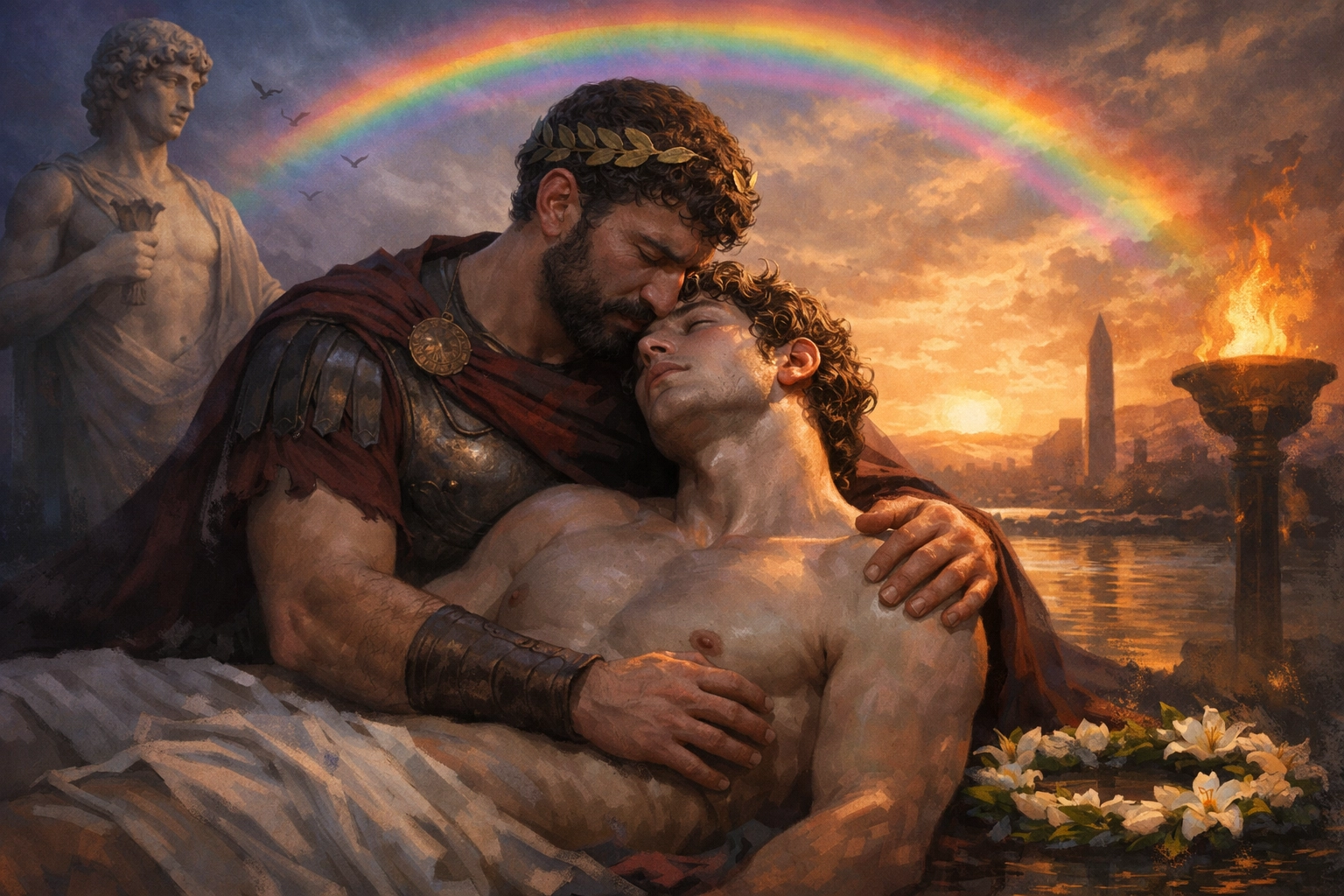
In October 130 CE, tragedy struck during their travels through Egypt. Antinous drowned in the Nile River under circumstances that remain frustratingly mysterious to this day. Was it an accident? Some historians suggest he may have fallen during the Osiris festival celebrations. Was it suicide, perhaps a sacrifice to extend Hadrian's life, as some whispered? Was it something more sinister?
We'll never know for certain. What we do know is that Hadrian's world shattered.
The Roman elite expected emperors to maintain stoic composure, to show restraint even in grief. Hadrian threw that rulebook into the Nile along with his heart. His mourning was so intense, so public, and so prolonged that it became a scandal in itself. Critics pointed out that he hadn't shown nearly as much emotion when his own sister Paulina died. The unspoken message was clear: This is inappropriate. You're an emperor. Get it together.
Hadrian's response? Watch me do the most inappropriate thing imaginable.
When Grief Becomes Divine
Here's where things get absolutely wild. Without consulting the Roman Senate: a massive breach of protocol: Hadrian declared Antinous a god. Not metaphorically. Not poetically. He literally deified his dead lover and expected the entire empire to worship him.

This was unprecedented. The Senate controlled deification. It was their thing. But Hadrian was grieving, powerful, and apparently out of damns to give. He saw an opportunity in the timing of Antinous's death during the Osiris festival, and Egyptian priests quickly made the connection between Antinous and the god of death and rebirth. Hadrian ran with it.
Throughout the empire, Antinous became syncretized with various local deities. In Greece, he was Hermes-Antinous. Elsewhere, Dionysus-Antinous. The kid from Bithynia became a god with a thousand faces, each reflecting the grief of an emperor who refused to let him go.
Biographer Royston Lambert later described Hadrian's feelings as "a mystical-religious need for his companionship." It wasn't just romantic love or sexual desire. It was something that transcended the physical: a spiritual connection that death couldn't sever.
A City Built on Love and Grief
But Hadrian wasn't done. Near the spot where Antinous drowned, he ordered the construction of an entirely new city: Antinoöpolis. This wasn't some small memorial or a simple temple. This was a full-scale city, designed according to Hellenic principles, decorated with columns and what must have been hundreds of statues of Antinous.
Imagine loving someone so much that you literally reshape geography in their memory. The city became a cultic center, likely housing Antinous's remains, and served as a permanent monument to their love. Today's gay romance authors writing about devotion have nothing on this level of commitment.
The city thrived for centuries, a lasting testament to a love that refused to be forgotten or diminished by death or scandal or the disapproving whispers of the Roman elite.
The Cult of the Beautiful God
Hadrian established games in both Antinoöpolis and Athens to commemorate Antinous. He founded the Antinoeia, an annual festival held every October: the month of Antinous's death: in his honor. But perhaps most remarkably, he encouraged private worship throughout the empire.
And people responded. Archaeologists have found evidence of widespread devotion to Antinous in homes across the Roman world. Statues, reliefs, coins, gems: all bearing the image of the beautiful youth who had captured an emperor's heart. More images of Antinous survive from antiquity than of any other private individual from the Roman Empire. Let that sink in. A Greek boy from a provincial town became one of the most depicted figures of his era because one man loved him enough to make the world remember.
The cult of Antinous remained popular for over 250 years, outlasting Hadrian himself by centuries. It wasn't until 391 CE that Emperor Theodosius, in his campaign to establish Christianity as the sole religion of the empire, finally banned the worship of Antinous.
Why This Story Still Matters
In our modern MM romance novels and gay love stories, we celebrate the grand gesture, the all-consuming passion, the refusal to let society dictate how we love. Hadrian and Antinous lived that story nearly two thousand years ago: and unlike most ancient same-sex relationships that were hidden, minimized, or erased by history, this one was shouted from the rooftops.
Hadrian didn't hide his grief. He didn't pretend it was less than it was. He didn't care that Rome thought he was being excessive or inappropriate. He loved Antinous publicly in life and mourned him publicly in death, using every resource at his command to ensure that no one could forget or diminish what they had shared.
That's the kind of authentic queer love story that deserves to be remembered, celebrated, and told again and again.
Want more incredible LGBTQ+ history and the best MM romance books? Follow us for stories that celebrate love in all its forms:
📚 Read With Pride – Your home for gay romance novels and LGBTQ+ fiction
Follow us on social media:
#ReadWithPride #MMRomance #GayRomance #LGBTQHistory #AncientRome #HadrianAndAntinous #HistoricalMMRomance #GayLoveStories #QueerHistory #LGBTQFiction #MMBooks #GayBooks #QueerLove #LGBTQPride #GayHistoricalRomance #AncientLove #LGBTQEbooks #RomanHistory #GayFiction #MMNovels

Leave a Reply
You must be logged in to post a comment.