

readwithpride.com
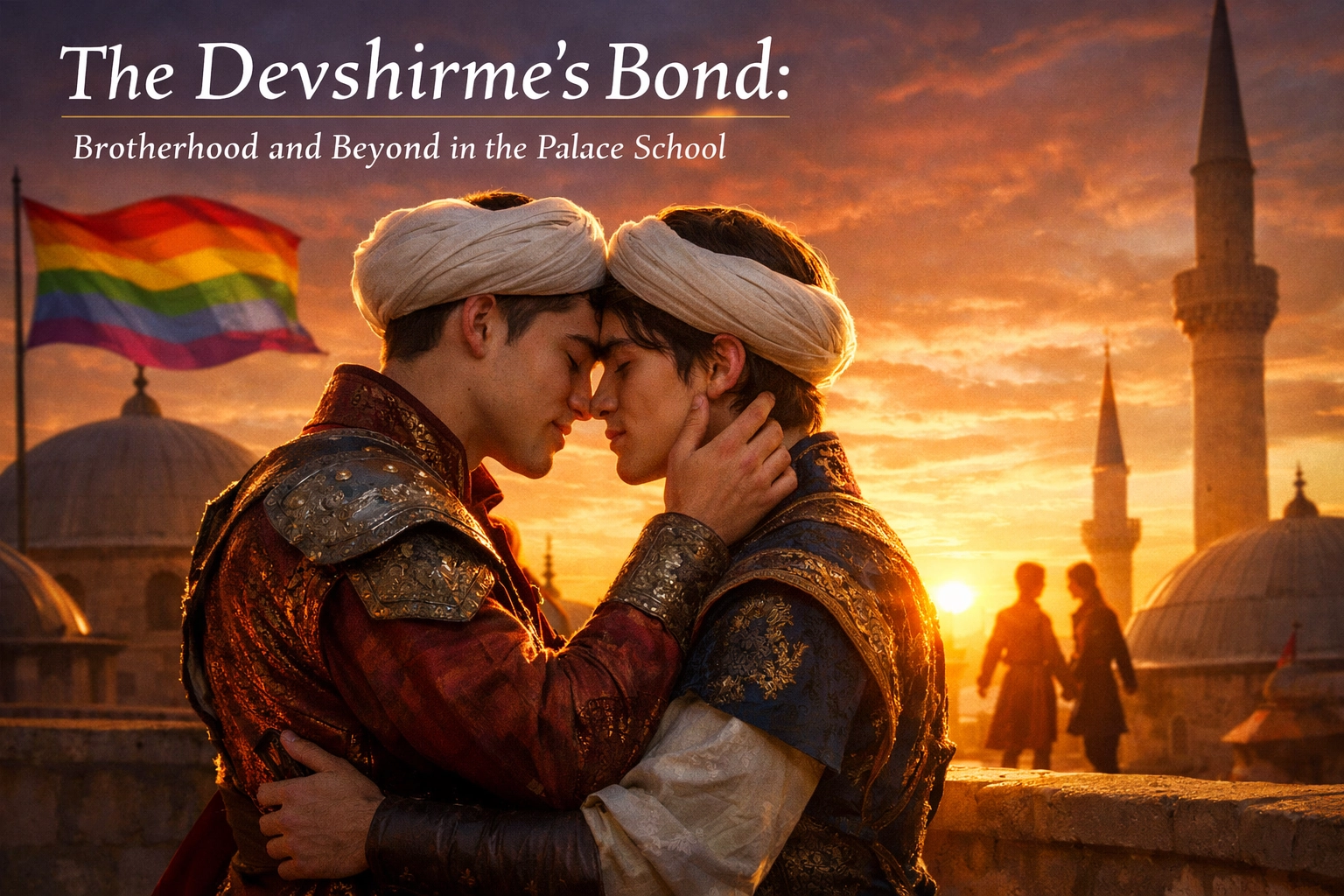
Behind the golden doors of Topkapi Palace, separated from their families and former lives, the devshirme boys found themselves navigating a world that was both terrifying and full of possibility. These Christian youths, recruited from across the Balkans and converted to Islam, were thrust together in the elite Enderun School, a place where survival meant forming bonds that went far deeper than simple friendship.
Torn from Home, Bound by Circumstance
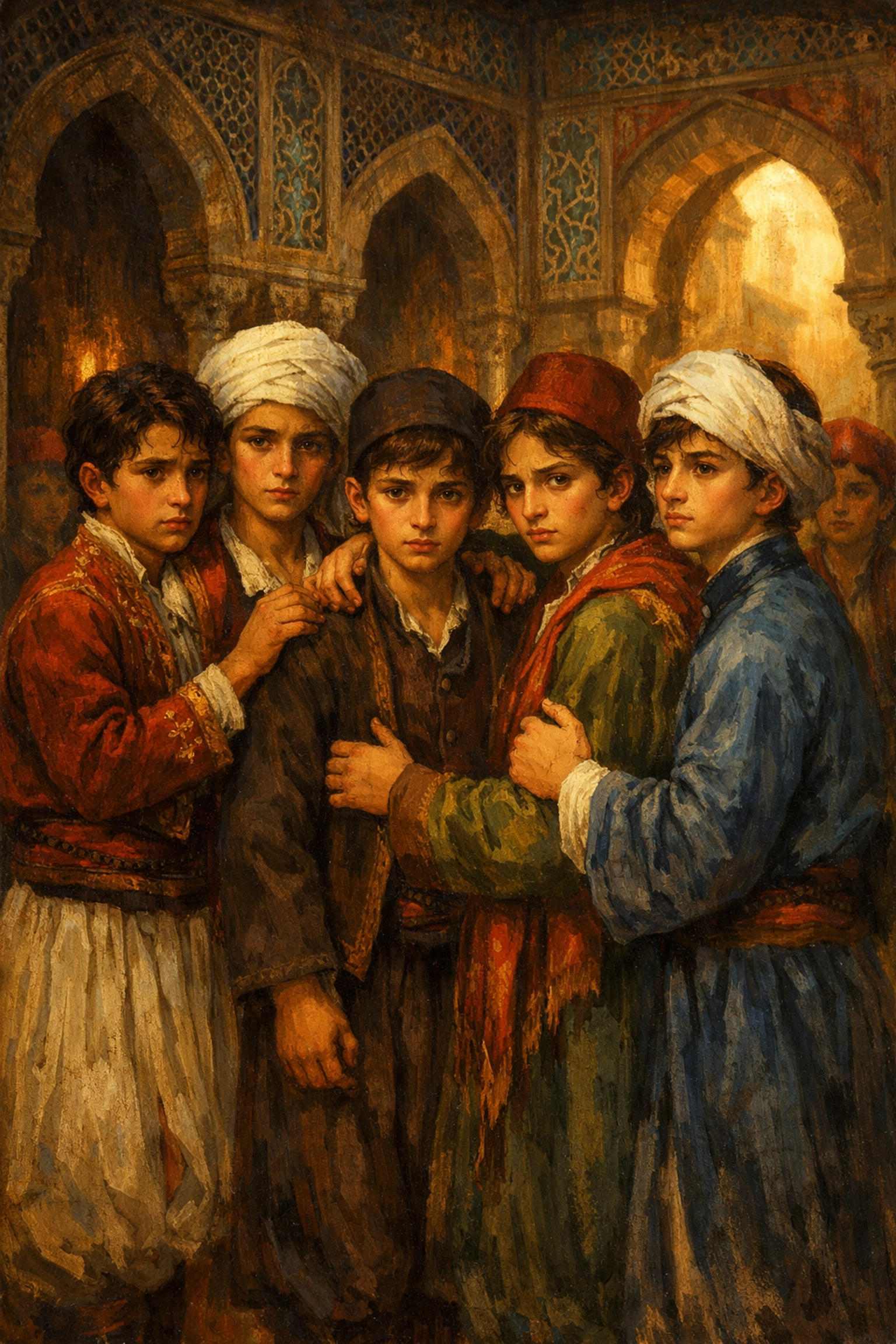
The devshirme system sounds almost fantastical when you first hear about it. Every few years, Ottoman officials would travel through Christian villages in the Balkans, selecting the brightest and most promising boys, usually between eight and eighteen years old. Greeks, Armenians, Bulgarians, Albanians, Serbs, these young men came from diverse backgrounds but shared one devastating experience: they were taken from everything they knew.
Imagine being ripped from your mother's arms, forced to convert to a new religion, given a new name, and deposited into a foreign palace with dozens of other terrified boys who spoke different languages and came from different worlds. The trauma was real. The fear was palpable. And in that crucible of displacement and reinvention, something remarkable happened.
They found each other.
The Enderun: Where Brotherhood Was Born
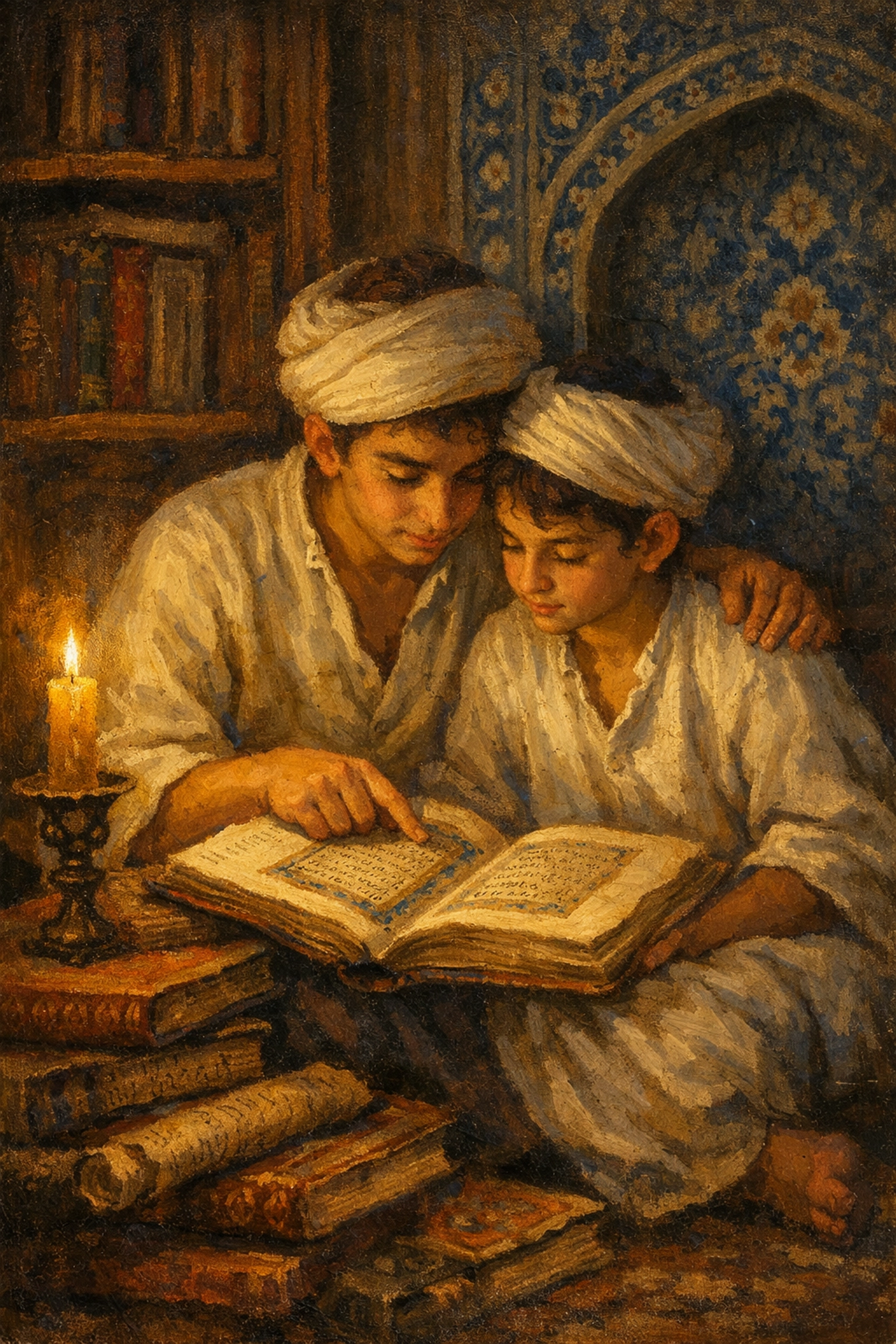
The Enderun wasn't just any school, it was the Ottoman Empire's most exclusive institution, a palace within a palace where the empire's future leaders were molded. The curriculum was rigorous: Turkish and Persian languages, Islamic theology, mathematics, music, poetry, athletics, and military training. But beyond the formal education, these boys learned something else entirely: how to survive by forming deep, unbreakable connections.
Living in close quarters, sleeping in shared dormitories, bathing together in the palace hamams, and spending every waking hour in each other's company, the devshirme developed bonds that outsiders struggled to understand. They were brothers-in-arms, yes, but also something more complex. They were lovers, protectors, confidants, and rivals all at once.
The palace walls created a unique environment where traditional social structures didn't quite apply. These boys had been stripped of their former identities. They had no families to arrange marriages. They had no external communities. They only had each other.
Love Behind Closed Doors
Ottoman culture, particularly within elite circles, had a more nuanced relationship with same-sex desire than many European societies of the same era. Persian poetry celebrating the love of beautiful young men was studied and admired. The concept of muhabbet (deep affection) between men wasn't automatically condemned, especially in homosocial environments like the military or palace schools.
Within the Enderun, relationships bloomed in the shadows between formal lessons. An older student might take a younger one under his wing, initially as a mentor, but the lines often blurred. A hand held too long during wrestling practice. Whispered conversations in darkened corridors after curfew. Stolen glances across the training yard that lasted just a moment too long to be merely friendly.
These weren't just fleeting attractions: many of these bonds lasted for life. When devshirme graduates were assigned to positions across the empire, they maintained networks of loyalty and affection that transcended official hierarchies. A boy you shared secrets with at fourteen might become a provincial governor at thirty, but he'd still remember those nights in the palace when you were all each other had.
The Power of Shared Trauma
Modern psychology recognizes something called "trauma bonding": the intense attachment that forms between people who share harrowing experiences. The devshirme boys lived this reality centuries before anyone gave it a name. They had all been taken, converted, renamed, and repurposed. They all understood what it meant to lose everything and rebuild from nothing.
In that shared understanding, they found safety to be vulnerable in ways they couldn't be anywhere else. A boy could cry about his lost mother without being mocked, because the others understood. He could express fear about the future without being seen as weak, because they all felt it. And he could express desire for another young man without immediate condemnation, because the palace walls created a space apart from the outside world's judgments.
The Ottoman palace hierarchy relied on these bonds. The empire needed these boys to be loyal to each other, to form a cohort that would prioritize the Sultan's interests over regional or ethnic allegiances. What the system perhaps didn't anticipate was how deep and how intimate those loyalties could become.
The Agas and Their Favorites
As the boys matured and rose through the ranks to become agas (officials), the pattern continued. Senior palace officials often selected favorite pages: younger students they mentored and, in many cases, loved. These relationships were semi-public secrets. Everyone knew. Few openly discussed it.
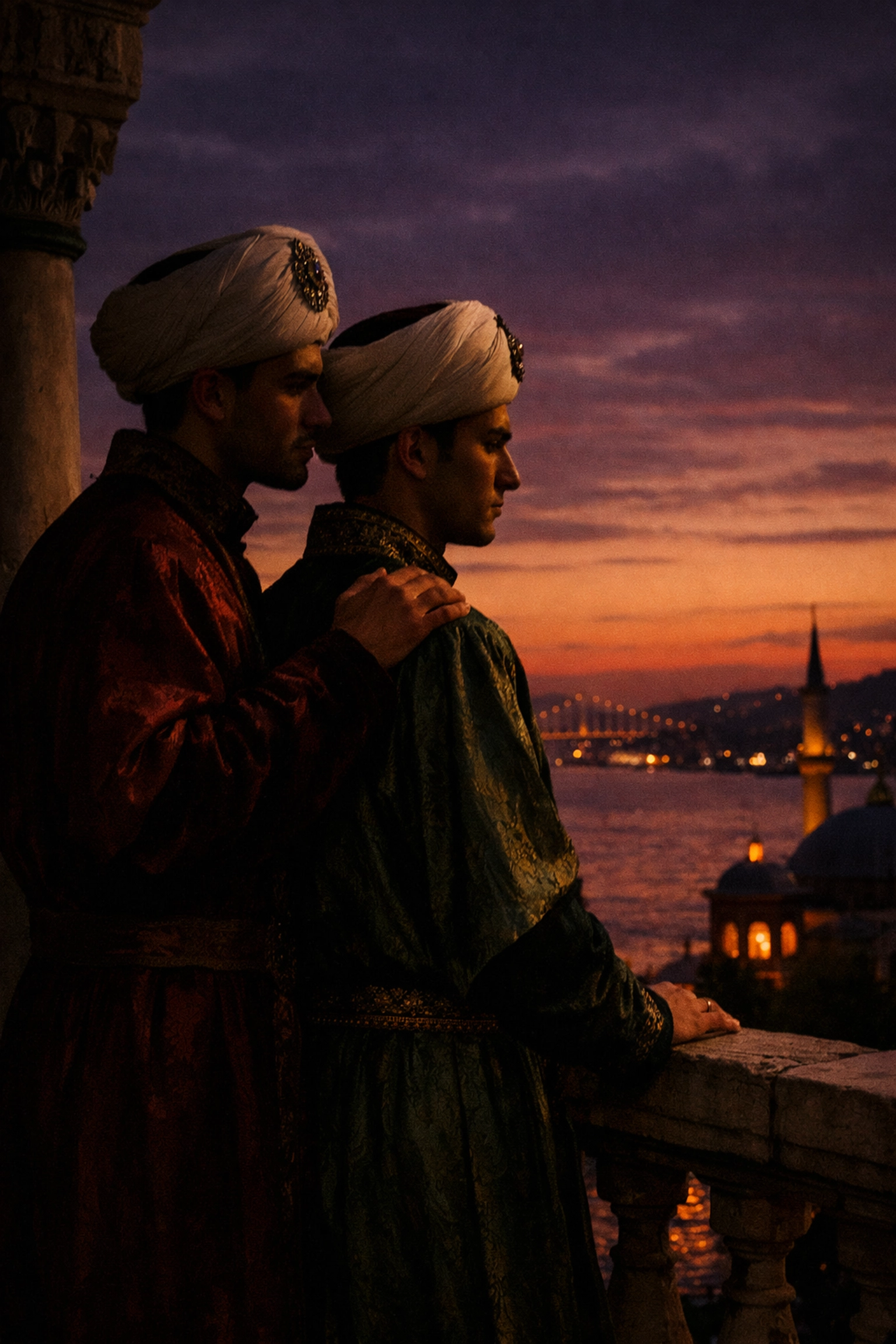
A powerful aga might have his protégé sleep in his chambers, ostensibly for protection and convenience. He would lavish gifts on the boy, ensure his advancement, and demonstrate fierce jealousy if others paid him too much attention. The Ottoman court poets wrote about these dynamics with knowing wit, using coded language that everyone understood.
The most successful devshirme graduates often maintained these partnerships throughout their careers. When they achieved high office, they would bring their former companions with them, creating networks of power bound by affection as much as ambition.
Beyond the Binary
What's fascinating about these relationships is how they challenge modern categories. Were these men "gay" in the contemporary sense? The concept didn't exist in that form. Were they simply making do in an all-male environment? That dismisses the genuine affection clearly documented in letters and poetry of the era.
The truth is more complex and, honestly, more interesting. Ottoman palace culture recognized a spectrum of masculine intimacy that didn't require rigid labels. A man could love another man passionately, even physically, without that necessarily defining his entire identity or future relationships.
Many devshirme graduates eventually married women and had families, as was expected of men in their positions. But that didn't erase or invalidate the loves and partnerships formed in their youth within the palace walls. The heart has always been capacious enough to hold multiple truths.
Legacy of Hidden Love
The stories of the devshirme boys remind us that LGBTQ+ history isn't just a Western narrative. Across cultures and centuries, people have found ways to love beyond prescribed boundaries. They've created spaces: sometimes hidden, sometimes semi-visible: where desire could flourish despite social constraints.
When we explore gay historical romance or MM romance today, we're tapping into something deeply human that transcends time and place. The longing for connection, the formation of chosen families, the courage to love in hostile environments: these themes resonate because they're universal to the queer experience.
The Enderun boys couldn't browse gay fiction or join LGBTQ+ communities. They didn't have the vocabulary we use today. But they had each other, and they made that enough. They turned institutional isolation into intimate community. They transformed a system designed to erase their identities into a space where new identities: and loves: could emerge.
Finding Ourselves in History
Reading about these hidden chapters of queer history isn't just academic: it's personally affirming. It tells us that we've always existed, always found ways to love, always created beauty and meaning even in restrictive systems. The devshirme boys were resilient, creative, and deeply human in their desires and connections.
If you're drawn to MM historical romance or gay novels that explore these themes of forbidden love and found family, you're connecting with a tradition that stretches back centuries. At Read with Pride, we celebrate these stories: both historical and contemporary: that honor the complexity of queer experiences across time.
The palace walls of the Enderun may have crumbled, but the bonds formed within them echo through history, reminding us that love has always found a way.
Follow us for more untold LGBTQ+ history:
#ReadWithPride #MMRomance #GayHistoricalRomance #LGBTQHistory #OttomanEmpire #DevshirmeSystem #QueerHistory #GayRomanceBooks #MMHistoricalRomance #LGBTQFiction #GayLiterature #QueerFiction #HistoricalMMRomance #GayBooks #MMBooks #LGBTQBooks #GayFiction #ReadWithPride2026

Leave a Reply
You must be logged in to post a comment.