

readwithpride.com
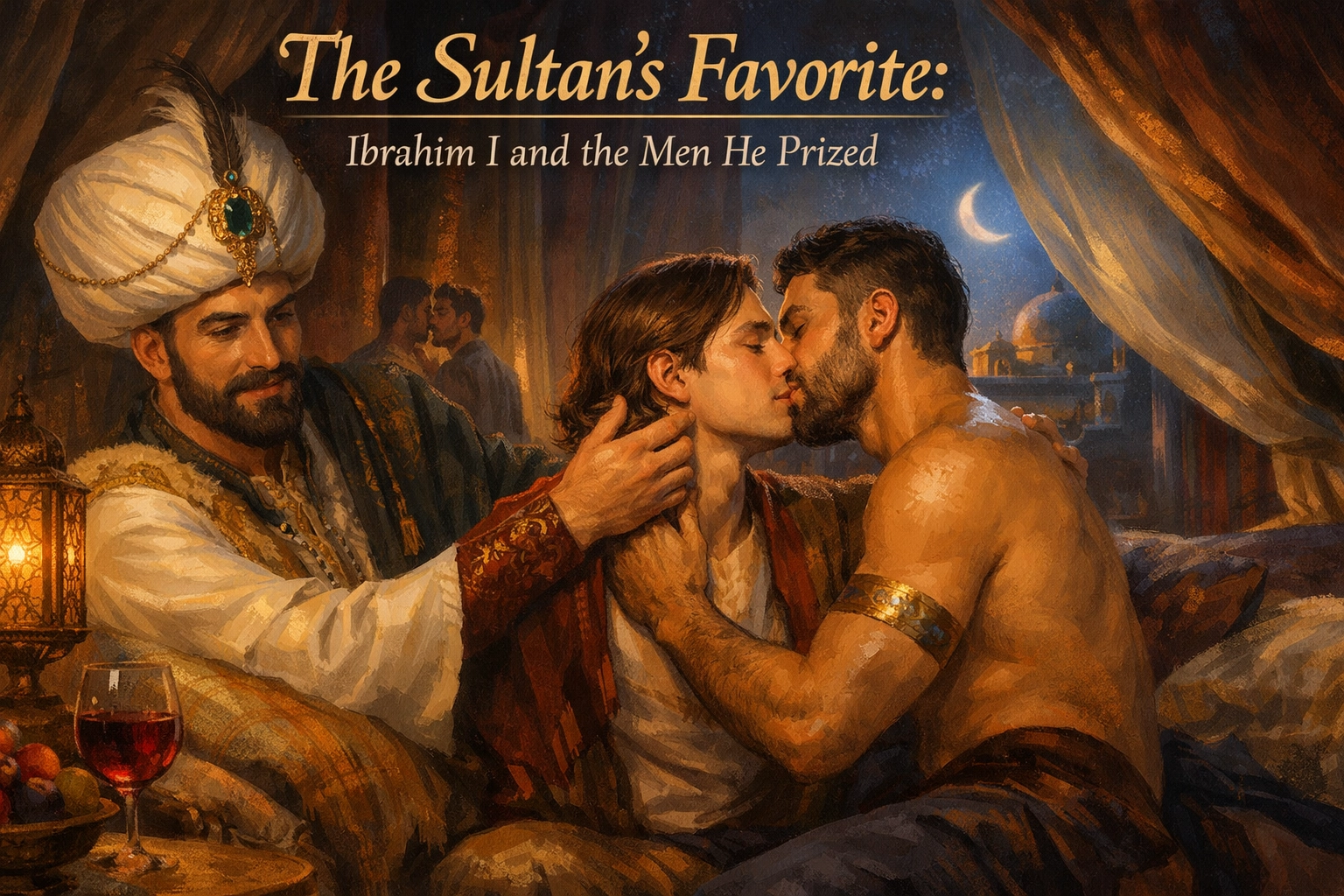
Behind the towering walls of Topkapi Palace in 17th century Istanbul, Sultan Ibrahim I sat at the center of an empire: surrounded by men who held his trust, shaped his decisions, and ultimately orchestrated his downfall. The Ottoman court was a world unto itself, where power dynamics played out in hushed chambers, where favorites rose and fell with a word, and where the intimacy between sultan and advisor could mean the difference between prosperity and chaos.
This is the story of a troubled sultan and the men who tried to guide him, failed him, or simply survived him.
The Sultan Who Lived in Shadows
When Ibrahim ascended to the throne in 1640, he was already a damaged man. He'd spent years locked away in the Kafes: the "Golden Cage": a gilded prison where Ottoman princes lived in isolation to prevent succession struggles. Imagine spending your entire youth confined to luxurious rooms, surrounded by a select few, never knowing if today would be the day your brother decided you were a threat worth eliminating.
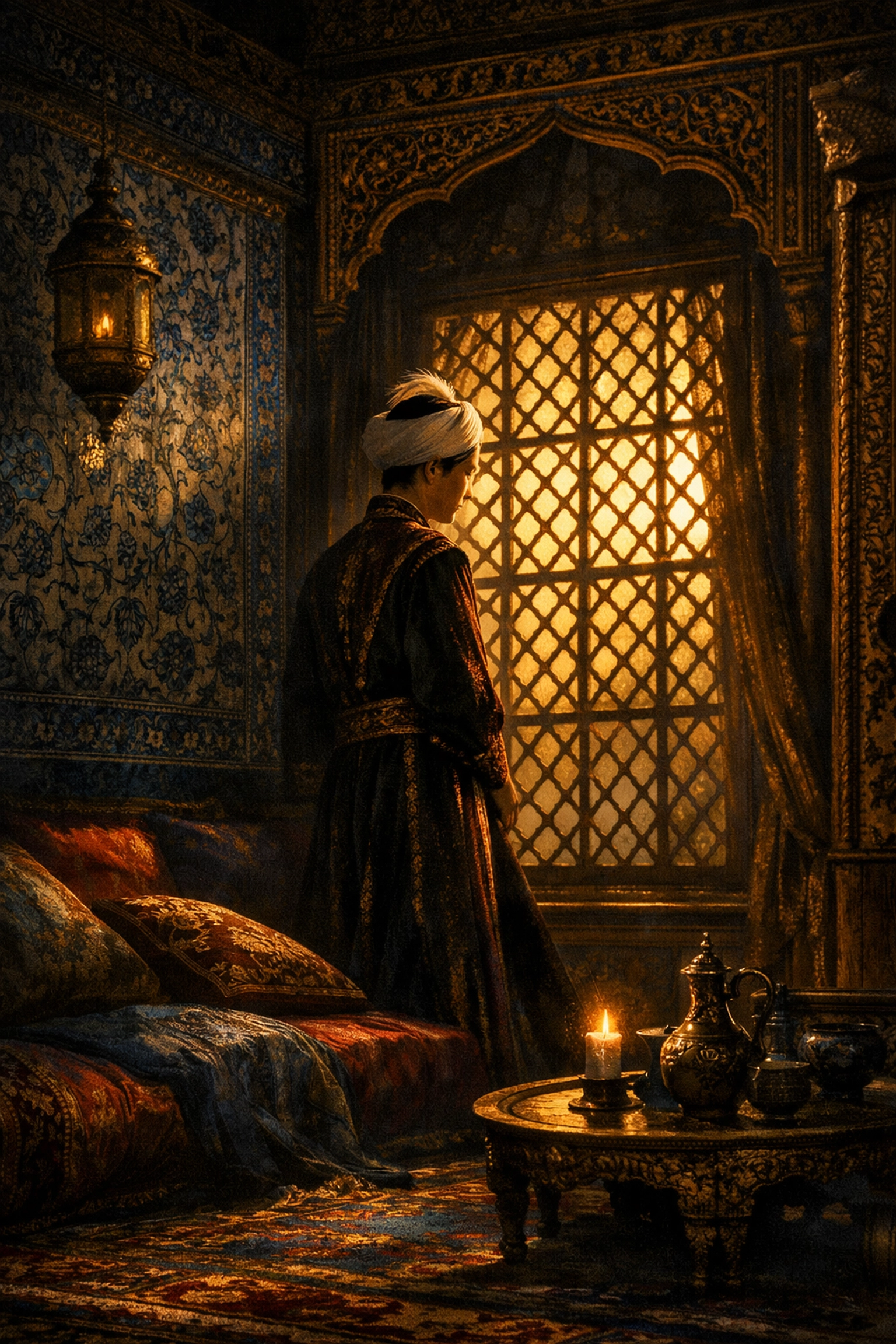
By the time Ibrahim emerged to rule, he was paranoid, unstable, and desperate for connection. And in the closed world of the Ottoman palace, those connections would be with the men closest to power: his viziers, his military commanders, and his confidants.
The Grand Vizier Who Held Everything Together
Enter Kemankeş Kara Mustafa Pasha, the man who basically ran the empire while Ibrahim figured out how to be sultan. Contemporary sources described him as "able but ambitious," which is Ottoman court speak for "competent but watch your back."
For four years, Kara Mustafa was Ibrahim's anchor. He was the steady hand when the sultan's trembled, the strategic mind when Ibrahim's wandered. They made an odd pair: the fragile sultan and his composed grand vizier: but it worked. Under Kara Mustafa's guidance, the empire stabilized. He negotiated peace with Persia and Austria in 1642, reformed the currency, tamed rebellious governors, and even took on the notoriously unruly Janissaries.
The relationship between a sultan and his grand vizier in the Ottoman court was intensely intimate in its own way. These men met daily, often in private. They shared meals, discussed state secrets, navigated crises together. The grand vizier's chambers were steps away from the sultan's. In a world where trust could get you killed, Ibrahim trusted Kara Mustafa with everything.
Until he didn't.
When Favor Turns Fatal
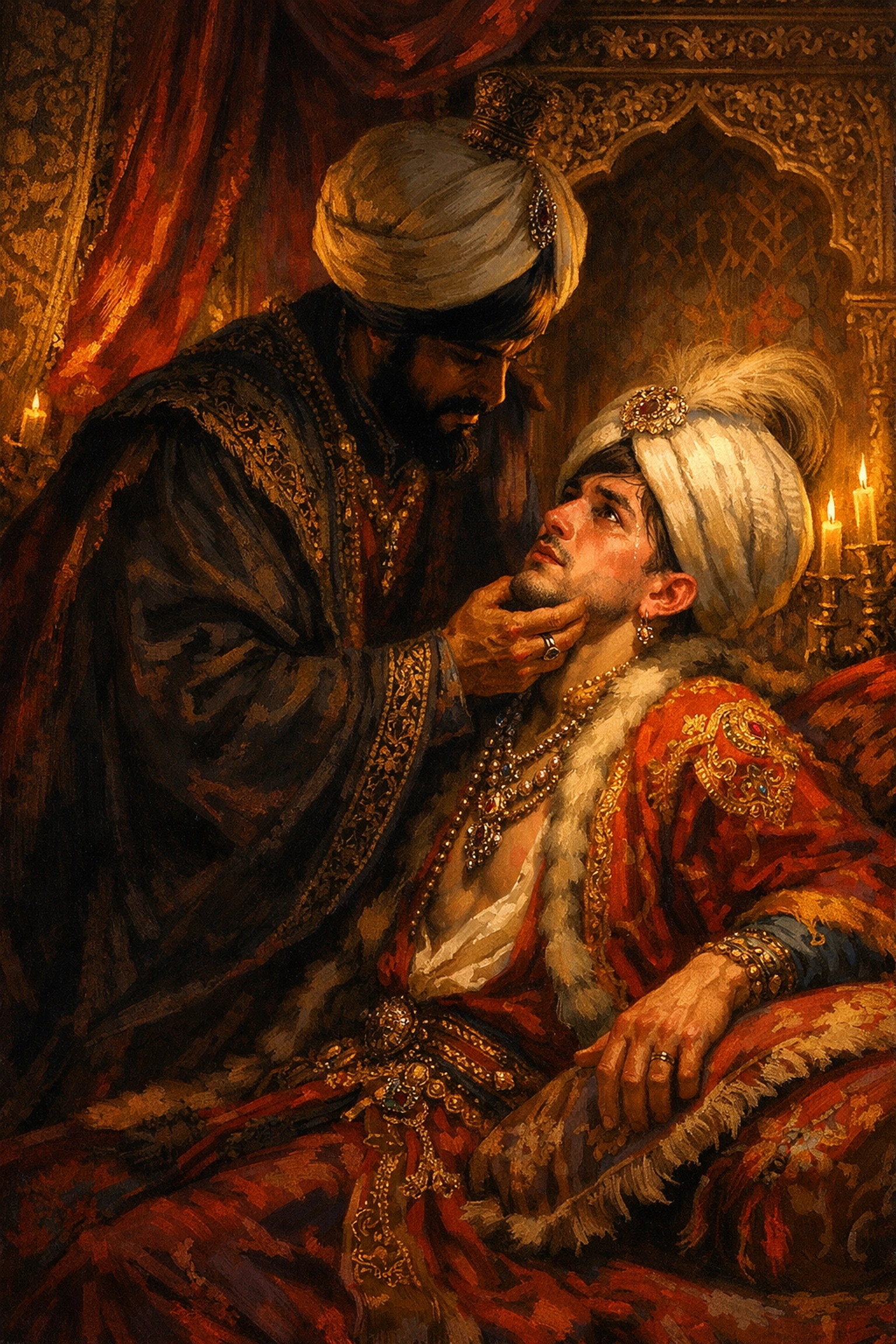
In 1644, Ibrahim ordered Kara Mustafa's execution. The reasons remain murky: palace intrigue, manipulation by harem factions, or simply Ibrahim's deteriorating mental state. What we know is that with Kara Mustafa's death, Ibrahim lost the one man who'd kept him grounded.
This is where the story gets darker. Without his steady vizier, Ibrahim fell deeper into paranoia and erratic behavior. The men he appointed next were either incompetent or opportunistic, more interested in enriching themselves than serving the empire. The intimate circle of trusted advisors that every sultan needed? It shattered.
The Admiral and the Conquest
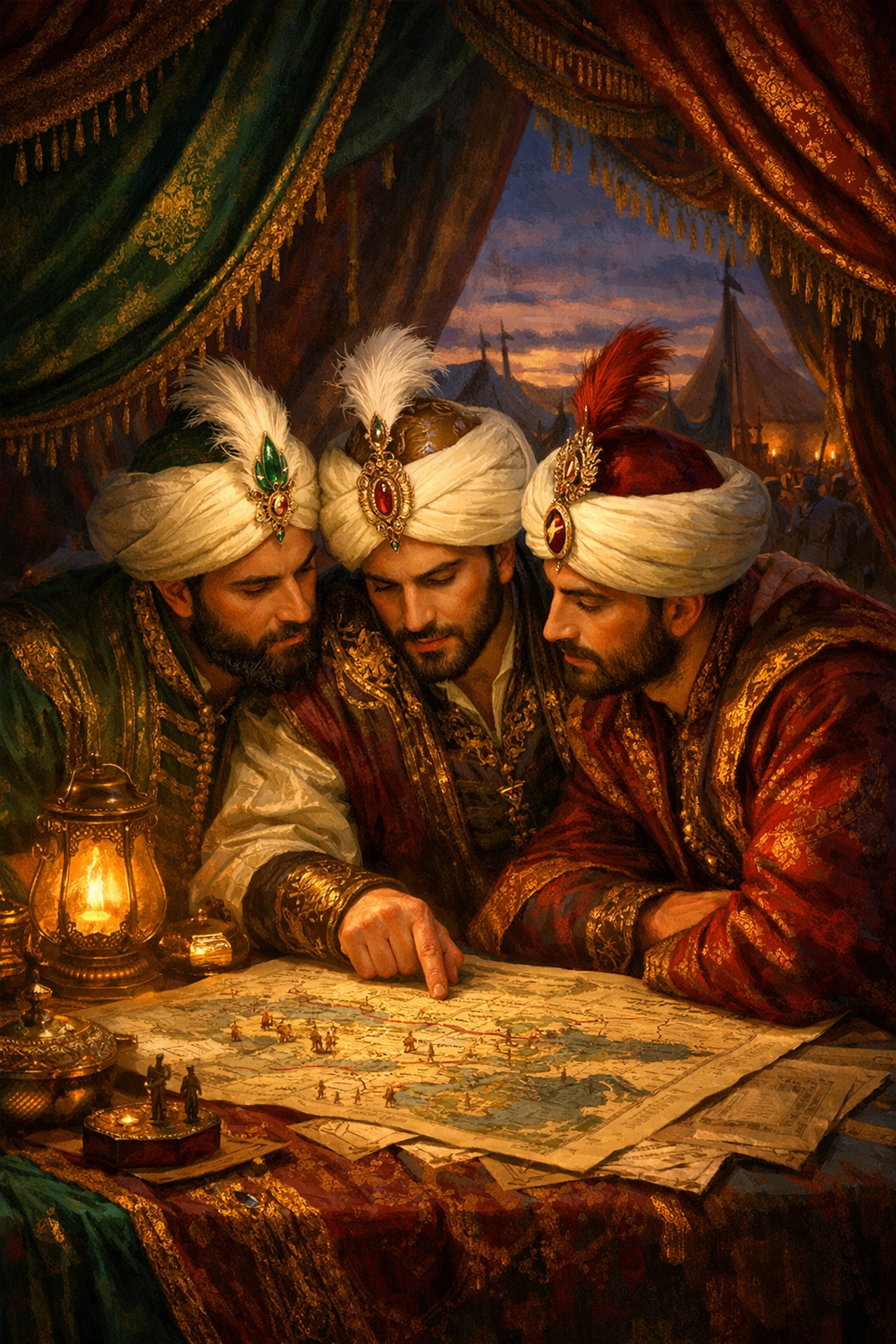
While court politics swirled, Ibrahim placed his military trust in another man: Grand Admiral Yusuf Pasha, described by contemporaries as "the best soldier of his time." If Kara Mustafa had been Ibrahim's political compass, Yusuf was his sword.
In 1645, Ibrahim launched an ambitious campaign to conquer Crete from Venice, and he put everything in Yusuf's capable hands. The relationship between sultan and military commander carried its own weight: strategy sessions, war councils, the shared burden of sending men to die for imperial ambitions.
The Ottoman military structure was deeply homoerotic in ways modern readers might not immediately grasp. Young men trained together, fought together, formed bonds that transcended mere friendship. Officers and their protégés shared quarters on campaign. The line between mentorship, brotherhood, and something more intimate was deliberately blurred in a culture that celebrated male warrior bonds.
The Palace as Pressure Cooker
Here's what people don't always understand about Ottoman palace life: it was suffocatingly intimate. The Topkapi Palace complex was massive, sure, but the inner sanctum where the sultan lived and worked? That was a world of maybe a few hundred people, tops. The same faces every day. The same men whispering in your ear, asking for favors, plotting advancement.
For a psychologically fragile sultan like Ibrahim, this environment was toxic. Every smile hid potential betrayal. Every advisor might be the one to poison your mind against another. And the only people who truly understood this pressure were the other men trapped in it with you.
The archives hint at Ibrahim's increasingly desperate attempts to find loyalty. He elevated favorites quickly and discarded them just as fast. He demanded impossible devotion. By 1648, his behavior had become so erratic that even capable officials actively avoided positions close to him: getting noticed by Ibrahim had become dangerous.
The Betrayal That Ended Everything
In August 1648, the men of the palace had had enough. The Janissaries, his officials, even members of his own household conspired together. They deposed Ibrahim and placed his seven-year-old son on the throne. Days later, Ibrahim was executed.
The men he'd trusted, feared, elevated, and destroyed came together in the end: not out of love or loyalty, but out of survival. In the closed world of Ottoman power, sometimes the only way out was through the sultan's death.
It's a brutal ending to a tragic story. Ibrahim I spent his reign searching for men he could trust completely in a system designed to make complete trust impossible. He found capable advisors and cast them aside. He promoted incompetent favorites who fed his paranoia. He lived and died by the decisions of the men around him.
What This Tells Us About MM romance books and Historical Truth
Looking back at Ibrahim's story through a modern queer lens requires nuance. There's no historical evidence that Ibrahim had romantic or sexual relationships with men: his personal life was dominated by his obsession with the women of his harem. But the emotional intensity of male relationships at the Ottoman court? That's undeniable.
These were bonds forged in isolation, pressure, and absolute power. They were relationships of dependence, mentorship, rivalry, and sometimes genuine affection. In the closed world behind palace walls, men were everything to each other: advisors, confidants, surrogate family, and sometimes destroyers.
The Ottoman court existed in a complex space regarding male intimacy. While Islamic law technically prohibited homosexual acts, the reality was far more complicated. Poetry celebrating beautiful young men flourished. The relationship between older mentors and younger protégés in military and administrative contexts carried homoerotic undertones that everyone acknowledged and no one explicitly discussed.
Ibrahim's story isn't a gay love story in the way we might write gay romance novels today. It's something else: a glimpse into a world where male power, male intimacy, and male violence intertwined in ways both fascinating and deeply troubling.
Follow the Stories
Want more hidden histories from behind closed palace doors? Follow us on Instagram, Facebook, and Twitter for daily stories that mainstream history books skip over.
Because at Readwithpride.com, we believe every story deserves to be told: especially the ones that make people uncomfortable, the ones that challenge our assumptions, and the ones that remind us that human relationships have always been complicated, messy, and impossible to fit into neat categories.
#OttomanHistory #SulkanIbrahim #ReadWithPride #QueerHistory #LGBTQ #HiddenHistory #PalaceSecrets #MMRomance #HistoricalLGBTQ #GayHistory #OttomanEmpire #TopkapiPalace #QueerHistoricalFiction #MMHistoricalRomance #LGBTQBooks #GayRomanceBooks #ReadwithprideCom

Leave a Reply
You must be logged in to post a comment.