

readwithpride.com
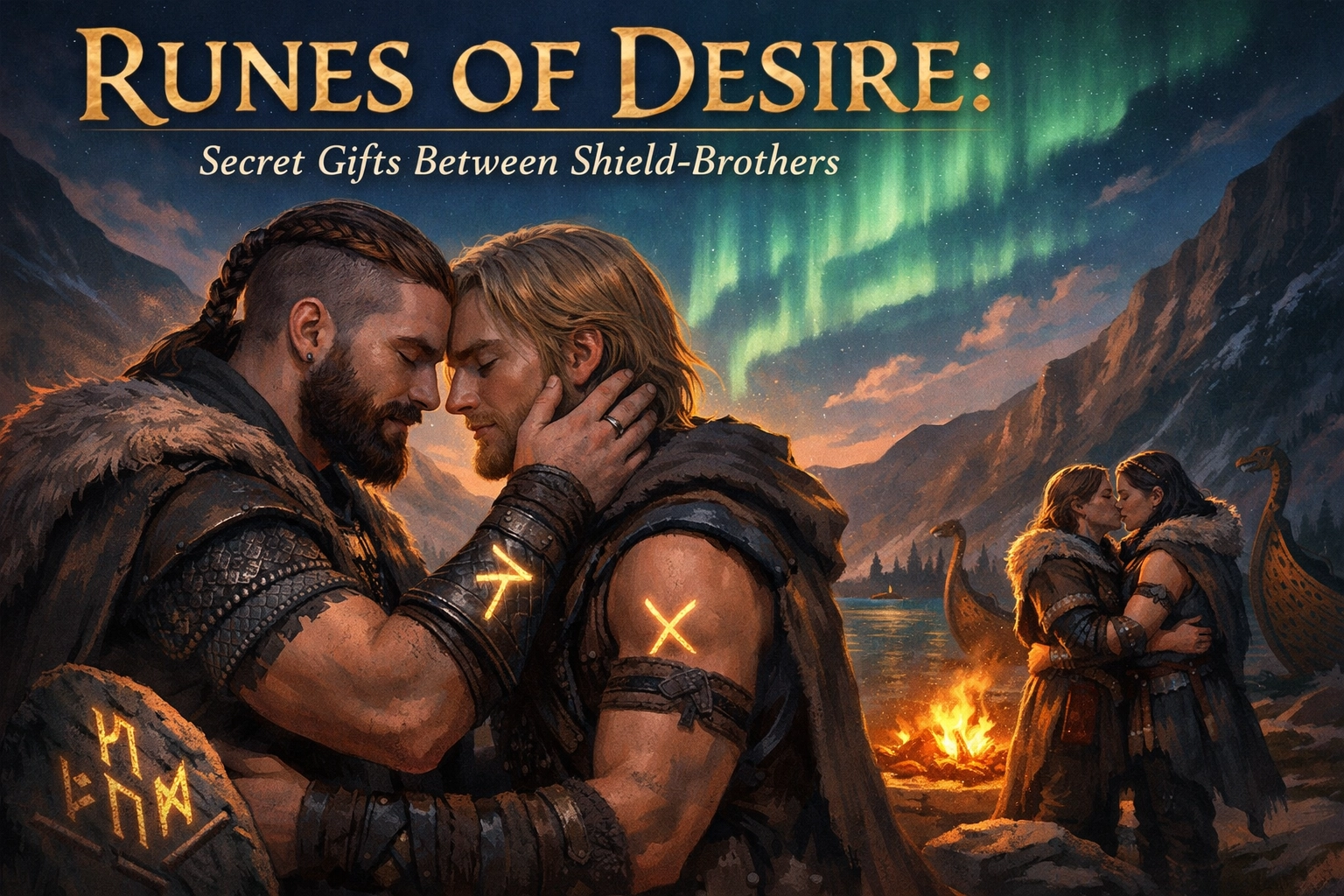
The spray of saltwater, the creak of longship timbers, and the whisper of secrets exchanged between warriors beneath Nordic stars. Viking culture wasn't just about raids and conquests: it held space for profound bonds between men that went far beyond the battlefield. Among the shields and swords, quiet acts of devotion played out in the form of carved runes and gleaming silver.
When Brotherhood Became Something More
The term "shield-brother" carries weight in Norse history. These weren't just battle companions who happened to stand next to each other during a fight. Shield-brothers formed bonds that Norse society recognized as sacred: sworn oaths that tied two warriors together in life and, according to some sagas, even in death.
But some shield-brothers shared something deeper. The historical record, sparse as it is, hints at relationships that transcended the platonic. While Viking culture had complex attitudes toward same-sex relationships: particularly around concepts of dominance and masculinity: there's evidence that intimate bonds between men existed, especially among warriors on long voyages.
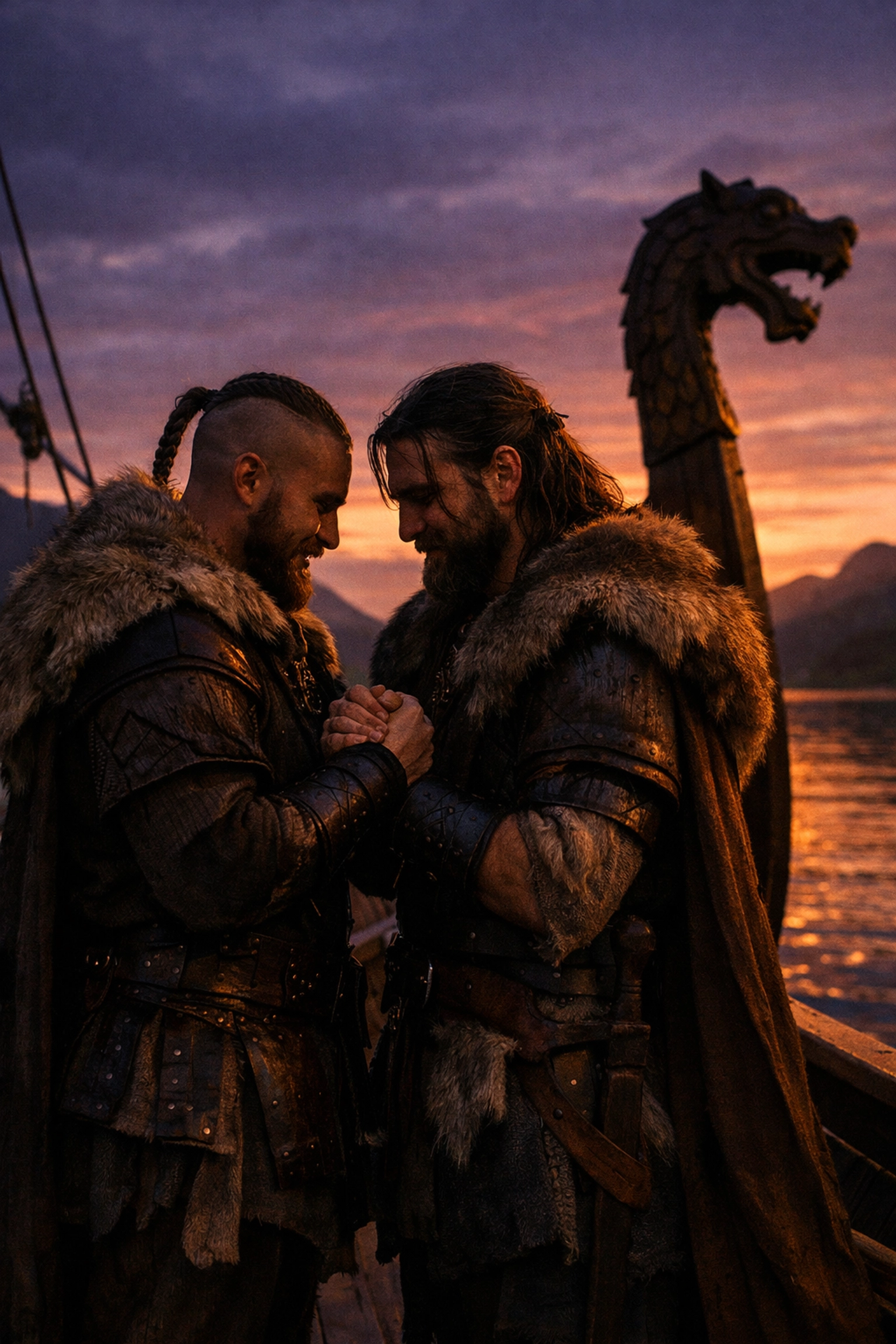
On those endless sea journeys, away from the watchful eyes of settlements and the rigid social structures of home, different rules applied. The longship became its own world, and the men aboard it formed their own codes.
The Language of Carved Wood
Vikings didn't have greeting cards or love letters in the way we think of them. Instead, they spoke through objects: particularly through runes carved into wood, bone, and stone. These weren't just decorative scratches. Each rune carried meaning, power, and intention.
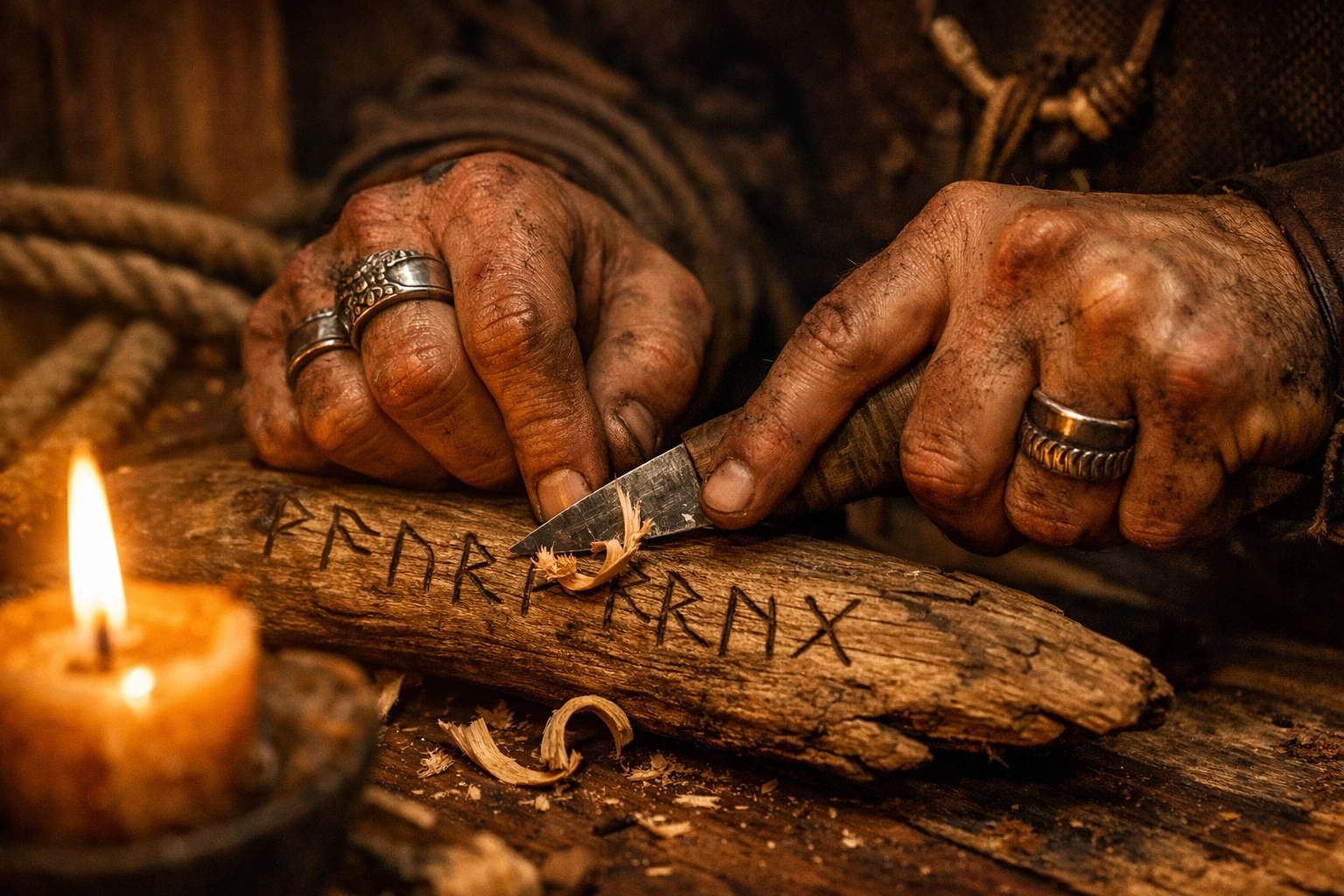
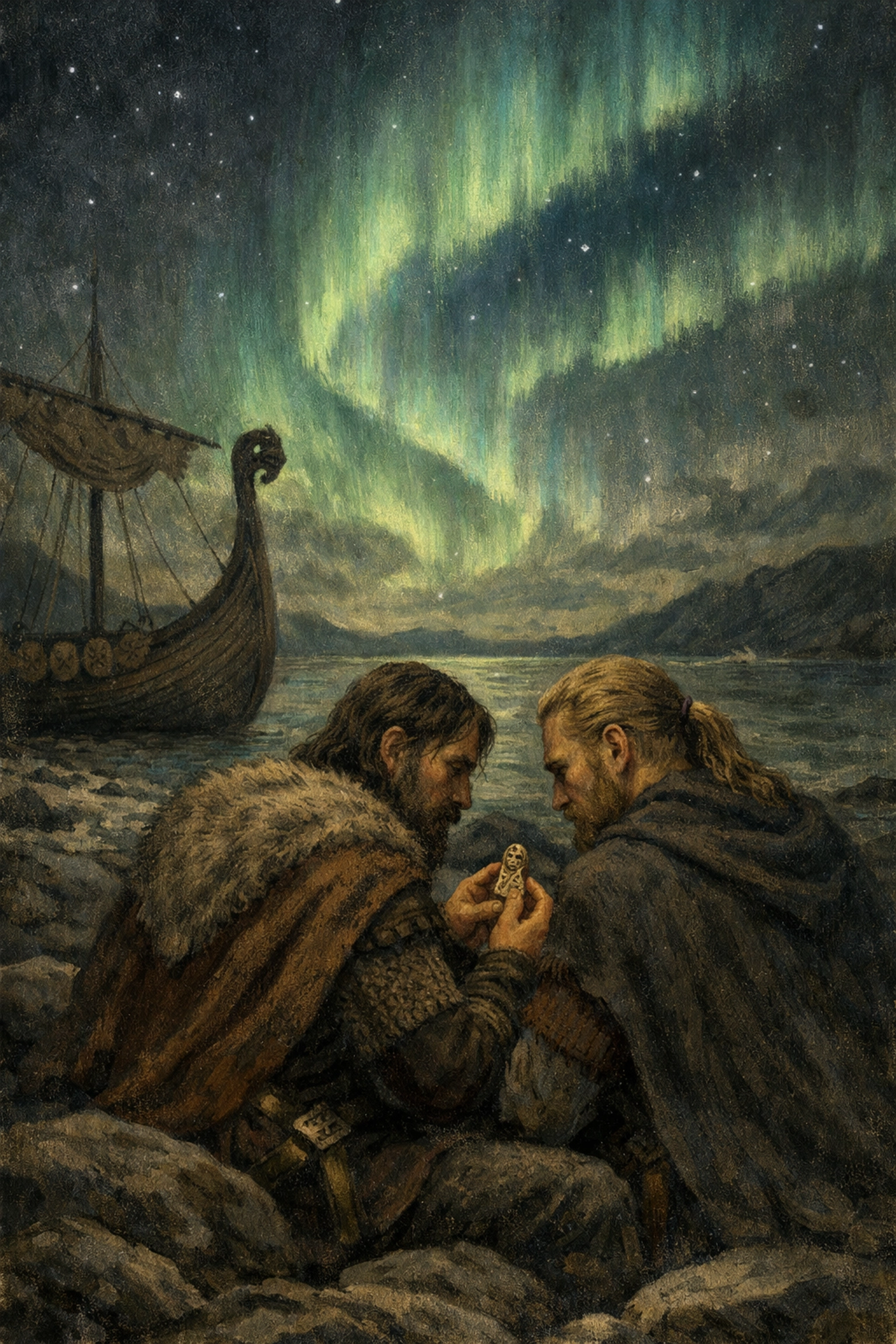
A warrior might carve a piece of driftwood during night watch, working by lantern light while his companions slept. The runes might spell out a name, or combine symbols that held private significance. Some runes were believed to offer protection, others to bind fates together. The act of carving itself was intimate: hours spent thinking of another person while your hands shaped something meant only for them.
These tokens were small enough to tuck into a belt pouch or hide in the folds of clothing. Imagine receiving such a gift on a cold morning, the wood still warm from being held against another man's chest. The giver might say nothing, or might murmur something about luck in battle. But both would know what the gesture truly meant.
Silver Circles and Unspoken Vows
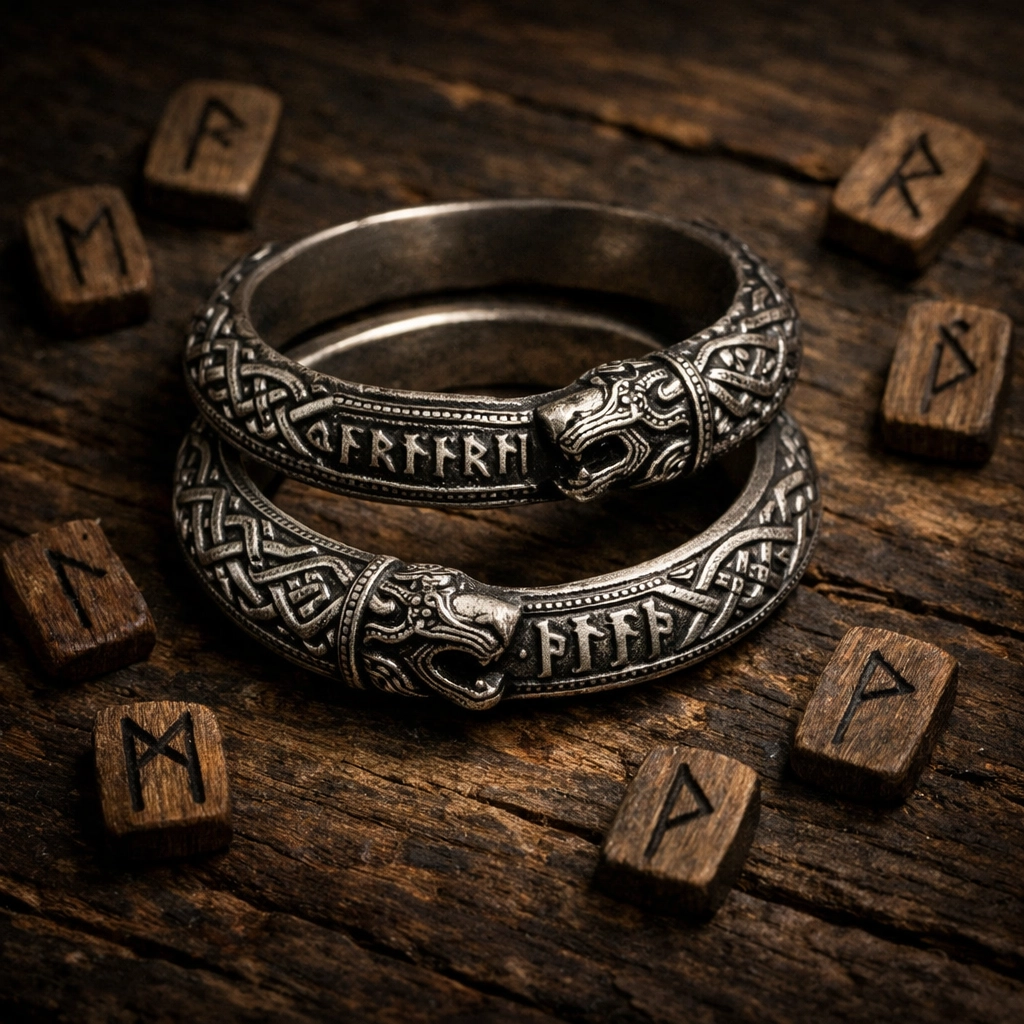
If carved runes were whispers, silver rings were declarations. Vikings loved their jewelry: arm rings, neck rings, finger rings. These weren't just adornments; they were displays of wealth, status, and connection. A ring given by a jarl to a warrior bound that warrior in service. A ring exchanged between two men could bind them in something else entirely.
Silver rings on long raids served multiple purposes. They were portable wealth, could be traded or used to pay ransoms, and displayed a warrior's success. But when a ring passed privately from one warrior to another, away from the distribution of plunder, it took on different significance.
Some of these rings bore inscriptions: again, those all-important runes. Others featured intricate patterns or symbols that held meaning for the two men involved. The weight of silver on your finger, placed there by hands that had gripped a shield beside yours, that had perhaps touched your face in the darkness of the ship's hull: that was its own kind of oath.
Hidden in Plain Sight
The beauty of these gifts lay partly in their ambiguity. A carved piece could be explained as a good luck charm. A ring could be seen as payment for loyalty or a reward for valor. Viking culture valued gift-giving between warriors as a way of cementing bonds and demonstrating generosity.
This social camouflage allowed deeper relationships to exist within acceptable frameworks. Two men who shared something beyond brotherhood could hide their connection within the broader tradition of warrior bonding. The gifts they exchanged looked, to outsiders, like the normal exchange of tokens between fighting men.
But context was everything. The timing of a gift, the privacy of its exchange, the way eyes met when it was given: these details transformed a simple object into a love token. The other warriors on the ship might suspect, might even know, but the plausible deniability remained.
What the Sagas Don't Say
Norse sagas tell us of great friendships between men, of warriors who grieved each other's deaths with intensity that rivals any romantic tragedy. They describe men who refused to outlive their companions, who chose death rather than continue without their shield-brother.
The famous story of Njáll and Gunnarr, while not explicitly romantic in the surviving texts, describes a bond so deep that their separation leads to tragedy for both. Other sagas mention men who were "dear to each other" or who shared living spaces in ways that raised eyebrows even then.
What these stories don't explicitly say, they suggest through absence and implication. The small, private moments: the exchange of meaningful objects, the quiet conversations, the choices to stay together when circumstance might separate them: these details live between the lines.
The Practicality of Affection
Life aboard a Viking longship was brutal. Storms threatened to capsize the vessel. Raiders faced constant danger from enemies and the elements alike. Disease, injury, and violence could claim lives in an instant. In that context, whatever comfort and connection men found with each other mattered enormously.
A token from someone you loved: whether you could speak that love aloud or not: was a talisman against the chaos. Something to grip when waves crashed over the bow. Something to touch for courage before a raid. Something to remind you that somewhere on this ship, or waiting back home, someone cared whether you lived or died.
These weren't grand romantic gestures. They were practical magic in object form. They said: you matter to me. Your life has value beyond your sword arm. I see you as more than just another warrior.
Legacy in Silver and Wood
Archaeologists occasionally find these objects: carved pieces with runes, silver rings, small tokens buried with warriors. Usually, they're catalogued as "personal effects" or "warrior equipment." The full story of their significance is lost to time.
But for those of us looking at Viking history through a queer lens, these objects take on deeper meaning. They're evidence of lives lived and loves hidden in the margins of what was recorded. They remind us that LGBTQ+ people have always existed, have always found ways to express affection and claim connection, even in societies that didn't have language for what they felt.
The shield-brothers who exchanged carved runes and silver rings were part of our history. Their gifts survive as proof that desire, love, and devotion have always found ways to exist: even aboard a longship, even in the spaces between what was allowed to be spoken.
When you explore LGBTQ+ history and stories, you're following a thread that stretches back centuries. Every MM romance novel, every piece of gay fiction, every queer love story we read today echoes those ancient connections: the ones that couldn't always speak their names but found other ways to be known.
The Vikings understood something fundamental: that what matters isn't always what you say, but what you give, what you carve, what you wear against your skin to remember someone else. In that way, they were not so different from us: just looking for ways to say "you matter" in a world that didn't always make space for that truth.
Looking for more LGBTQ+ historical stories and MM romance books that explore hidden histories? Follow us on Facebook, Instagram, and Twitter/X for updates.
#ReadWithPride #MMRomance #LGBTQHistory #VikingHistory #GayRomance #QueerFiction #HistoricalLGBTQ #GayBooks #MMHistoricalRomance #ShieldBrothers #LGBTQEbooks #GayFiction #PrideReading #QueerHistory #NorseLove

Leave a Reply
You must be logged in to post a comment.