

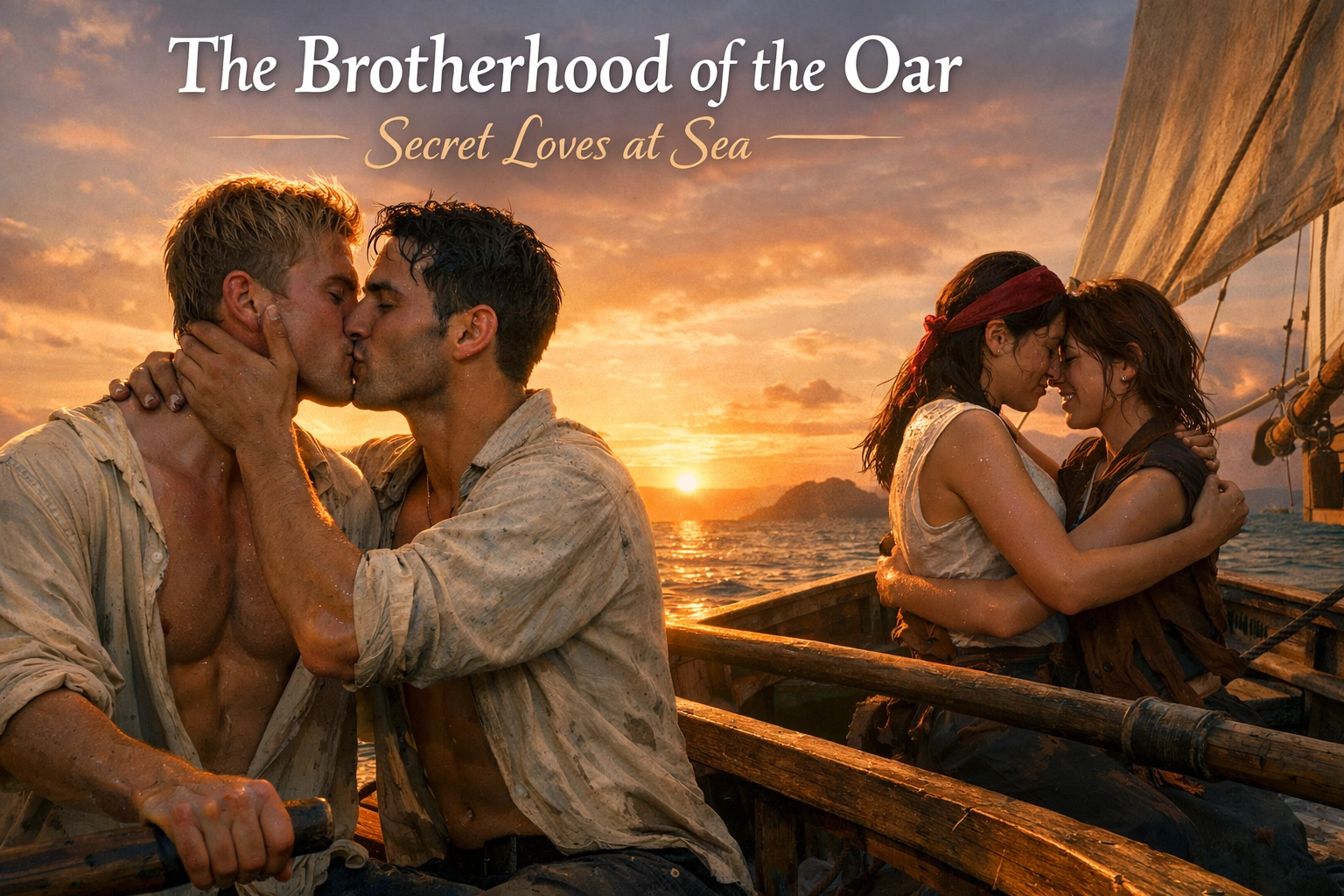
readwithpride.com
When we think of Vikings, we picture fierce warriors with braided beards, longships cutting through icy waters, and raids on distant shores. But what happened during those months-long voyages when thirty or forty men were crammed into a wooden vessel, far from wives and families, sharing every waking and sleeping moment? The truth is far more intimate than the sagas typically tell us.
The longships of the Norse weren't just vessels of war and trade, they were floating worlds unto themselves, where the rules of land society bent and sometimes broke entirely. Out on the open sea, with nothing but wood beneath your feet and endless horizon in every direction, different bonds formed. Deeper bonds. The kind that couldn't always be spoken about when the ship finally made port.
Life in Close Quarters
Picture this: You're shoulder to shoulder on a rowing bench, your body moving in perfect rhythm with the man beside you. Hour after hour, day after day. The oar becomes an extension of your arm, and the man next to you becomes an extension of your soul. You learn the sound of his breathing, the strength of his pull, the way he grunts when a wave hits unexpectedly.
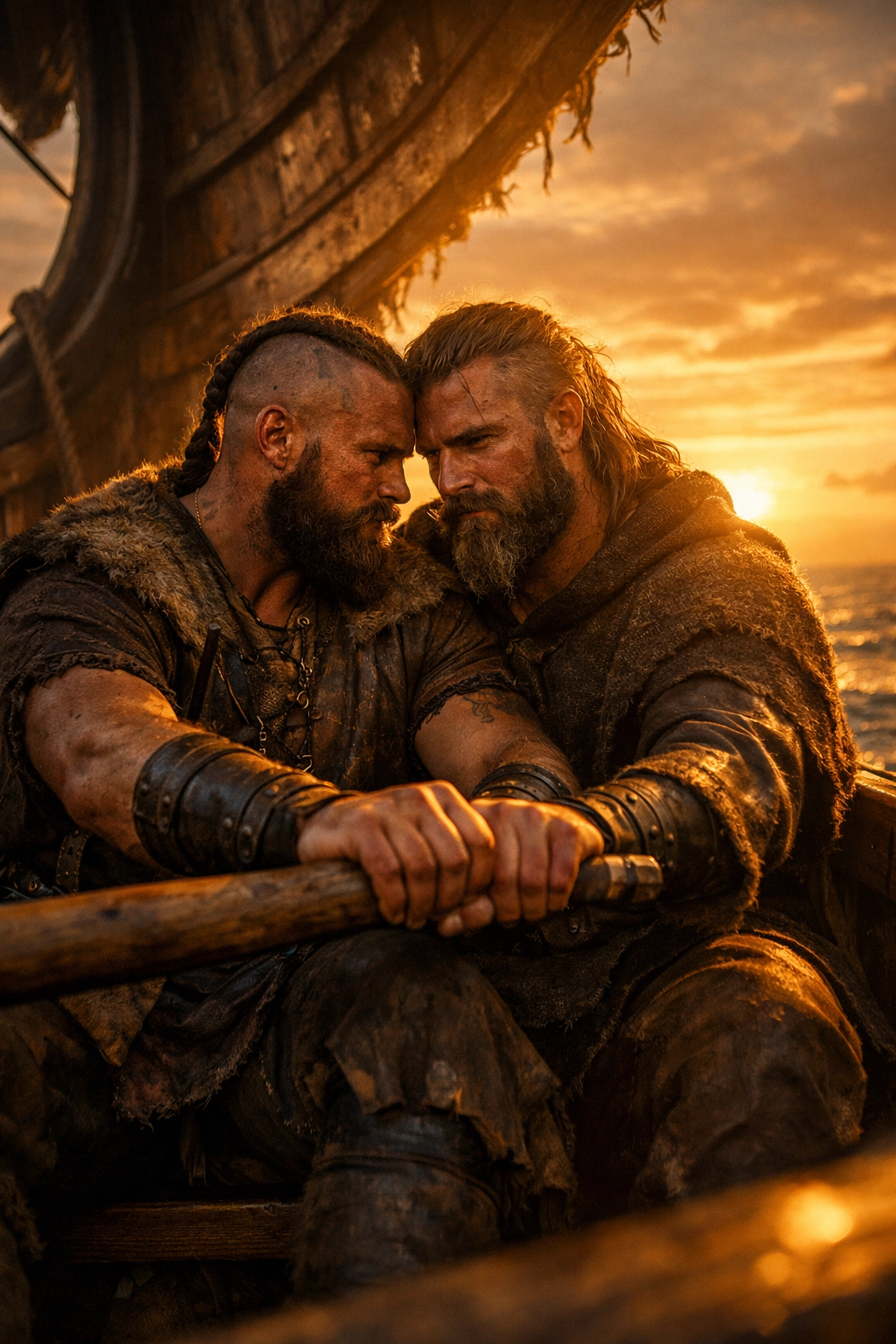
Viking longships weren't luxury cruises. These vessels were typically sixty to eighty feet long, maybe fifteen feet wide at most. Crew sizes ranged from twenty-five to sixty men depending on the ship. That's a lot of bodies in not much space. There were no private quarters, no separate cabins. Everyone slept on the deck, huddled together for warmth under wool blankets and furs. When storms hit, and they always did, men clung to each other as much as they clung to the ship itself.
The Norse sagas, written down centuries after the Viking Age, sanitized much of what actually happened at sea. But archaeological evidence and legal codes tell a different story. The medieval Scandinavian law codes actually addressed same-sex relationships, which means they were common enough to require legal discussion. The famous insult "ergi" (unmanliness) wasn't about loving men, it was about passivity. The distinction mattered to the Vikings in ways that reveal a complex understanding of masculinity and desire.
The Sacred Bond of Shield-Brothers
Vikings had a concept called "sworn brotherhood", a formal bond between two warriors that was legally recognized and considered as binding as marriage. These men swore oaths to each other, sometimes literally mixing their blood. They fought side by side, shared their wealth, and yes, sometimes shared their beds.

The sagas mention several such pairings, though always in careful language. The most famous might be the bond between King Olaf Tryggvason and his companion. Historical records suggest these relationships involved both martial partnership and emotional intimacy that went beyond simple friendship. On a ship, where death could come from a sudden storm or an arrow in the dark, having someone who knew you completely: body and soul: wasn't just comfort. It was survival.
The rowing itself became a kind of meditation, a shared rhythm that synchronized not just bodies but hearts. Old crew members could tell you who rowed well together just by watching the water. Some pairs moved as one person, their oars hitting the water in perfect unison, creating a harmony that made the whole ship faster. Captains knew to keep good pairs together. Break that bond, and you might lose more than just rowing efficiency.
Nights Under Northern Stars
When darkness fell and the ship anchored in some sheltered cove, the real intimacy began. Men would huddle in small groups for warmth, and the boundaries between friendship and something more could blur. The sagas sometimes mention men sharing a single fur, supposedly just for practical warmth. Sure. And I'm just reading MM romance books for the plot.
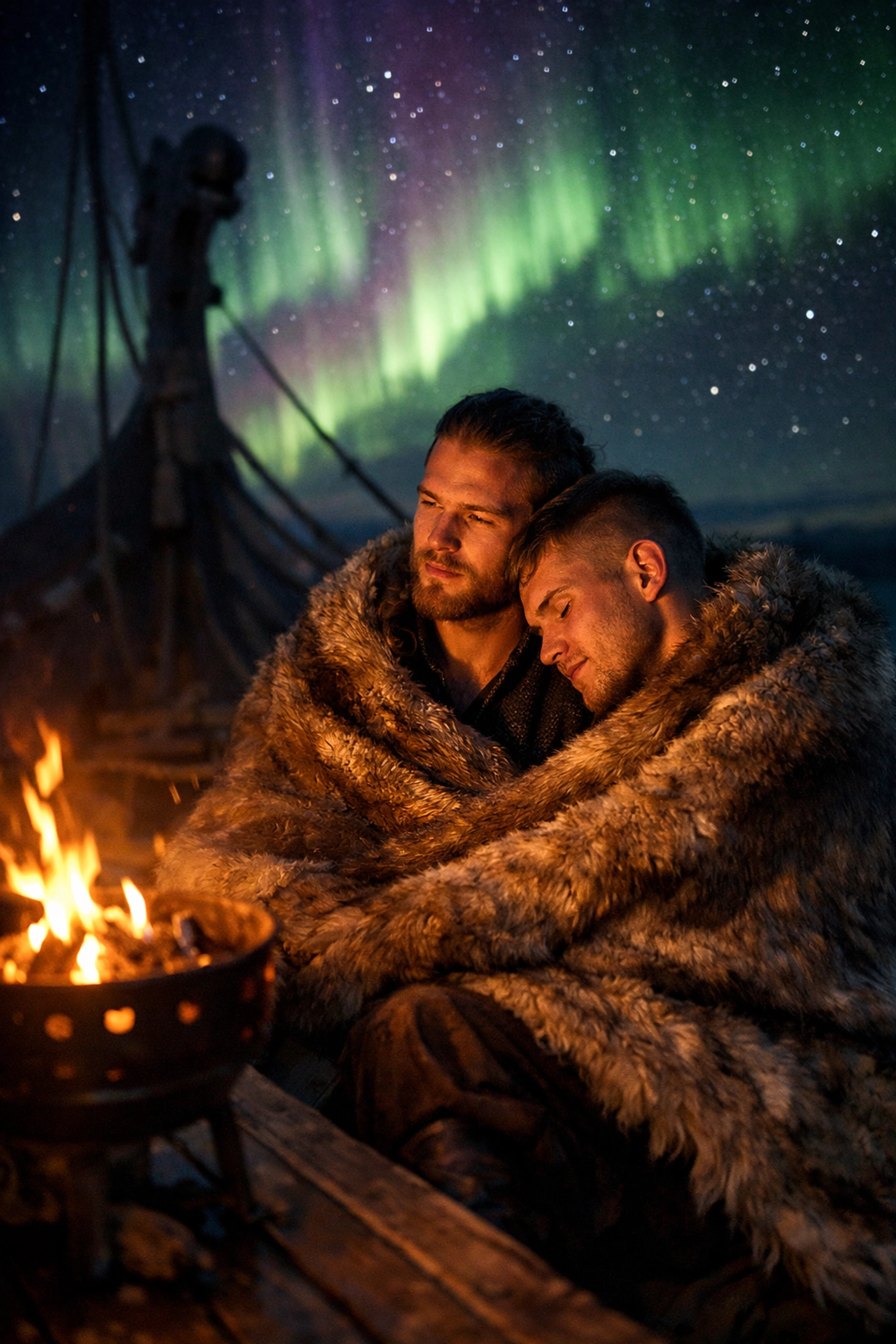
Drinking was common during these evening respites: the Vikings never went anywhere without mead or ale. Alcohol loosened tongues and lowered inhibitions. Men spoke of things they wouldn't mention on land. Feelings got confessed. Hands wandered. The ship became its own world with its own rules, and what happened at sea stayed at sea: mostly.
Some relationships formed out on the waves became lifelong partnerships. Men who survived multiple voyages together often settled near each other on land, their farms side by side, their lives intertwined. Their wives (because societal expectations still required marriage) knew something deeper bound their husbands to these other men, but speaking of it openly would violate the unspoken code.
The Poetry They Didn't Teach in School
Viking culture was big on poetry: skalds composed elaborate verses praising warriors and their deeds. But there's another layer to this poetry that often gets glossed over in modern translations. Many of these poems contain homoerotic imagery that's pretty unmistakable once you know what to look for.
References to "sweet fellowship," descriptions of warriors' beauty that go well beyond what you'd write about a mere comrade, verses about the pain of separation from a shield-brother: this wasn't subtle. The medieval monks who later transcribed these poems sometimes left sections out or rewrote them, but enough survived to give us glimpses of the truth.
The concept of "mannvænn" appears in old Norse texts: it translates roughly to "man-fine" or having affection for men. It wasn't necessarily shameful unless you were the passive partner (that toxic masculinity was still very much a thing). The Viking understanding of same-sex desire was different from modern frameworks, but it absolutely existed and found expression in the close confines of those longships.
When the Ship Comes Home
The hardest part of every voyage wasn't the storms or the battles: it was coming home and pretending the intimacy never happened. Men who'd held each other through terrifying nights, who'd whispered confessions under the stars, who'd found comfort in each other's arms, suddenly had to be just "ship-mates" again.
Some couldn't do it. Historical records mention men who kept sailing, voyage after voyage, never settling down despite having the means to do so. Maybe they were just addicted to adventure. Or maybe they were addicted to the only place where they could truly be themselves, where love between warriors wasn't just accepted but understood as part of the natural order of things.
The legacy of these sea-bound relationships echoes through Viking culture in ways historians are only now beginning to fully explore. The emphasis on male bonding, the elaborate rituals around sworn brotherhood, the poetry celebrating companionship: it all points to a culture that, while still constrained by its own rules and biases, made space for love between men in ways that might surprise us.
Finding Our Own Brotherhood
Reading these stories of Viking intimacy today, as part of the LGBTQ+ community, feels like uncovering hidden history. These weren't the sanitized tales of noble warriors we learned in school. These were real men finding real connection in extraordinary circumstances. Their stories remind us that queer love has always existed, even when it had to hide between the lines of history books.
If you're hungry for more stories of male bonds and hidden histories, Read with Pride offers a treasure trove of MM romance books and gay fiction that explores these themes in both historical and contemporary settings. From gay historical romance to contemporary gay novels, there's something for everyone who loves stories of men loving men against all odds.
The brotherhood of the oar wasn't just about rowing in unison: it was about finding your person in the most unlikely of places, when survival itself required vulnerability and trust. Those Viking crews understood something fundamental: that intimacy forged in hardship creates bonds stronger than steel.
So next time you see a Viking ship in a museum or a movie, remember: there's always more to the story than the official history tells us. And sometimes, the most powerful love stories are the ones written in the wake of a longship, visible only to those who know where to look.
Follow us for more untold LGBTQ+ history:
- Facebook: Read with Pride
- Instagram: @read.withpride
- X/Twitter: @Read_With_Pride
- Website: readwithpride.com
#ReadWithPride #MMRomance #GayHistoricalRomance #VikingHistory #LGBTQHistory #GayRomanceBooks #MMHistoricalRomance #QueerHistory #GayFiction #LGBTQBooks #GayLoveStories #MMBooks #GayNovels #HistoricalMMRomance #QueerFiction #GayLiterature #2026GayBooks #BestMMRomance #LGBTQReading #GayBookClub

Leave a Reply
You must be logged in to post a comment.