

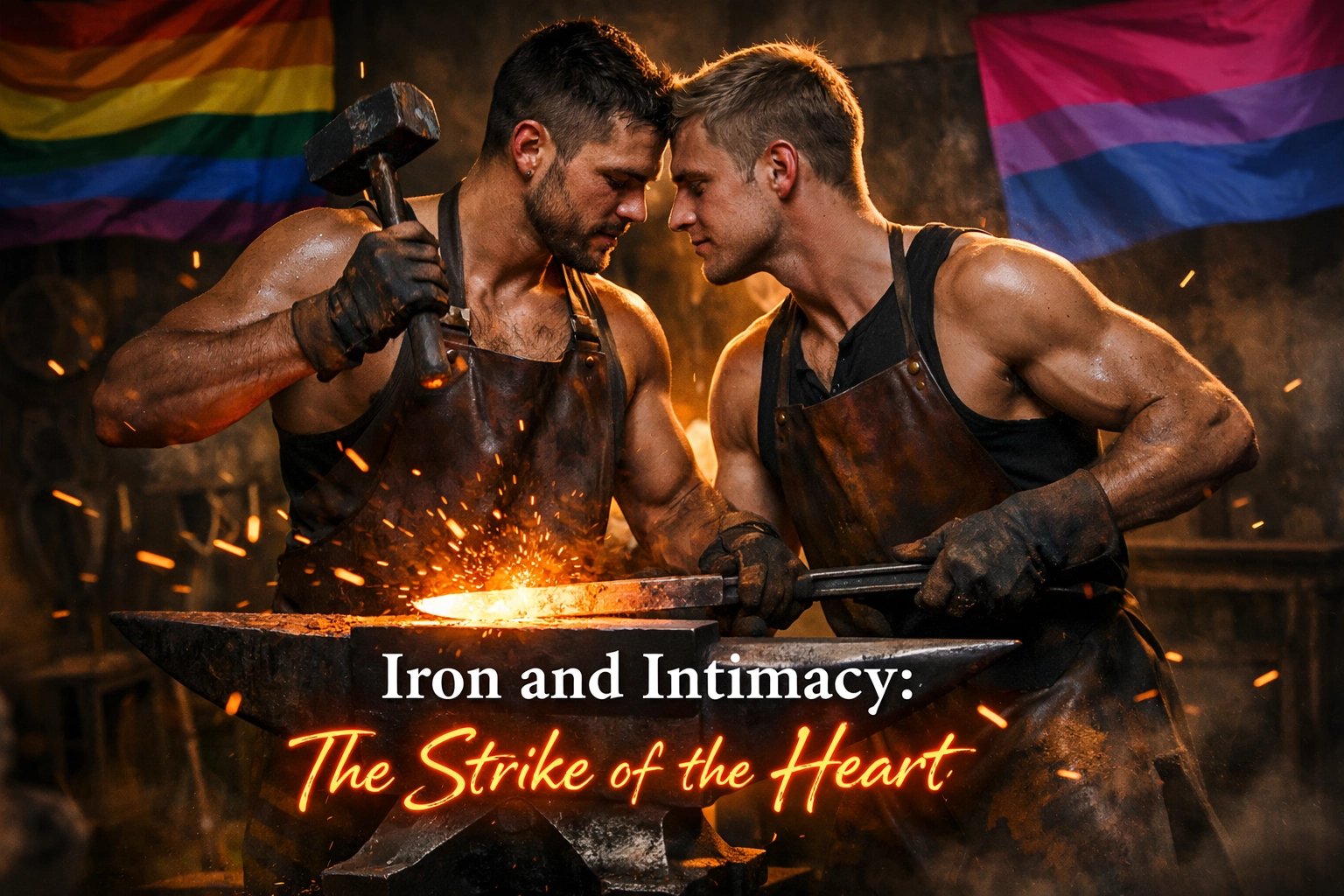
readwithpride.com
The smoke from the factory chimneys painted Manchester's sky a permanent shade of grey in 1842. From his office window overlooking the floor, Edmund Hartley could see the machinery grinding to a halt, one wheel after another falling silent. The strike had begun.
And at the center of it all stood William Fletcher, dirt on his face, fire in his eyes, and words that could move mountains pouring from his lips as he rallied the men.
Edmund's heart did something complicated in his chest. Something it had no business doing.
When Worlds Collide
The Industrial Revolution wasn't just about steam and steel, it was about people crushed between the gears of progress. Factory owners like Edmund lived in Georgian townhouses with servants and imported wine. Workers like William shared cramped lodgings with twelve others, their lungs slowly blackening from the factory air.
The divide wasn't just economic. It was a canyon carved by birth, education, and the cruel mathematics of capitalism. Edmund had inherited his father's textile mill at twenty-five. William had started working at eight, his childhood stolen by the same machines that now stood silent in protest.
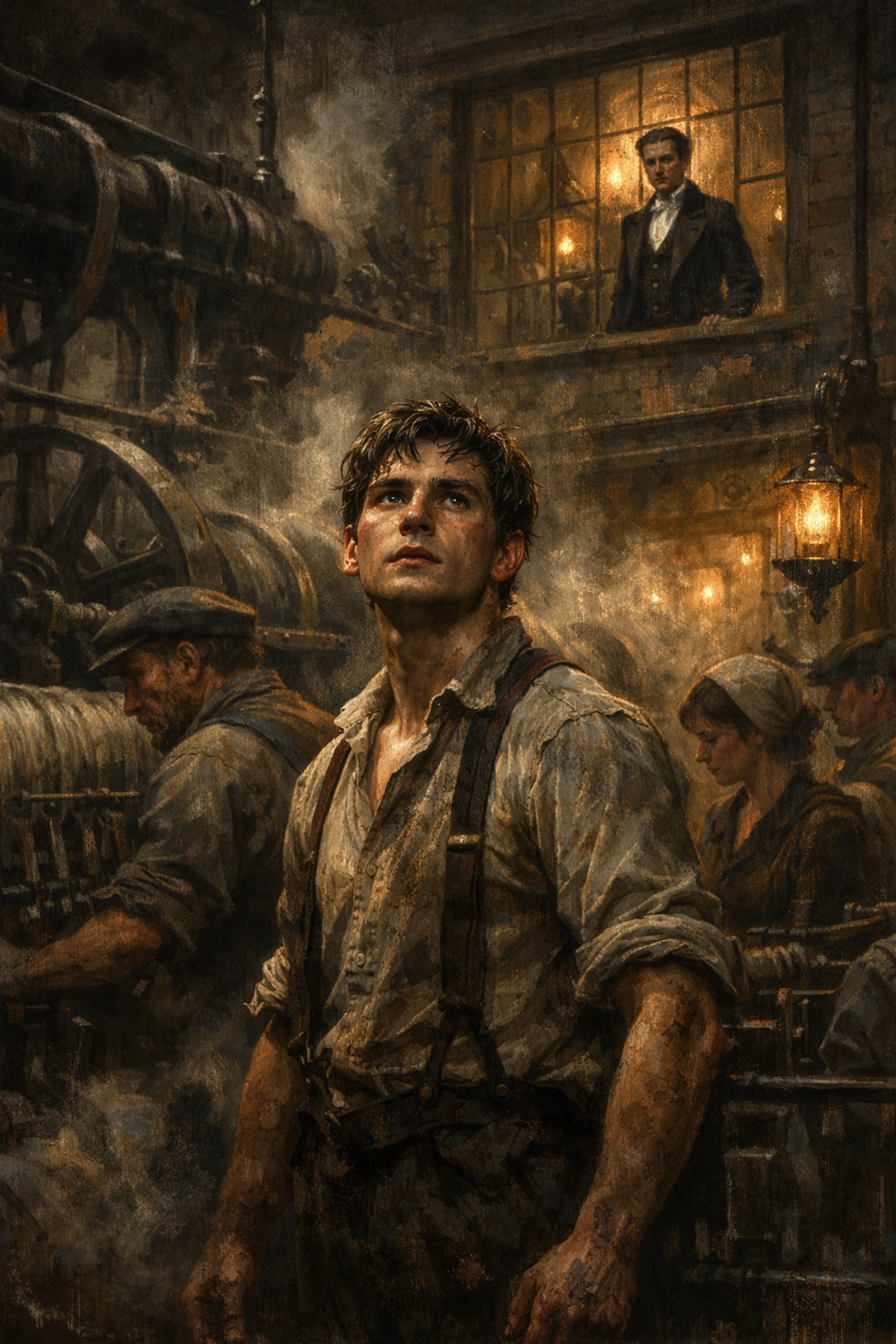
When Edmund first noticed William, really noticed him beyond being just another face on the factory floor, it was during a dispute over working hours. William had spoken up, articulate and passionate, defending a colleague too exhausted to stand. Edmund had been struck not just by his courage, but by the way his hands moved when he talked, by the intelligence burning behind eyes that society deemed unworthy of education.
That was three months ago. Now William was leading a strike that could ruin everything Edmund's family had built.
And Edmund couldn't stop thinking about him.
The Impossible Math of Desire
Gay romance has always existed in the margins, but when you add class difference to the equation during Victorian England, you're playing with fire. The Criminal Law Amendment Act hadn't passed yet, but sodomy was still punishable by death, and the social consequences of a relationship between a factory owner and his worker would be catastrophic for both.
For Edmund, discovery meant social death, his family's reputation destroyed, business partnerships severed, possibly criminal prosecution. He'd seen what happened to men like Oscar Wilde decades later. Society showed no mercy.
For William, the stakes were somehow even higher. He'd be labeled a social climber at best, a prostitute at worst. His credibility with the workers would evaporate. The very men he was trying to protect would turn against him, assuming he'd sold them out to the owner's bed.
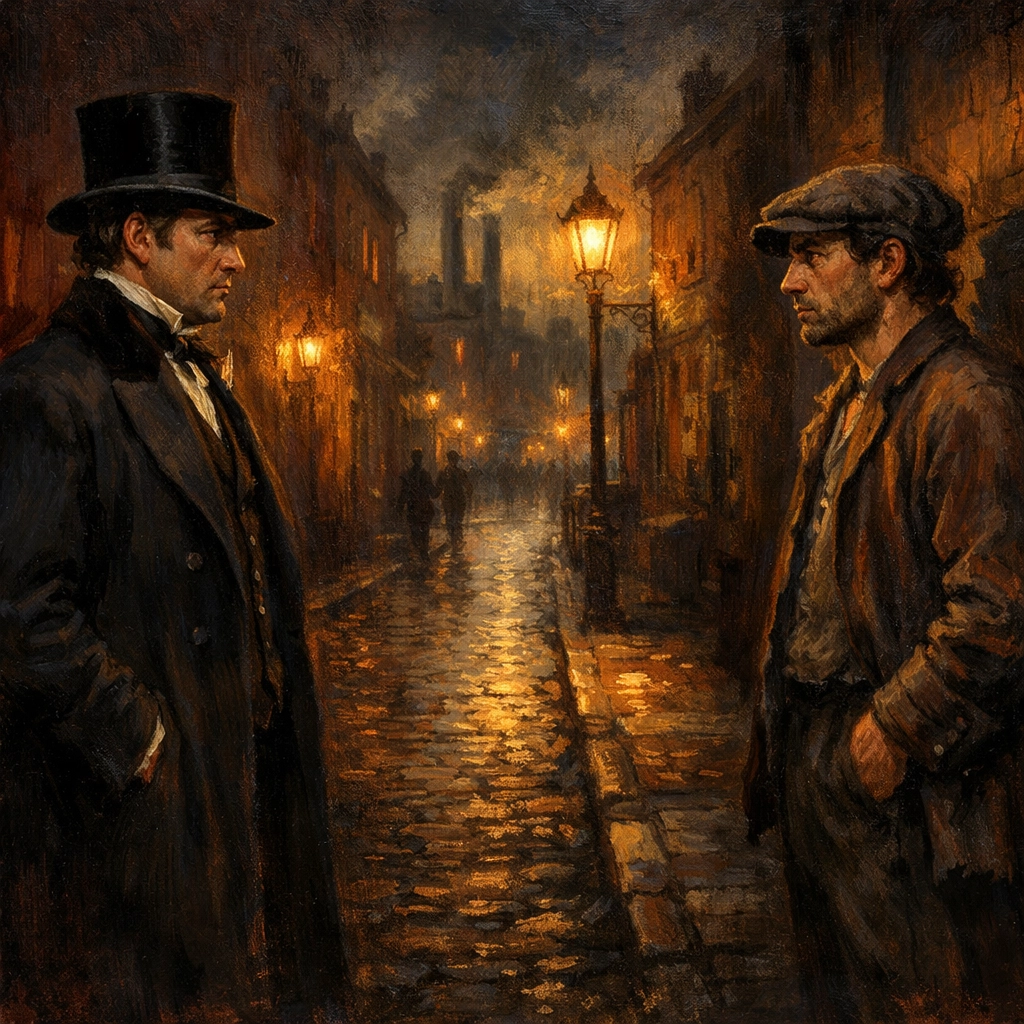
Yet here's what history often glosses over: these relationships happened anyway. Love, or lust, or whatever complicated emotion exists between two people who shouldn't want each other, doesn't care about logic. It doesn't respect class boundaries or self-preservation instincts.
Edmund found himself engineering reasons to walk through the factory. William found himself lingering after confrontations, their arguments lasting longer than necessary, charged with something neither could name.
The Secret Meeting
It happened during the second week of the strike. Edmund sent word through a trusted intermediary (every forbidden relationship needs one): meet me at the old warehouse by the canal. Neutral ground.
William came, suspicious but curious. They were supposed to negotiate. Instead, they stood ten feet apart in the dusty darkness, the air thick with things unsaid.
"You're destroying my business," Edmund said, but his voice lacked conviction.
"You're destroying our lives," William countered. "Sixteen-hour days. Children losing fingers. Men dying from the fumes. But sure, let's talk about your bloody business."
The anger between them was real. So was everything else.
"I notice you," Edmund admitted, the words tumbling out unbidden. "I notice you and I shouldn't. I watch you speak and I forget why I'm supposed to be your enemy."
William's expression shifted: shock, then understanding, then something that looked like relief mixed with terror. "You think I don't know? You think I haven't felt you watching? This is madness."
"Complete madness," Edmund agreed.
They kissed like drowning men gasping for air.
The Impossible Negotiation
What followed wasn't a fairy tale. Real life rarely is, especially when you're writing MM romance books about historical class struggles.
They couldn't be together. Every logical bone in their bodies knew this. Edmund couldn't abandon his family's business, his responsibilities, his place in society. William couldn't betray the workers who depended on him, couldn't be seen as compromised.
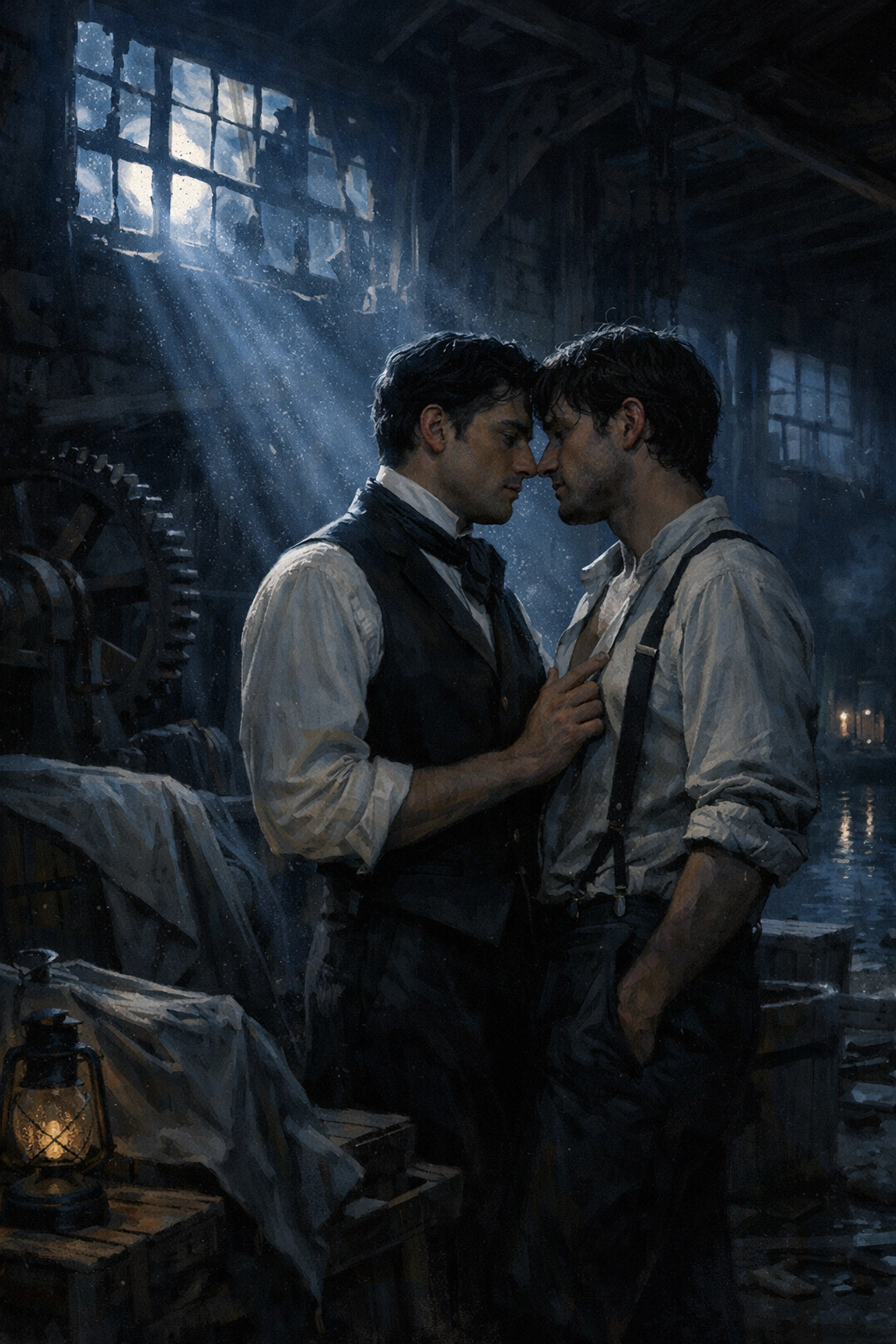
But they kept meeting. Stolen hours in the warehouse. Conversations that started as arguments about labor conditions and ended with desperate kisses. Learning each other's bodies in the spaces between their warring worlds.
"You could improve conditions without ruining yourself," William said one night, lying in the darkness beside Edmund on a bed of old canvas tarps. "Shorter hours. Safety measures. Fair wages. You'd still profit."
"The other owners would blacklist me. No bank would extend credit to a radical."
"So you choose money over what's right?"
"I choose survival. Same as you."
The honesty hurt because it was true. Neither of them were heroes. They were just two men trying to navigate an impossible situation while falling for each other despite every good reason not to.
The Cost of Loving Across the Divide
Historical gay romance: the kind we explore here at Read with Pride: often focuses on the external threats: prosecution, social ostracism, violence. But the internal conflicts cut just as deep.
Edmund struggled with guilt. Every time he held William, he thought about the workers' families going hungry during the strike. Every kiss felt like a betrayal of his class, his duties, everything he'd been raised to value.
William wrestled with his own demons. Was he being seduced by privilege? Was his desire for Edmund undermining the cause? Could he trust his own judgment when his body wanted something his politics condemned?
The power imbalance was undeniable. Edmund could fire William with a word. He controlled William's livelihood, his survival. How could any relationship be genuine under those conditions?
"I don't want your charity," William said during one of their increasingly frequent arguments. "I don't want you to improve conditions because you're fucking me. I want you to do it because it's right."
"And I want you to see me as more than just a factory owner," Edmund shot back. "But we don't always get what we want, do we?"
The Resolution That Wasn't
History doesn't record what happened to Edmund Hartley and William Fletcher. They're fictional, but they represent thousands of real relationships that existed in the shadows of industrial Britain: relationships between masters and servants, owners and workers, rich and poor.
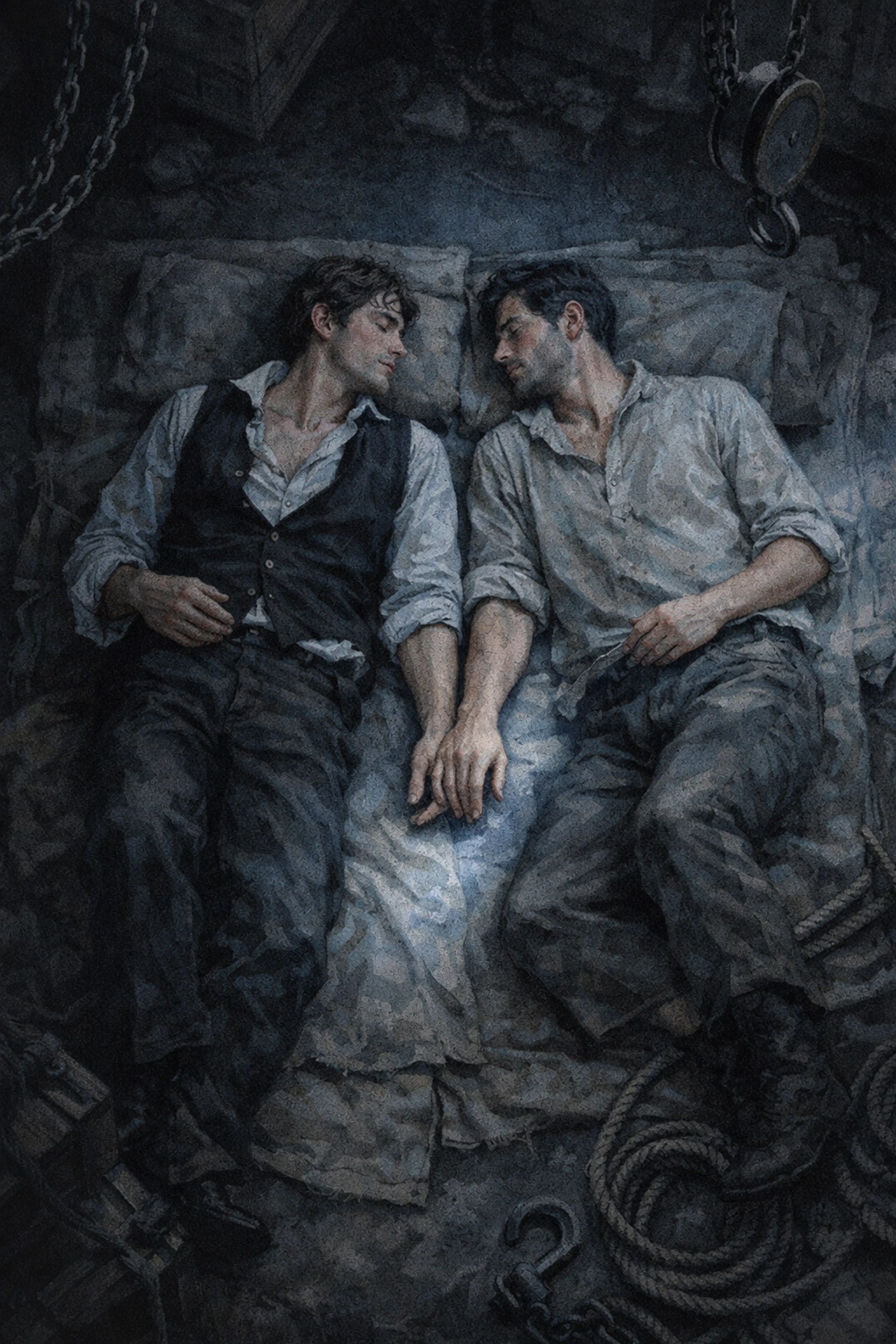
Some probably ended in tragedy. Discovery. Prosecution. Suicide. The Victorian era wasn't kind to men who loved men, and it was especially cruel when those men crossed class lines.
Others might have found compromise. Edmund gradually improving conditions, slowly enough not to attract attention. William moderating his demands, the strike ending with partial victories. Both men continuing to meet in secret, their relationship a guilty pleasure neither could quit.
A rare few might have defied the odds completely: Edmund abandoning his inheritance, the two of them disappearing to another city, another country, reinventing themselves as something other than owner and worker.
We don't know. History didn't care enough to record the love stories of gay men, especially when those men came from different worlds.
Why These Stories Matter
When we talk about gay romance novels and MM fiction here at Read with Pride, we're not just talking about escape and entertainment. We're talking about recovery: recovering the stories that history tried to erase.
Rich and poor gay relationships have always existed. They existed in ancient Rome between senators and slaves. In medieval castles between lords and stable boys. In Victorian factories between owners like Edmund and workers like William. They exist today, though the specific challenges have evolved.
The fundamental tensions remain: power imbalance, social judgment, the question of whether genuine love can exist across vast economic divides. These are the tensions that make for compelling gay historical romance: not just the forbidden nature of same-sex love, but the added complexity of class warfare.
These stories remind us that LGBTQ+ people have always been part of every social stratum, every historical moment, every class struggle. Our love stories aren't separate from history: they're woven through it, often hidden but always present.
Whether you're into enemies to lovers MM romance or slow burn stories, the tale of Edmund and William captures something essential: the messy, complicated, sometimes impossible reality of loving someone across a divide.
Because in the end, that's what the best LGBTQ+ fiction does: it shows us the full humanity of queer love, including all the parts that don't fit neatly into happily-ever-afters.
Discover more historical gay romance and MM fiction at readwithpride.com. Follow us on Facebook, Instagram, and X/Twitter for daily LGBTQ+ book recommendations.
#MMRomance #GayHistoricalRomance #LGBTQFiction #ReadWithPride #GayRomanceBooks #QueerFiction #MMBooks #GayLoveStories #HistoricalGayRomance #IndustrialRevolution #ClassDivide #ForbiddenLove #LGBTQHistory #GayNovels #MMFiction #QueerLove #GayLiterature #2026GayBooks

Leave a Reply
You must be logged in to post a comment.