

readwithpride.com
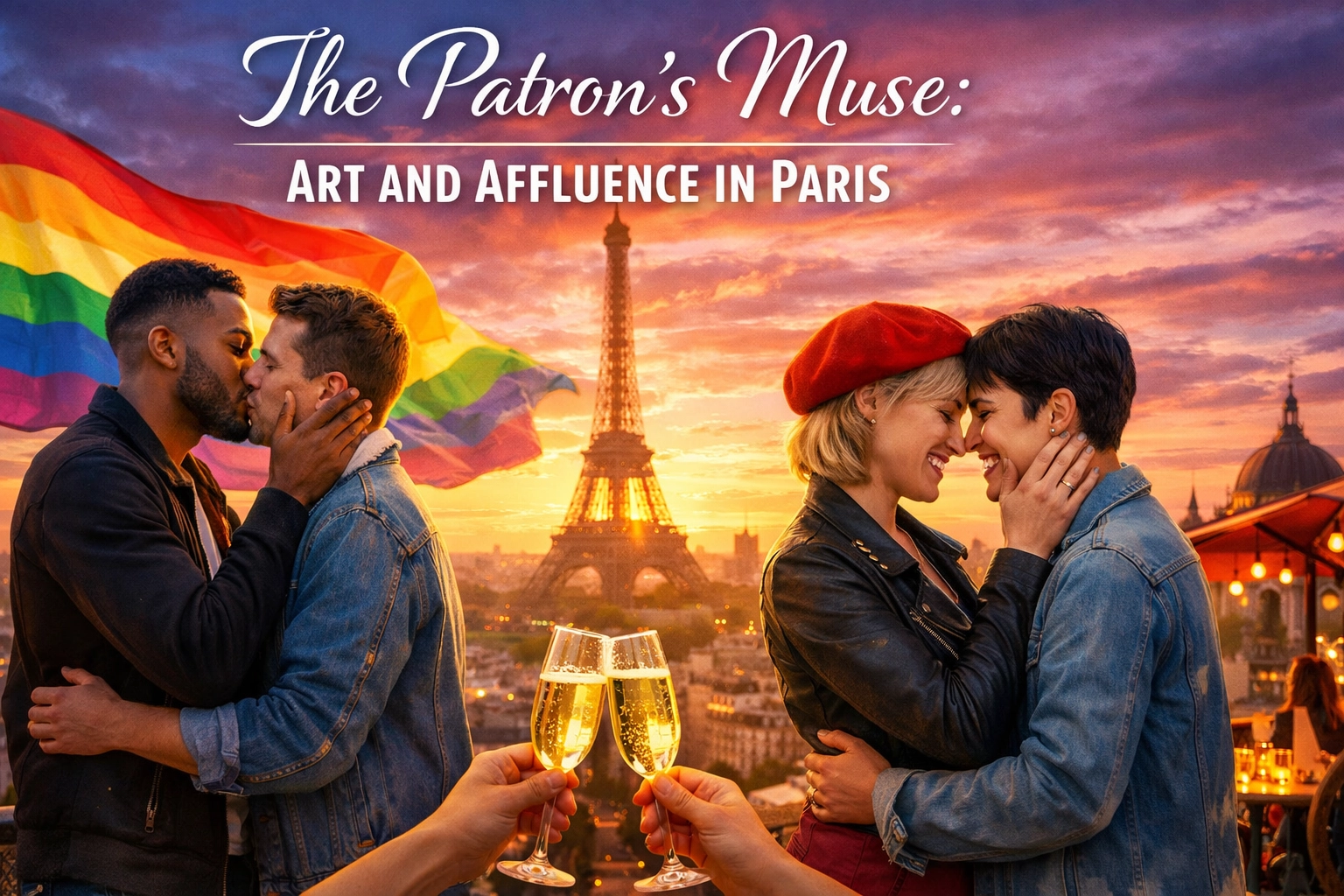
Paris in the 1920s wasn't just about jazz, champagne, and Hemingway getting drunk at the Ritz. For those who know where to look, it was also the backdrop for some of the most complicated, beautiful, and absolutely devastating love stories between men, especially when one had a trust fund and the other had turpentine stains on his only decent shirt.
Let's talk about what happened when wealth met talent in Montparnasse, and how love didn't give a damn about bank accounts.
The Golden Boy and the Starving Artist
Alexander Hartford III (because of course there were two before him) arrived in Paris with everything: family money, Harvard connections, and a townhouse near the Luxembourg Gardens that most struggling artists would kill for. He'd been sent to Europe by his family to "broaden his horizons" and "develop cultural refinement", code for "please stop embarrassing us in Boston."
What they didn't anticipate was Marcel Dubois.
Marcel lived in a sixth-floor walk-up in Montmartre that barely qualified as a room. No running water, a single window that rattled in the wind, and canvases stacked so thick you could barely see the floor. But his paintings? Absolute fire. Raw, emotional, and completely unmarketable according to every gallery owner in the Marais.
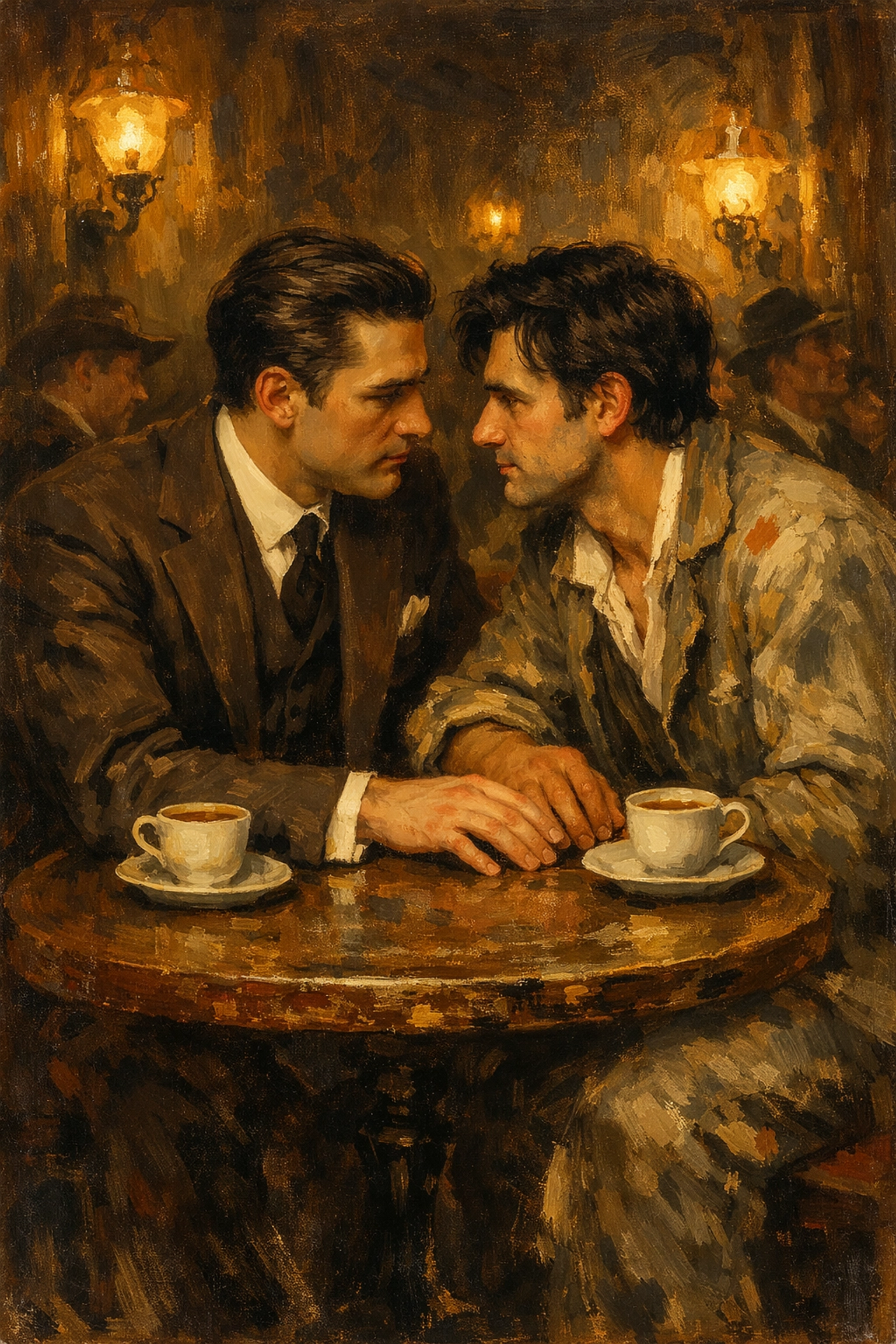
Their first meeting was pure cinema: Alexander stumbled into a grotty café after getting lost, and there was Marcel, paint under his fingernails, arguing with the owner about a tab he couldn't pay. Alexander paid it without thinking, old money habits die hard, and Marcel looked at him with a mixture of gratitude and absolute fury.
"I don't need charity from American tourists," Marcel said in accented English.
"Good," Alexander replied. "Because I'm buying your time, not offering charity. Show me your work."
That's how it started. That's how it always starts, one moment of connection that changes everything.
When Class Warfare Meets Actual Love
Here's what the MM romance novels don't always tell you: falling in love across class lines isn't just romantic, it's absolutely exhausting.
Alexander's world ran on champagne lunches, gallery openings where everyone air-kissed and said nothing meaningful, and dinner parties where the silverware alone cost more than Marcel's annual rent. He was expected to eventually marry some debutante, return to Boston, and manage the family's shipping interests while pretending his time in Paris was just a youthful adventure.
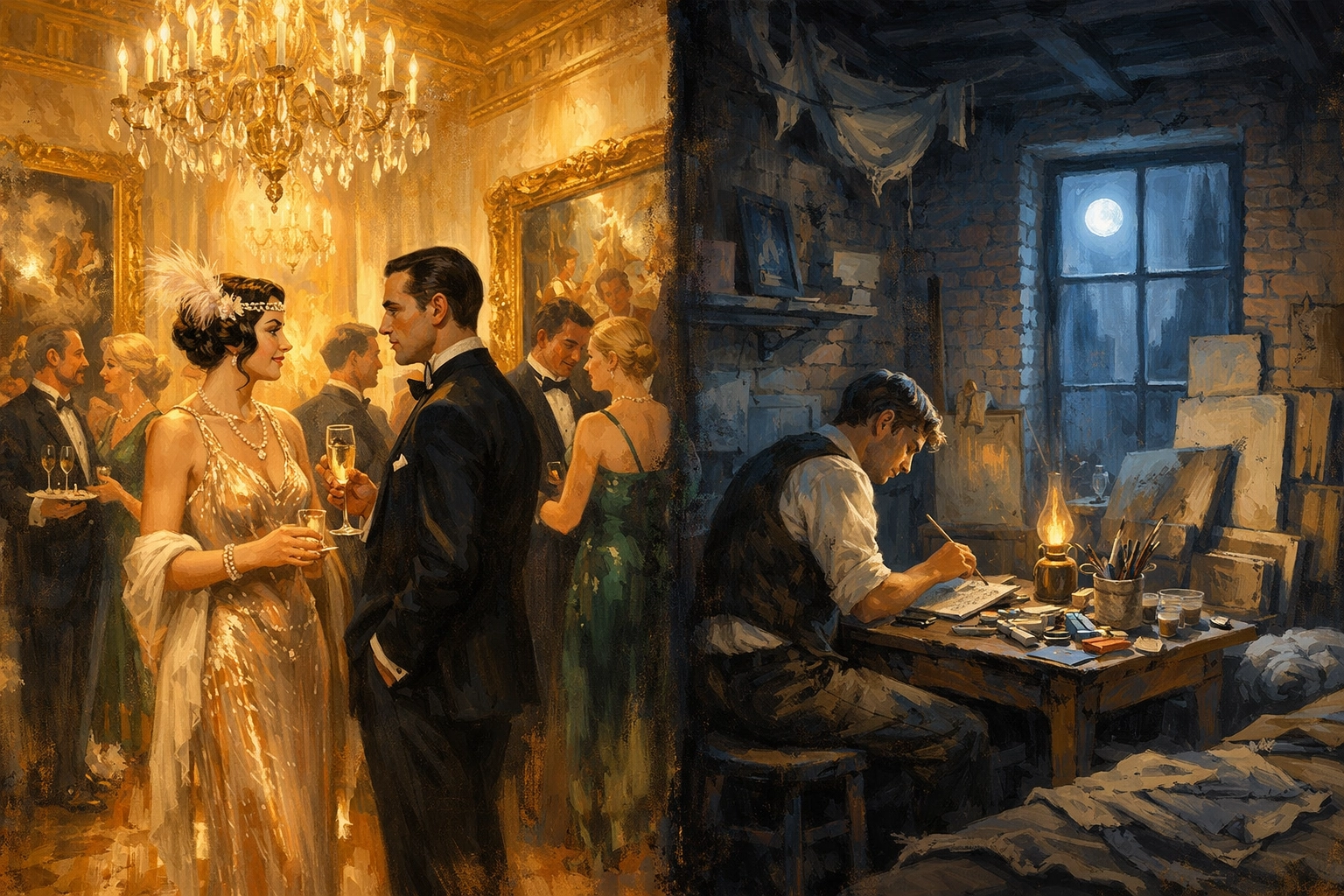
Marcel's world? Coffee and cigarettes for breakfast (if he remembered breakfast), brutal honesty, and a community of artists who shared everything because they had nothing. His friends were poets, dancers, and musicians who'd all come to Paris chasing the same desperate dream: to create something that mattered before poverty or society crushed them.
The first time Alexander invited Marcel to a society dinner, it was a disaster. Marcel showed up in his only suit, threadbare at the elbows, paint stained at the cuffs, and proceeded to tell a countess exactly what he thought of her "safe, bourgeois taste" in art. Alexander was mortified. His friends were scandalized.
Marcel left halfway through dessert.
"I can't be your exotic pet," Marcel said later, when Alexander found him at their usual café. "I can't smile at people who think art should match their furniture."
"Then don't," Alexander said. "Let me be yours instead."
The Real Cost of Patronage
Alexander did what wealthy men in love had done for centuries: he became Marcel's patron. He bought supplies, paid for the studio space, commissioned works. He opened doors that would've stayed locked forever for a poor French painter with no connections.
And Marcel hated it.
Not the support itself, he needed to eat, needed supplies, needed a chance, but what it represented. Every canvas Alexander bought, every introduction he made, every problem he solved with money felt like another chain. How do you love someone who holds your entire career in their perfectly manicured hands?
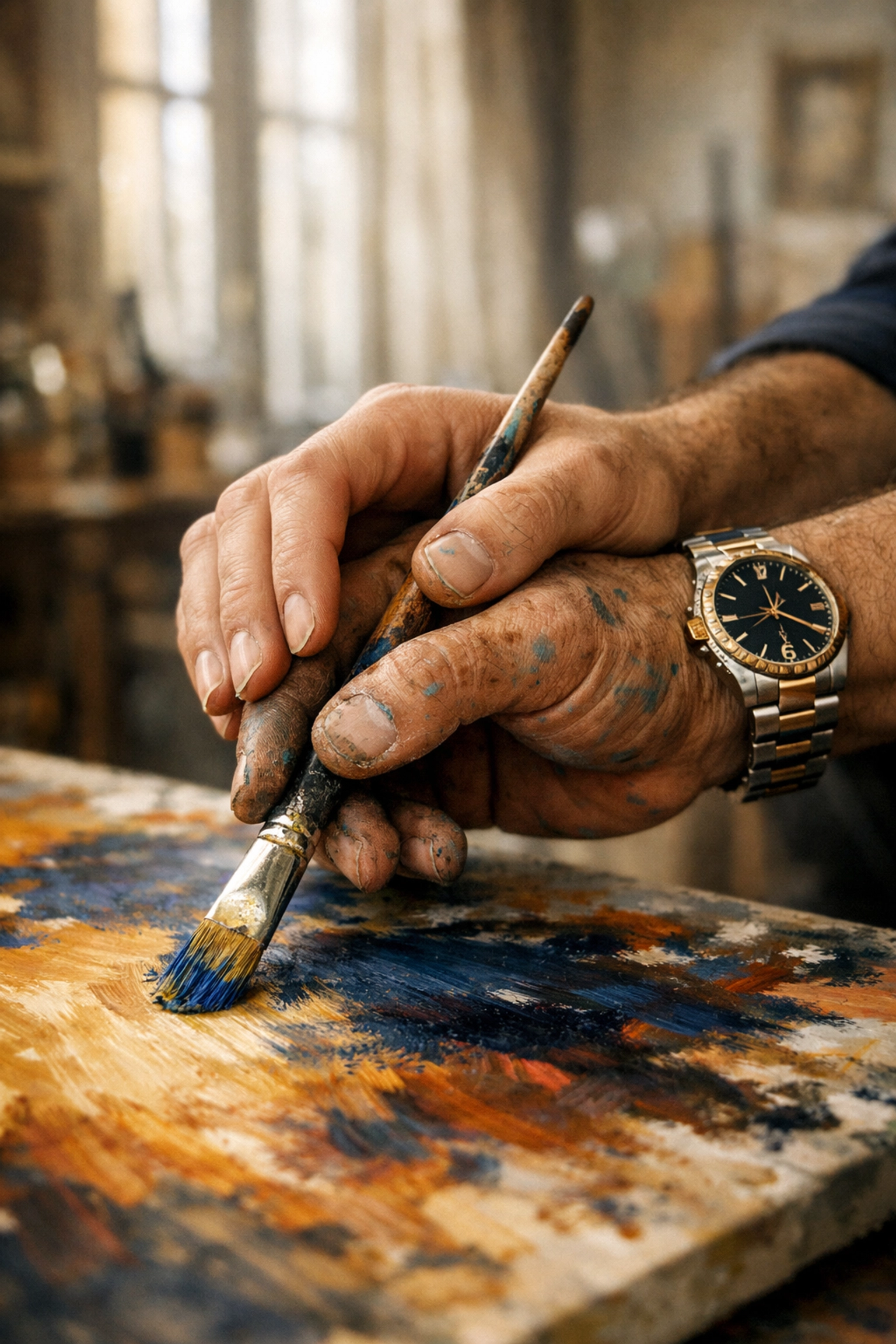
The fights were legendary. Marcel accusing Alexander of buying him like a possession. Alexander pointing out that without his support, Marcel would still be arguing about café tabs. Both of them right. Both of them wrong. Both of them terrified that money had corrupted something that started pure.
"I would love you in rags," Alexander said during one particularly brutal argument.
"But you don't have to," Marcel shot back. "That's the point."
This is the part that gets left out of gay historical romance sometimes, the real, grinding tension of unequal relationships. It's not just society's prejudice. It's waking up knowing your lover could withdraw support at any moment. It's wondering if you're loved for yourself or as a project. It's the exhausting work of maintaining dignity when someone else pays your bills.
The Scandal That Changed Everything
Everything came crashing down at Alexander's gallery show, the one where he was supposed to debut Marcel's work to Parisian society. Alexander had planned it for months, calling in every favor, leveraging every connection. This was supposed to be Marcel's breakthrough.
But someone had talked. Rumors spread through the American expatriate community like wildfire: Alexander Hartford III wasn't just patronizing a French artist, he was involved with him. Sleeping with him. Living in sin with some Montmartre nobody.
Half the invited guests didn't show. The ones who did whispered behind gloved hands. Alexander's family sent an urgent telegram demanding he return to Boston immediately. His trust fund was threatened. His reputation was in tatters.
And Marcel's paintings? They hung on those gallery walls, brilliant and devastating and completely ignored because of who had loved their creator.
"I've ruined you," Marcel said, standing in the empty gallery.
"No," Alexander said quietly. "They did this. Not you. Never you."
Love in the Margins
They didn't get a Hollywood ending: not the kind we'd write today. Alexander was eventually cut off by his family and had to actually work for a living (the horror). He became an art dealer, never wealthy again but comfortable enough. Marcel got his recognition, but it took years and happened largely after they'd both left Paris.
What they did get was each other. A small apartment in the 6th arrondissement. Quiet dinners at home. A life built in the margins of society where they could finally stop performing for everyone else.
They learned to navigate the inequality that never fully disappeared. Alexander learned to ask before helping, to support without smothering. Marcel learned to accept support without feeling purchased. Neither was perfect at it. Love across class lines never is.
But here's what matters: they chose each other anyway.
Why These Stories Still Matter
We're still telling stories about rich guys and struggling artists: Read with pride showcases countless MM romance books exploring similar themes: because the tension is timeless. Whether it's 1920s Paris or modern-day New York, gay romance novels understand that love doesn't erase inequality; it forces you to confront it.
The best LGBTQ+ fiction doesn't pretend these relationships are easy. It shows the work, the fights, the compromise, and the stubborn determination to build something real despite everything stacked against you.
Alexander and Marcel's story reminds us that privilege comes with responsibility, that talent deserves support without strings, and that real love means seeing each other clearly: bank account and all: and choosing partnership anyway.
Looking for more complex, authentic gay love stories that don't shy away from real-world challenges? Explore our collection of queer fiction at Read with Pride, where every story celebrates the messy, beautiful reality of LGBTQ+ love throughout history.
Follow us for more untold gay historical romance stories:
📘 Facebook
🐦 Twitter/X
📸 Instagram
#ReadWithPride #MMRomance #GayHistoricalRomance #LGBTQFiction #GayRomanceBooks #QueersReading #1920sParis #HistoricalMMRomance #GayLoveStories #MMBooks #QueerHistory #LGBTQHistory #ClassAndLove #PatronAndArtist #GayRomanceNovels #MMContemporary #LGBTQEbooks #PrideReading #RainbowReads #QueerLit

Leave a Reply
You must be logged in to post a comment.