

readwithpride.com
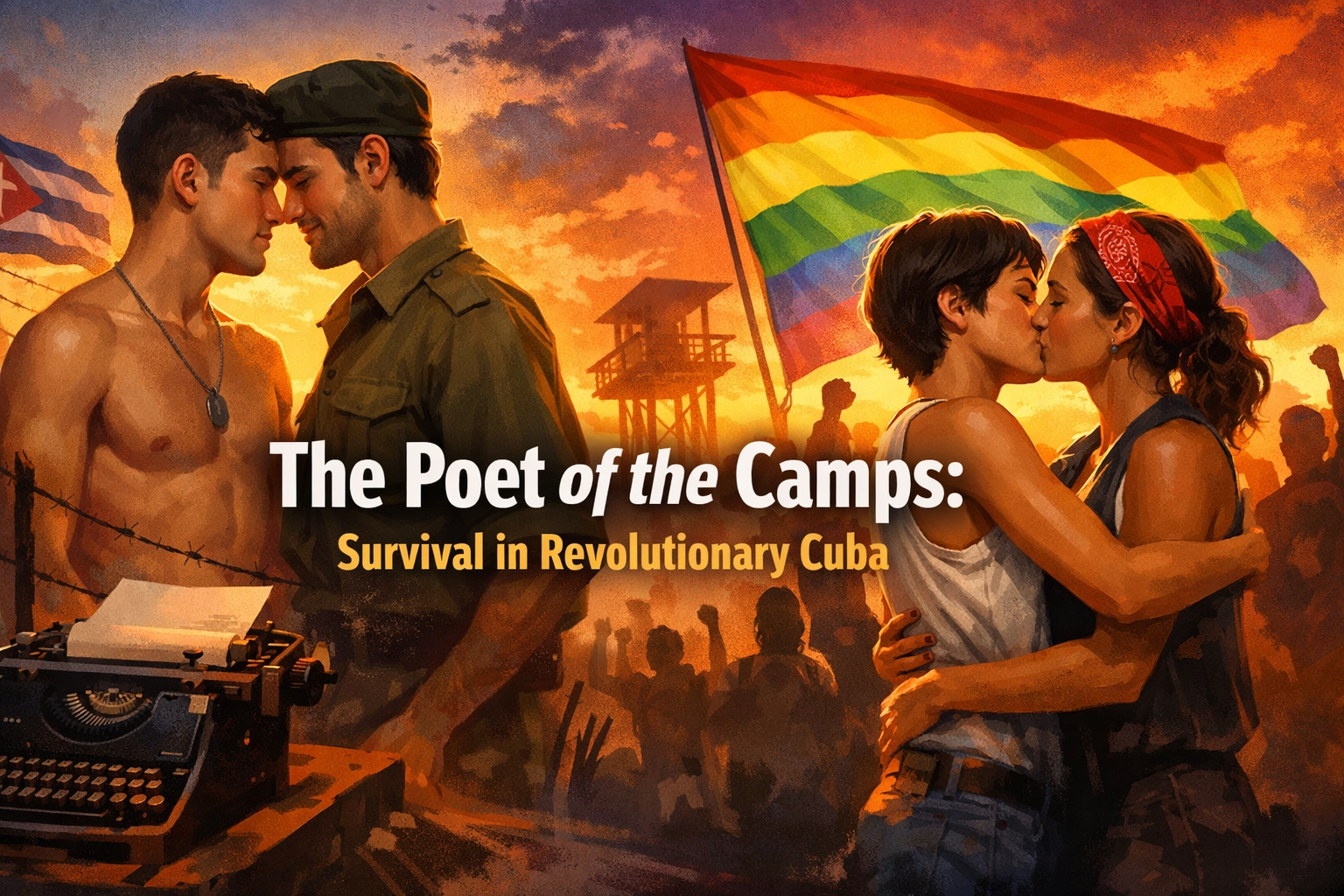
The revolution promised freedom, but for many gay men in Cuba, it delivered something else entirely: barbed wire, forced labor, and the crushing weight of "re-education." Between 1965 and 1968, the UMAP camps: Unidades Militares de Ayuda a la Producción: became prisons disguised as patriotic service, where young men were sent to have their "deviations" beaten, worked, and shamed out of them.
This is the story of one of those men. A poet who refused to let concrete and sugarcane break what mattered most: his words, his truth, and his identity.
The Night the Soldiers Came
He was twenty-three when they came for him. Not in the middle of the night like in the movies, but on a Tuesday afternoon while he was teaching literature to secondary school students. The knock on the classroom door. The stern faces. The summons that wasn't really a request at all.
His crime? Being seen at a party. Wearing his shirt unbuttoned one too many buttons. Having a voice that was "too soft" and mannerisms that were "inappropriate for a revolutionary educator." In Castro's Cuba, being gay wasn't just socially unacceptable: it was considered a threat to the revolution itself, a capitalist sickness that needed to be cured.
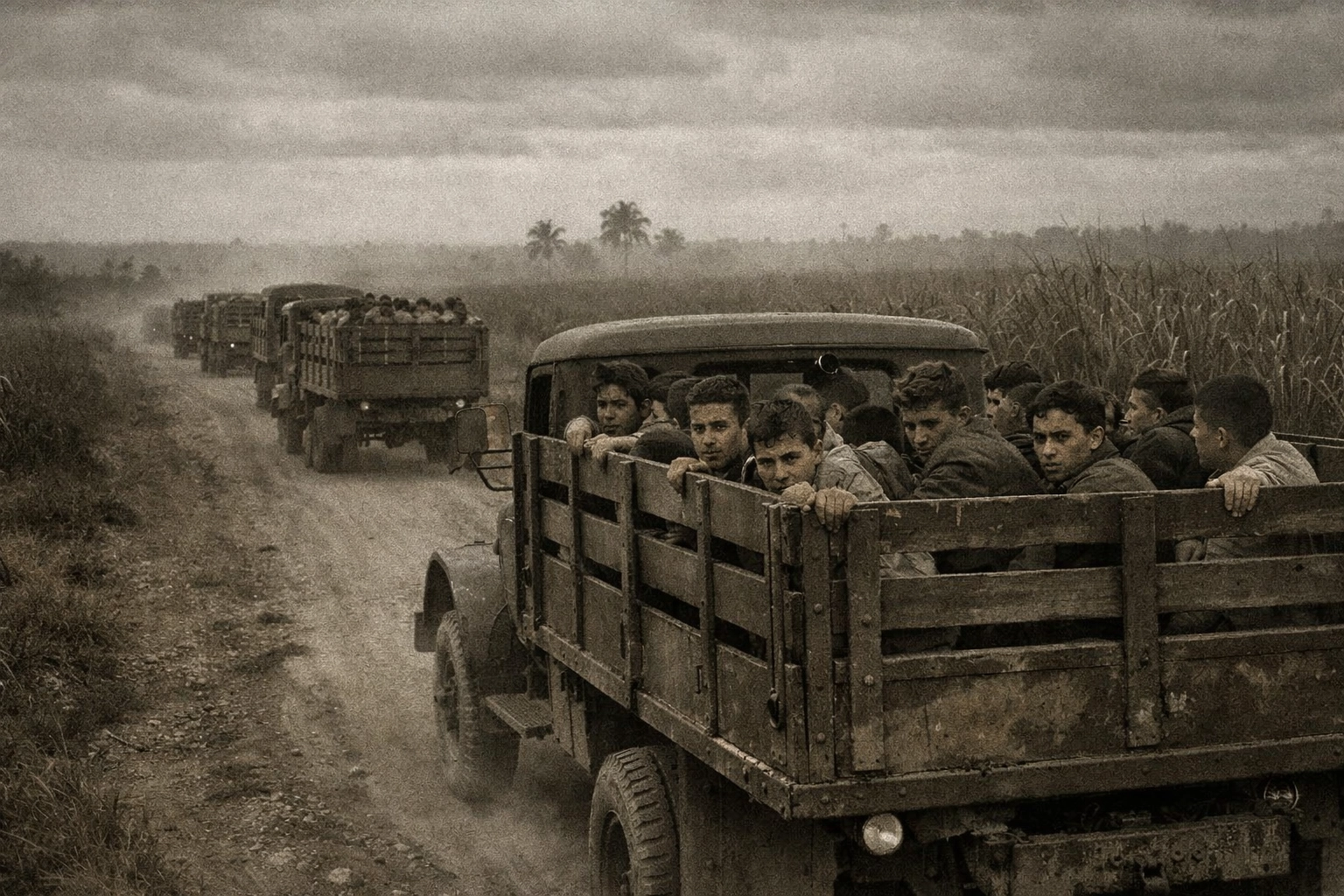
Within forty-eight hours, he found himself on a truck heading toward the Camagüey province, along with dozens of other young men. Some were gay. Others were religious. A few were just men who'd refused to cut their hair or had criticized the government once too loudly at a bar. The UMAP camps didn't discriminate much when it came to who they deemed "antisocial elements."
Life Behind the Wire
The camps were brutal in their simplicity. Wake before dawn. Work in the sugarcane fields or construction sites for twelve hours. Stand for political lectures about becoming "new men" worthy of the revolution. Sleep on concrete floors. Repeat.
The guards called them maricones, pájaros, every slur imaginable. They organized the men into work brigades with cruel efficiency, sometimes forcing them to cut sugarcane until their hands bled, sometimes making them dig ditches that would be filled in the next day just to break their spirits.
But our poet had something the guards couldn't confiscate: memory. While others whispered about escape or counted down the days, he began memorizing poetry. His own verses. Lines from Lorca. Passages from Whitman. Every piece of gay literature and queer history he could recall became an act of resistance.
At night, when exhaustion should have silenced everyone, he would recite quietly to those who wanted to listen. Soft words in the darkness. Reminders that beauty still existed beyond the barbed wire.
The Underground Network of Words
Word spread about the poet in Block Seven. Men began approaching him during the brief rest periods, asking him to remember their stories too. A musician from Havana who'd been arrested at a drag show. A farmer's son who'd fallen in love with his best friend. A university student who'd translated Genet's novels.
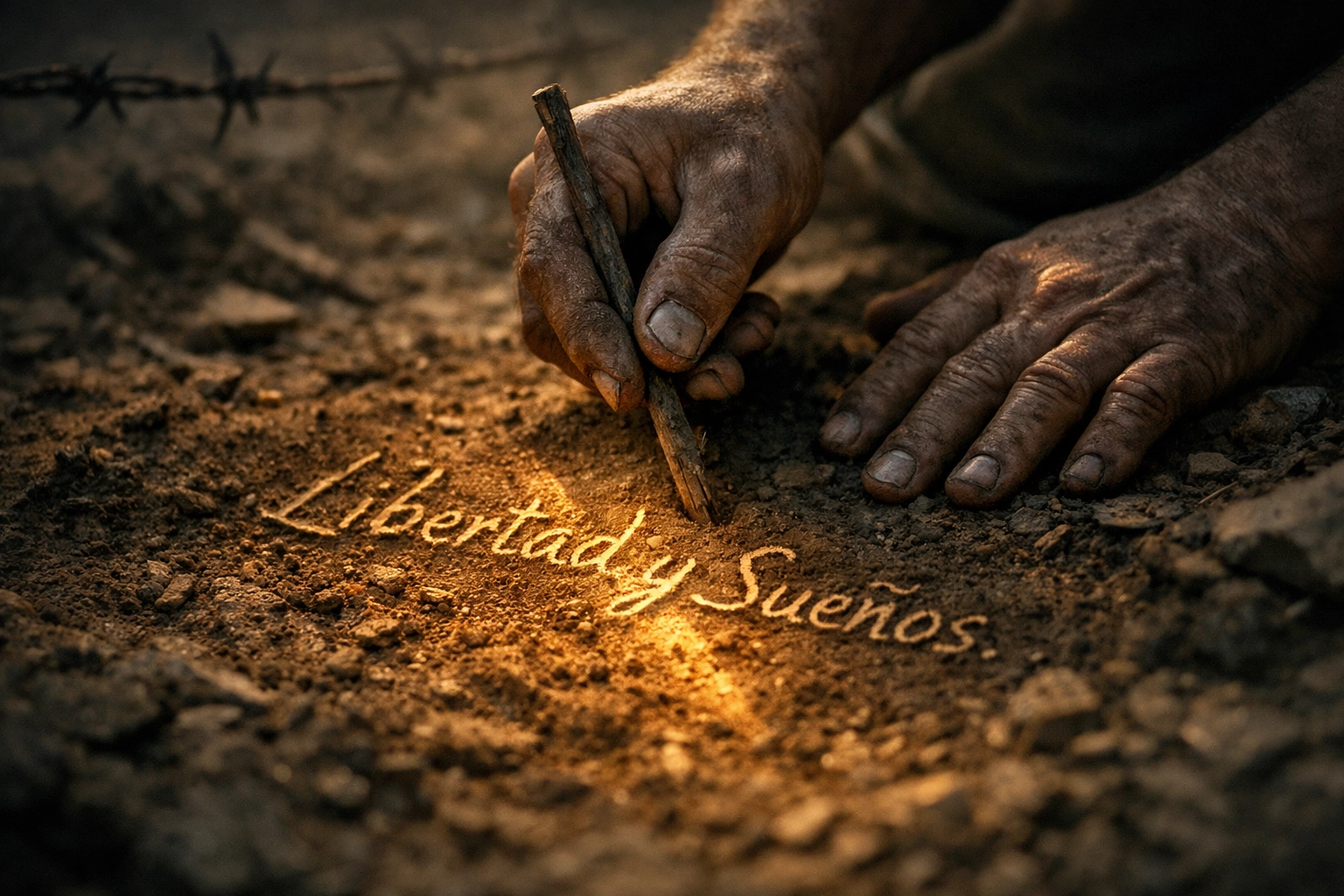
He became a living archive, a human library of experiences that the regime wanted erased. He memorized names, dates, love stories, and dreams. When paper was impossible to find, he scratched poems into the dirt with sticks, let others read them, then smoothed the earth again before the guards' next patrol.
This is what Read with pride means at its core: the refusal to let your story be erased, even when every system works to silence you. These men in the UMAP camps were writing LGBTQ+ fiction with their lives, creating gay romance narratives in the most hostile environment imaginable.
Some historians estimate that between 25,000 and 35,000 men passed through the UMAP camps. Each one has a story. Most were never written down.
The Price of Survival
Not everyone made it out. Some men broke under the combination of labor, malnutrition, and psychological torture. Others were beaten so severely they never fully recovered. A few simply disappeared: transferred to other facilities, or worse.
The poet survived by making himself useful. He helped illiterate campmates write letters home (carefully censored, of course). He taught basic reading to those who'd never had the chance. He turned his literature classes into covert acts of education, weaving in messages of human dignity between the approved revolutionary texts.
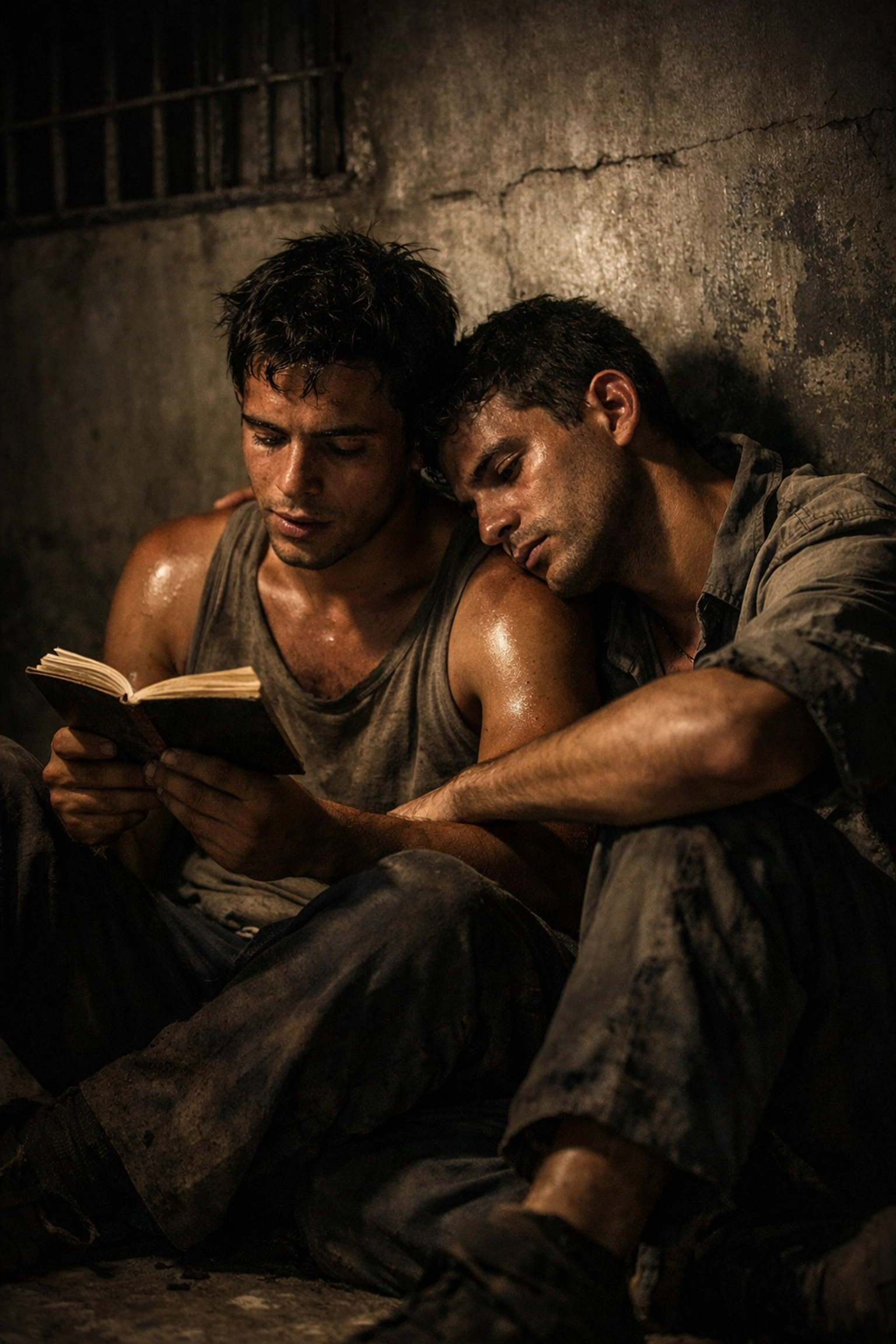
But survival came with costs that weren't visible. The constant vigilance. The need to hide any gesture or word that might be "too feminine." The nights he lay awake, terrified he'd talk in his sleep and reveal something dangerous. The relationships that formed between men in the camps: bonds of solidarity, sometimes love: that had to be hidden even more carefully than on the outside.
When the Camps Closed
International pressure eventually forced Castro's government to shut down the UMAP camps in 1968. The official line was that they'd served their purpose. The truth was that they'd become an embarrassment, with reports of the conditions leaking to foreign journalists and human rights organizations.
Our poet returned to Havana, but not to his teaching position. That door was closed. He worked odd jobs: dishwasher, street vendor, anything that kept him invisible to authorities. But he never stopped writing, even if he could only share his work in small, trusted circles.
His poems from this period are raw and unflinching. They speak of men who loved men in a country that branded such love as treason. They document the specific loneliness of queer life under communism, where the revolution that promised equality delivered persecution instead.
This is the history we need to remember when we talk about gay books and MM romance today. Every love story we can now publish freely, every queer fiction narrative that celebrates same-sex desire: these exist because people survived systems designed to destroy them.
The Legacy That Won't Be Buried
The poet's work wasn't published in Cuba during his lifetime. But copies were smuggled out, typed on onionskin paper and hidden in luggage, carried by sympathetic visitors who understood the importance of testimony. His verses appeared in exile publications in Miami, Madrid, and Mexico City.
Today, his poems are studied in universities, translated into multiple languages, and recognized as vital documentation of a dark chapter in LGBTQ+ history. But more than that, they're beautiful. They prove that even in the camps, even when the regime tried to remake these men into something they weren't, the essential human capacity for love and creative expression survived.
Why These Stories Matter Now
We're living in a moment when gay romance novels and MM fiction are more popular and visible than ever. But this visibility didn't happen in a vacuum. It's built on the resilience of people who lived through much worse: whether in Cuban camps, Soviet psychiatric hospitals, Chinese "conversion therapy" centers, or countless other places where being LGBTQ+ was treated as a disorder to be cured.
When you pick up MM romance books from Read with pride, you're participating in a tradition of resistance. Every gay love story published is a middle finger to every regime that tried to erase queer people from existence. Every LGBTQ+ ebook downloaded is a small act of remembrance for those who couldn't live their truths openly.
The poet of the camps never got his happy ending in the traditional sense. He died in the 1990s, having spent most of his life unable to publish under his own name in his own country. But his words survived. His testimony endures. And in that survival, there's a kind of victory that no labor camp could prevent.
Discover more untold stories of LGBTQ+ resilience and resistance at readwithpride.com.
Follow us for more queer history and contemporary gay fiction: Facebook | Instagram | X/Twitter
#ReadWithPride #LGBTQHistory #QueerHistory #GayHistory #MMRomance #GayBooks #QueerFiction #LGBTQBooks #GayLiterature #CubanHistory #UMAPCamps #QueerResilience #GayRomanceBooks #MMFiction #LGBTQFiction #GayRomanceNovels #HistoricalLGBTQ #QueerStories #GayAuthors #PrideInHistory

Leave a Reply
You must be logged in to post a comment.