

readwithpride.com
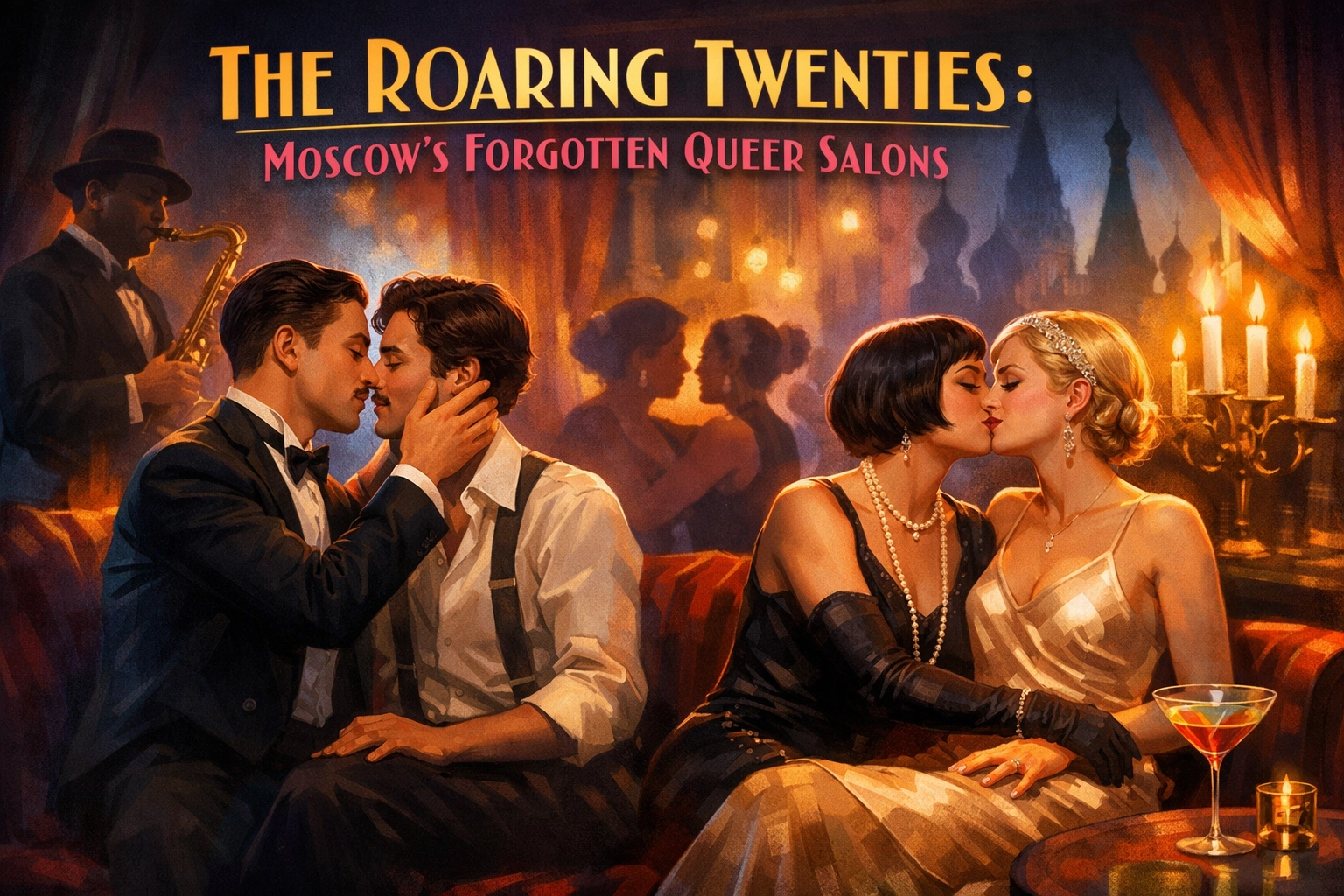
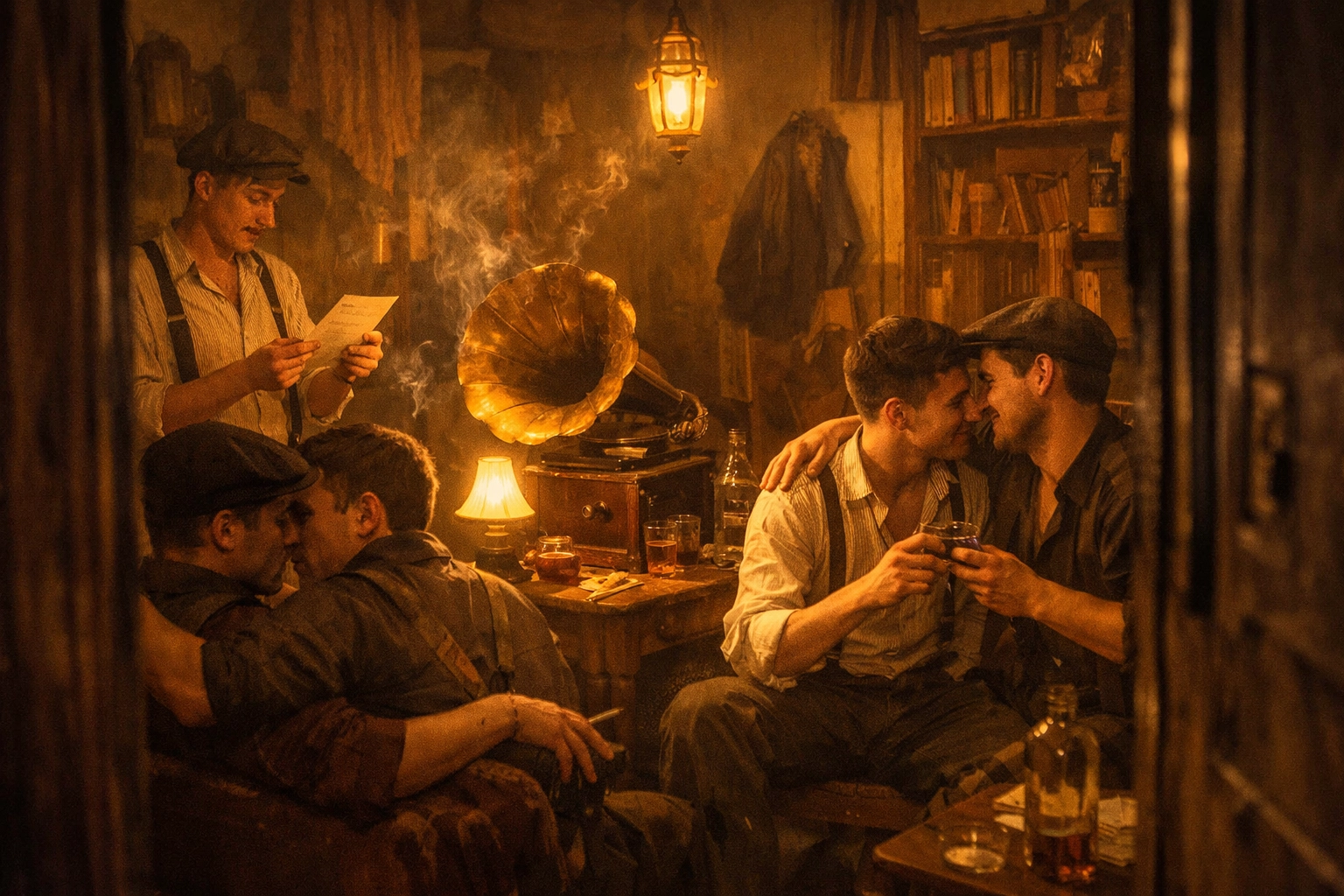
Picture this: It's 1923, and behind the door of a cramped communal apartment in Moscow, glasses clink, forbidden poetry is recited, and men dance with men while gramophone music drifts through cigarette smoke. For one brief, shining moment in Soviet history, queer Russians tasted something revolutionary – freedom.
The 1920s in Moscow weren't just roaring; they were whispering secrets in darkened hallways, passing coded messages at public bathhouses, and hosting underground salons that would make today's speakeasy culture look tame. This is the story of those forgotten spaces, those brave souls, and the brief golden age that history tried to erase.
When Revolution Met Liberation
Following the October Revolution of 1917, something unexpected happened in the new Soviet Russia – the old Tsarist laws criminalizing homosexuality simply disappeared. When the Bolsheviks threw out the Imperial legal code, they created an accidental paradise. For a few precious years, Russia became one of the most progressive places on Earth for queer people, even more tolerant than Western Europe or America.
This wasn't exactly by design. The revolutionaries were more focused on dismantling the old order than specifically liberating queer Russians. But the result was the same – suddenly, loving who you loved wasn't a crime. And Moscow's queer community seized the moment.
The Communal Apartment Underground
Soviet communal apartments – kommunalkas – were meant to be symbols of collective living, where multiple families shared kitchens, bathrooms, and thin walls. Privacy was a bourgeois concept, the Party said. But these cramped, overcrowded spaces became unlikely sanctuaries for Moscow's queer underground.
Think about the ingenuity required. You'd need to know which neighbors could be trusted, which nights the local Party committee member would be away, and how to disguise a gathering as anything but what it really was. A "poetry reading" might feature verses coded with queer longing. A "political discussion group" could be cover for men seeking connection in a world that still viewed them with suspicion, legal or not.
The salons moved location constantly, whispered about in public cruising spots along Sretensky Boulevard or near Sverdlov Square. You'd hear about next week's gathering at the bathhouse, passed along through a network of knowing glances and careful introductions. This wasn't just socializing – it was survival with style.
Where Poetry Met Passion
These weren't wild parties in the modern sense. The gatherings were elegant, intellectual affairs where Moscow's queer artists, writers, and workers mingled over cheap vodka and dreams of a future that might actually include them. Banned French novels circulated hand-to-hand. Someone might perform a scene from Oscar Wilde. Debates raged about whether communism would truly liberate sexual minorities or if this tolerance was temporary.
Spoiler: They were right to worry.
The salons created their own culture, their own language. Certain gestures, certain phrases that meant nothing to outsiders but everything to those in the know. A particular way of lighting a cigarette. A reference to a banned poem. In a country obsessed with conformity, these tiny rebellions mattered enormously.
The Public Spaces of Private Lives
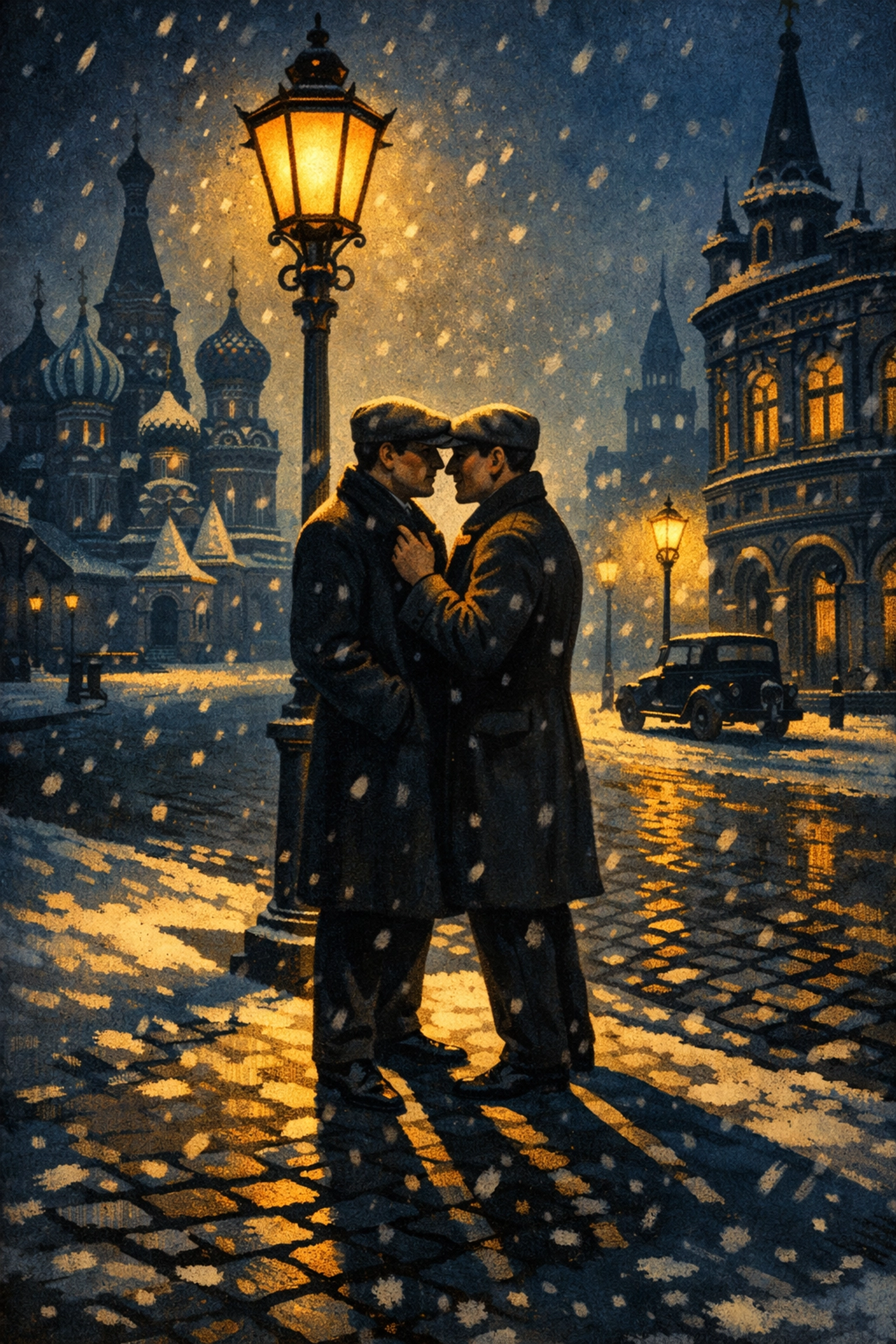
Beyond the apartment salons, Moscow's queer geography mapped itself onto public spaces. The pleshkas – cruising grounds – were scattered throughout the city like constellations only visible to those who knew where to look. Gorky Park of Culture and Rest, despite its very official Soviet name, became a meeting ground after dark. Public gardens, certain bathhouses, the areas around railway stations – all became part of an invisible city within the city.
Photographer Yevgeniy Fiks would later document these spaces, capturing images in 2008 of locations that had served as queer gathering spots since the 1920s. By then, thousands of Muscovites passed through these spaces daily, completely unaware they were walking through monuments of hidden history.
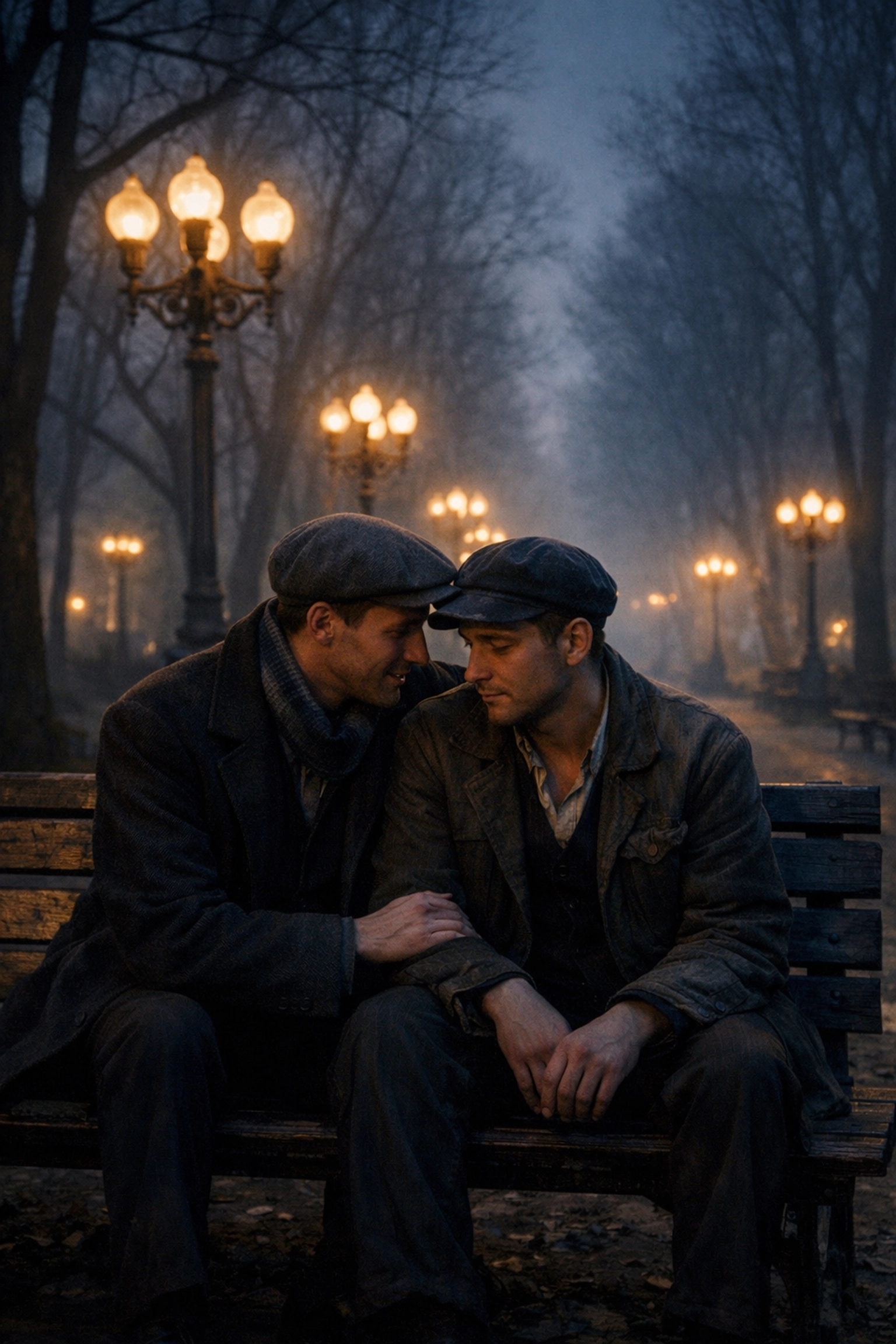
The genius of it all was how these communities existed in plain sight. Two men sitting on a bench in Sverdlov Square might be comrades discussing the latest Party directive. Or they might be planning to meet later at an apartment salon. The ambiguity was the point.
The Famous and the Forgotten
While detailed records of specific salon attendees are scarce – paranoia and later purges saw to that – we know Moscow's artistic scene in the 1920s included numerous queer figures who navigated this landscape. Theatre directors, poets, dancers, and intellectuals all found ways to live their truths, at least privately.
The tragedy is how many names we've lost. How many brilliant minds, passionate hearts, and brave souls left no trace beyond whispered stories? Soviet archives remain largely silent on the personal lives of these individuals, their loves and losses erased as thoroughly as the salons themselves.
When the Music Stopped
By the early 1930s, the doors were closing. Stalin's rise brought a brutal crackdown on anything deemed deviant from his narrow vision of Soviet society. In 1933, homosexuality was recriminalized. The charge? Article 121 – "muzhelozhstvo," carrying sentences of up to five years in labor camps.
The salons scattered overnight. Those networks of trust that had protected the community became potential death sentences. A wrong word to the wrong person could mean imprisonment, exile, or worse. Some fled abroad if they could. Others went deep underground, their gatherings reduced to furtive meetings between two or three trusted friends.
A poignant artifact from this period survives – a 1934 letter from British Communist Harry Whyte to Stalin himself, pleading for the reversal of the new law. Whyte argued eloquently that persecution of homosexuals contradicted Marxist principles. Stalin's response? A curt dismissal and continued repression.
Legacy Written in Whispers
What remains of Moscow's queer salons of the 1920s? Fragments, mostly. Oral histories passed down through generations. A few photographs that might mean nothing to outsiders but everything to those who understand. Buildings still standing where secret gatherings once flourished, their walls holding memories they can't speak.
This history matters because it shows us that queer life persists even in the most hostile conditions. Those communal apartment salons weren't just parties – they were acts of resistance, declarations that love and community would survive regardless of the state's approval.
For those of us who love queer fiction and LGBTQ+ literature, these stories remind us why representation matters. Every gay romance novel, every piece of MM fiction that explores historical queer life is reclaiming a past that was deliberately hidden. When you read about forbidden love, secret meetings, and the courage to be yourself against all odds, you're connecting with people who lived those stories for real.
Finding These Stories Today
The forgotten salons of 1920s Moscow live on in the stories we tell, the books we write, and the history we refuse to let stay buried. At Read with Pride, we're committed to sharing these narratives – the dark moments and the bright ones, the struggles and the triumphs.
Whether you're into gay historical romance, contemporary MM books, or just want to understand queer history better, there's a whole world of stories waiting. Stories that honor those who came before, who danced in cramped apartments and loved despite the danger, who created beauty in impossible circumstances.
Because that's what we do. That's what we've always done. We find each other, we create spaces of our own, and we survive. From Moscow's secret salons to today's thriving queer community, the thread continues.
Follow our journey: Instagram | Facebook | Twitter/X
#ReadWithPride #LGBTQHistory #QueerHistory #GayHistory #MoscowHistory #SovietQueerLife #MMRomance #GayBooks #QueerFiction #LGBTQLiterature #GayRomanceBooks #HistoricalLGBTQ #QueerStories #GayLoveStories #LGBTQCommunity #QueerCulture #HiddenHistory #MMHistoricalRomance #GayHistoricalRomance #PrideHistory

Leave a Reply
You must be logged in to post a comment.