

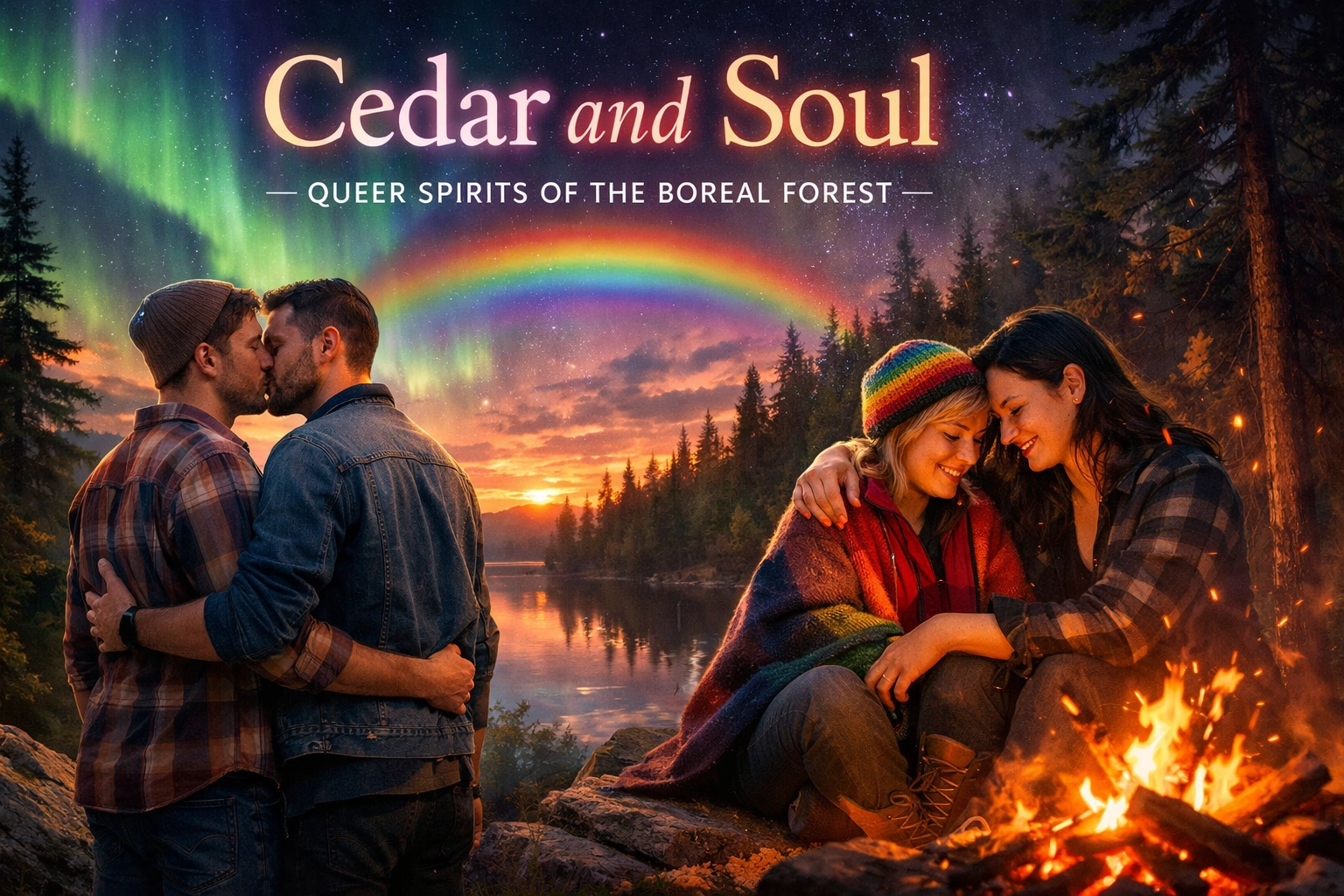
readwithpride.com
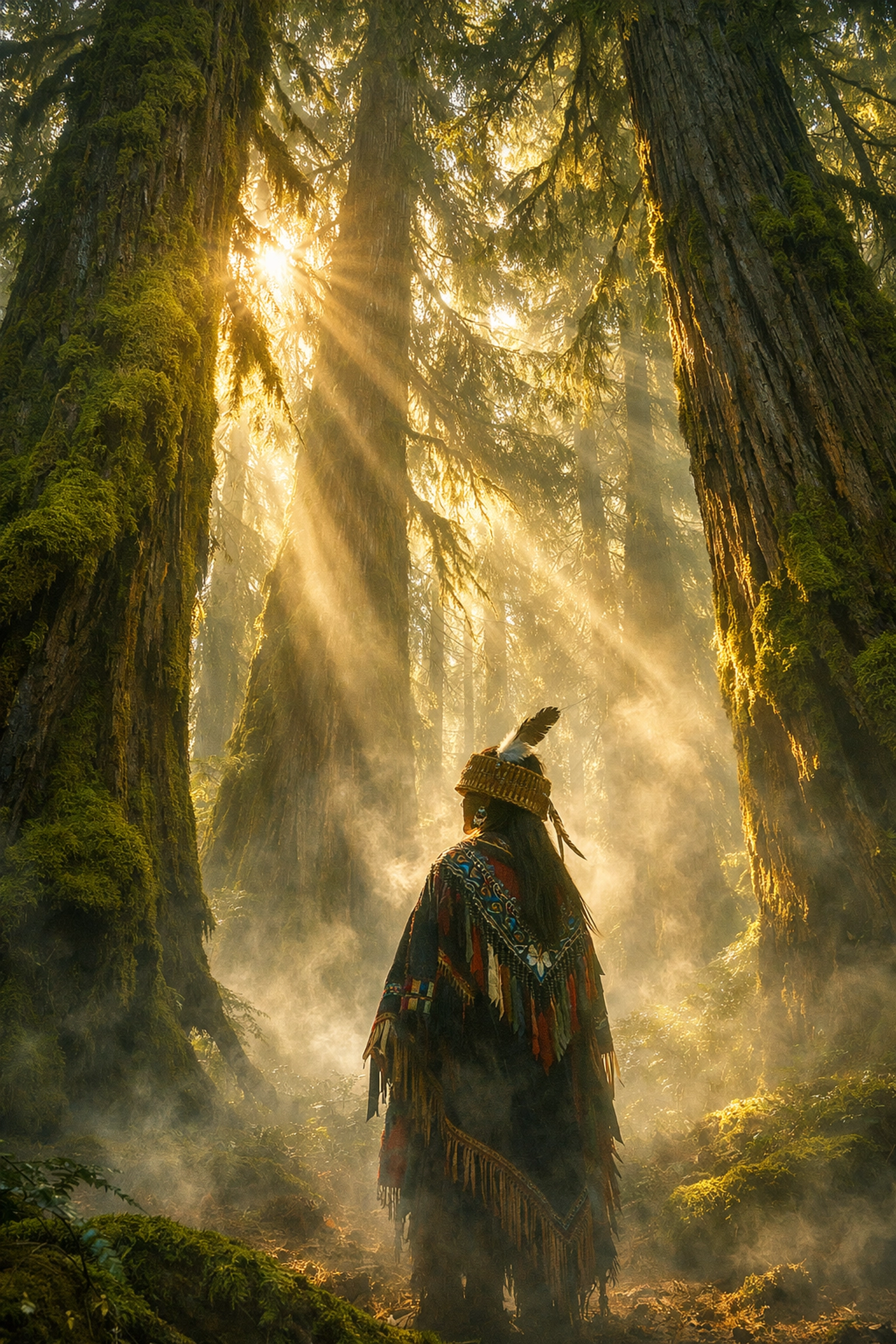
Deep in the ancient forests of the Pacific Northwest, where towering cedars pierce the mist and the air smells of salt and moss, Indigenous communities have held knowledge that colonial powers tried desperately to erase. Among the oldest stories carved into totem poles and woven into cedar bark blankets are tales of people who walked between worlds: those who embodied both masculine and feminine spirits, who served as bridges between the physical and spiritual realms.
These weren't just accepted members of their communities. They were revered. Sacred. Essential.
Long before European colonizers imposed rigid gender binaries and criminalized anything outside heteronormative frameworks, the forests held different truths. The Tlingit, Haida, Coast Salish, and dozens of other nations recognized that gender and sexuality existed on spectrums as varied as the forest ecosystem itself. And in the most remote villages, hidden among watersheds and mountain passes that outsiders couldn't navigate, these traditions survived when they were being systematically destroyed elsewhere.
The Keepers of Balance
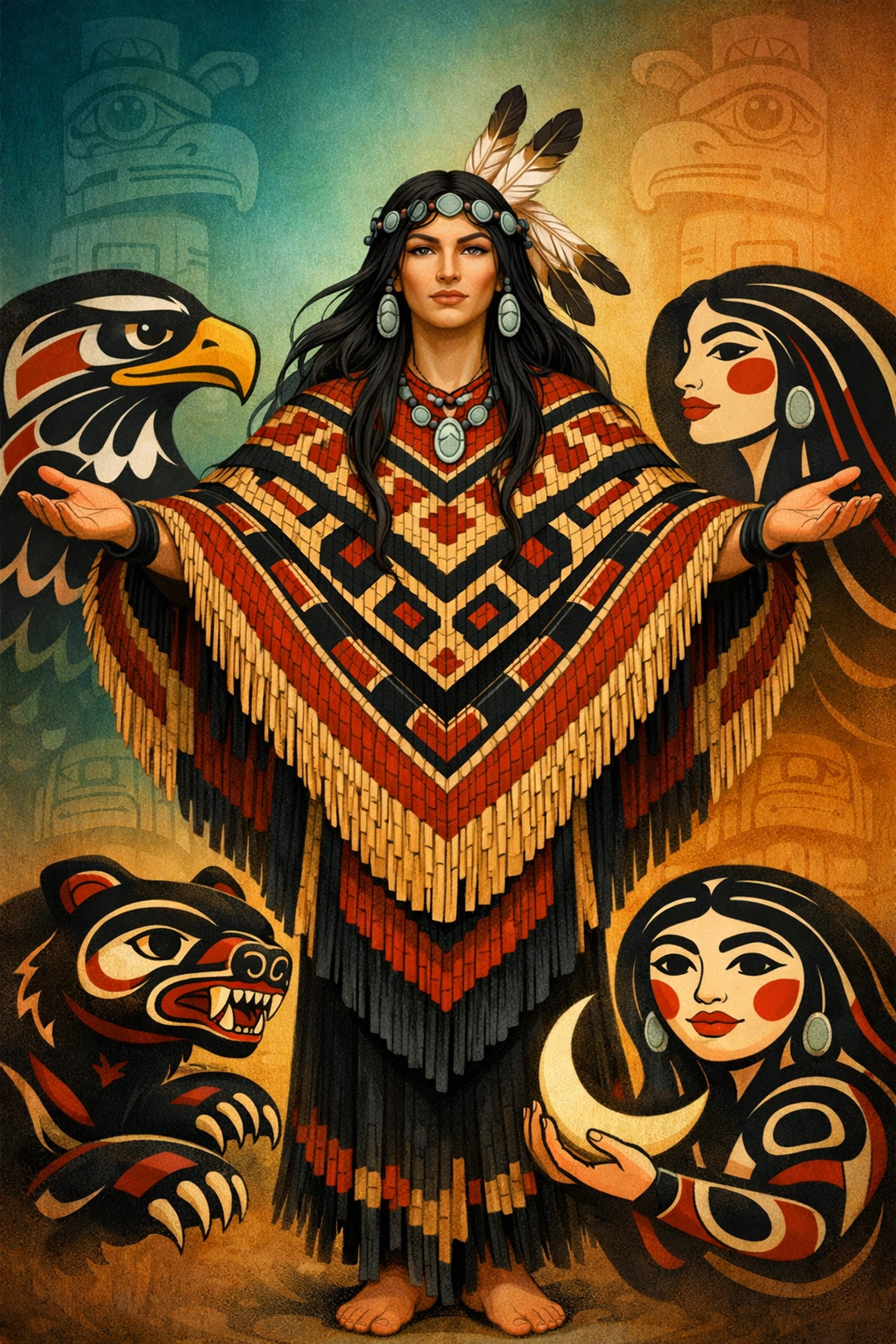
The term "Two-Spirit" is a modern pan-Indigenous creation from the 1990s, but the concept stretches back millennia across North America. In the Pacific Northwest specifically, each nation had their own names and traditions for gender-diverse and queer individuals. The Tlingit spoke of nadleeh, the Haida had wha'da, and the Coast Salish honored sq'eq'oy'qey people who embodied both masculine and feminine energies.
These individuals often held specialized roles that leveraged their unique perspective of walking between gendered worlds. They were matchmakers who understood the complexities of attraction and partnership. They were mediators in disputes, able to see multiple sides because they themselves embodied multiplicity. They were artists and craftspeople whose work was considered particularly powerful because it drew from masculine and feminine creative energies.
But perhaps most crucially, they were spiritual leaders and healers.
The forests themselves taught lessons about diversity and interconnection. Any forester knows that the health of the ecosystem depends on variety: different species supporting each other, different growth patterns creating resilience. The Indigenous peoples of the boreal forests understood this principle spiritually as well as ecologically. A community needed diverse perspectives to thrive. Gender-diverse individuals weren't aberrations: they were necessary threads in the social fabric.
Hidden Villages, Preserved Wisdom
When missionaries and colonial administrators arrived with their doctrines and laws, they targeted gender-diverse Indigenous people with particular viciousness. These colonizers understood instinctively that destroying Two-Spirit traditions was essential to breaking down Indigenous social structures. Residential schools, criminalization, forced conversion: the assault was systematic and brutal.
But geography became a form of protection.
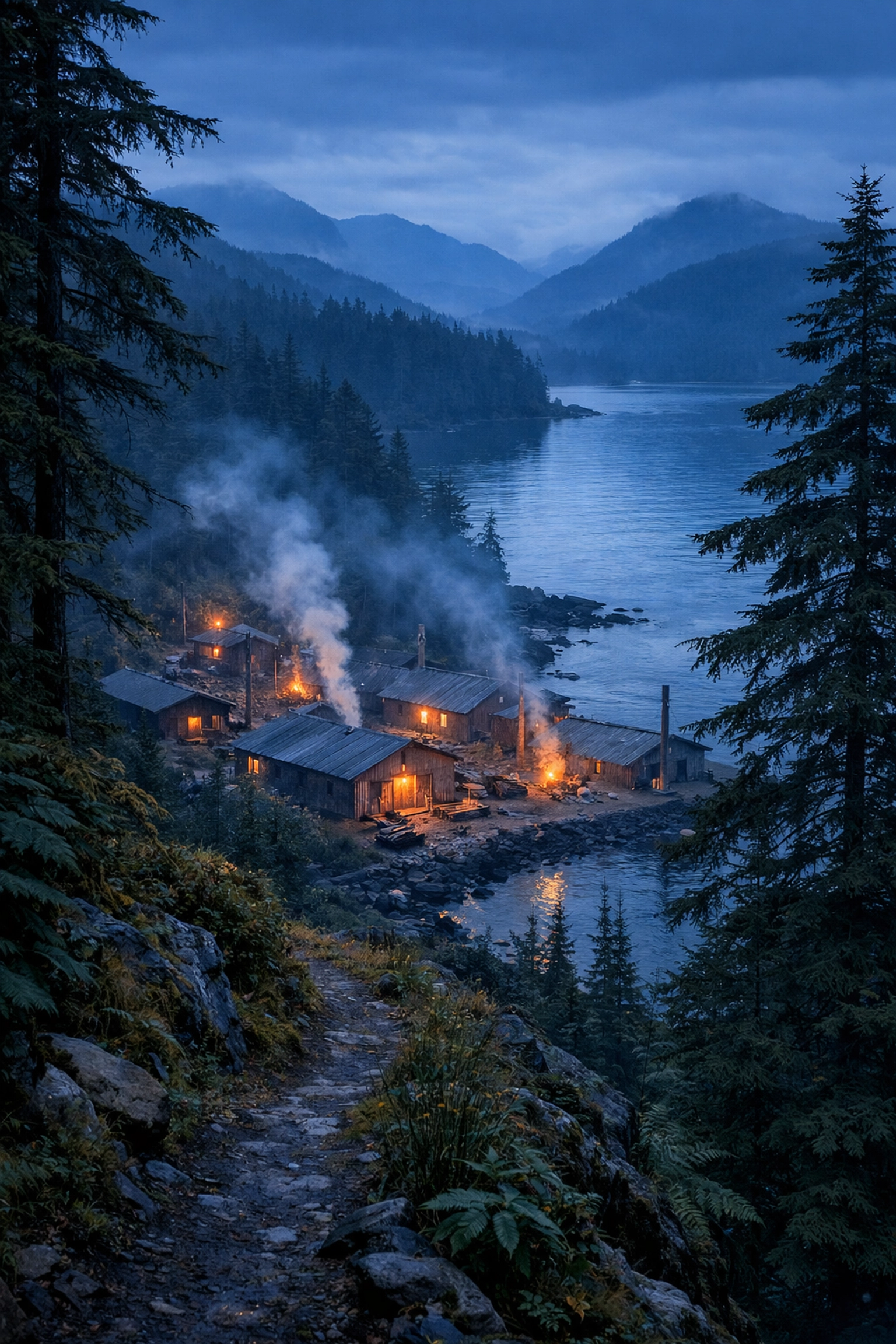
The Pacific Northwest's terrain is among the most challenging in North America. Dense rainforests with limited visibility. Treacherous coastlines with unpredictable tides. Mountain passes that required intimate knowledge to navigate. Remote fishing villages accessible only by boat or treacherous forest trails. Communities that had lived in these places for thousands of years knew every stream, every game trail, every hidden cove.
Colonial administrators couldn't reach everywhere. And even when they did, they couldn't stay. The most remote communities maintained their traditions in secret, passing down knowledge from generation to generation even as the outside world insisted these identities didn't exist, had never existed, were invented by modern activists.
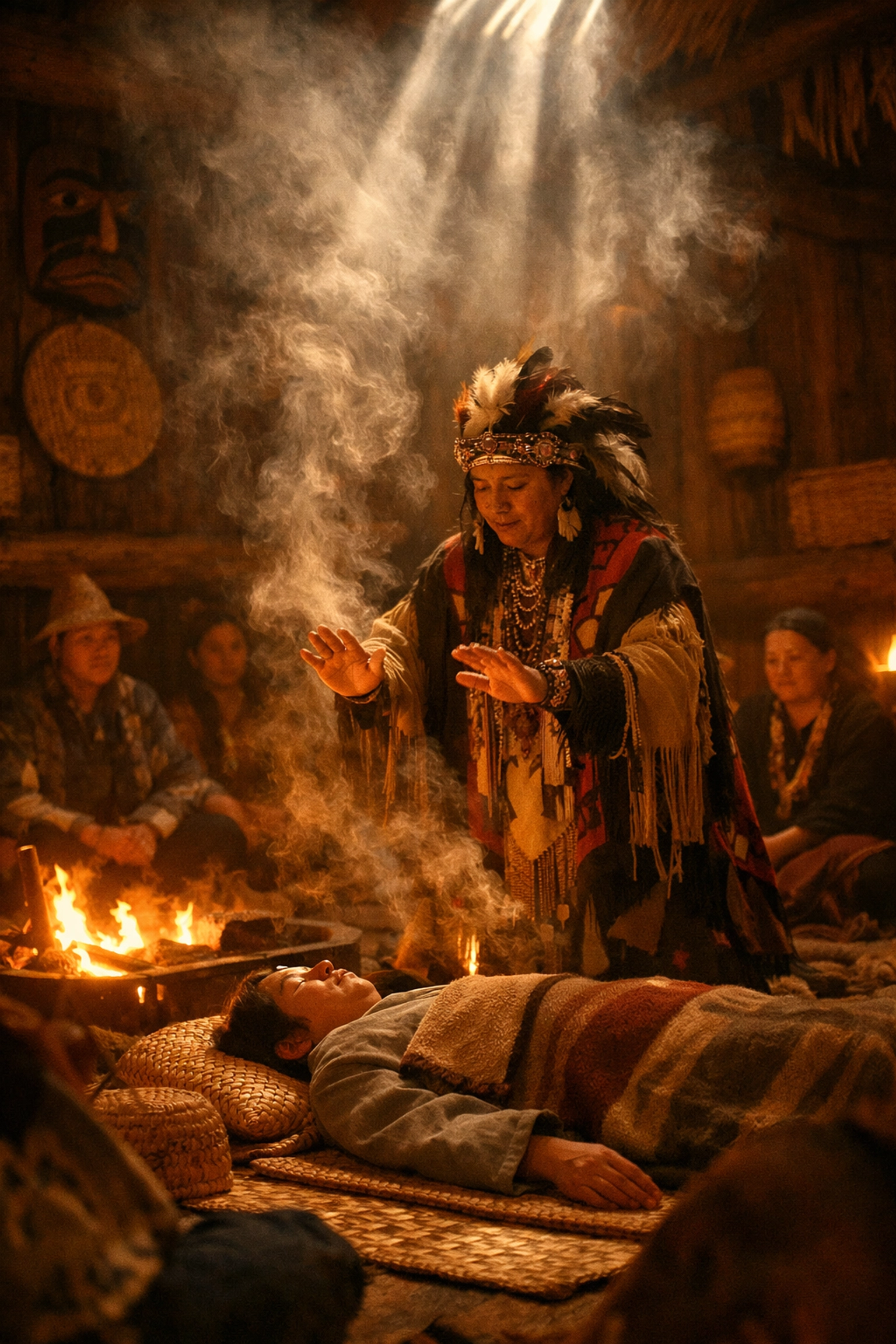
In village longhouses lit by carefully tended fires, elders taught younger generations about the spirits that inhabited the forest. They shared stories of ancestors who had embodied both male and female spirits, who had special gifts for communication with the spirit world, who had healed communities through ceremonies that drew on their unique positioning between worlds.
Ceremonies in Cedar Smoke
The ceremonial life of Two-Spirit people in Pacific Northwest cultures was deeply tied to the forest itself. Cedar, in particular, held sacred significance: the "Tree of Life" that provided shelter, clothing, medicine, and spiritual protection. Two-Spirit individuals often had specialized knowledge of cedar's properties and uses, both practical and spiritual.
Healing ceremonies might involve elaborate preparations. The healer would gather specific plants at specific times, following protocols passed down through generations. They would prepare cedar smoke to cleanse participants. They would enter trance states, sometimes facilitated by specific plants or through rhythmic drumming and singing, to communicate with spirit guides and receive guidance for healing.
These weren't performances or superstitions. They were sophisticated spiritual and psychological practices refined over thousands of years. Two-Spirit healers often specialized in treating ailments that other healers couldn't: conditions that involved spiritual imbalance, emotional trauma, or problems related to identity and community belonging. Their own experience navigating multiple identities gave them unique insight into the human psyche.
The isolation of forest communities meant these practices could continue even when they'd been driven underground elsewhere. A Two-Spirit healer might be known throughout a network of remote villages, traveling by canoe between communities to perform ceremonies and pass on teachings to young people showing signs of possessing both spirits.
The Brutal In-Between
We need to acknowledge the devastation. Even in remote communities, colonial violence reached its fingers. Two-Spirit people who were discovered by authorities faced forced conversion, institutionalization, or murder. Families were torn apart when children were taken to residential schools where speaking their languages or acknowledging their identities meant punishment.
Some remote communities tried to hide their Two-Spirit members when outsiders arrived. Others were forced to watch as beloved healers and leaders were taken away, often never to return. The psychological trauma of this erasure reverberates through generations.
Yet even in these darkest moments, resistance persisted. Stories were told in whispers. Ceremonies were performed in the deepest forest. Knowledge was encoded in art forms that colonizers didn't understand: woven into baskets, carved into hidden meanings in totem poles, embedded in songs and dances.
The forest itself became a sanctuary. Two-Spirit individuals who faced violence or rejection sometimes fled into the deep woods, living alone or in small groups, maintaining spiritual practices and ceremonies even when isolated from their communities. Some of these forest dwellers became legendary figures: mysterious healers who would appear when needed, powerful spirits who protected the land.
Modern Resurgence and Reclamation
Today, Indigenous communities across the Pacific Northwest are reclaiming Two-Spirit traditions that colonization tried to destroy. Young people are learning from elders who maintained knowledge in secret. Ceremonies are being performed openly again. Pride and traditional spirituality are recognized as complementary rather than contradictory.
The connection to the forest remains central. Many Two-Spirit people describe feeling most themselves in the woods, surrounded by cedar and moss and the ancient energy of the land. Contemporary Two-Spirit artists create work that honors ancestral traditions while asserting modern identities. Healers are combining traditional plant knowledge with modern healthcare approaches.
This resurgence matters far beyond Indigenous communities. Two-Spirit traditions offer the entire LGBTQ+ community examples of societies that recognized and celebrated gender and sexual diversity. They demonstrate that rigid binary thinking about gender is culturally specific, not universal. They prove that queer identities aren't modern inventions but human experiences that have existed across all times and cultures.
For those of us at Read with Pride, these stories remind us why representation matters so deeply. When queer identities are erased from history, it becomes easier to pretend we're aberrations rather than fundamental parts of human diversity. But the truth remains, carved in cedar and woven into the very fabric of the oldest cultures on this continent.
The boreal forests of the Pacific Northwest still hold secrets: ceremonies that haven't been shared outside communities, stories that aren't ready to be told to outsiders, sacred knowledge that belongs to its keepers. And that's as it should be. Not everything needs to be exposed, documented, made available for general consumption.
But the existence of these traditions, the survival of this knowledge despite centuries of attempted genocide: that alone is a radical act of resistance. It's a testament to the resilience of queer spirits who refused to be extinguished. It's a reminder that our identities are as ancient as the cedars, as essential to the ecosystem as rain, as sacred as any other aspect of human experience.
The forest remembers what colonial powers tried to make us forget.
Connect with us and explore more LGBTQ+ stories:
Follow us on Facebook, Instagram, and X for more content celebrating queer history, MM romance books, and LGBTQ+ fiction. Discover our collection of gay romance novels and queer literature at readwithpride.com.
#ReadWithPride #TwoSpirit #IndigenousLGBTQ #QueerHistory #LGBTQBooks #MMRomance #GayRomanceBooks #QueerFiction #LGBTQLiterature #IndigenousPride #GayBooks #TwoSpiritPride #QueerIndigenous #LGBTQHistory #MMRomanceBooks #GayFiction #PacificNorthwest #IndigenousWisdom #QueerAncestors #LGBTQCommunity

Leave a Reply
You must be logged in to post a comment.