

readwithpride.com
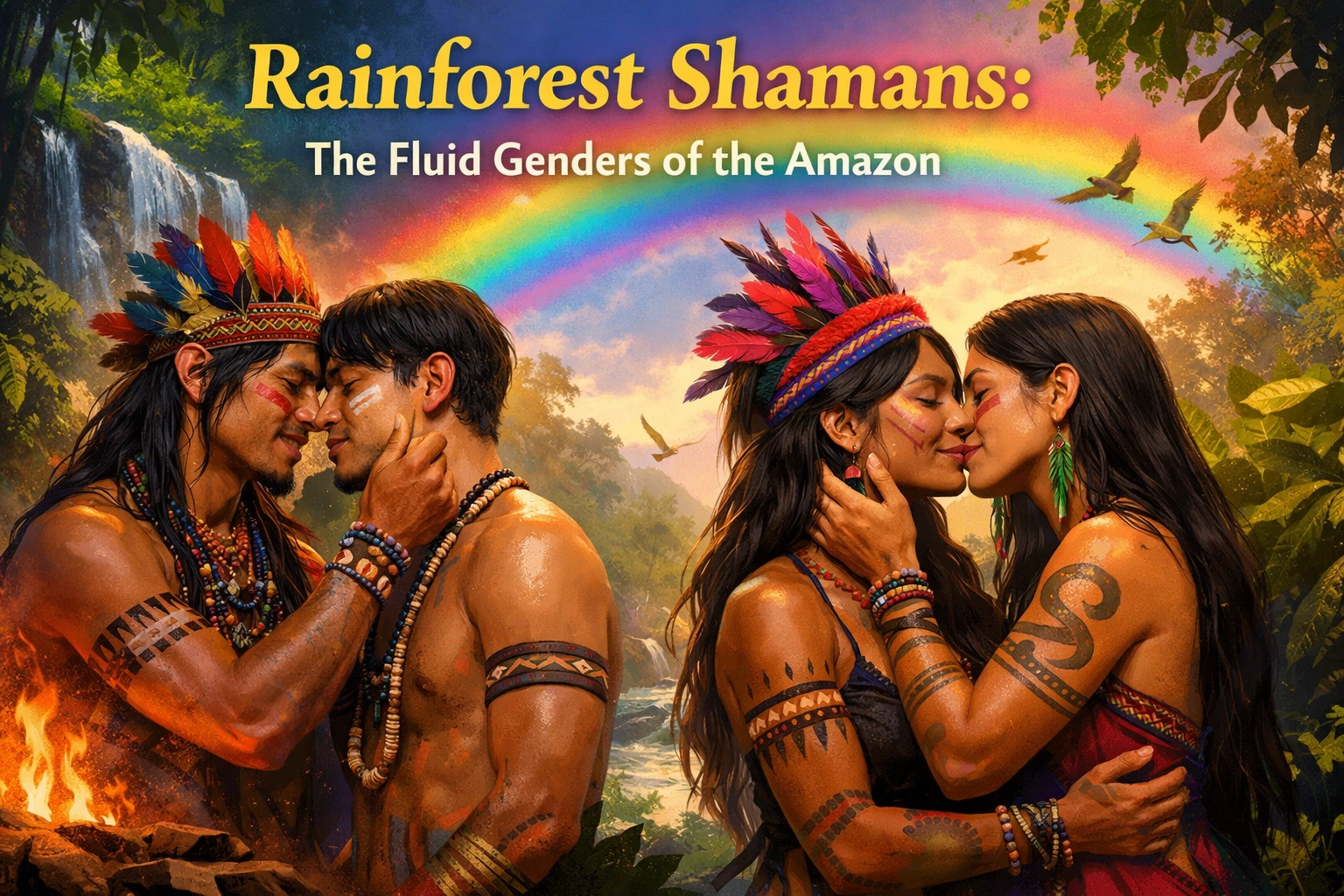
Deep within the Amazon rainforest, where the world's most powerful river system carves through millions of acres of green canopy, Indigenous communities have preserved traditions that challenge everything we think we know about gender and sexuality. Long before Western activists coined terms like "non-binary" or "gender fluid," Amazonian shamans were already living these truths, their spiritual practices woven into a worldview that recognized gender as something far more complex than a binary choice.
The Amazon isn't just the lungs of our planet: it's also been a sanctuary for some of humanity's most progressive understandings of gender identity. And the stories buried in these ancient forests? They're absolutely fascinating.
When Gender Wasn't a Box to Check
Among recently contacted Amazonian peoples, anthropologists discovered something remarkable: the boundary between male and female activities was historically blurred and fluid, particularly among communities living mobile jungle lifestyles. Unlike the rigid gender roles that colonial societies tried to impose, these Indigenous groups understood that human identity existed on a spectrum.
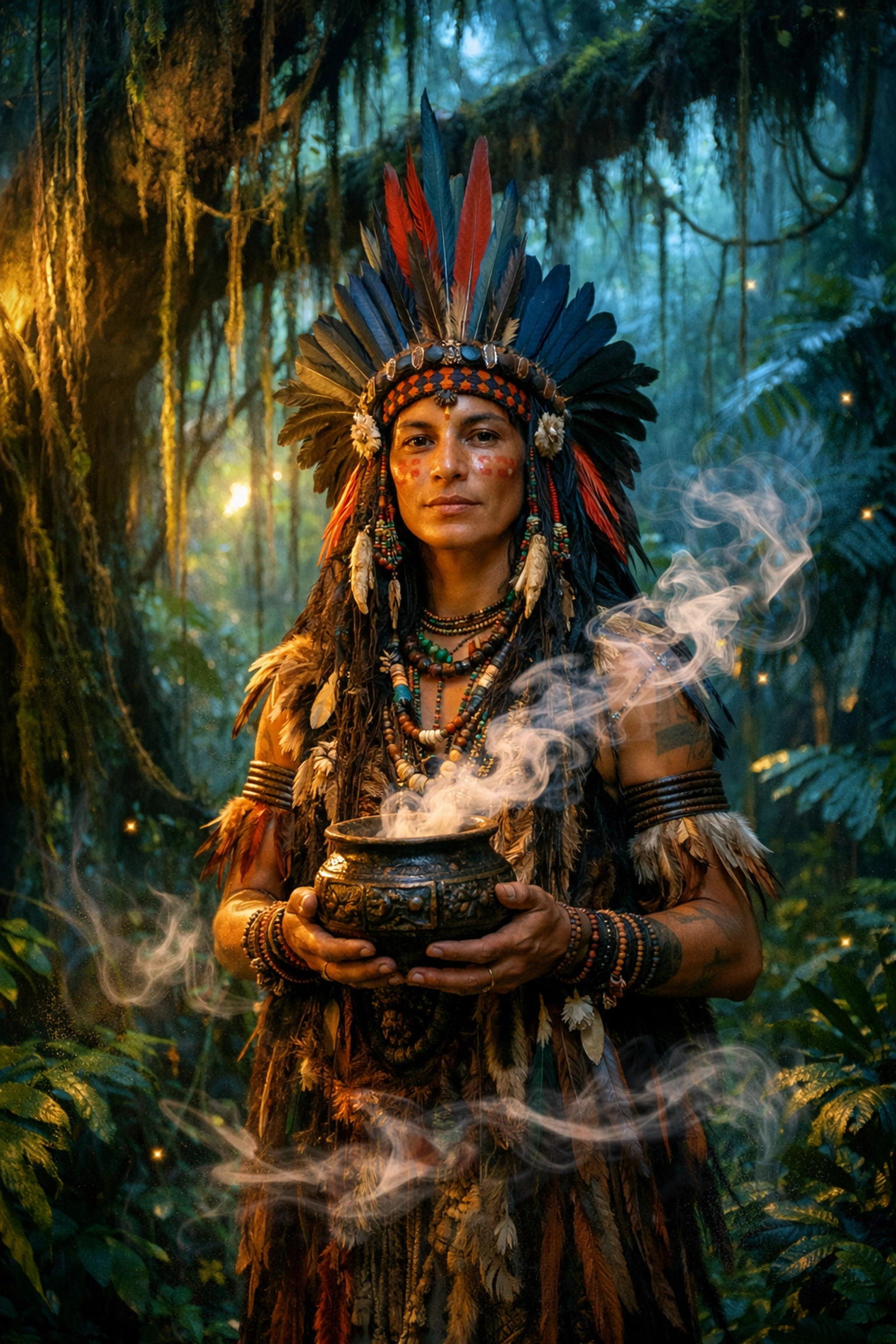
The Yaminawa people provide a perfect example. Before sustained contact with non-Indigenous societies, Yaminawa women actively practiced shamanism and consumed ayahuasca: the powerful psychedelic brew central to Amazonian spiritual traditions. Their initiation processes followed the same learning mechanisms as men's, though conducted individually within family environments rather than collectively. This wasn't some footnote in their culture; it was fundamental to how they understood spiritual power and human capability.
The Txitonawa, who only established stable relationships with Peruvian society in 1995, confirmed that women drank ayahuasca from young ages and participated fully in shamanic knowledge. These weren't exceptions to the rule: this was the rule, at least until colonial influence began reshaping Indigenous societies.
The Sacred Power of Bodies
Here's where things get really interesting. In some Amazonian communities, women's reproductive capacities: menstruation and childbirth: were culturally recognized as equivalent to male shamanic powers. Let that sink in for a moment. While European colonizers were burning "witches" and imposing patriarchal religious structures, Amazonian cultures were honoring the inherent spiritual power of female bodies.
Among the Eastern Tukano communities, this "natural" shamanic power held by women explained why their original ancestors were created by a female figure. The cosmic origin story itself acknowledged feminine creative force as supreme. This wasn't lip service: it was embedded in their most fundamental understanding of how the universe came to be.
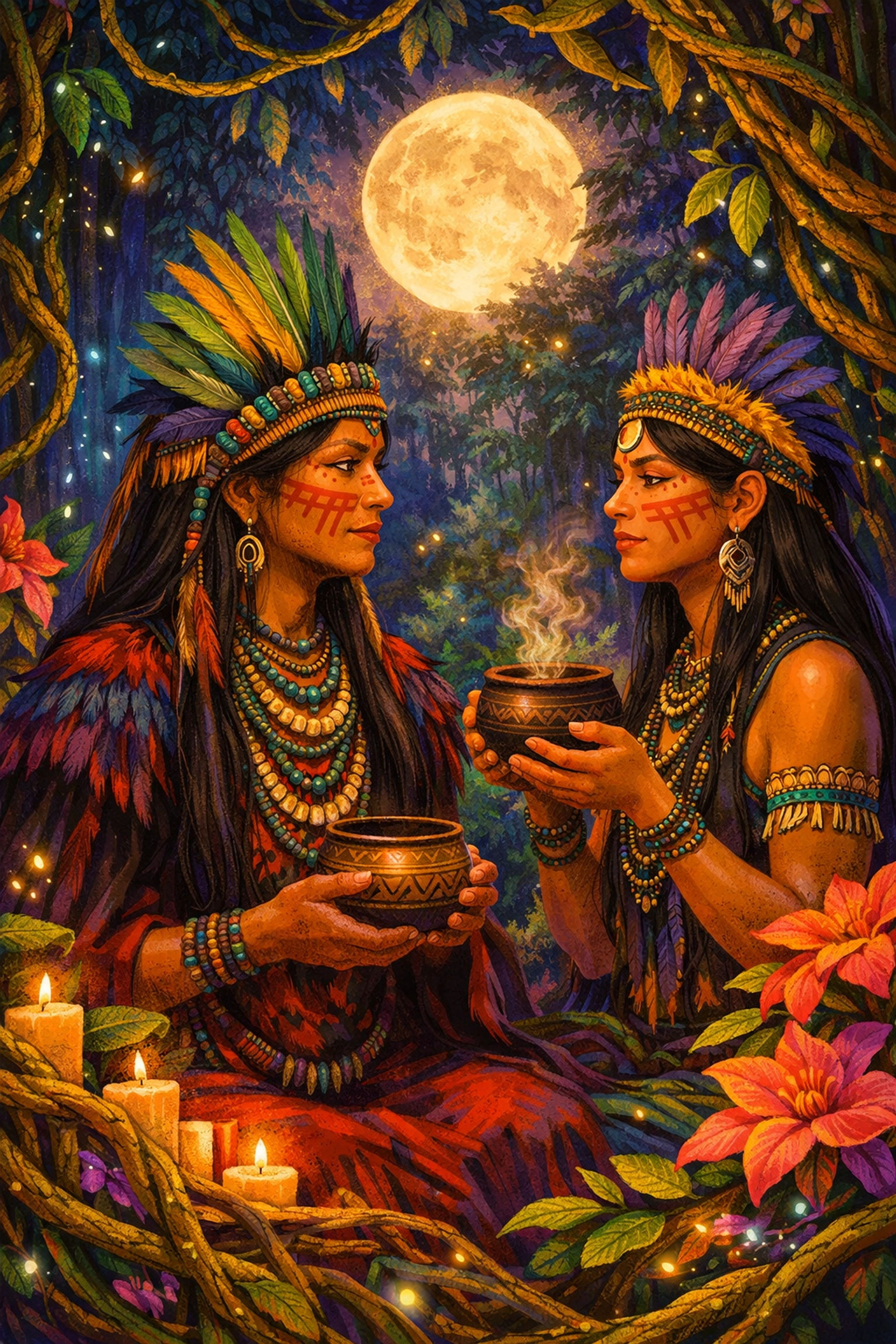
This recognition didn't always translate to equal ceremonial authority (patriarchy has a way of creeping into even the most progressive spaces), but the symbolic framework was radically different from what colonial societies brought with them.
The Colonial Shadow
Of course, nothing gold can stay: especially when colonizers arrive with Bibles and rigid gender norms. Scholars now argue that the contemporary separation between women and shamanism, particularly regarding ayahuasca practice among groups like the Yaminawa, reflects historical processes of contact and sedentarization rather than pre-contact norms. Translation: colonial influences and increased relationships with non-Indigenous societies actively worked to widen gender distinctions that previously didn't exist or were far more flexible.
This pattern mirrors what we see in LGBTQ+ historical research globally. Whether we're talking about Two-Spirit people in North America, hijra communities in South Asia, or sworn virgins in the Balkans, colonialism consistently worked to erase or suppress gender diversity and same-sex relationships. The Amazon was no exception.
Today, gender dynamics in Amazonian shamanism vary wildly across different groups. Many communities restrict women's participation in certain ceremonies due to concerns about spontaneous abortion, though notably, the Shuar show no sex-based differences in ayahuasca consumption. The Shipibo present another fascinating pattern: women possess exclusive knowledge of ayahuasca-inspired designs used in pottery and clothing, yet historically didn't consume ayahuasca themselves. It's complicated: as queer history always is.
The New Generation of Rainforest Shamans
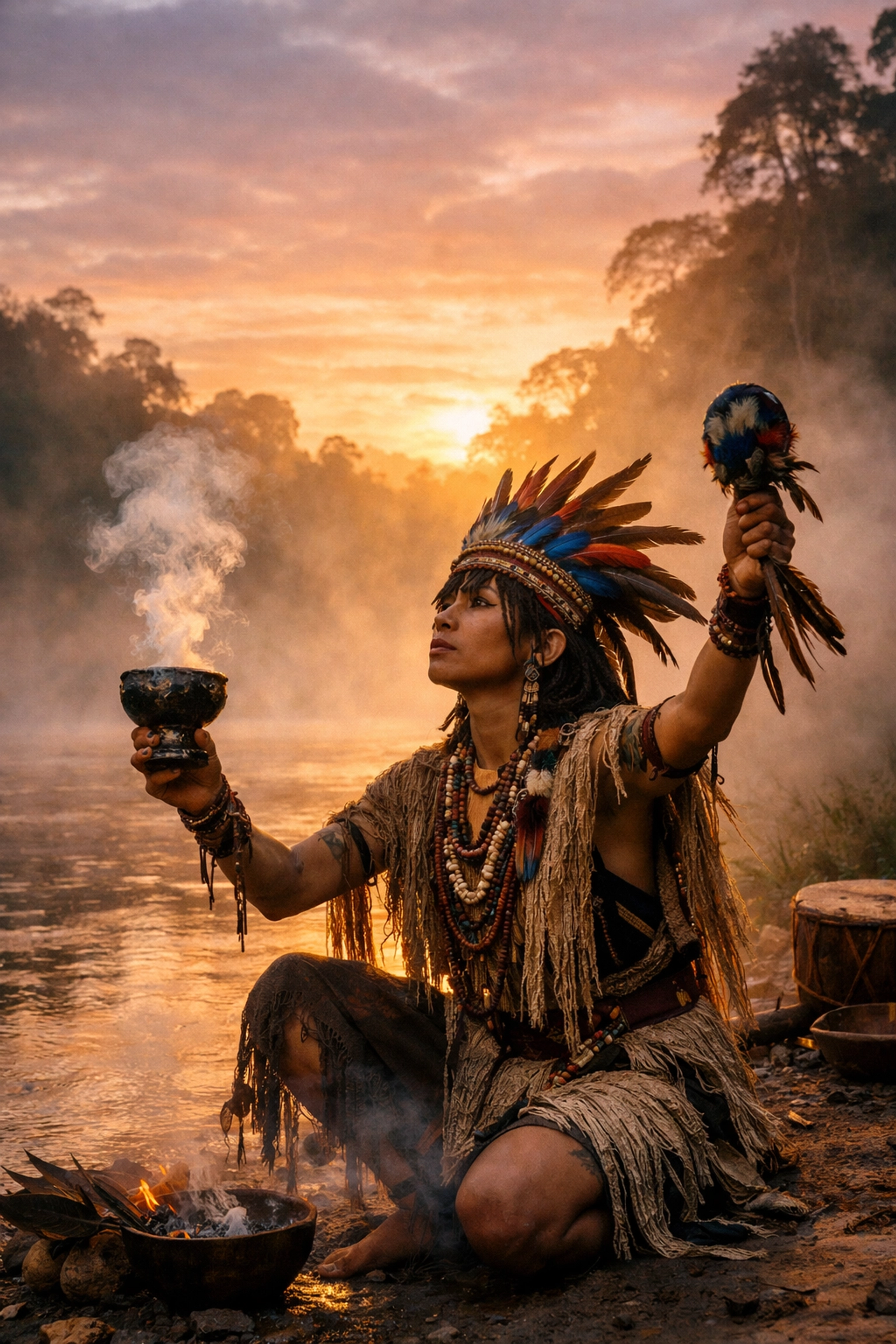
But here's where the story gets hopeful. In 2006, the Yawanawa became the first tribe to consecrate a female shaman in recent history. Neighboring groups like the Katukina and Ashaninka followed suit, marking what some scholars call a "return" to pre-colonial practices and what others see as a new chapter in an ongoing story.
These women undertook rigorous initiation requirements: abstaining from sex, meat, salt, sugar, and fish while living in isolation for a year. Their commitment initially surprised male community members who'd grown up in cultures already shaped by decades or centuries of colonial influence. Not all veteran shamans were thrilled about this shift; some denounced female-led ceremonies as illegitimate, reflecting ongoing resistance rooted in more recent patriarchal traditions.
Sound familiar? The same dynamics play out in LGBTQ+ spaces worldwide. Progress happens, but it's rarely linear, and there's always pushback from those invested in maintaining traditional hierarchies.
What This Means for Queer History
Why does any of this matter to readers interested in gay romance, MM fiction, or LGBTQ+ literature? Because these Amazonian traditions remind us that rigid Western concepts of gender and sexuality aren't universal truths: they're cultural constructs, and relatively recent ones at that.
The gender-fluid shamans of the Amazon lived lives that would resonate with many modern non-binary, genderqueer, and transgender individuals. They occupied spiritual roles that transcended binary gender categories. They wielded power through identities that refused to be boxed in. And they did all this centuries before Stonewall, before Pride parades, before the terminology we use today even existed.
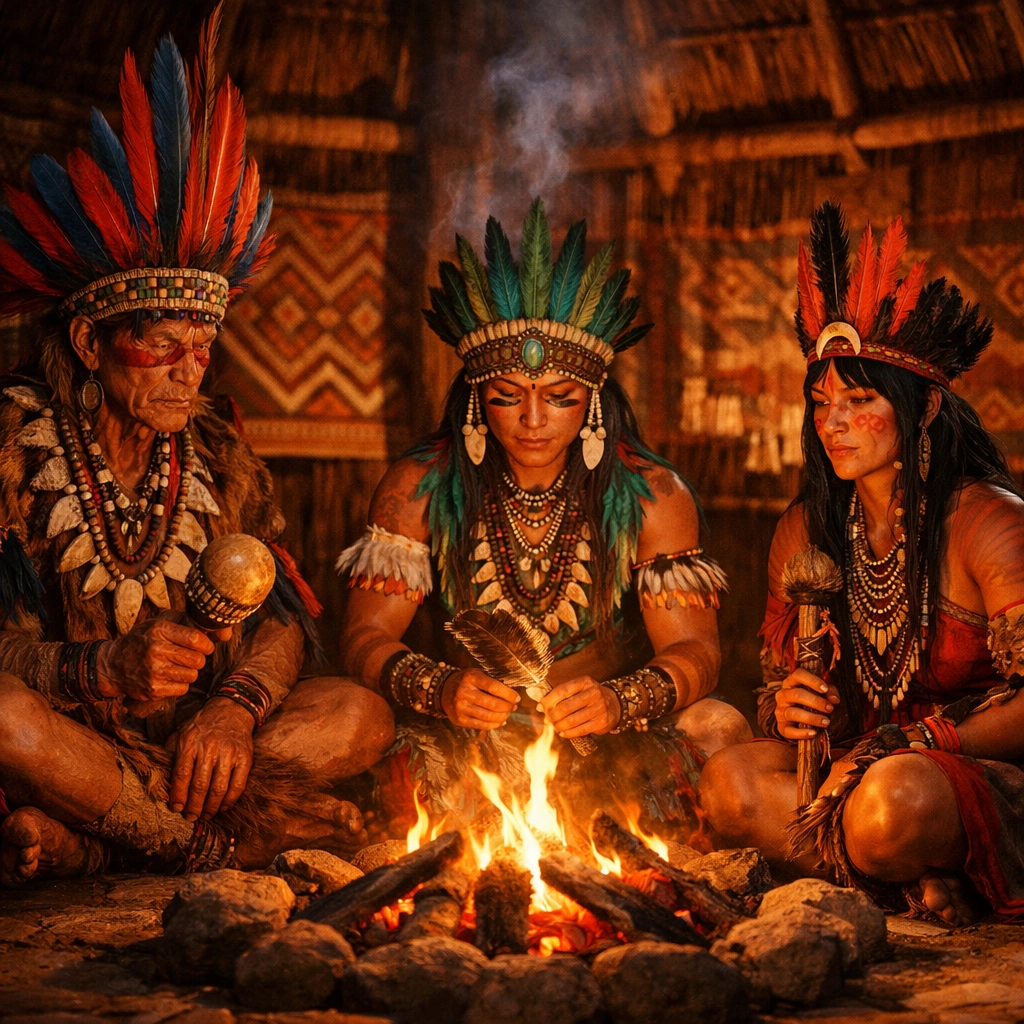
When we read historical romance or dive into queer fiction set in different time periods, we're often told that our identities are "anachronistic": that LGBTQ+ people didn't exist in certain times or places. The shamans of the Amazon prove that's nonsense. Gender diversity and sexual fluidity have existed in human societies across the globe throughout history. What changes is whether those identities are celebrated, tolerated, or suppressed.
The Forest Remembers
The Amazon holds countless secrets in its emerald depths. Ancient cities are still being discovered beneath the canopy. Uncontacted tribes continue living traditional lifestyles, their languages and customs unknown to the outside world. And somewhere in that vast green wilderness, shamans still practice traditions that honor the full spectrum of human identity.
These stories matter. They're part of our collective queer heritage, evidence that we've always been here, living our truths even when the dominant culture tried to erase us. Whether you're into contemporary MM romance or historical LGBTQ+ fiction, these real-world histories provide the foundation for understanding how gender and sexuality have always been more complex than colonial societies wanted to admit.
The fluid genders of Amazonian shamans aren't curiosities or anomalies: they're proof that diversity is natural, that rigid binaries are the real aberration, and that indigenous wisdom often surpasses the limited thinking of supposedly "civilized" societies.
So next time you're looking for your next read, remember that truth is often stranger and more beautiful than fiction. The rainforest shamans knew it centuries ago: gender is a journey, identity is fluid, and the human experience is gloriously diverse.
Discover more LGBTQ+ stories and history at readwithpride.com: your destination for MM romance books, gay romance novels, and queer fiction that celebrates authentic identity.
Follow us on social media:
#ReadWithPride #LGBTQHistory #QueerFiction #MMRomance #GayRomanceBooks #IndigenousWisdom #GenderFluid #AmazonianCulture #QueerHistory #LGBTQReading #HistoricalLGBTQ #NonBinary #TransHistory #ShamanicTraditions #LGBTQCommunity #QueerAuthors #MMRomanceBooks #GayLiterature #PrideReading

Leave a Reply
You must be logged in to post a comment.