

readwithpride.com
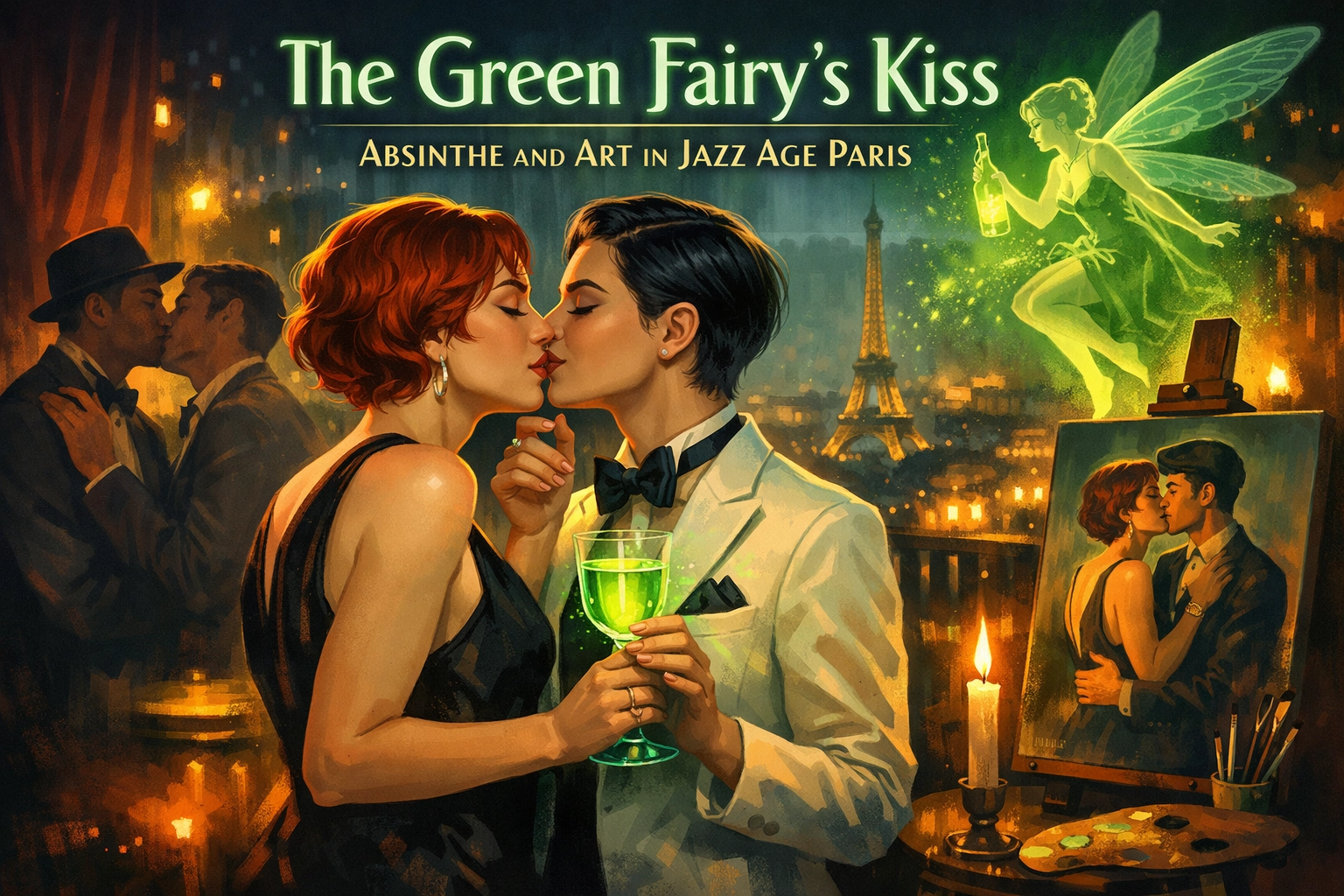
Here's the delicious irony of Jazz Age Paris and its obsession with absinthe: by the time American queers started flooding into Montparnasse cafés in the 1920s, la fée verte, the Green Fairy, had been banned for nearly a decade. France outlawed absinthe in 1915, right in the middle of World War I, blaming the emerald-hued liqueur for everything from moral decay to military defeats.
But try telling that to the expatriate writers, artists, and pleasure-seekers who made Paris their playground in the 1920s. They arrived with dog-eared copies of Oscar Wilde and tales of Toulouse-Lautrec, desperate to taste the legendary drink that had fueled an entire generation of artistic genius. The fact that it was illegal only made it more enticing.
The Ghost of the Belle Époque
The queer expatriates who descended on Paris after WWI were chasing something more than just affordable rent and weak exchange rates. They were hunting for the ghost of the Belle Époque, that glittering pre-war era when absinthe flowed freely at l'Heure Verte (the Green Hour), when five o'clock meant settling into a wicker café chair with a glass of the green goddess, watching the sugar cube slowly dissolve into milky clouds.
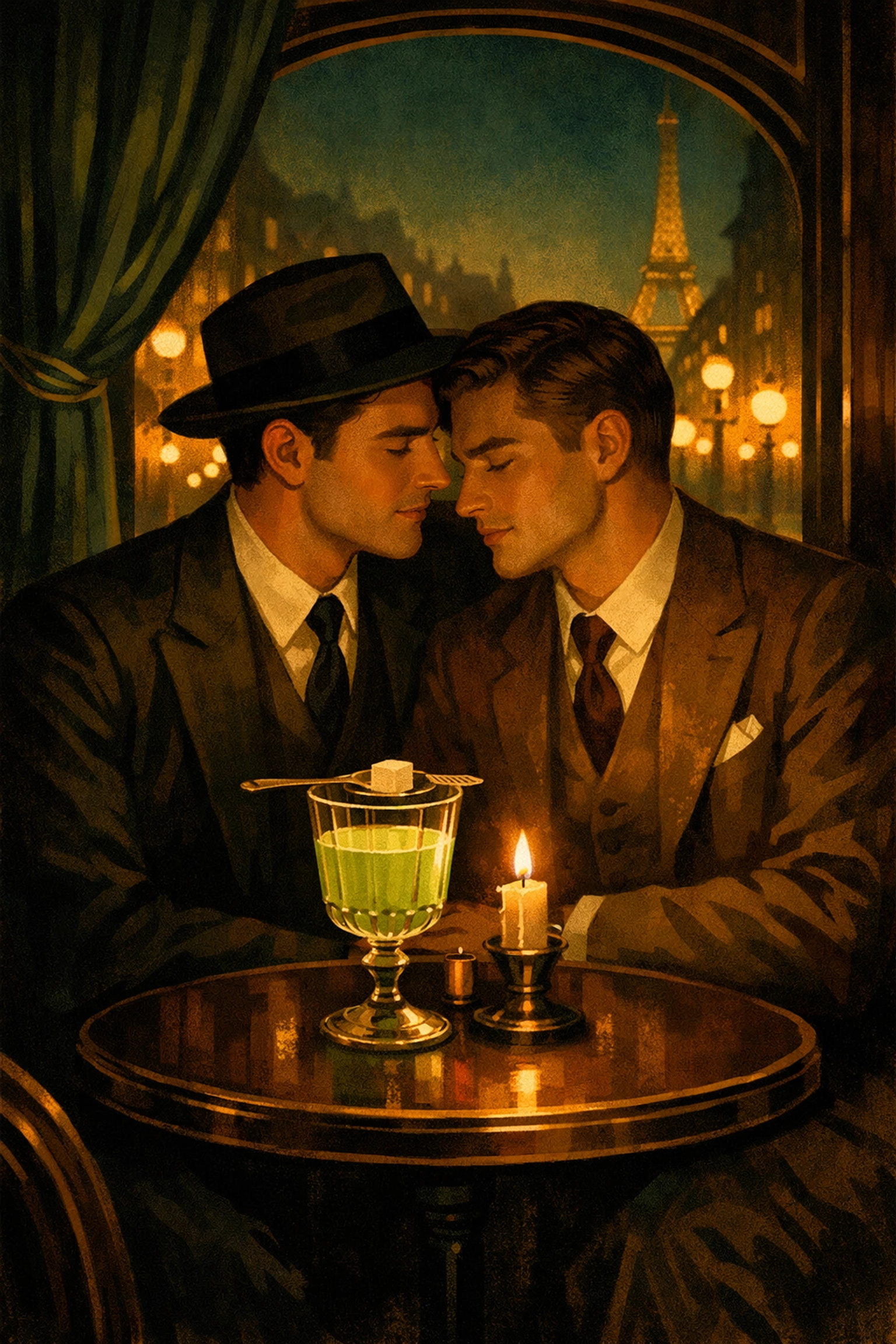
That world had vanished. But its mythology? That lived on in every underground bar, every whispered recommendation, every knowing glance between those in the know. The lesbian salons of Natalie Barney and Gertrude Stein became the new temples of transgression, where the spirit of absinthe, if not always the actual liquid, infused everything.
What We Actually Drank
Let's be real: Jazz Age Paris wasn't suffering from a shortage of intoxicants. When absinthe disappeared, the party simply… adapted. Cognac, champagne, and pastis (absinthe's legal, less hallucinogenic cousin) became the drinks of choice. American prohibition refugees brought their taste for cocktails, transforming Parisian bars into laboratories of mixology.
But here's where it gets interesting for our queer community: some establishments never really stopped serving absinthe. Underground distillers kept producing it, and certain cafés, especially those catering to bohemians, artists, and sexual minorities, quietly maintained their pre-war traditions. You just had to know who to ask, and how to ask discreetly.
The writer Djuna Barnes, openly bisexual and perpetually broke, supposedly knew every establishment in Montparnasse that still served the real thing. Janet Flanner, who chronicled Paris life for The New Yorker under the pen name Genêt, dropped coded references to "special drinks" in her letters home.
Sex, Substances, and Liberation
The thing about Jazz Age Paris that made it a queer paradise wasn't just the alcohol, it was the entire cocktail of liberation. After the carnage of WWI, traditional morality felt ridiculous. The old rules had led to trenches and gas attacks and millions dead. Why not experiment? Why not live?
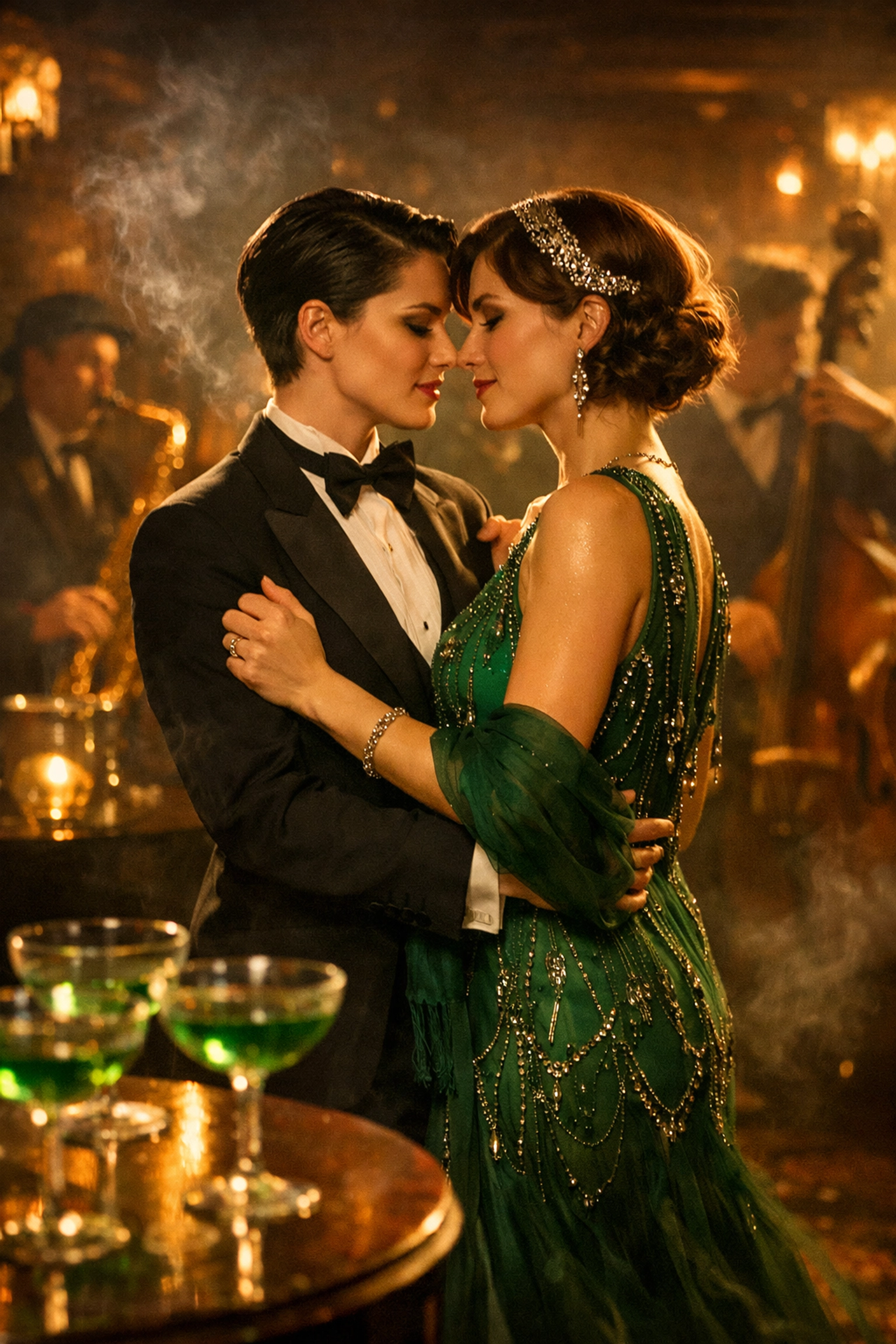
For LGBTQ+ folks, this meant unprecedented freedom. While the United States and Britain were actively persecuting homosexuals, Paris offered something radical: indifference. The French police had better things to do than raid lesbian salons or arrest men for dancing together.
This atmosphere of permissiveness extended to drug use. Opium dens operated openly in certain quarters. Cocaine was fashionable. And for those who could find it, absinthe carried the added thrill of illegality, a fitting drink for people whose very existence was illegal in their home countries.
The intersection of substances and sexuality created a unique culture. At Le Monocle, the famous lesbian nightclub where everyone wore tuxedos, the drinks were strong and the dancing was close. At Bricktop's, where Ada "Bricktop" Smith held court, Black and white, straight and queer, artists and aristocrats all mixed freely, fueled by champagne and jazz and the sheer joy of existing in a place that let you be yourself.
The Mythology Machine
What's fascinating is how the banned status of absinthe actually enhanced its mythology within queer circles. The Belle Époque artists who had drunk it, Wilde, Verlaine, Rimbaud, were now safely dead and could be romanticized without complication. Their queerness, their artistry, and their absinthe consumption became intertwined in a mythology of creative genius fueled by transgression.
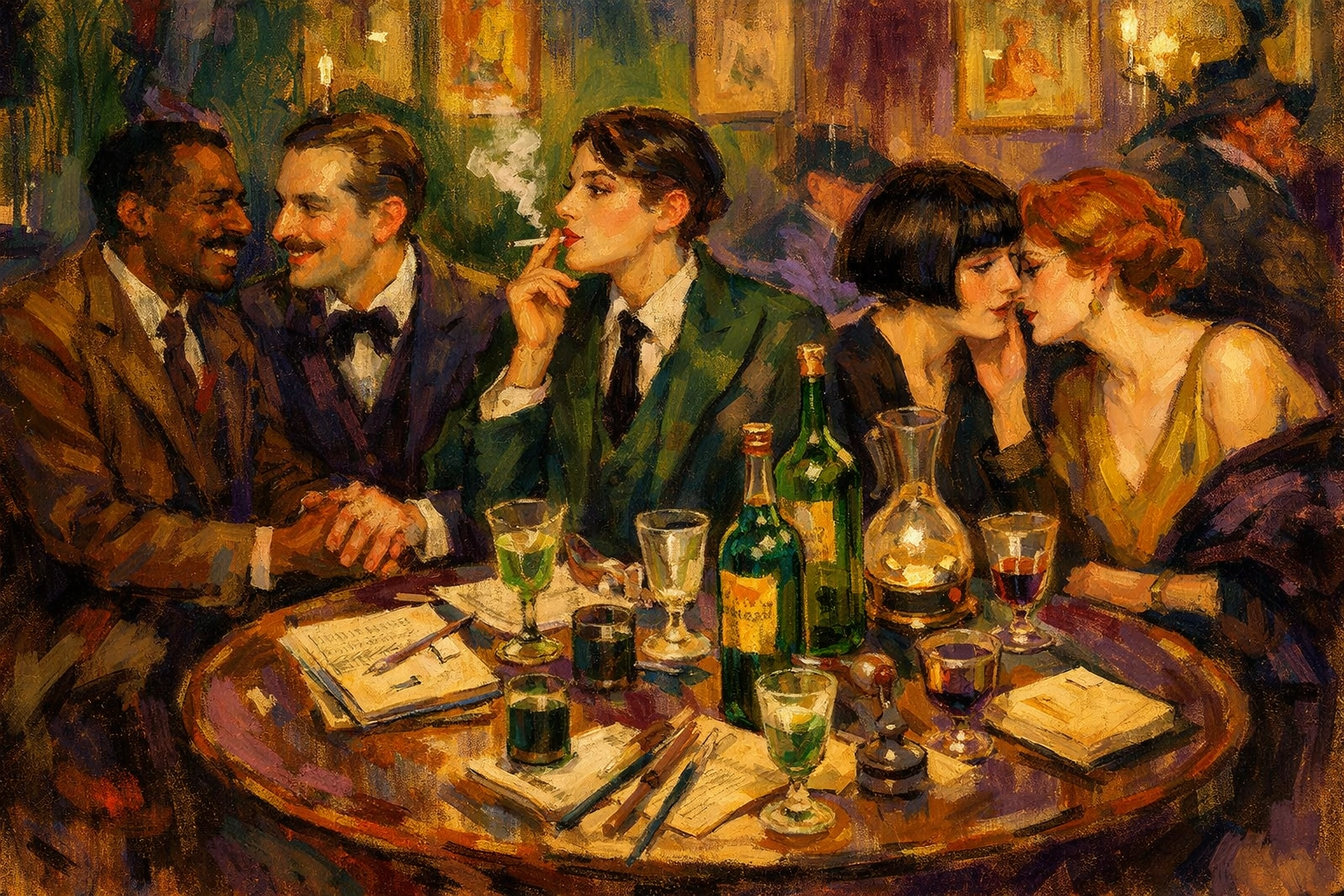
Young queer writers arriving in Paris in the 1920s didn't just want to drink what Wilde drank, they wanted to be Wilde. They wanted that same combination of artistic brilliance, sexual liberation, and substances that lowered inhibitions and raised consciousness. If absinthe was illegal, well, so was their love. It all fit together.
Ernest Hemingway, though straight, captured this nostalgia perfectly in his memoir "A Moveable Feast," describing his obsession with finding real absinthe in 1920s Paris. If a macho American was chasing the Green Fairy, imagine how much more meaningful it was for queer artists trying to connect with their cultural ancestors.
The Real Legacy
Here's what the absinthe mythology actually gave Jazz Age queer Paris: permission. Permission to live differently, to love differently, to create differently. The substance itself, whether it was actually absinthe or just strong pastis with food coloring, mattered less than what it represented.
It was a sacrament of nonconformity. Every secret sip in a back-room bar was a middle finger to the laws that tried to control bodies and desires. Every ritual of sugar cube and slotted spoon was a connection to artistic ancestors who had loved and created despite society's condemnation.
The real intoxication wasn't chemical, it was freedom. The freedom to publish lesbian love poetry (thank you, Natalie Barney). The freedom to run a bookshop that sold banned books (thank you, Sylvia Beach). The freedom to write honestly about queer desire without couching it in euphemisms or tragic endings.
Where This Fits in LGBTQ+ History
When we talk about LGBTQ+ history and substance use, we need honesty. Yes, there was drinking. Yes, there were drugs. Yes, there were consequences: addiction, health problems, early deaths. But we also need to understand the context.
For queer people in the 1920s, substances were often survival tools. They eased the pain of living in exile from homeland and family. They facilitated connection in a world that criminalized queer intimacy. They provided courage to live authentically when authenticity could mean imprisonment or worse.
The Jazz Age Paris obsession with absinthe: with its banned status and its artistic mythology: was really about claiming space in history. It was about saying: we belong to this tradition of creative genius and beautiful rebellion. We are the inheritors of Wilde and Rimbaud, of Toulouse-Lautrec's Moulin Rouge and Verlaine's scandalous verses.
Reading the Full Story
Want to dive deeper into LGBTQ+ history, from Jazz Age Paris to modern-day celebrations of queer life? Readwithpride.com offers a vast collection of gay romance books, MM romance, and LGBTQ+ fiction that explore our community's rich, complex, and beautiful history. Whether you're into gay historical romance that brings the 1920s to life or contemporary MM novels that tackle substance use and recovery with authenticity, there's something for everyone.
The stories we tell about our past shape how we understand our present. The queer expatriates of Jazz Age Paris weren't just drinking and partying: they were building a culture, creating art, and claiming their right to exist joyfully and authentically. That legacy lives on in every queer fiction story that refuses to sanitize our history or pretend we were anything other than fully human: complicated, creative, sometimes messy, always resilient.
Follow us for more LGBTQ+ history and book recommendations:
Facebook | Instagram | X/Twitter
#ReadWithPride #LGBTQHistory #JazzAgeParis #QueerHistory #MMRomance #GayRomanceBooks #LGBTQFiction #QueerLit #HistoricalLGBTQ #AbsintheHistory #GayLiterature #LGBTQBooks #QueerCulture #GayBooks #MMBooks #LGBTQReading #PrideReading #QueerParis #GayHistoricalRomance #ReadWithPride2026

Leave a Reply
You must be logged in to post a comment.