

readwithpride.com
When Ancient Rome Threw the Ultimate Rager
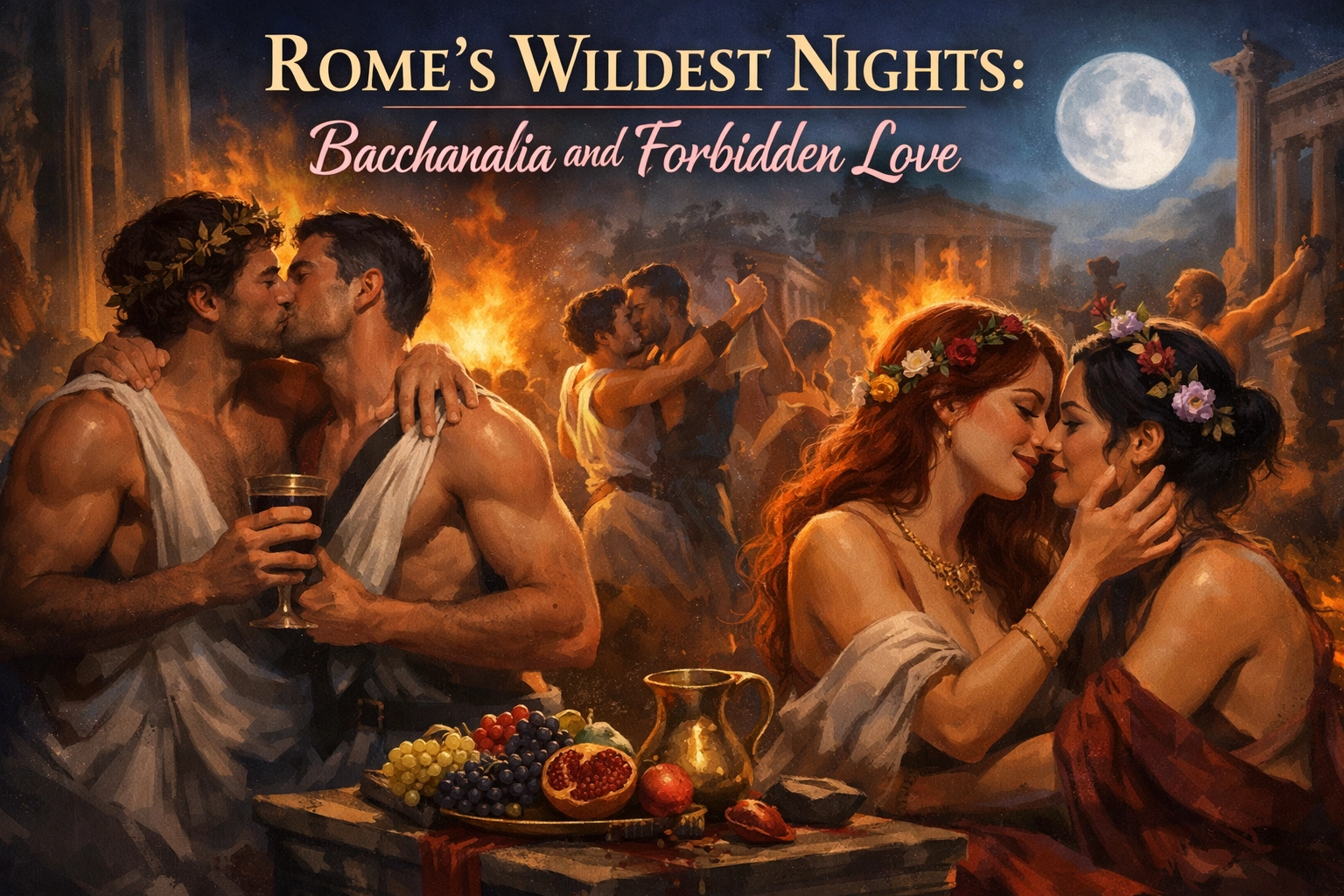
Picture this: It's 186 BC, and somewhere in the shadows of ancient Rome, torch-lit groves are pulsing with bodies, wine flows like water, and the air is thick with incense, sweat, and something that definitely isn't just fermented grapes. Welcome to the Bacchanalia, the legendary festivals that made Rome's elite clutch their togas in horror and everyone else desperately try to score an invitation.
These weren't your average wine-and-cheese gatherings. The Bacchanalia were secretive religious festivals dedicated to Bacchus (the Roman name for the Greek god Dionysus), and they quickly became synonymous with everything the buttoned-up Roman establishment feared: sexual freedom, mind-altering substances, and rituals that turned social hierarchies completely upside down. And yes, that included plenty of same-sex passion among the revelry.
For those of us at Read with Pride, diving into this slice of queer history feels like uncovering a time capsule of unapologetic hedonism. Long before Stonewall or Pride parades, ancient Romans were exploring sexuality, intoxication, and ecstasy in ways that would make modern club culture look tame.
From Sacred Rites to All-Night Parties
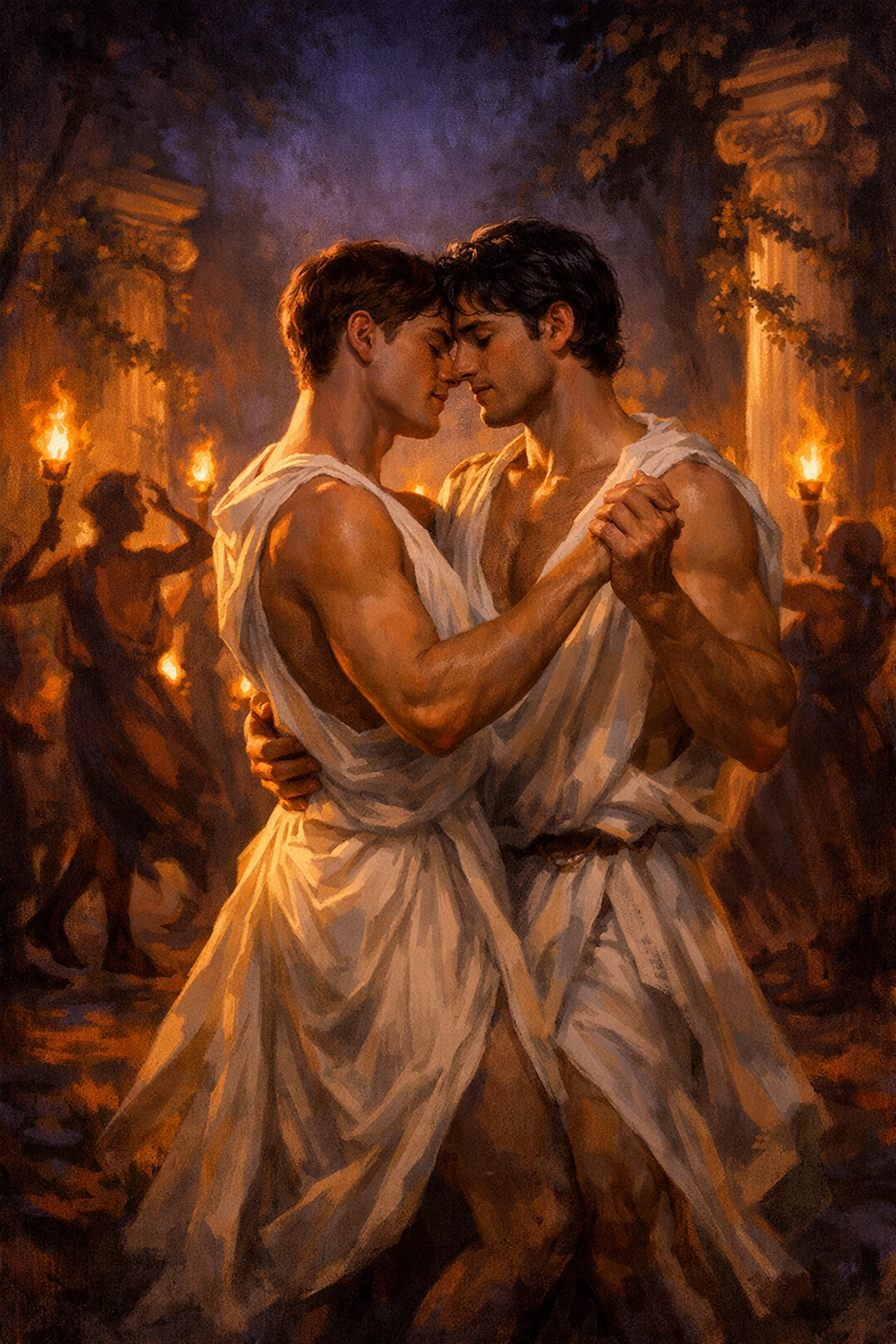
The Bacchanalia didn't start out as the scandalous affairs they became. Originally introduced to Rome around 200 BC from southern Italy, these were daytime fertility rites exclusively for women, held just three times a year. Matrons served as priestesses, and the whole thing was relatively… respectable. By Roman standards, anyway.
Then came Paculla Annia, a Campanian priestess who completely revolutionized the game. Claiming she was acting under direct orders from Bacchus himself (convenient, right?), she opened the cult to men, including her own sons. More dramatically, she moved the celebrations from daytime to nighttime and ramped up the frequency from three days a year to five days every single month.
This shift changed everything. What had been sacred women's mysteries morphed into mixed-gender nocturnal festivals where social conventions dissolved faster than you could say "pass the amphora." And when we say mixed-gender, we're talking about a fluid, boundary-pushing environment where same-sex encounters were just as common as opposite-sex ones.
Wine, Drugs, and Dionysian Delirium
So what actually happened at these legendary parties? According to historical accounts, and yes, we have to take some of these with a grain of salt since they were often written by scandalized conservatives: the Bacchanalia featured frenzied dancing, ecstatic prayer, wild music, and copious amounts of wine. Participants wore animal skins, let their hair down (literally), and worked themselves into states of near-animalistic abandon.
But it wasn't just the wine doing the heavy lifting. Ancient sources suggest that celebrants also consumed psychedelic herbs, mushrooms, and plants like belladonna that could induce hallucinations and altered states of consciousness. Modern scholars believe these substances played a crucial role in the religious experiences participants sought: a spiritual high combined with a very literal one.
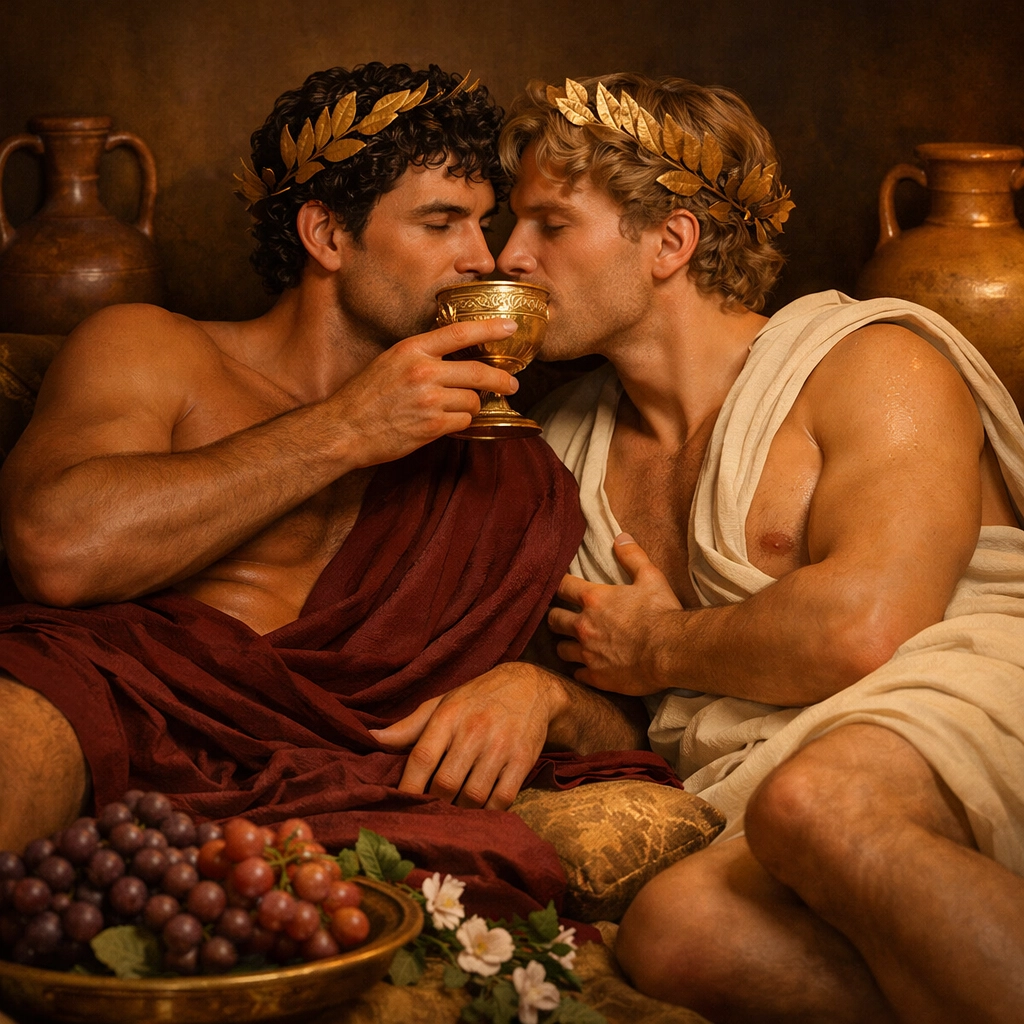
The sexual aspect was equally uninhibited. One female servant who witnessed the secret nighttime rituals described them as "a sink of every form of corruption," though we might read that pearl-clutching horror as evidence that people were simply having a damn good time on their own terms. In ancient Rome's complex sexual culture, same-sex relations among men: particularly between free men and enslaved youths or between older and younger partners: were commonplace, though with their own set of social rules and power dynamics.
At the Bacchanalia, however, those rigid hierarchies seemed to blur. The darkness, the intoxication, the religious fervor: it all created spaces where desire could flow more freely. For men seeking other men, these festivals offered rare opportunities for passion outside the usual constraints of Roman social life.
Queer Undertones in Bacchic Worship
It's worth noting that Bacchus himself had strong queer associations in Greco-Roman mythology. Often depicted as youthful, beautiful, and androgynous, Bacchus/Dionysus blurred gender boundaries in ways that both fascinated and unsettled ancient audiences. His mythological entourage included satyrs engaged in same-sex activities, and his worship celebrated fluidity in all its forms.
For Roman men who loved other men, Bacchic worship provided religious and cultural cover for expressing desires that, while not exactly forbidden, existed within strict social parameters in everyday Roman life. The god himself was a queer icon centuries before we had that terminology, and his festivals became havens for sexual exploration.
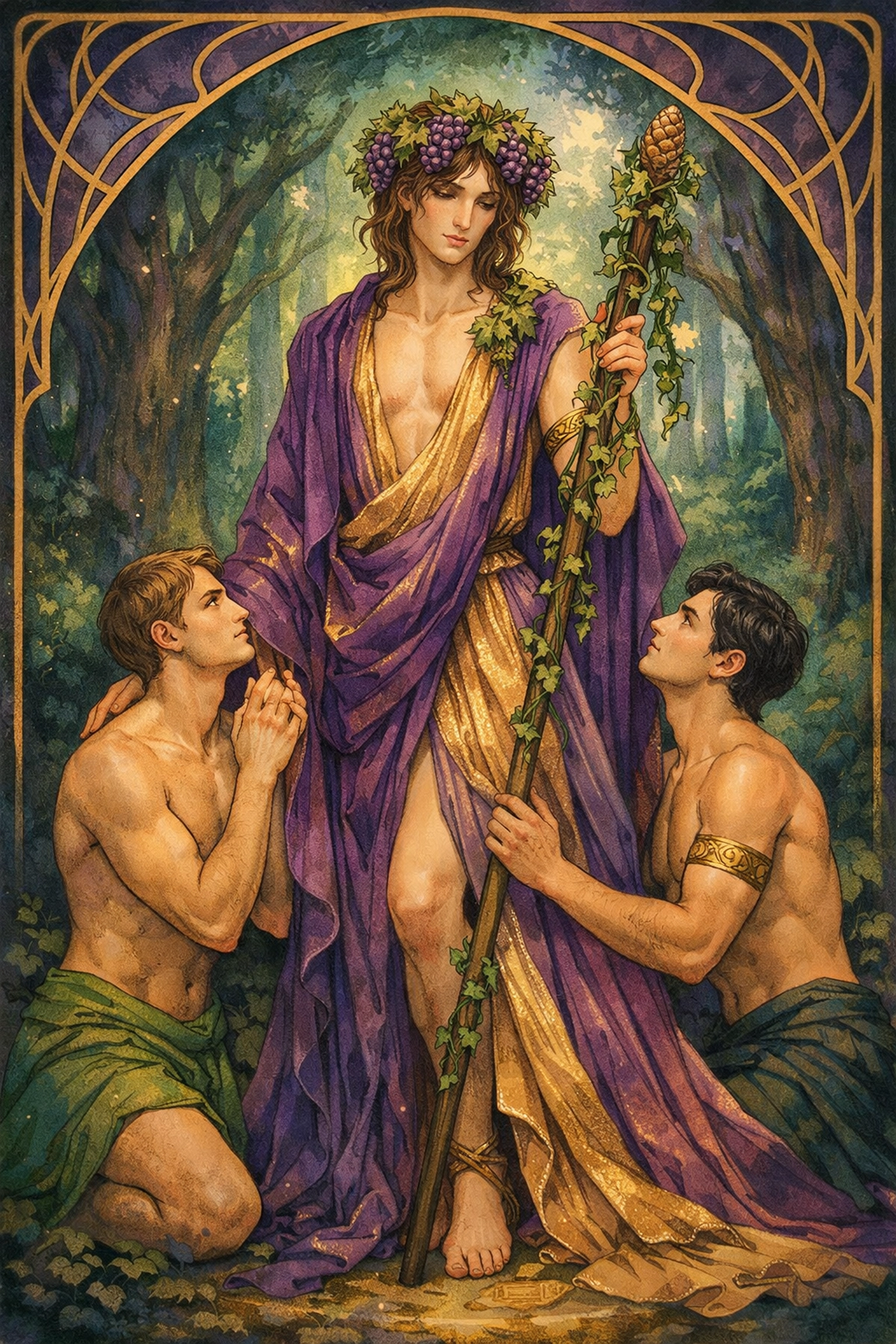
The all-male spaces within Bacchanalia, once Paculla Annia opened the cult to men, created opportunities for homoeroticism that went beyond the typical patron-client relationships or gymnasium hookups of Roman life. Here, in the torch-lit groves, with wine and drugs flowing freely, men could express desire and intimacy with a spiritual dimension that legitimized what might otherwise have been mere carnality.
The Establishment Strikes Back
Predictably, Rome's conservative establishment eventually had enough. By 186 BC, rumors were flying about what went on in those secret gatherings: orgies, violence, mysterious disappearances, and political conspiracies. Whether these allegations were true, exaggerated, or entirely fabricated remains debated by historians. What's clear is that the Roman Senate saw the Bacchanalia as a threat to social order.
The Senate issued the Senatus Consultum de Bacchanalibus, effectively banning the festivals throughout Italy except in rare, specially approved cases. The crackdown was brutal: thousands were arrested, and many were executed. It was one of ancient Rome's first major moral panics, a forerunner to countless future attempts by authorities to suppress expressions of sexuality and intoxication they couldn't control.
Sound familiar? Throughout history, from the Bacchanalia to modern-day police raids on gay bars, authorities have consistently targeted spaces where marginalized people gather to celebrate, love, and exist outside mainstream norms. The pattern is depressingly consistent: create spaces of freedom, threaten the establishment, face violent suppression.
The Underground Continues
Here's the thing about trying to ban a good party: it rarely works. Despite the Senate's decree and the executions, devoted followers didn't just disappear. They fled to forests, remote groves, and the wilder reaches of southern Italy, where they continued their secret rites away from prying eyes. The Bacchanalia went underground but never truly died.
In fact, these festivals persisted with surprising vigor throughout the imperial period. It wasn't until Christianity's rise that Bacchic worship finally faded: replaced by a religion that took a decidedly dimmer view of wine-soaked ecstatic dancing and sexual freedom.
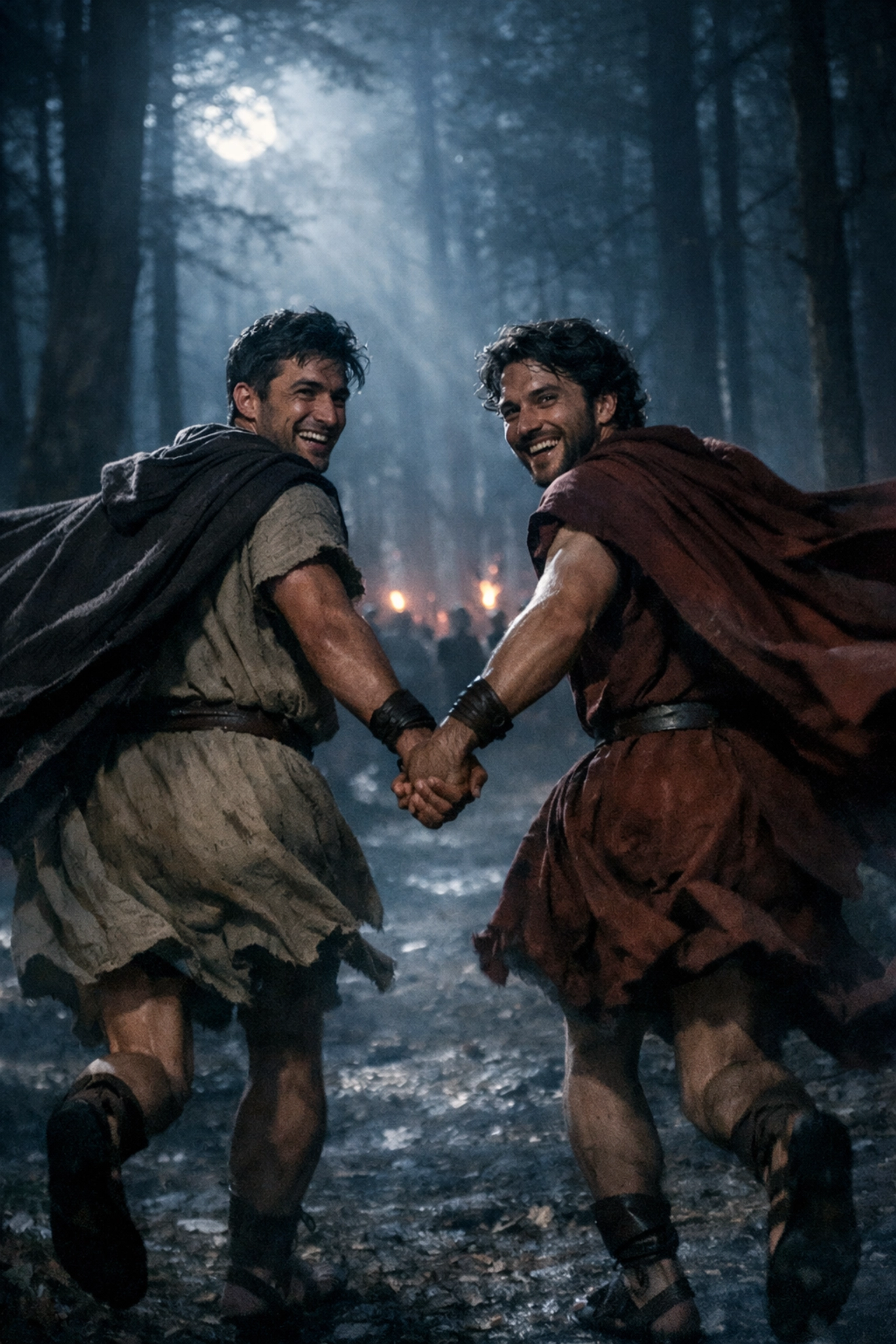
For those of us interested in LGBTQ+ history, the Bacchanalia represent something powerful: proof that our ancestors have always found ways to create spaces of liberation, no matter the risks. These ancient Romans dancing in torchlit groves, emboldened by wine and worshipping a gender-fluid god, were our spiritual predecessors. They remind us that the fight for sexual freedom and the right to gather, celebrate, and love whom we choose is older than empire itself.
What We Can Learn from Ancient Bacchanalia
Looking back at Rome's wildest nights from our 2026 perspective, what strikes me most isn't just the excess or the scandal: it's the courage. Attending a Bacchanalia, especially after the ban, was genuinely dangerous. People risked execution for the chance to worship freely, love freely, and experience transcendence on their own terms.
That spirit lives on in modern queer fiction and MM romance that celebrates passion without apology, in Pride celebrations that reclaim public space, and in every LGBTQ+ venue that creates sanctuary from a hostile world. The throughline from ancient Rome to today is unbroken: people will always seek spaces to be authentically themselves, whatever the cost.
The story of Bacchanalia also reminds us that the intersection of substance use, sexuality, and spirituality isn't new or shameful: it's ancient and human. Our community's complicated relationship with nightlife, clubs, and party culture has deep roots. Understanding that history helps us navigate the present with more wisdom and less judgment.
Raising a Glass to History
So here's to the Bacchanalia and everyone who danced in those groves, who drank that wine, who loved whom they chose in the shadows and the firelight. Here's to Bacchus, that beautiful, gender-bending god of liberation. And here's to us, their descendants in spirit, still fighting for the right to gather, celebrate, and love without fear.
The Romans tried to shut down the party in 186 BC. They failed. That's a legacy worth remembering.
Explore more LGBTQ+ history and discover amazing gay romance books at readwithpride.com – your home for MM romance, queer fiction, and stories that celebrate love in all its forms.
Follow us for more queer history and book recommendations:
- Facebook: facebook.com/profile.php?id=61586883027069
- Instagram: @read.withpride
- X/Twitter: @Read_With_Pride
#ReadWithPride #LGBTQHistory #QueerHistory #AncientRome #Bacchanalia #MMRomance #GayRomanceBooks #QueerFiction #LGBTQBooks #GayLiterature #QueerLove #PrideHistory #LGBTQCommunity #GayBooks #MMBooks #HistoricalQueer #AncientQueerHistory #BacchusWorship #LGBTQPride #GayHistoricalRomance

Leave a Reply
You must be logged in to post a comment.